
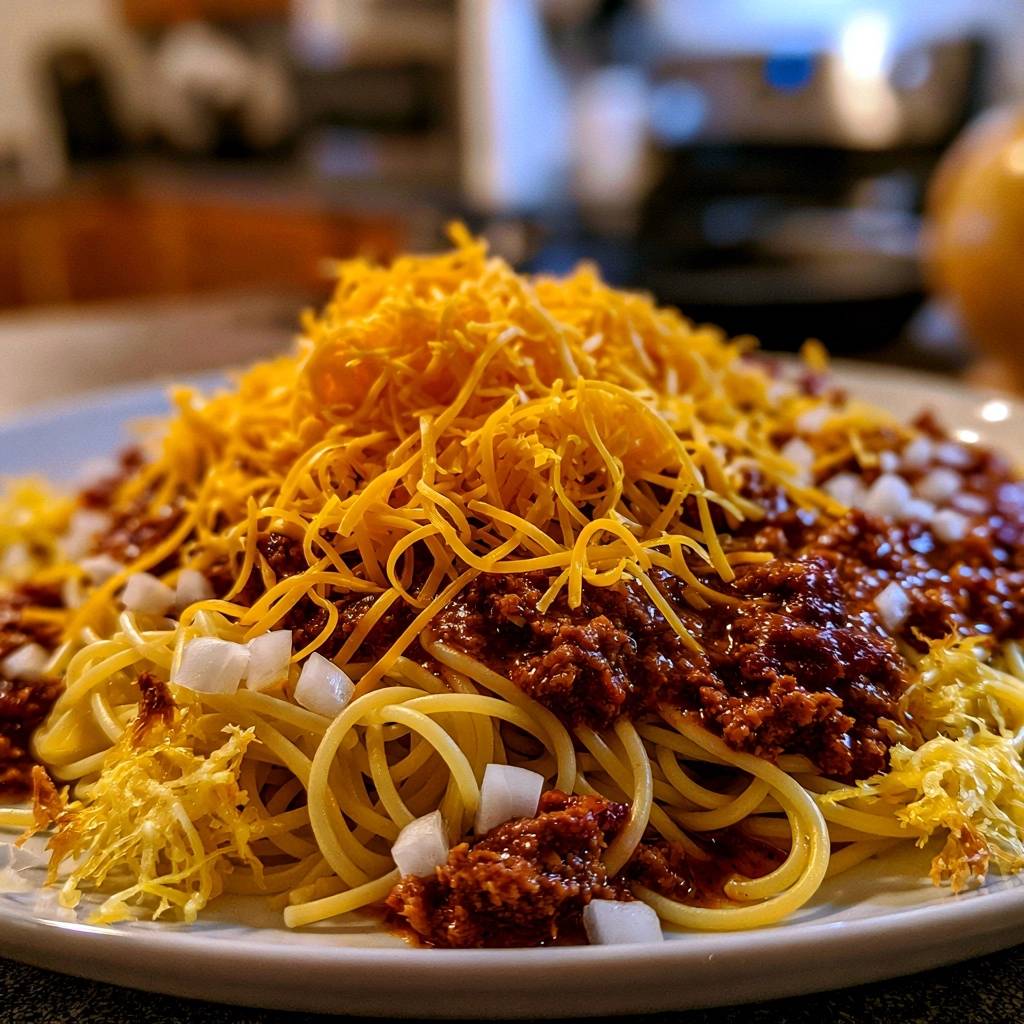
If you’ve ever sat down at a famous chili parlor in the Queen City, you know the heartbreak of a poorly made home version. Most recipes leave you with a puddle of orange water at the bottom of your plate that dilutes the flavor and makes the pasta soggy. This version changes that by focusing on a specific reduction technique that ensures every drop of liquid is packed with savory, spiced beef flavor.
The secret to that iconic, fine-textured meat sauce isn’t in the frying pan. In fact, you should keep your skillet in the cupboard. We use a “boil-not-brown” method that breaks the beef down into tiny, pebble-like pieces that melt in your mouth. By simmering the sauce uncovered for over an hour, we drive off the excess moisture, leaving behind a thick, mahogany sauce that clings to the spaghetti like a dream.
Expert cooks know that the texture of Cincinnati chili is just as important as the taste. To get it right, you must whisk the raw meat into cold water before you ever turn on the burner. This prevents the proteins from seizing into large, chunky crumbles. It might feel strange to boil raw meat, but this is the only way to achieve that velvety, authentic consistency found in the best parlors.
Defining the Authentic Cincinnati Chili Spaghetti Profile
Cincinnati chili is a unique beast that bears almost no resemblance to the chunky, bean-heavy stews of Texas. It’s actually a Mediterranean-style meat sauce, heavily influenced by the Greek and Macedonian immigrants who created it. You won’t find chunks of bell peppers or tomatoes here; instead, it’s a smooth, uniform sauce designed specifically to top noodles or hot dogs.
The flavor profile is deeply savory with a surprising warmth from “baking” spices. While it’s called chili, it isn’t “spicy” in the traditional sense. It relies on a complex layering of aromatics that create a rich, umami base. Because it’s so thin compared to standard chili, it requires a specific serving style known as the “Ways” system to balance the flavors.
A 3-way includes spaghetti, chili, and a mountain of cheese. A 4-way adds either onions or beans, and a 5-way includes both. This recipe focuses on the 4-way style with raw, diced onions. The sharp bite of the onion cuts through the richness of the beef and the warmth of the cinnamon, creating a perfectly balanced bite every time.
The History of Empress and Skyline Influence
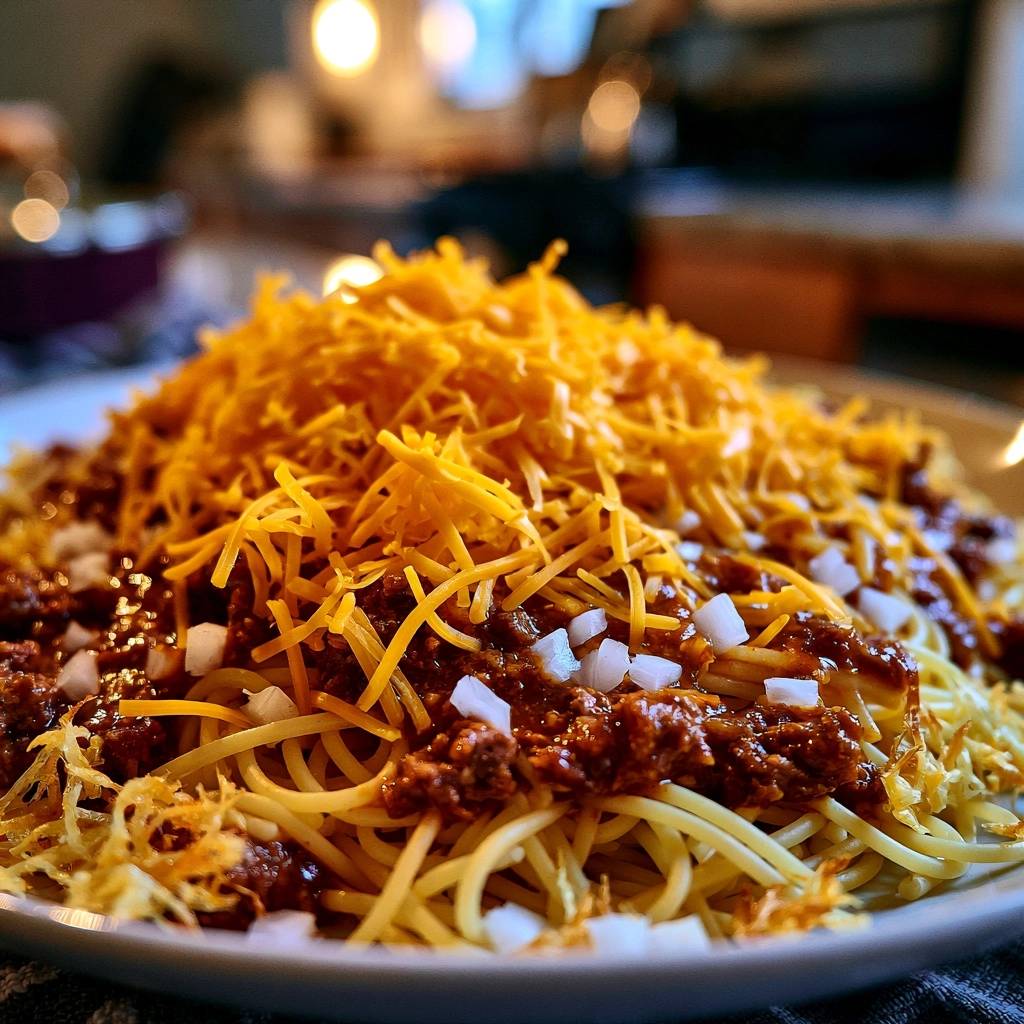
In the 1920s, brothers Tom and John Kiradjieff began serving this “chili” next to the Empress Theatre in Cincinnati. They took the flavors of their homeland—spices like cloves and nutmeg—and adapted them to the American palate. This fusion created a cult following that eventually led to the birth of Skyline Chili and Gold Star Chili, the two giants of the region today.
The hallmark of this dish is the inclusion of unsweetened cocoa powder and cinnamon. These ingredients don’t make the sauce taste like dessert; rather, they provide a dark, earthy depth that complements the beef. It’s a culinary tradition that has remained virtually unchanged for a century because the flavor profile is so distinct and addictive.
Essential Components for a Thick Meat Sauce
To avoid a greasy finish, you must choose your beef wisely. I recommend using 85/15 or 90/10 lean ground beef. Since we aren’t browning the meat and draining the fat, any grease in the pot stays in the sauce. Using a leaner cut ensures the sauce is rich but doesn’t leave a heavy, oily film on the roof of your mouth.
The acidity in this recipe comes from two places: tomato sauce and apple cider vinegar. The tomato sauce provides the body, while the vinegar acts as a brightener. It wakes up the heavy spices and prevents the beef from feeling too “flat” on the tongue. Don’t skip the Worcestershire sauce either; it adds a fermented salty kick that rounds out the cocoa powder.
Quality matters when it comes to your spices. If that tin of chili powder has been sitting in your pantry since the last presidential election, toss it. Fresh chili powder and ground cloves have volatile oils that provide the necessary aroma. When these spices hit the simmering water, they should fill your entire kitchen with a warm, inviting scent.
The Spice Blend: Beyond Standard Chili Powder
The magic happens in the ratio of cinnamon, allspice, and cloves. These warm spices are the backbone of the dish. While standard chili powder provides the base, the cloves and allspice add a haunting, aromatic quality that makes people ask, “What is that secret ingredient?”
Using unsweetened cocoa powder is non-negotiable for an authentic color and mouthfeel. It provides a subtle bitterness that balances the sweetness of the cinnamon. When combined with the savory beef, it creates a complex sauce that tastes like it’s been simmering for days rather than just an hour.
Choosing the Right Pasta and Cheese
Standard spaghetti is the traditional vessel for this sauce. You want a noodle that is sturdy enough to hold the meat but thin enough to be twirled easily. Always cook your pasta in water that tastes like the sea. Since the chili sauce is complex but not overly salty, the pasta needs to be well-seasoned from the inside out.
The cheese is perhaps the most visual part of the dish. You need a sharp cheddar, and it must be finely shredded—often called “feather shredded.” Avoid the pre-bagged stuff, which is coated in potato starch to prevent clumping. Grate a cold block of sharp cheddar yourself for that light, airy “mountain” that melts just slightly where it touches the hot chili.
The Science of the Boil-Not-Brown Technique
Most people fail at Cincinnati chili because they start by browning the beef in oil. This creates Maillard reaction crusts and large, chewy curds. While that’s great for a burger, it’s the enemy of an authentic Cincinnati sauce. By starting with cold water, you allow the meat fibers to separate and suspend evenly in the liquid.
As the water heats up, the proteins cook gently while they are still separated. This results in a texture that is almost like a fine paste or very small pebbles. It allows the sauce to become a cohesive emulsion rather than a watery broth with chunks of meat floating in it. This is the key to the “no-water” promise.
This technique also allows the fat to render out slowly. Because the meat is submerged, the fat rises to the top in a clear layer, making it incredibly easy to skim off with a wide spoon. You get all the flavor of the beef without the heavy, weighted feeling of a greasy sauce.
Achieving the Perfect Meat Suspension
Before you turn on the stove, place your raw beef and 3 cups of water in the pot. Use a sturdy whisk or a potato masher to vigorously break up the meat. You are looking for a pink, cloudy liquid with no visible clumps larger than a grain of rice.
Once the meat is fully suspended, then you bring it to a boil. If you see any large chunks forming as it heats, give it another quick whisk. This initial step is the most important part of the entire process. If you get the texture right here, the rest of the recipe is foolproof.
Step-by-Step: Reducing Authentic Cincinnati Chili Spaghetti
The total cooking time is about 75 minutes, and almost all of it is hands-off. However, you must leave the lid off the pot. We are intentionally inviting evaporation. As the water turns to steam, the flavors of the spices and the beef concentrate, turning a thin liquid into a thick, spoonable sauce.
During the first 30 minutes, the meat will cook through and the liquid will start to clear. You’ll notice a bit of foam or fat rising to the top; feel free to skim this off for a cleaner finish. After this initial simmer, the meat is tender and ready to absorb the aromatics.
Once you add the tomato sauce and spices, the transformation begins. The sauce will turn from a pale brown to a deep, dark red-brown. The smell will change from “boiled beef” to that unmistakable, spicy Cincinnati aroma. Keep the heat on low to avoid scorching the bottom of the pot.
Phase One: The Initial 30-Minute Simmer
This first phase is all about setting the texture. By simmering the meat in water alone, you ensure the proteins are fully cooked and tender before adding the acidic ingredients. Acid, like the vinegar and tomato sauce we add later, can sometimes toughen meat if added too early.
Watch the water level during this time. You want it to reduce slightly, but the meat should still be fully submerged. If your stove runs very hot, you might need to turn it down to the lowest possible setting. The goal is a gentle bubble, not a rolling boil.
Phase Two: The 45-Minute Flavor Infusion
Now we add the “soul” of the dish. Stir in the tomato sauce, cocoa, and all those warm spices. As the sauce simmers for the final 45 minutes, it will thicken significantly. The cocoa powder acts as a natural thickener, and the tomato sauce reduces into a rich paste that binds everything together.
To check if it’s ready, use the “spoon test.” Dip a large spoon into the chili and pull it out. The sauce should coat the back of the spoon thickly, and when you run your finger through it, the line should stay clean. If it’s still runny or drips off quickly, give it another 10 minutes of simmering.
Troubleshooting Common Texture Issues
If your sauce looks greasy, it’s likely because the beef had a higher fat content than expected. Don’t panic. Simply take a rolled-up paper towel and gently blot the surface of the simmering sauce. The towel will wick up the oil while leaving the flavorful sauce behind.
If the clove flavor feels too strong, it usually means the sauce hasn’t reduced enough yet. As the other flavors concentrate, the cloves will settle into the background. If it’s still too punchy at the end, a tiny pinch of extra salt or a teaspoon more of vinegar can help balance the intensity.
Fixing a Thin or Runny Sauce
If you reach the end of the cook time and the sauce still looks like soup, turn the heat up to medium-high for 5 to 10 minutes. Stir constantly to prevent burning. This “high-simmer” will force the remaining water out quickly.
Whatever you do, do not add a cornstarch slurry or flour. This will turn the sauce into a gummy, gravy-like mess that ruins the authentic mouthfeel. Patience is your best friend here; let the heat do the work of thickening the sauce naturally through reduction.
Plating the Perfect 4-Way Presentation
Plating is an art form in Cincinnati. Start with a dense mound of spaghetti in the center of a shallow plate or bowl. Do not toss the noodles in the sauce! The chili should be ladled directly over the top of the pasta, leaving the edges of the spaghetti visible.
For a 4-way, sprinkle your finely diced raw onions over the hot chili. The onions should be diced very small so they provide a crunch without being overwhelming. The heat from the sauce will just barely soften the onions, taking away their raw “burn” while keeping them crisp.
The “Airy Mountain” Cheese Technique
The cheese is the crowning glory. You want to grab a large handful of the cold, finely shredded cheddar and drop it onto the chili. Do not press it down! It should look like a fluffy cloud sitting on top of the meat.
The steam from the reduced chili will melt the very bottom layer of the cheese, creating a creamy interface between the meat and the topping. The top of the cheese mountain should remain cold and distinct. This contrast between the hot, spicy meat and the cold, sharp cheese is the signature experience of this dish.
Make-Ahead Strategies and Storage
Like most stews and sauces, Cincinnati chili is actually better the next day. As it sits in the fridge, the spices have more time to meld and the beef absorbs even more flavor. If you are making this for a party, I highly recommend making the sauce a full day in advance.
When you store it, the fat will solidify on the top into a hard orange layer. This is actually great because you can easily lift it off and discard it before reheating. This results in an even leaner, cleaner-tasting sauce that is perfect for serving to guests.
Freezing and Reheating for Meal Prep
This sauce freezes beautifully. Place the cooled chili in airtight containers or heavy-duty freezer bags. It will stay fresh for up to three months. To reheat, let it thaw in the fridge overnight and then warm it in a saucepan over low heat.
If the sauce seems too thick after freezing, add a tablespoon of water at a time to loosen it up. Be careful not to add too much, or you’ll end up with the watery plate we worked so hard to avoid! Reheat it slowly so the fats emulsify back into the sauce smoothly.
Expert Tips for Regional Accuracy
To eat this like a local, serve it with a side of oyster crackers. Many people like to poke a hole in the cracker and fill it with a drop of hot sauce before popping it in their mouth between bites of spaghetti. It adds a nice salty crunch to the meal.
Finally, make sure your pasta is drained extremely well. Shake the colander vigorously. Any water clinging to the noodles will end up at the bottom of your plate, thinning out that beautiful reduction you spent over an hour perfecting. A dry noodle is the best friend of a thick Cincinnati sauce.
Frequently Asked Questions
Can I use ground turkey instead of beef?
Yes, you can use ground turkey, but you should choose a mix that includes some dark meat. If you use 99% lean turkey breast, the sauce will be very dry and lack the traditional richness. You may also need to add a teaspoon of olive oil to the water to help the spices bloom properly.
Why is there chocolate in the chili?
The unsweetened cocoa powder isn’t there for sweetness. It provides a deep, earthy bitterness and a dark color that balances the “sweet” spices like cinnamon and allspice. It acts more like a mole sauce component, adding a layer of savory complexity that makes the beef taste richer.
Do I really have to use a whisk on raw meat?
Absolutely. This is the most important step for the texture. If you don’t whisk the meat into the cold water, you will end up with large chunks of boiled beef. The whisk breaks the meat down into the tiny, uniform pieces that define the authentic Cincinnati style.
Can I make this in a slow cooker?
I don’t recommend it for this specific “no-water” version. Slow cookers trap steam, which means the sauce won’t reduce. You’ll end up with a very thin, watery soup. If you must use one, leave the lid slightly ajar for the last two hours of cooking to allow for some evaporation, but the stovetop is much more reliable.
How do I make it a 5-way?
To turn this into a 5-way, simply add a layer of warmed dark red kidney beans. Traditionally, the beans are placed on top of the spaghetti before the chili is ladled on, or they are scattered over the chili before the onions and cheese. Make sure to drain and rinse the beans thoroughly first.
Authentic Cincinnati Chili Spaghetti
Course: Main CourseCuisine: AmericanDifficulty: easy4
servings10
minutes1
hour60
Minutes680
kcalAmerican
Ingredients
1 pound lean ground beef (85/15 or 90/10)
3 cups water (Reduced from 1 quart to ensure thickness)
1 (15 oz) can tomato sauce
1 large white onion, finely diced (divided)
2 tablespoons chili powder
1 teaspoon ground cinnamon
1/2 teaspoon ground cloves
1/2 teaspoon ground allspice
1 tablespoon unsweetened cocoa powder
1 tablespoon apple cider vinegar
1 teaspoon Worcestershire sauce
1/2 teaspoon garlic powder
1/2 teaspoon salt (plus more for pasta water)
1 pound spaghetti noodles
3 cups finely shredded sharp cheddar cheese (cold)
Directions
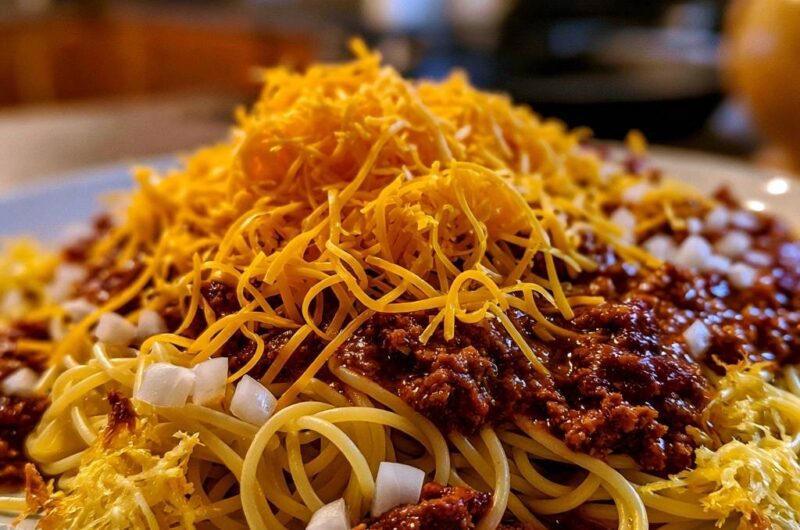
- To achieve the fine, pebble-like texture seen in the image, do not brown the meat. Add the raw ground beef and 3 cups of water to a large pot. Use a whisk or potato masher to break the meat into very fine crumbles until it is fully suspended in the water with no large chunks.
- Bring the mixture to a boil, then immediately reduce heat to low. Simmer uncovered for 30 minutes. Skim off any excess fat that rises to the surface if desired.
- Stir in the tomato sauce, chili powder, cinnamon, cloves, allspice, cocoa powder, vinegar, Worcestershire sauce, garlic powder, and salt.
- Continue to simmer uncovered for another 45 minutes. This long simmer is essential for the “No More Watery Sauce” promise; the liquid must reduce until the sauce is thick, dark, and meaty. If it still looks thin, continue simmering until it reaches a heavy, spoonable consistency.
- While the sauce finishes, cook the spaghetti in a large pot of heavily salted boiling water until al dente. Drain thoroughly in a colander; shake well to ensure no water remains trapped in the noodles.
- To serve (4-Way Style): Place a dense mound of spaghetti on a plate. Ladle a generous portion of the thickened chili directly over the center.
- Scatter a tablespoon of the finely diced raw white onions over the chili.
- Finish with a massive, airy pile of finely shredded cold cheddar cheese. The heat from the reduced sauce will slightly melt the bottom layer of cheese while the top remains a fluffy mountain, exactly as pictured.
Notes
- The secret to the thick texture is simmering uncovered to allow for reduction and using a whisk to ensure the meat has a fine, pebble-like consistency.