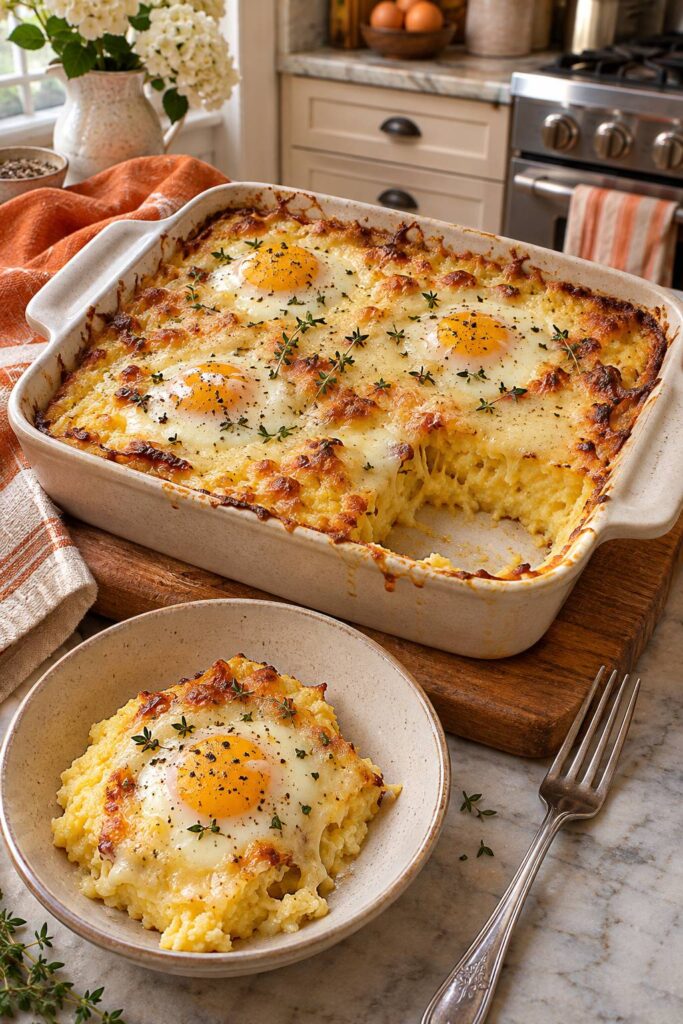
There is a special comfort in a breakfast you can eat with a spoon, something warm and rich with a surprise waiting underneath. These baked polenta breakfast bowls deliver exactly that. Soft, creamy polenta is enriched with fontina and Parmesan, spread into a baking dish, and topped with eggs that bake until the whites are set and the yolks stay soft.
Because eggs and cheese do most of the work here, this is a protein-forward morning meal that feels substantial enough to carry you through a busy day. It is also a practical choice for a family, since everything comes together in one dish and scoops neatly into bowls.
Why Quick-Cooking Polenta and Broth Work Well Here
Polenta is ground corn, and the form you buy determines how it behaves. Quick-cooking polenta is what makes this recipe practical on a weekday, because it turns creamy within the short window you would spend making coffee.
Cooking it in a mix of low-sodium chicken broth and whole milk gives the polenta a savory backbone and a silkier texture than water alone would. Choosing low-sodium broth keeps you in control of the salt, since the cheese adds plenty of its own.
Getting Smooth Polenta Without Lumps
The most common mistake with polenta is adding it too quickly. Pour it in slowly while whisking so each grain hydrates before it can clump at the bottom of the pan. Once the mixture thickens, keep the heat moderate and stir often, especially along the bottom edge, where polenta scorches easily.
Grainy polenta almost always means it needs more time to soften, not more salt. Stir the cheese in off the heat so the fontina melts smoothly instead of turning stringy. The finished polenta should be thick, glossy, and free of any grit between your teeth.
Setting the Eggs and Judging Doneness
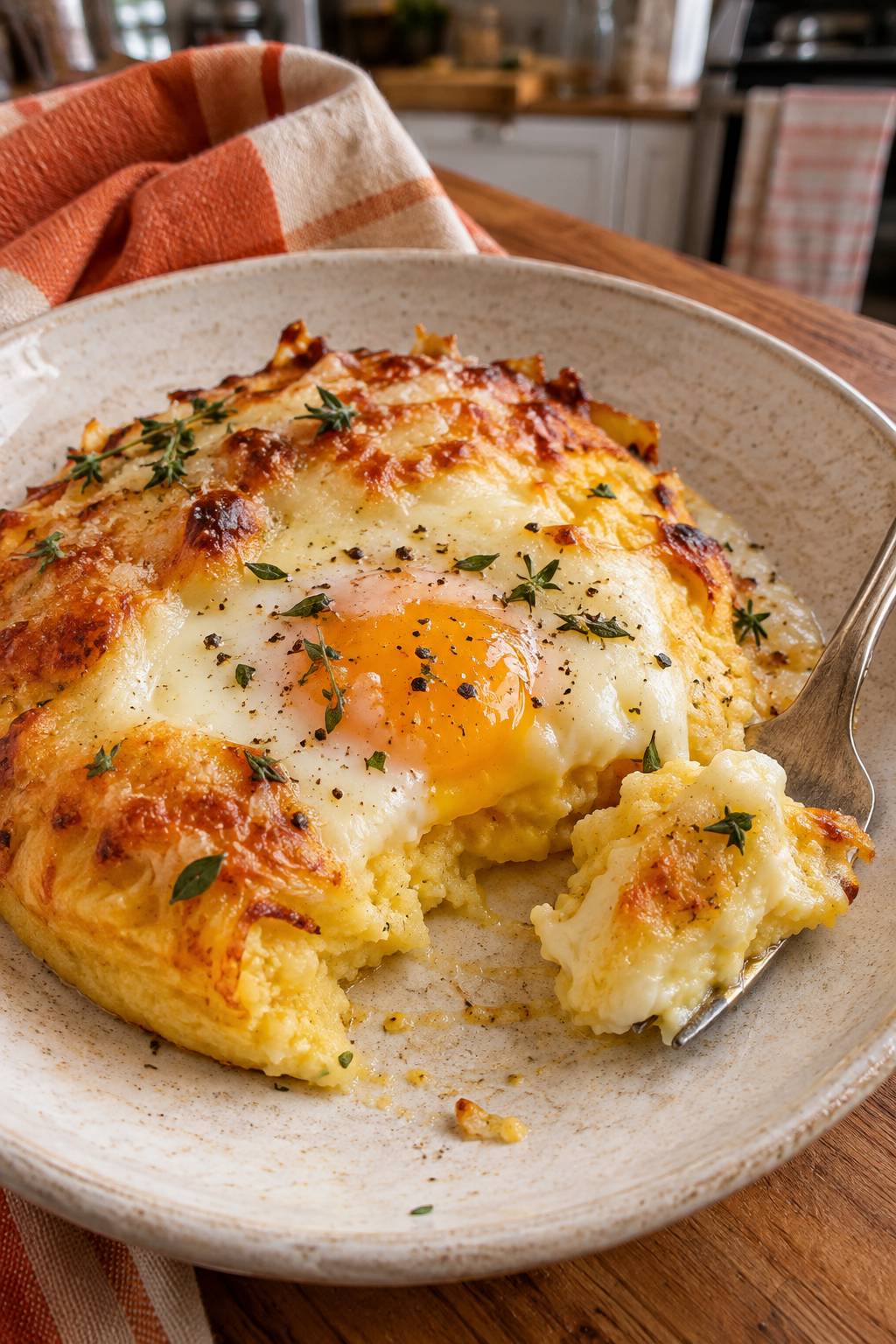
Spreading the polenta to an even thickness matters. Thin spots set too quickly and dry out, while thick mounds leave eggs with nowhere to settle. Shallow wells pressed into the surface act as little cradles, keeping each white contained while the yolk sits up on top.
Pull the dish from the oven when the whites look opaque and firm, but the yolks still look soft and glossy in the center. They keep cooking from residual heat during the rest, so a slightly loose yolk is exactly what you want. If you prefer deeper color on the cheese, the optional broiler step adds browning, but watch closely because melted fontina can go from golden to scorched quickly.
Finishing Touches That Make the Bowl
Fresh thyme leaves add a bright, herbal note that cuts through the richness, and a few small sprigs make the bowl look inviting. Freshly ground black pepper adds gentle heat, and a light sprinkle of flaky salt, if you like it, gives the top a pleasant crunch.
Scoop each egg along with a generous portion of polenta so every spoonful includes yolk, cheese, and grain. Serve the bowls right away while the polenta is still warm and the yolks are at their best.
Frequently Asked Questions
Why does this recipe call for quick-cooking polenta?
Quick-cooking polenta softens within the short cooking window this breakfast needs and gives a smooth, spoonable base under the eggs. It thickens predictably with broth and milk, so the wells you press into it hold their shape while the dish rests before serving.
How do I know when the eggs are done?
Look for fully set egg whites and yolks that still look glossy and soft in the center. The cheese should be melted and lightly golden at the edges. The dish keeps cooking briefly after it leaves the oven, so a slightly jiggly yolk is the right stopping point.
What causes lumpy or grainy polenta?
Lumps usually come from adding polenta too fast or skipping the whisking while it goes in. Grainy texture means it has not cooked long enough to soften fully. Keep the heat moderate, stir often, and keep cooking until no grit remains.
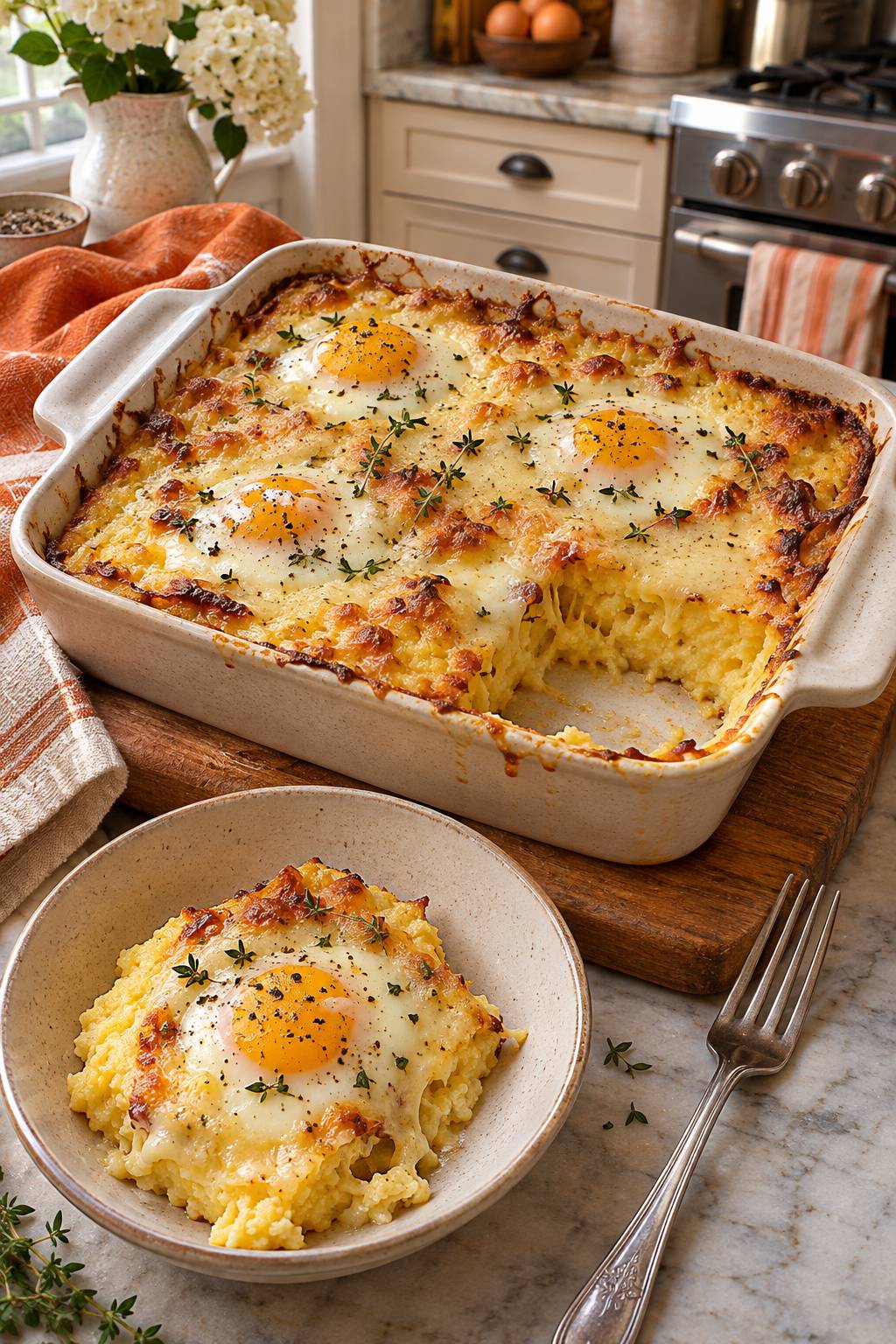
Baked Polenta Breakfast Bowls with Fontina and Eggs
Course: BreakfastCuisine: AmericanDifficulty: Easy6
servings15
minutes20
minutes390
kcal50
minutesCreamy polenta cooked in broth and milk is enriched with fontina and Parmesan, spread into a baking dish, topped with six baked eggs and thyme, then scooped into bowls. It is a warm, filling breakfast that can feed a family from one pan.
Ingredients
- For the polenta
1 tbsp unsalted butter, softened, for greasing the dish
4 cups low-sodium chicken broth
2 cups whole milk
1 1/2 cups quick-cooking polenta
2 tbsp unsalted butter
1/2 tsp kosher salt
1/4 tsp freshly ground black pepper
1/2 cup finely grated Parmesan cheese (about 1 1/2 oz)
1 cup shredded fontina cheese (about 4 oz), divided
- For the eggs and topping
6 large eggs
1 tbsp fresh thyme leaves, plus a few small sprigs for garnish
1/4 tsp freshly ground black pepper
Pinch of flaky sea salt, optional
Directions
- Adjust an oven rack to the center position and heat the oven to 400°F. Grease a 9×13-inch baking dish with the softened 1 tablespoon butter.
- In a large heavy saucepan, bring the broth, milk, salt and pepper to a boil over medium-high heat. Slowly whisk in the polenta to prevent lumps.
- Reduce the heat to medium-low and cook for 5 minutes, stirring often with a whisk or wooden spoon, until the polenta is thick, creamy and no longer grainy.
- Remove the pan from the heat. Stir in the Parmesan, 2 tablespoons butter and 3/4 cup of the fontina until melted and smooth. Reserve the remaining 1/4 cup fontina for the topping.
- Spread the polenta evenly in the prepared dish, about 1 inch thick. Let it stand for 10 minutes so it firms up slightly and holds the egg wells.
- Use the back of a spoon to press six evenly spaced shallow wells into the polenta. Crack one egg into each well. Sprinkle the eggs with the remaining 1/4 cup fontina, the thyme leaves and 1/4 teaspoon black pepper.
- Bake for 15 minutes, until the egg whites are fully set, the yolks are still soft and the cheese is melted and golden at the edges.
- Optional: for deeper browning, switch the oven to broil and cook for 1 to 2 minutes, watching closely so the cheese does not burn.
- Let the dish rest for 5 minutes. Scoop one egg and a portion of polenta into each bowl, then garnish with thyme sprigs and a pinch of flaky salt, if using.
Notes
- Use quick-cooking polenta, which cooks in about 5 minutes. Coarse-ground polenta needs 25 to 30 minutes of simmering and more liquid, so it is not a direct swap for this timing.
- Polenta spread about 1 inch thick gives a shallow well that holds each egg. Cooling for 10 minutes firms the polenta so the wells keep their shape.
- Leftover bowls can be covered and refrigerated for up to 3 days. Reheat portions in the microwave or in a skillet with a splash of milk, then add a fresh egg if you want an egg on top.