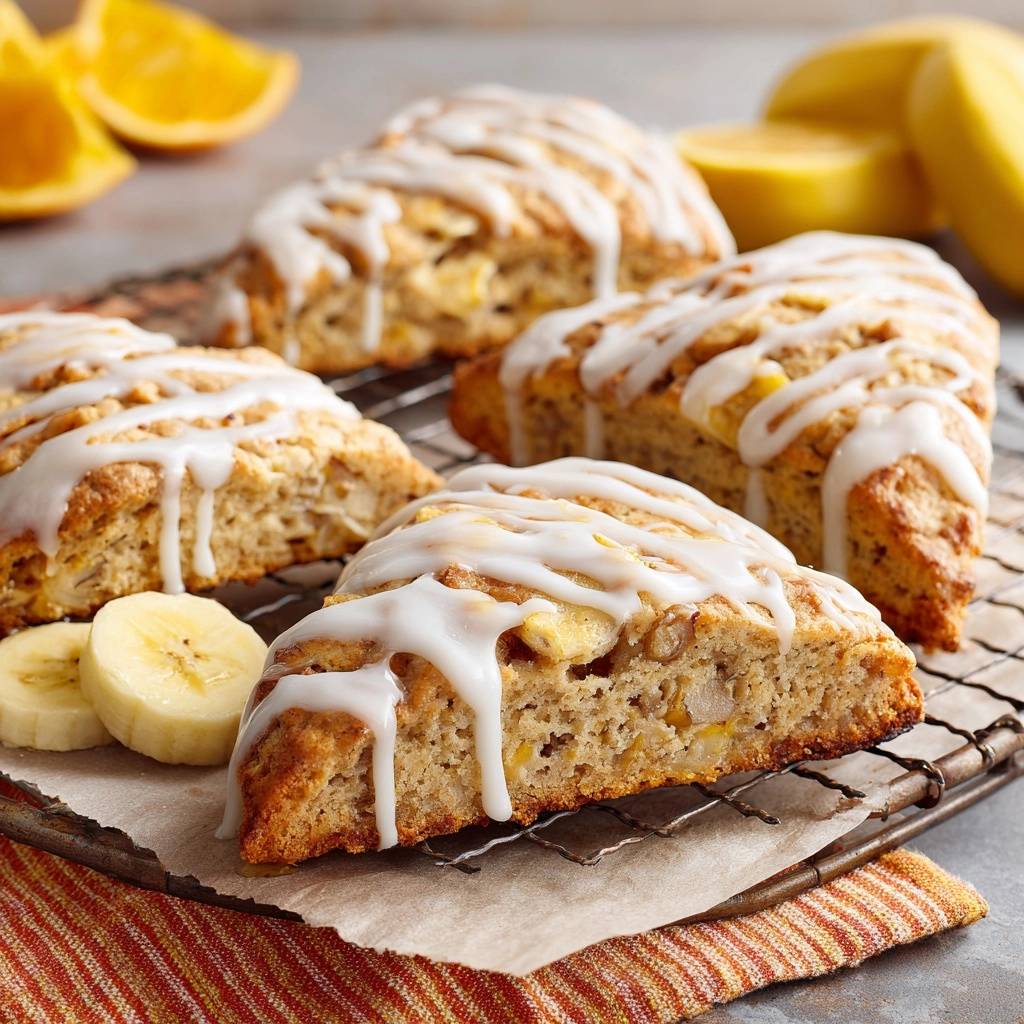
Sick of banana orange scones that turn out dense and tough like hockey pucks? This recipe changes everything. You’ll get tall, flaky layers packed with banana chunks, bright orange zest, and crunchy walnuts, all thanks to one simple trick: grating frozen butter right into the flour.
Most home bakers grab softened butter and overwork the dough, killing the flakiness. However, this method keeps everything cold for bakery-style lift. In addition, the banana orange scones burst with natural sweetness and citrus zing that make them impossible to resist.
The secret lies in those frozen butter shreds. They create steam pockets during baking, pushing the dough up high. Therefore, you avoid the flat, heavy results that plague so many attempts at banana orange scones.
Grated Frozen Butter Technique
Why Frozen Butter Prevents Density
Frozen butter doesn’t melt too soon when you mix it in. Instead, it stays in tiny shreds that release steam in the oven. This builds flaky layers, unlike softened butter that soaks into the flour and toughens everything up.
Baking chemistry backs this: fat distribution matters. Grated frozen bits coat evenly in flour, so they vaporize just right for lift. You’ll see your banana orange scones rise tall every time.
Pro tip: freeze your butter solid for at least an hour first. It grates like cheese and keeps the dough cold longer.

Box Grater Method for Uniform Shreds
Grab a box grater with large holes. Hold the frozen butter firm and grate it straight into your dry ingredients bowl. Work quickly to avoid warming it.
Then, toss the shreds gently with a fork. Coat every piece in flour so they don’t clump. Avoid smashing or rubbing; that warms the butter and ruins the steam pockets.
For even distribution, use your fingers lightly if needed. This step guarantees uniform flakiness in your banana orange scones.
Dry Ingredients for Banana Orange Scones
Flour and Leavening Balance
Start with 2 cups all-purpose flour. It gives the perfect structure without heaviness. Add 1/3 cup granulated sugar for subtle sweetness that lets banana shine.
Whisk in 1 tablespoon baking powder and 1/2 teaspoon baking soda. The soda reacts with banana’s acidity for extra rise. Finally, 1/2 teaspoon salt sharpens all flavors.
Why AP flour? Others like bread flour make scones chewy. This balance ensures tender banana orange scones.
Walnuts Add Crunch Contrast
Chop 1/2 cup walnuts roughly. They bring nutty crunch against the soft, moist crumb. Toast them lightly in a dry pan for deeper flavor if you like.
In banana orange scones, walnuts balance the fruit’s tenderness. No nuts? Swap for sunflower seeds. They keep the texture pop without overpowering.
Fold them in at the end for even bites every time.
Wet Ingredients Blend
Mashed Banana Moisture Role
Mash 1 large ripe banana to about 1/2 cup. Ripe ones offer peak sweetness and moisture for tender crumb. Spotty skins mean more banana flavor.
Save some slices for mix-in chunks. They give juicy bursts amid flaky layers in banana orange scones. Don’t overmash; lumps add character.
This natural wetness reduces the need for extra fat, keeping scones light.
Orange Zest and Juice Impact
Zest 1 fresh orange for those potent oils. It delivers bright, aromatic punch without bitterness. Use 1/4 cup fresh juice for tang.
Mix in 1/4 cup buttermilk to tenderize the dough. It adds subtle acidity. One teaspoon vanilla rounds it all out smoothly.
Fresh juice beats bottled; it tastes cleaner and zestier in banana orange scones. Save 2 tablespoons for the glaze.
Minimal Folding Dough Process
Two-Fold Method Avoids Gluten
Pour the wet blend into the dry. Add walnuts and sliced banana. Fold twice with a spatula until shaggy clumps form.
Stop there. Overmixing wakes up gluten for tough banana orange scones. Minimal handling keeps them flaky and soft.
The dough looks messy at first. That’s perfect; it means tenderness ahead.
Patting and Chilling Disk
Turn onto a floured surface. Pat gently into an 8-inch circle, 1-inch thick. No rolling pin or kneading needed.
Chill the disk on the parchment-lined sheet for 30 minutes. This firms butter for better rise and stops spreading. Patience pays off here.
Your banana orange scones will hold shape beautifully in the oven.
Precise Wedge Cutting
Preheat to 400°F. Cut the chilled disk into 8 wedges with a sharp knife. Separate them slightly on the sheet.
Bake 16 to 18 minutes. Look for golden edges and tall, risen centers. The aroma hits sweet and citrusy.
Orange Glaze Drizzle Finish
Smooth Powdered Sugar Glaze
Whisk 1 cup powdered sugar with 2 tablespoons fresh orange juice. It should flow like heavy cream. Add juice drop by drop if too thick.
Drizzle over warm scones. The glaze sets shiny and crackly. Garnish with thin orange, lemon, or banana slices for color.
This finish amps up the banana orange scones’ citrus vibe perfectly.
Cooling for Peak Texture
Cool on a wire rack 10 minutes before glazing. Warm scones soak in the glaze just right. Serve fresh for ultimate flakiness.
That first bite flakes away with banana chunks and zest. Store extras airtight at room temp for two days max.
Baking Science of Flaky Scones
Steam Pockets from Butter Shreds
Grated frozen butter melts in stages. First, it softens; then steam from the water content lifts layers high. Chilling locks this in.
Banana moisture adds humidity for more puff. Leaveners kick in CO2 bubbles too. Together, they create oven spring you can see and taste.
Result? Banana orange scones with real height and airiness, not density.
Acidity from Banana and Buttermilk
Banana’s natural acids trigger baking soda fast. This releases CO2 for lift right away. Orange juice boosts that pH balance.
Buttermilk tenderizes proteins too. It keeps the crumb soft in banana orange scones. No soggy bottoms here.
Fresh ingredients ensure the reaction pops perfectly.
Avoiding Dense Scone Pitfalls
Overmixing Leads to Toughness
Kneading builds gluten networks. They trap chewiness, not flakiness. Signs include smooth dough and heavy baked scones.
Stick to two folds for shaggy texture. This method delivers light banana orange scones every bake. Trust the mess.
Overworked dough smells bready, not buttery. Fix by starting fresh next time.
Skipping Chill Causes Spreading
Without 30 minutes cold, butter melts early. Scones spread flat instead of rising. Oven too hot speeds this up.
Always chill. Check your temp with an oven thermometer. Fixes flat ones: bake hotter next round, shorter time.
Flavor Variations for Banana Orange Scones
Citrus Zest Swaps
Try lemon zest for sharper tang. Lime adds tropical twist. Mix in dried cranberries for chew with the banana.
Chocolate chips melt gooey inside. Keep the frozen butter grate and folds. These tweaks keep banana orange scones flaky.
Each swap refreshes the classic without losing lift.
Nut and Fruit Adjustments
Pecans bring buttery depth over walnuts. Blueberries pair juicy with banana. For vegan, grate frozen coconut oil and use plant milk.
Almond milk works but add a splash lemon juice for acidity. These changes maintain tenderness in banana orange scones.
Experiment, but chill dough always.
Pairing Banana Orange Scones
Hot Beverages That Enhance
Earl Grey tea’s bergamot lifts the orange notes. Black coffee cuts through richness perfectly. Herbal chamomile soothes alongside.
These balance the scones’ sweetness. Hot steam carries citrus aromas too. Ideal for breakfast or snack.
Breakfast or Snack Sides
Pair with Greek yogurt for creamy contrast. Fresh berries add pop. Build a brunch board with cheese and fruit.
Banana orange scones shine center stage. They elevate simple spreads effortlessly.
Make-Ahead Freezing Guide
Freeze Dough Wedges Raw
Chill, cut into wedges, then freeze flat on a sheet. Bag them airtight once solid. Up to 3 months easy.
Bake straight from freezer at 400°F, add 2-3 minutes. No thaw needed. Label with date for freshness.
This means fresh-tasting banana orange scones anytime.
Glazed Scones Storage
Room temp in airtight container holds 2 days. Fridge up to 5 days; reheat at 350°F for 5 minutes to crisp.
Freeze unglazed up to 1 month. Thaw, glaze, warm. Keeps flakiness alive.
Troubleshooting Banana Orange Scones
Scones Not Rising Tall
Check leaveners: baking powder fizzes in hot water? Soda dissolves in vinegar? Old ones fail.
Butter not frozen enough melts early. Grate colder next time. Oven middle rack helps too.
Glaze Too Runny or Thick
Runny? Sift in more sugar. Thick? Thin with juice drops. Whisk smooth every time.
Gummy Texture Inside
Overripe banana adds too much wet. Use riper but not mushy. Overbaking dries outsides only.
Bake to golden, test doneness with a poke. Perfect banana orange scones stay moist, not gummy.
Common Questions on Banana Orange Scones
Can I Use Regular Milk?
Yes, swap 1/4 cup milk for buttermilk. Add 1/2 teaspoon lemon juice for tang and tenderness. It works but buttermilk tenderizes best.
How to Grate Butter Easily?
Freeze 1 hour solid. Use box grater large holes only. Dip in flour if sticks; fork toss after.
Gluten-Free Adaptation?
Use 1:1 GF flour blend. Add 1/2 teaspoon xanthan gum if not included. Slight density expected, but flaky trick helps.
Why Slice Extra Banana?
Chunks give texture bursts in flaky layers. Use firm ripe slices; they hold shape without sogginess.
Best Oven Position?
Middle rack for even heat. Convection? Drop 25°F or shave 2 minutes. Perfect rise guaranteed.

Banana Orange Scones
Course: BreakfastCuisine: AmericanDifficulty: easy8
scones20
minutes18
minutes68
MinutesAmerican
Ingredients
2 cups all-purpose flour
1/3 cup granulated sugar
1 tablespoon baking powder
1/2 teaspoon baking soda
1/2 teaspoon salt
1/2 cup unsalted butter, frozen solid and grated
1 large ripe banana, mashed (about 1/2 cup)
Zest of 1 orange
1/4 cup fresh orange juice
1/4 cup buttermilk (or milk)
1 teaspoon vanilla extract
1/2 cup chopped walnuts
1 banana, sliced for mix-in
Glaze: 1 cup powdered sugar
2 tablespoons fresh orange juice
Optional garnishes: orange slices, lemon slices, banana slices
Directions
- Preheat oven to 400 degrees F. Line a baking sheet with parchment paper.
- In a large bowl, whisk flour, sugar, baking powder, baking soda, and salt.
- Grate the frozen butter directly into the dry mix using a box grater’s large holes. This is the non-dense scone trick: frozen butter shreds create steam pockets for flaky lift, while grating keeps pieces cold and uniform. Toss gently with a fork to coat every shred in flour, avoiding any smashing.
- In a separate bowl, mix mashed banana, orange zest, orange juice, buttermilk, and vanilla.
- Pour wet mix into dry. Add walnuts and sliced banana chunks. Fold twice with a spatula just until dough holds together in shaggy clumps. Stop here: overmixing develops gluten for density; minimal handling locks in tenderness.
- Turn dough onto a floured surface. Gently pat into an 8-inch circle, about 1-inch thick. Do not knead.
- Chill dough disk on the baking sheet for 30 minutes. This firms up butter for max rise and prevents spreading.
- Cut into 8 wedges. Separate slightly. Bake 16 to 18 minutes until golden and risen tall.
- Cool on a wire rack 10 minutes. Whisk glaze ingredients until smooth; drizzle over warm scones. Garnish with orange, lemon, and banana slices. Serve fresh for peak flakiness.
Notes
- Key trick: Grate frozen butter for steam pockets and flaky lift. Fold dough only twice to avoid toughness. Chill before baking for maximum rise.