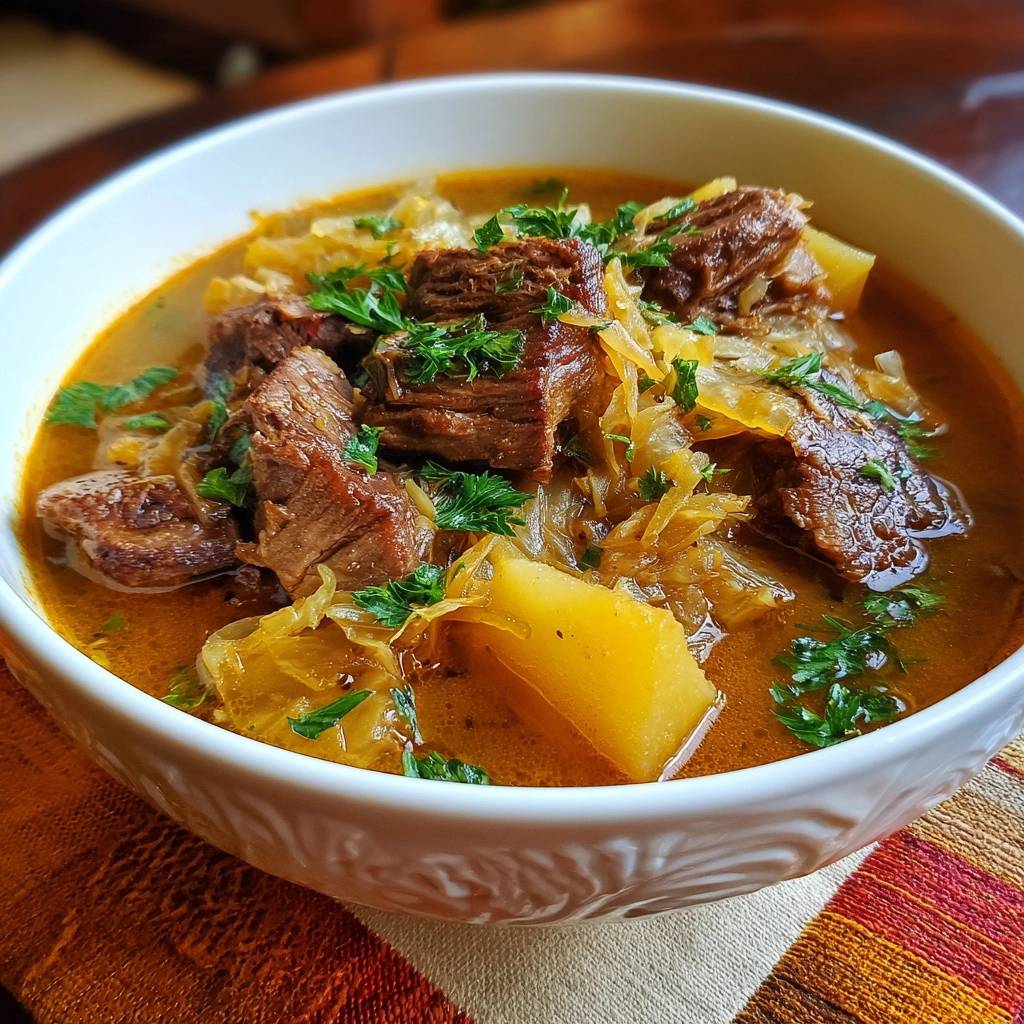
Why Beef Sauerkraut Stew Transforms Dinners
Tired of chewy beef that turns your Beef Sauerkraut Stew into a jaw workout? Most stews demand all-day simmering, but this version nails fall-apart tender meat in just 2 hours. You get that rich, comforting depth without babysitting the pot all afternoon.
Here’s why it works so well. The high-heat sear creates a crust that locks in juices, while sauerkraut’s acidity tenderizes the beef naturally. No more tough bites ruining the meal. In addition, this method beats traditional long cooks by using everyday ingredients for pro results.
The real secret? Pat the beef dry before searing. That step ensures a crisp crust instead of steaming. This Beef Sauerkraut Stew serves 6, with 20 minutes prep and 2 hours cook time. You’ll crave it weekly.
Core Ingredients for Beef Sauerkraut Stew
Beef chuck forms the heart of your Beef Sauerkraut Stew. Its marbling melts into the broth during simmering, adding richness. Therefore, choose grass-fed cuts for deeper flavor that elevates the whole dish.
Sauerkraut brings tenderizing power plus a tangy edge. Draining and rinsing it balances the acidity, so it enhances without overpowering. Freshly fermented kraut outperforms canned for brighter taste and better texture.
Potatoes add heartiness and natural thickening from their starch. Use waxy varieties like Yukon Gold; they hold shape better than russets. In addition, tomato paste delivers umami depth when bloomed, while beef broth builds the savory base. Opt for low-sodium to control salt.
Selecting Beef Chuck for Stew Tenderness
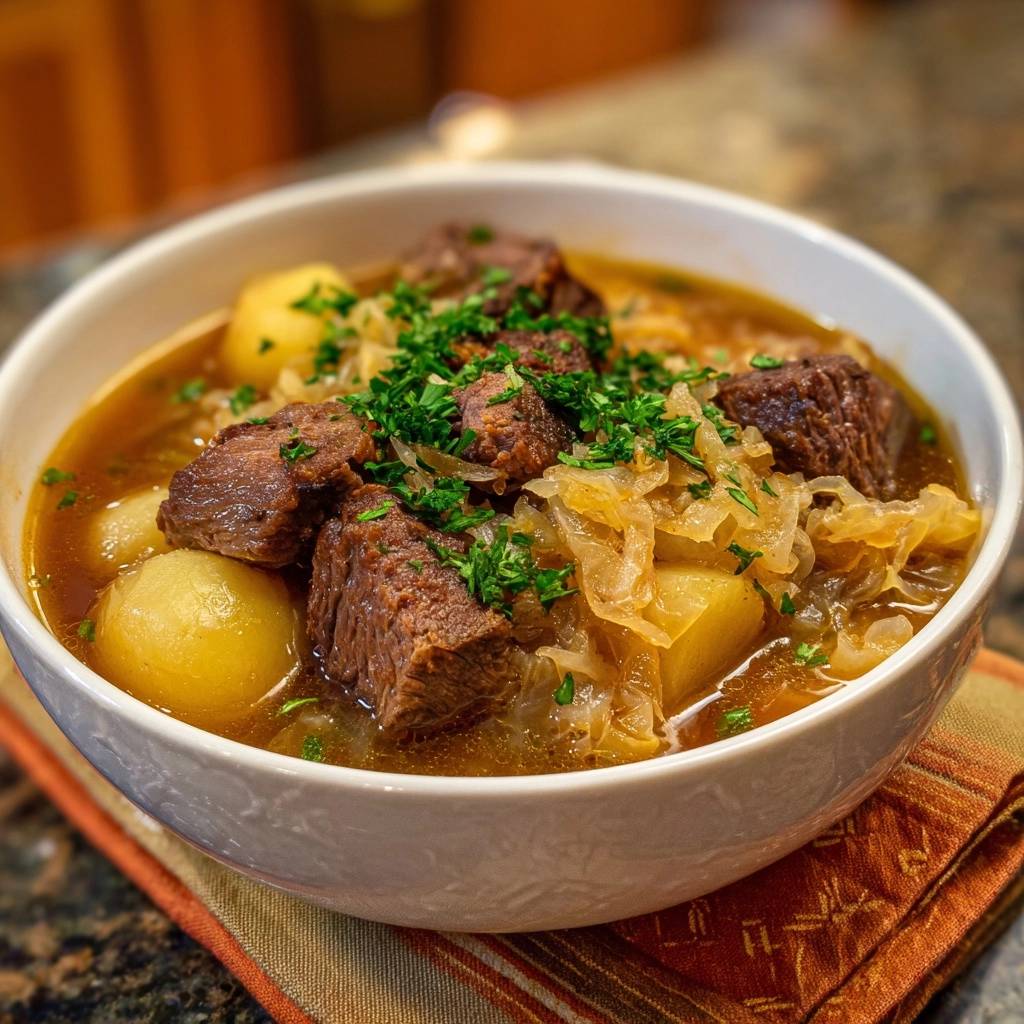
Beef chuck shines in Beef Sauerkraut Stew thanks to its fat and connective tissue. These break down into silky gelatin, creating tender meat. Cut into 1.5-inch cubes so they cook evenly without drying out.
Sauerkraut’s Role in Beef Stew Tenderizing
Sauerkraut’s lactic acid denatures tough collagen in the beef. Drain it well and rinse lightly to tame the tang. Therefore, it tenderizes faster than vinegar, giving your stew that melt-in-your-mouth quality.
Potatoes and Broth Building Blocks
Potatoes release starch as they simmer, thickening the Beef Sauerkraut Stew naturally. Choose firm ones to avoid mush. Meanwhile, good broth reduces for intense flavor, and tomato paste caramelizes for sweet umami.
Science of Tender Beef in Sauerkraut Stew
Searing triggers the Maillard reaction, browning sugars and proteins for a flavorful crust. This seals juices inside the beef, preventing dryness. Sauerkraut’s low pH then breaks down collagen faster than neutral broths, mimicking a slow braise in less time.
Unlike wine marinades, sauerkraut works during cooking, not just prep. Therefore, you skip tough meat and get fork-tender results. This beats pressure cookers because the gentle simmer builds layered flavors without mushy textures.
Maillard Browning Locks Stew Juices
High heat sparks Maillard browning, forming a barrier on beef cubes. Sear in batches to avoid steaming; overcrowding boils instead. That crust traps moisture for juicy Beef Sauerkraut Stew every time.
Sauerkraut Acidity Breaks Down Beef Collagen
Sauerkraut drops the stew’s pH, softening collagen over 2 hours. This creates gelatinous tenderness without overcooking. Simmer gently for the sweet spot where beef shreds easily.
Equipment Essentials for Beef Sauerkraut Stew
A Dutch oven excels for Beef Sauerkraut Stew with its even heat and tight lid. It retains moisture during simmering. If you lack one, use a heavy pot with a good seal.
Vegetable oil’s high smoke point handles searing without burning. Grab tongs for flipping beef and a fork for doneness checks. Therefore, you avoid special gear while nailing pro results. Skip slow cookers here; the sear needs stovetop power.
Step-by-Step: Searing Beef Sauerkraut Stew Base
Start by patting beef dry; wet meat steams instead of browning. Heat oil until shimmering, then sear cubes in batches for 4-5 minutes. Turn for deep color on all sides, and rest on a plate.
Reduce heat, stir in tomato paste, and cook until it darkens. Pour in broth and scrape the fond; those bits pack umami. This builds a robust base for your Beef Sauerkraut Stew.
High-Heat Sear for Juicy Beef Cubes
Sear over medium-high, turning every minute for even crust. Batches prevent steaming gray meat. Juices stay locked in, so your beef stays succulent.
Building Broth with Tomato Paste Depth
Cook paste 1 minute till brick-red; it sweetens the broth. Deglaze thoroughly for fond flavor. This step amps up the stew’s savory punch.
Step-by-Step: Simmering Beef Sauerkraut Stew Perfection
Return beef to the pot with sauerkraut, potatoes, salt, and pepper. Bring to a simmer, then cover and drop to low. Stir every 30 minutes for even cooking.
Simmer 1 hour 45 minutes to 2 hours until beef shreds with a fork. Taste for salt, garnish with parsley for freshness. Ladle hot and enjoy the tender payoff.
Layering Sauerkraut and Potatoes Evenly
Stir sauerkraut and potatoes throughout the liquid. Bring to simmer, then lower heat. Even distribution ensures balanced tenderness.
Achieving Fork-Tender Beef Finish
Check at 1 hour 45 minutes; beef should pull apart easily. Stir occasionally to prevent sticking. Fresh parsley adds bright contrast at the end.
Avoiding Pitfalls in Beef Sauerkraut Stew
Overcrowding the sear turns beef gray and boiled. Work in batches for that crust. Insufficient simmer leaves meat tough, so hit 2 hours minimum.
Undrained sauerkraut sours the dish; rinse lightly. Add salt late to avoid toughening potatoes. These fixes keep your Beef Sauerkraut Stew perfect.
Fixing Overcrowded Pan Stewing
For 2 pounds beef, do 3-4 batches. Space cubes so heat circulates. This yields browned, juicy results instead of steamed meat.
Balancing Sauerkraut Tang Levels
Rinse kraut under cool water till mild. Taste midway and adjust. A pinch of sugar tames excess if needed.
Make-Ahead Guide for Beef Sauerkraut Stew
Store Beef Sauerkraut Stew in the fridge up to 4 days; flavors deepen overnight. Freeze portions in bags for 3 months. Thaw in fridge before reheating.
Reheat gently on stovetop with a splash of broth to restore tenderness. Therefore, it’s ideal for meal prep. Batch cook on weekends for easy weeknights.
Flavor Twists on Beef Sauerkraut Stew
Add carrots or onions early for sweetness in your Beef Sauerkraut Stew. Sprinkle caraway seeds with kraut for earthy synergy. Smoked paprika brings subtle heat.
Swap potatoes for turnips if low-carb. These tweaks keep the tender core while varying taste. Experiment confidently; the base forgives.
Pairing Sides with Beef Sauerkraut Stew
Sop up broth with crusty bread. A crisp green salad cuts the richness perfectly. Roasted root veggies echo the stew’s heartiness.
Herbal tea warms alongside. These sides make your Beef Sauerkraut Stew a full, satisfying meal.
Beef Sauerkraut Stew Troubleshooting Queries
Why Is My Beef Sauerkraut Stew Beef Chewy?
Chewy beef means skipped sear or short simmer. Always brown in batches first, then cook full 2 hours. Sauerkraut acidity needs time to tenderize fully.
Can I Use Slow Cooker for Beef Sauerkraut Stew?
Yes, sear beef stovetop first, then slow cook on low 6-8 hours. Add sauerkraut and potatoes after 4 hours to avoid mush. It works but stovetop builds better crust.
How Long Does Beef Sauerkraut Stew Last Frozen?
Freeze Beef Sauerkraut Stew up to 3 months in airtight bags. Thaw overnight in fridge, then reheat gently. Potatoes hold up well if not overcooked initially.
Substitute Potatoes in Beef Sauerkraut Stew?
Use sweet potatoes or turnips; they hold shape and add subtle sweetness. Cut same size for even cooking. Avoid watery veggies like zucchini that dilute broth.
Make Beef Sauerkraut Stew Less Tangy?
Rinse sauerkraut more thoroughly and drain well. Add a pinch of sugar or extra tomato paste during simmer. Taste and balance gradually for perfect tang.
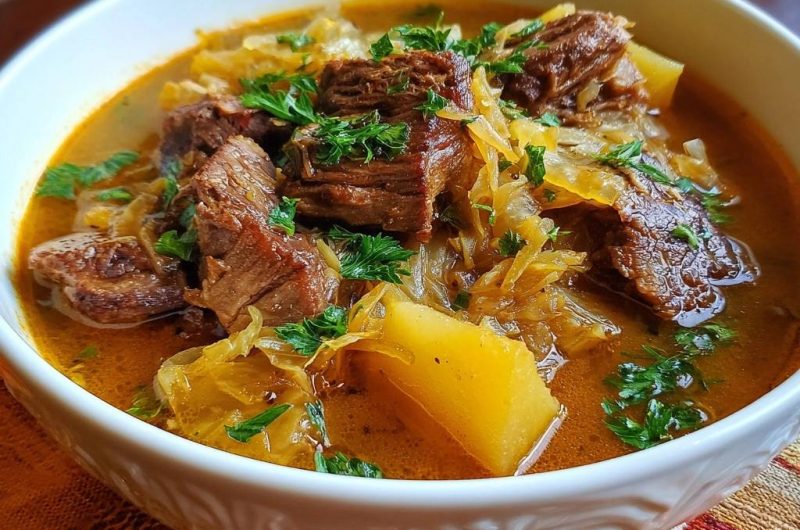
Beef Sauerkraut Stew
Course: Main CourseCuisine: AmericanDifficulty: easy6
servings20
minutes2
hours120
Minutes450
kcalAmerican
Ingredients
2 pounds beef chuck, cut into 1.5-inch cubes
1 pound sauerkraut, drained and lightly rinsed
4 medium potatoes, peeled and cut into 1-inch cubes
4 cups beef broth
2 tablespoons tomato paste
2 tablespoons vegetable oil
1 teaspoon salt
1/2 teaspoon black pepper
1/4 cup chopped fresh parsley, for garnish
Directions
- high-heat browning locks in juices while sauerkraut’s natural acidity tenderizes the meat to fall-apart perfection in just 2 hours, no special equipment needed.
- Ingredients:
- pounds beef chuck, cut into 1.5-inch cubes
- pound sauerkraut, drained and lightly rinsed
- medium potatoes, peeled and cut into 1-inch cubes
- cups beef broth
- tablespoons tomato paste
- tablespoons vegetable oil
- teaspoon salt
- /2 teaspoon black pepper
- /4 cup chopped fresh parsley, for garnish
- Directions:
- Pat beef cubes dry with paper towels. Heat oil in a large Dutch oven or heavy pot over medium-high heat until shimmering.
- Sear beef in batches (dont overcrowd) for 4 to 5 minutes per batch, turning to brown all sides deeply. This crucial high-heat sear creates a flavorful crust that traps juices inside, preventing chewiness. Transfer seared beef to a plate.
- Reduce heat to medium. Stir in tomato paste and cook 1 minute until it darkens slightly. Add beef broth, scraping up browned bits from the pot bottom for max flavor.
- Return beef and any juices to the pot. Stir in sauerkraut, potatoes, salt, and pepper. Bring to a simmer.
- Cover tightly and reduce heat to low. Simmer gently for 1 hour 45 minutes to 2 hours, stirring occasionally, until beef shreds easily with a fork. The sauerkraut’s mild acidity works like magic here, breaking down tough connective tissues without drying out the meat.
- Taste and adjust salt if needed. Ladle into bowls, garnish with parsley, and serve hot. Stores in fridge up to 4 days.
Notes
- Sear beef in batches to avoid overcrowding for best browning. Sauerkraut’s acidity tenderizes meat naturally. Stores in fridge up to 4 days.