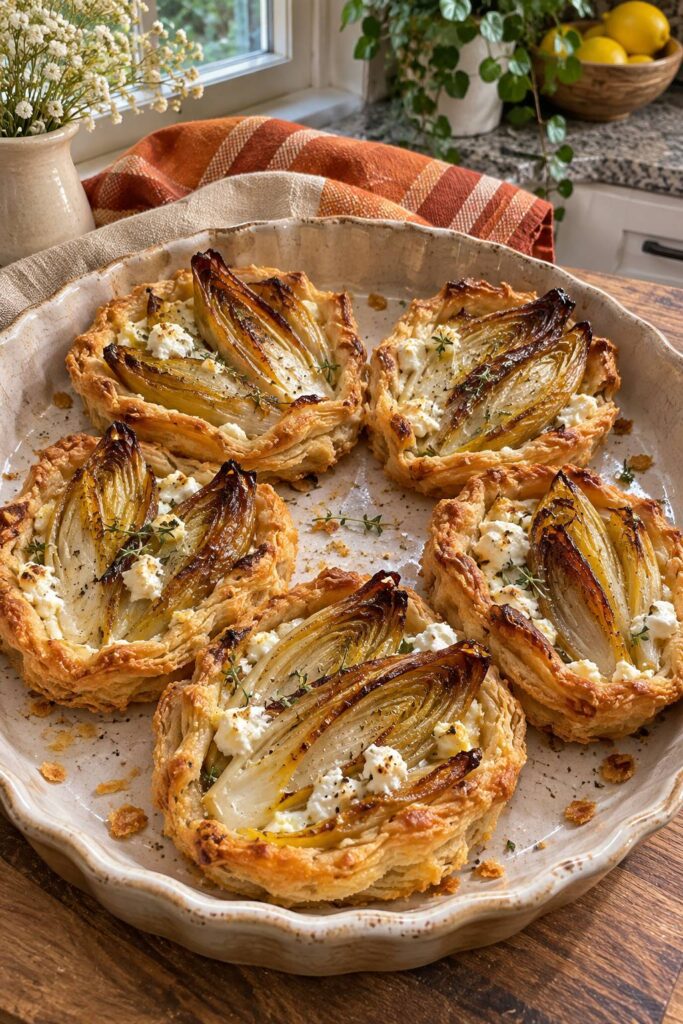
These caramelized endive tartlets bring together crisp puff pastry, deeply browned Belgian endive and a creamy cottage cheese filling. Goat cheese adds tang, while lemon zest and fresh thyme brighten the savory filling. You get a contrast of flaky edges, tender vegetables and soft cheese in a main course that feels special without needing elaborate decoration.
Cottage cheese takes a central role here, blending into the filling rather than remaining visibly curdy. The details that deserve your attention are moisture control and pastry handling: well-blotted endive, drained cottage cheese and cool pastry help you build tartlets with distinct textures.
Give the Endive Color Without Losing Its Shape
Belgian endive has a pleasantly bitter character that works well with tangy goat cheese and buttery pastry. Browning its cut surfaces gives the tartlets their caramelized flavor. Let the endive sit undisturbed against the skillet so those surfaces can develop deep golden color; moving it around makes that contact less consistent.
Keep the cores intact when trimming so the leaves stay together. The covered cooking with water brings the endive to just tender, but it should still hold its shape. Arrange the browned faces upward so their color remains visible above the filling.
Keep Excess Moisture Out of the Filling
The filling should be creamy without carrying pooled liquid onto the pastry. Drain watery cottage cheese before measuring it, following the recipe card, and gently blot the cooked endive after it has cooled. These details matter because surface moisture can soften the pastry directly beneath the vegetables.
Blending the cottage cheese with goat cheese, egg and lemon zest creates a mostly smooth base. The egg helps the filling set as it bakes, while goat cheese contributes tang throughout. Stirring in thyme after blending distributes the leaves through the creamy mixture.
Protect the Puff Pastry Border
Thaw the puff pastry according to its package directions and keep it refrigerated until you are ready to roll. Cool pastry is easier to handle neatly. A lightly floured surface helps prevent sticking, while gentle handling preserves the stacked bases as you assemble them.
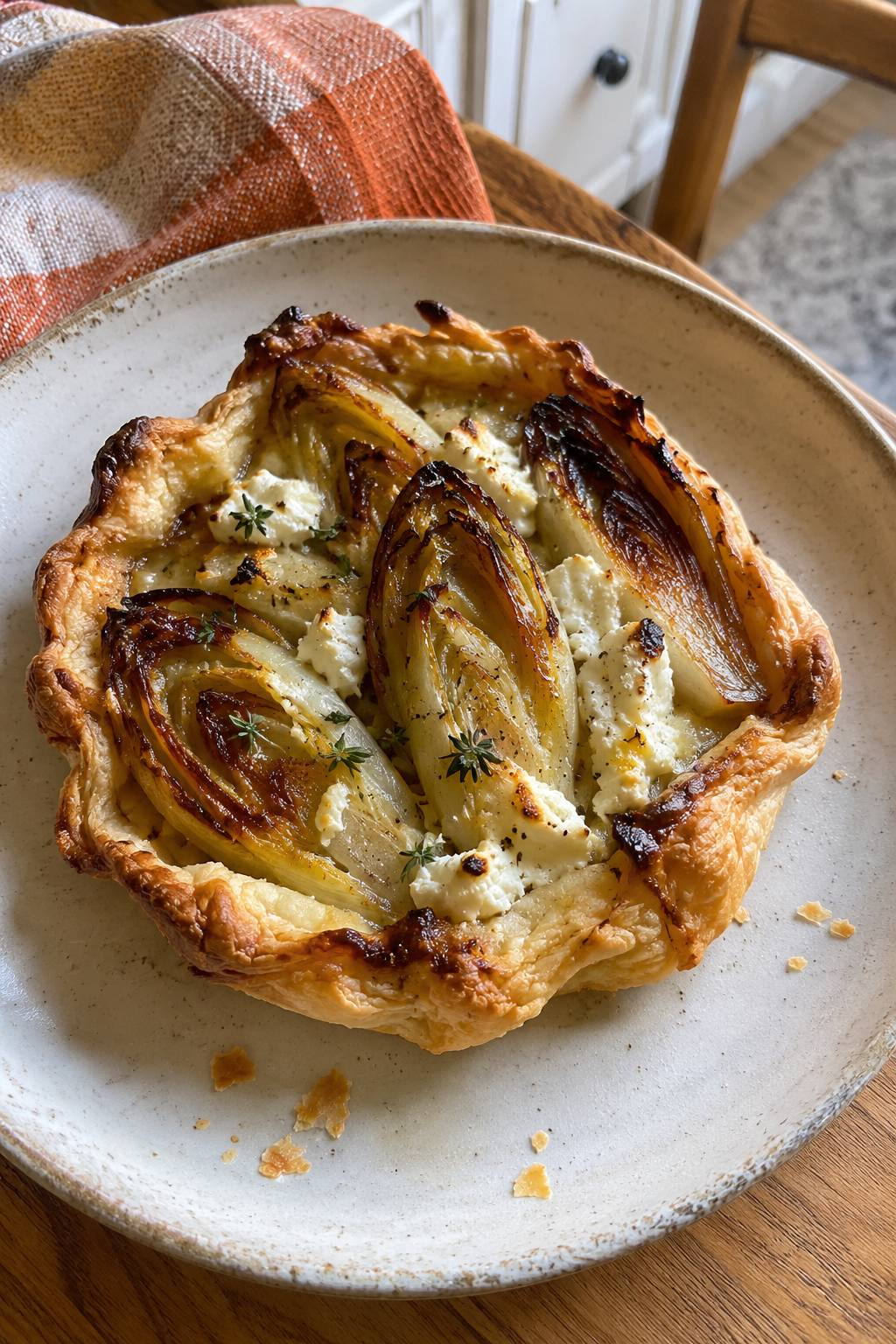
The scored border gives the filling a defined space and leaves the edges free to puff. Score lightly without cutting through, and keep the cheese mixture inside that boundary. Pricking the centers helps limit puffing beneath the filling. Brush the exposed borders lightly with egg wash for a golden finish.
Look Beyond the Golden Edges
The pastry border is only part of the doneness picture. You also want browned bottoms and a set filling, along with deeply golden, puffed edges. Follow the recipe card for baking guidance, including switching rack positions and rotating the baking sheets so the tartlets brown evenly.
Goat cheese crumbled around the endive adds pockets of tang against the creamy base. After the rest specified on the recipe card, finish with the remaining thyme and serve warm, when you can appreciate the crisp pastry alongside the tender endive.
Frequently Asked Questions
Why should I leave the endive cores intact?
The cores hold the leaves together through skillet cooking and assembly. Trim away only the dry ends so you can transfer the endive without it falling apart. Keeping its shape also makes it easier to position the browned surfaces facing up.
Does the cottage cheese filling need to be completely smooth?
No. The recipe calls for a mostly smooth filling, so a little texture is fine. Focus on draining pooled liquid before blending. That gives you a creamy base without adding excess moisture beneath the endive and around the pastry center.
How can I tell whether the tartlets are done?
Look for deeply golden, puffed pastry, browned bottoms and filling that has set. A colored border alone does not tell you whether the base is ready. Use those visual cues alongside the baking guidance and any additional baking specified on the recipe card.
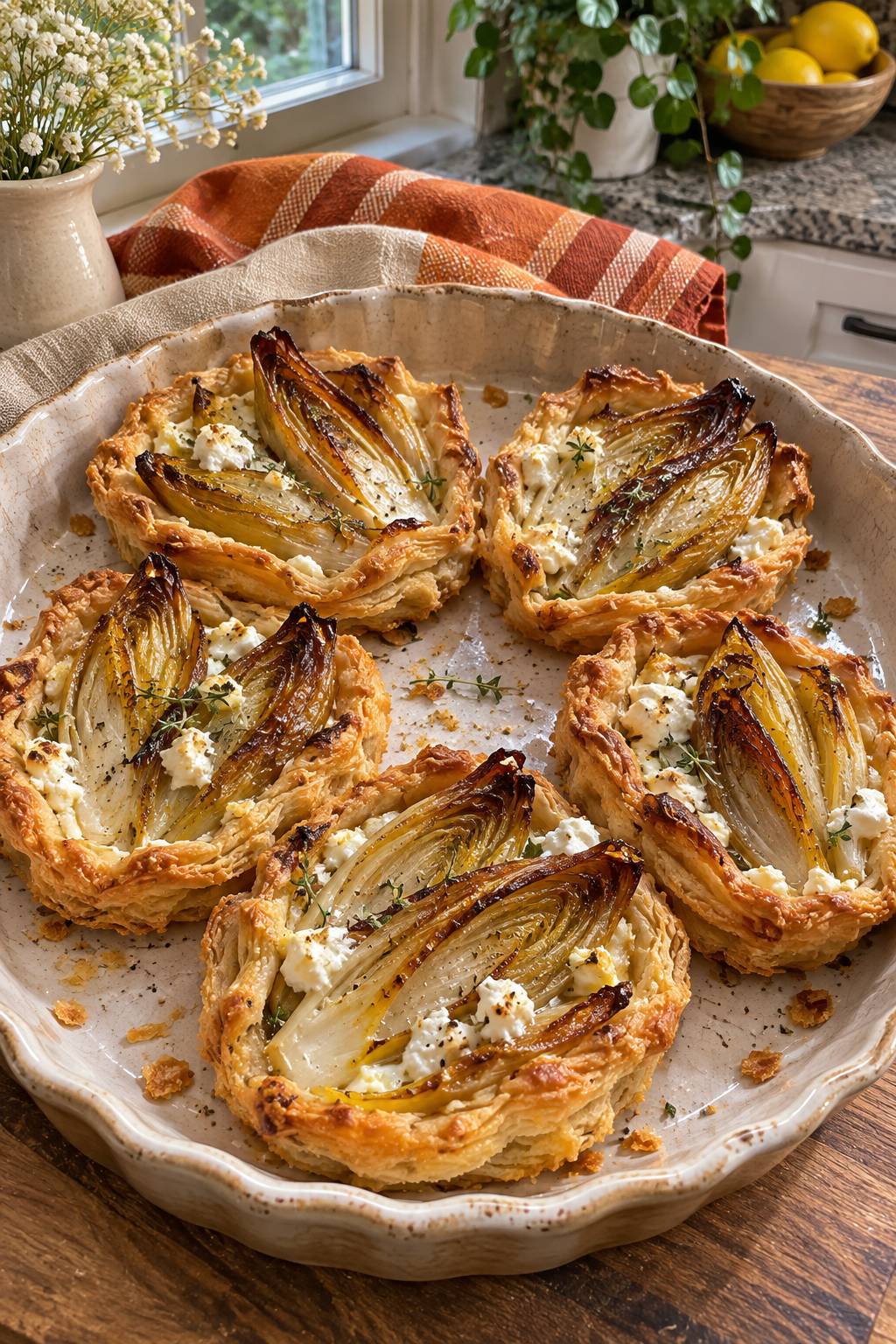
Caramelized Endive Tartlets with Goat Cheese
Course: Main CourseCuisine: AmericanDifficulty: Easy6
servings25
minutes45
minutes560
kcal1
hour20
minutesGolden puff pastry holds caramelized Belgian endive, a creamy cottage cheese filling and tangy goat cheese. Fresh thyme finishes the tartlets, which bake until the pastry is crisp and the endive edges are deeply browned.
Ingredients
- Caramelized endive
6 small Belgian endives, about 1 1/2 lb total
2 tbsp unsalted butter, divided
1/2 tsp kosher salt, divided
1/4 tsp black pepper
1/4 cup water, divided
2 tsp fresh thyme leaves, divided
- Pastry and filling
17.3 oz frozen puff pastry, 2 sheets, thawed according to package directions
1 tbsp all-purpose flour, for rolling
1 1/2 cups low-fat cottage cheese, drained of any pooled liquid
8 oz goat cheese, divided
2 large eggs, divided
1 tsp finely grated lemon zest
1/4 tsp kosher salt
1/4 tsp black pepper
1 tbsp water
Directions
- Prepare
- Heat the oven to 400°F. Line two large baking sheets with parchment paper. Trim just the dry ends from the endives, leaving the cores intact to hold the leaves together. Cut each endive lengthwise in half and pat dry.
- Caramelize the endive
- Melt 1 tbsp butter in a large skillet over medium heat. Add half the endive halves, cut sides down, and season with half the salt and pepper listed for the endive. Cook undisturbed for 6 minutes, until the cut surfaces are deep golden brown. Add 2 tbsp water around the endive, cover and cook for 4 minutes, until just tender. Transfer to a plate, cut sides up. Repeat with the remaining butter, endive, seasoning and 2 tbsp water. Let the endive cool for 5 minutes, then gently blot away surface moisture.
- Make the filling
- Blend the cottage cheese, 4 oz goat cheese, 1 egg, lemon zest, salt and pepper until mostly smooth. Stir in 1 tsp thyme leaves. In a small bowl, beat the remaining egg with 1 tbsp water for the egg wash.
- Shape the tartlets
- On a lightly floured surface, roll each pastry sheet into a 10×15-inch rectangle. Cut each into six 5-inch squares, making 12 squares total. Stack the squares in pairs to make 6 tartlet bases, brushing a thin layer of egg wash between each pair. Place 3 bases on each prepared baking sheet. Lightly score a 1/2-inch border around each base without cutting through, then prick the centers with a fork.
- Fill
- Divide the cottage cheese mixture among the pastry centers, keeping it inside the scored borders. Arrange 2 endive halves on each tartlet, browned sides up. Crumble the remaining 4 oz goat cheese around the endive. Brush the exposed pastry borders lightly with egg wash.
- Bake
- Bake for 25 minutes, switching the baking sheets between the upper and lower racks and rotating them front to back halfway through. The pastry should be deeply golden and puffed, the bottoms browned and the filling set. If necessary, bake for an additional 3 to 5 minutes.
- Serve
- Let the tartlets rest for 5 minutes. Sprinkle with the remaining 1 tsp thyme leaves and serve warm.
Notes
- Thaw the pastry before starting the timed preparation, following the package directions, and keep it refrigerated until you are ready to roll it.
- Blotting the cooked endive removes moisture that could soften the pastry beneath the filling.
- If your cottage cheese is particularly watery, drain it in a fine-mesh strainer before measuring.
- Refrigerate leftovers in a covered container for up to 3 days. Reheat on a baking sheet at 350°F until hot and crisp.