
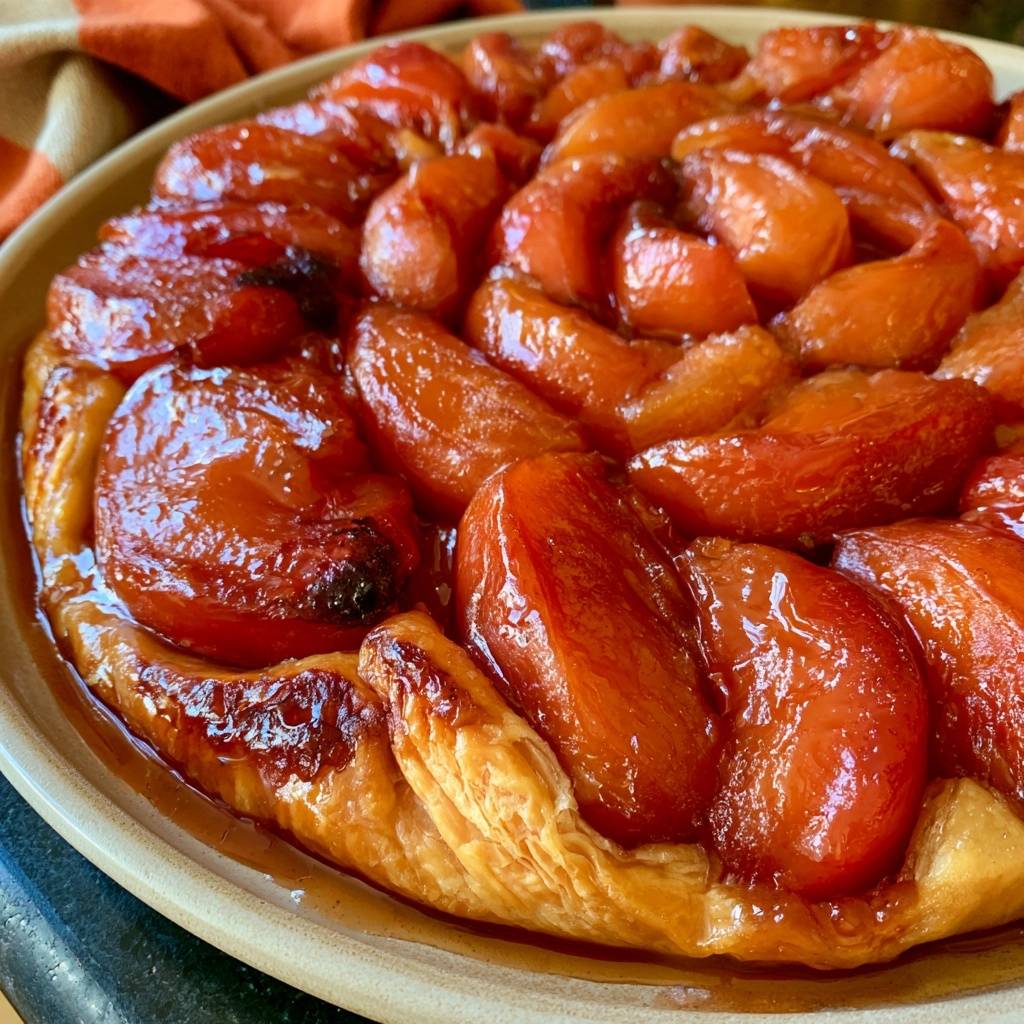
Caramelized Quince Tarte Tatin turns quince wedges and puff pastry into a French upside-down tart with tender fruit, glossy caramel, and a crisp, golden top. The fruit cooks beneath the pastry, then the tart is inverted so the caramel-coated quince becomes the centerpiece.
Plain 2% Greek yogurt adds a cool, tangy contrast to the warm, buttery caramel. Its protein-rich character also suits a dessert table where you want something alongside the tart that feels fresh and satisfying.
Prepare the quince for a tender center
Quince can be quite firm, so simmering the peeled, cored wedges before baking gives them a head start. Lemon juice brings a bright note to the fruit, while water helps soften it gently. The goal is a wedge that yields to a knife with slight resistance; it should not be left hard in the hope that the oven will do all the work.
Quince firmness varies. If a wedge remains hard after the recipe-card simmer, keep cooking until it reaches that slight resistance. Then drain the fruit well and pat it dry. Excess moisture can loosen the caramel and make it harder for the pastry to bake up crisp.
Build amber caramel carefully
An even layer of granulated sugar helps it melt consistently in the oven-safe skillet. Swirl the pan occasionally as the sugar cooks, and watch for an amber color. Once it reaches that point, take the skillet off the heat before whisking in softened unsalted butter. The caramel is hot, so add the butter carefully and whisk until the mixture is smooth.
Arrange the quince snugly in the caramel, then turn the wedges gently as they cook so their surfaces become coated. Keep the handling gentle: intact wedges make a more appealing top when the tart is inverted. Avoid letting the caramel darken too far; amber is the cue to remove the sugar from the heat.
Keep the pastry crisp and golden
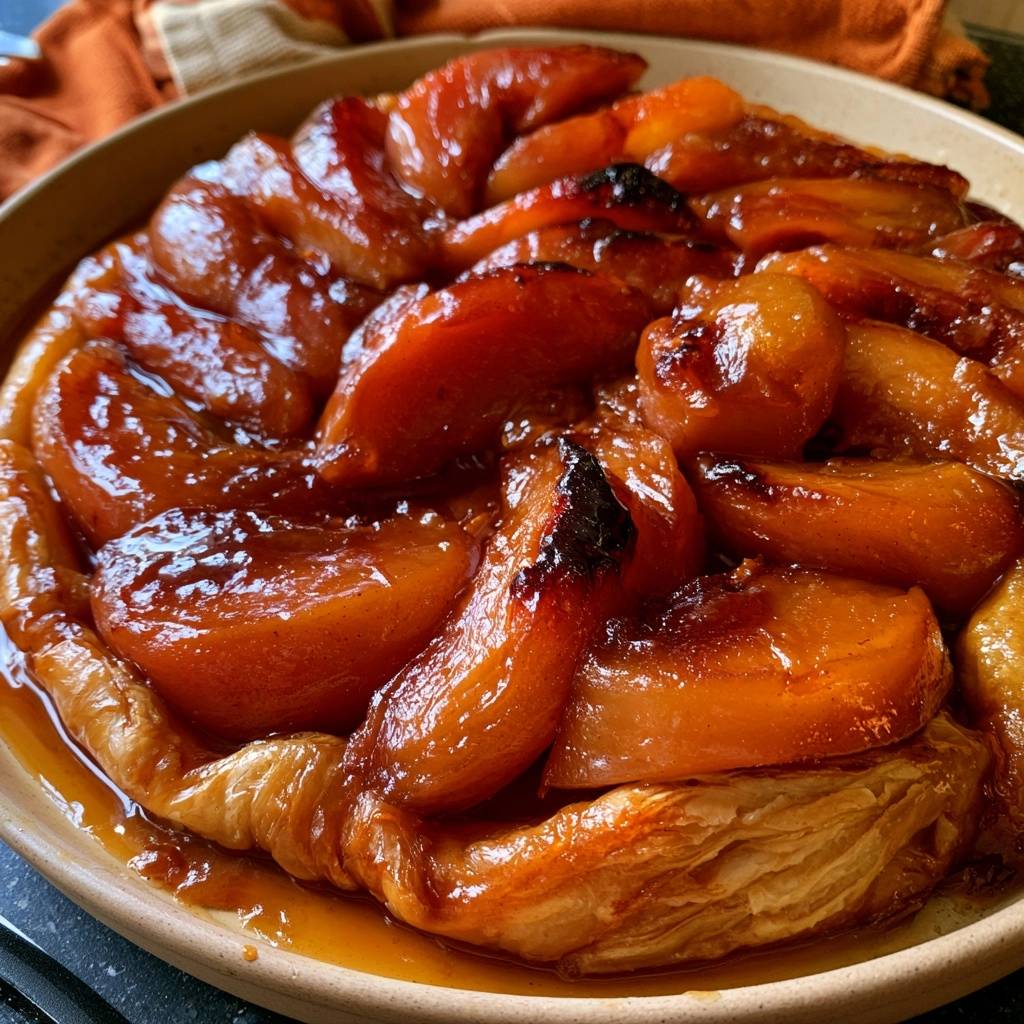
The puff pastry should be thawed but still cold when it goes over the fruit. Lay it across the quince, tuck the edges down around the wedges, and cut a few small slits in the center so steam can escape. Working with cold pastry helps it hold its shape as you cover the filling.
Set the skillet on a rimmed baking sheet before baking. This catches any caramel that bubbles over and keeps the oven cleaner. Bake until the pastry is puffed and deep golden; a pale top can look less crisp and finished. The baking sheet belongs on the middle rack, as directed on the recipe card.
Invert after the tart rests
Give the tart its specified rest in the skillet before turning it out. The pause lets the caramel settle while it is still warm enough to release. Run a thin knife around the edge, cover the skillet with a large serving plate, and carefully invert. Spoon any caramel remaining in the pan over the fruit.
Serve the tart warm with plain Greek yogurt. The yogurt’s mild tang balances the concentrated sweetness of caramel and quince, while its creamy texture contrasts with the crisp pastry. Keep the accompaniment simple so the fruit and buttery crust remain the focus.
Frequently Asked Questions
How do I know when the quince is ready to bake?
After simmering, a knife should enter a wedge with slight resistance. If the quince still feels hard, continue simmering until it reaches that texture. Drain and pat the wedges dry before arranging them in the caramel.
Why should the puff pastry stay cold?
Cold, thawed puff pastry is easier to handle over the fruit and helps it keep its shape while you tuck the edges around the quince. Cut small slits in the center to let steam escape as it bakes.
How do I help the tart release from the skillet?
Let it rest in the skillet for the time listed on the recipe card, then run a thin knife around the edge. Place a large serving plate over the skillet and invert carefully. Spoon any caramel left behind over the fruit.
Caramelized Quince Tarte Tatin
Course: DessertCuisine: FrenchDifficulty: Easy6
servings25
minutes1
hour480
kcal1
hour35
minutesTender quince wedges caramelize beneath a crisp puff pastry crust in this classic upside-down tart. Serve warm with plain Greek yogurt for a tangy, protein-rich accompaniment.
Ingredients
- Quince
2 lb quince, peeled, cored, and cut into 1/2-inch wedges
4 cups water
1 tbsp lemon juice
- Caramel and pastry
3/4 cup granulated sugar
6 tbsp unsalted butter, softened
1 sheet puff pastry, about 8 oz, thawed but kept cold
- For serving
1 cup plain 2% Greek yogurt
Directions
- Heat the oven to 400°F. Set a rimmed baking sheet on the middle rack. Add the quince, water, and lemon juice to a saucepan. Bring to a gentle simmer and cook for 25 minutes, until a knife enters a wedge with slight resistance. Drain well and pat the wedges dry.
- Spread the sugar evenly in a 9-inch oven-safe skillet. Cook over medium heat for about 7 minutes, swirling the skillet occasionally, until the sugar melts and turns amber. Remove the skillet from the heat and carefully whisk in the softened butter until smooth.
- Arrange the quince wedges snugly in the caramel. Return the skillet to medium heat and cook for 3 minutes, turning the wedges gently to coat them.
- Lay the puff pastry over the quince, tuck the edges down around the fruit, and cut a few small slits in the center for steam. Set the skillet on the baking sheet and bake for 25 minutes, until the pastry is puffed and deep golden.
- Let the tart rest in the skillet for 10 minutes. Run a thin knife around the edge, place a large serving plate over the skillet, and carefully invert the tart. Spoon any caramel left in the pan over the fruit. Serve warm with Greek yogurt.
Notes
- Quince firmness varies. If a wedge is still hard after 25 minutes of simmering, continue cooking until a knife enters with slight resistance so the fruit finishes tender in the oven.