Why Cast Iron Elevates Creamy Mac and Cheese
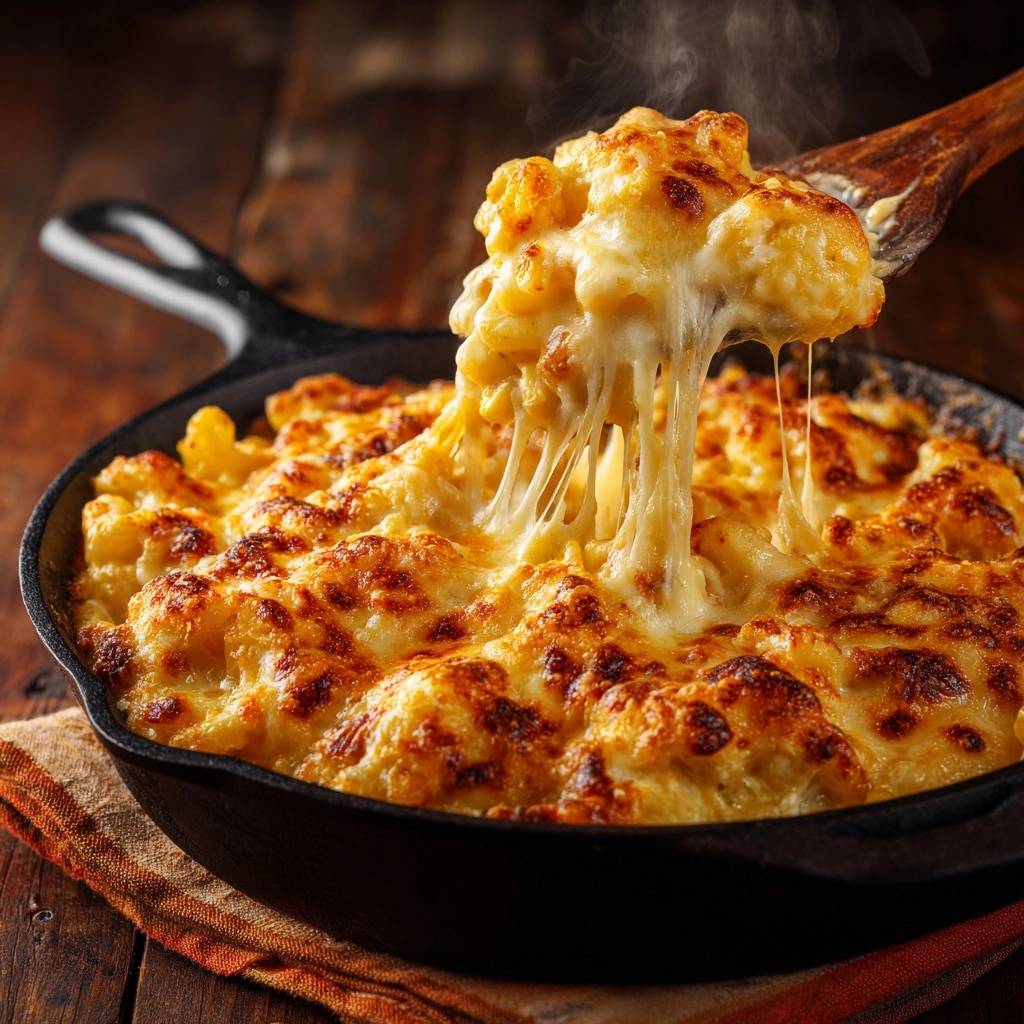
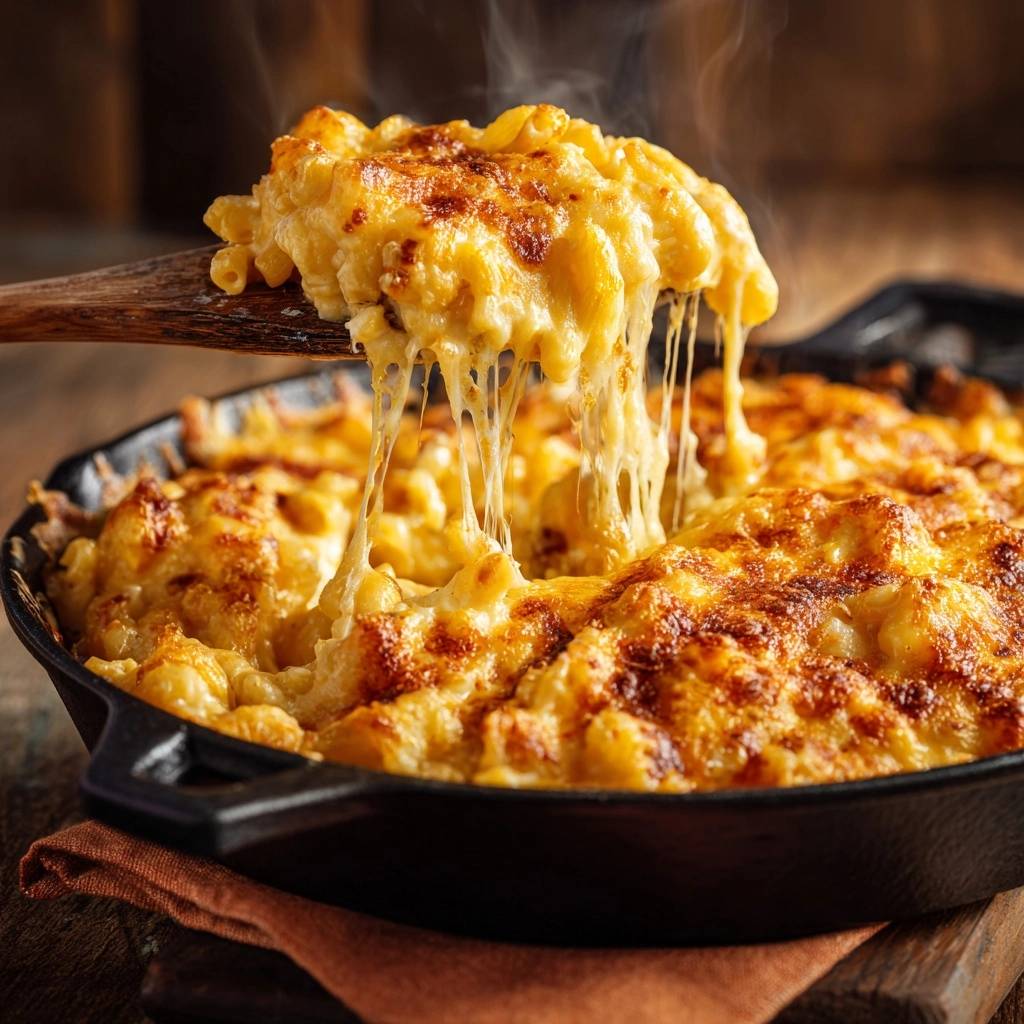
Picture this: that first bite of Cast Iron Skillet Mac and Cheese where the edges crunch golden and the center pulls apart in stretchy, silky strands. No more grainy boxed stuff that separates into a greasy mess. This version delivers restaurant-level creaminess right from your stovetop to oven.
So why does it work so well? The cast iron holds heat evenly, creating bubbly tops and crispy bits without hot spots. Plus, you control every element for foolproof results. In addition, the method teases out bold flavors while banishing lumps forever.
Here’s the expertise kicker: grate your cheese super fine and melt it off the heat. That simple step emulsifies proteins perfectly, locking in silkiness that stays smooth even after baking. You’ll never go back to takeout mac.
Equipment: Why Cast Iron Skillet Matters Most
A 10-inch cast iron skillet shines for Cast Iron Skillet Mac and Cheese because it transitions seamlessly from stove to oven. Its thermal mass distributes heat evenly, so your roux cooks without scorching and the top browns just right.
Nonstick pans can’t match this; they warp under high oven heat. Glass lacks the retention for crispy edges. Therefore, grab a pre-seasoned Lodge if you don’t have one, it lasts generations with basic care.
Cast iron’s natural seasoning builds a nonstick surface over time. Clean with hot water and a brush, dry thoroughly, then oil lightly. You’ll get perfect release every time.
Seasoning Your Skillet for Perfect Results
Check your cast iron’s seasoning before starting; it should look shiny and dark. For dairy-rich recipes like Cast Iron Skillet Mac and Cheese, good seasoning prevents the roux from sticking during those first bubbly minutes.
If it’s dull, heat oil in the skillet over medium, wipe excess, and bake at 450°F for an hour. Pre-seasoned skillets work best out of the box. However, always avoid soap to keep that protective layer intact.
Ingredient Breakdown for Lump-Free Cheese Sauce
Start with 8 ounces elbow macaroni; its short tubes hold sauce perfectly. Then, 3 tablespoons unsalted butter and 3 tablespoons all-purpose flour form the roux base. Whole milk, 3 cups, brings creaminess without watering down; low-fat versions separate easily.
Sharp cheddar, 4 cups shredded and divided, melts smoothly thanks to its acidity. Mustard powder (1 teaspoon) adds umami depth, while 1/2 teaspoon salt, 1/4 teaspoon pepper, and 1/4 teaspoon garlic powder balance the richness. Finely grate block cheese yourself; pre-shredded has anti-caking agents that cause graininess.
These pantry heroes ensure your Cast Iron Skillet Mac and Cheese stays velvety. No fancy stuff needed, just quality picks for pro results.
Cheese Selection: Sharp Cheddar vs. Mild
Sharp cheddar’s aging breaks down proteins for flawless off-heat melting in Cast Iron Skillet Mac and Cheese. Mild cheese releases too much moisture and turns grainy. Its higher fat content clings beautifully.
Swap in a bit of Gruyere for nuttiness if you want. However, stick to sharp as the base; it emulsifies best without separating.
Pantry Staples That Build Bold Flavor
Mustard powder sneaks in tang that cuts through cheese richness without overpowering your Cast Iron Skillet Mac and Cheese. Garlic powder adds savory warmth, 1/4 teaspoon does it.
Salt at 1/2 teaspoon and pepper at 1/4 teaspoon enhance every bite. Firstly measure precisely; too much salt masks the silkiness these build together.
Mastering the Roux: Foundation of Silky Sauce
Preheat your oven to 400°F. Cook 8 ounces macaroni in salted boiling water one minute less than al dente, about 6 minutes. Drain; it finishes cooking in the sauce for perfect bite.
Melt 3 tablespoons butter in your 10-inch cast iron over medium. Whisk in 3 tablespoons flour; cook 1-2 minutes until bubbly and golden. Stir constantly, you’re smelling nutty aroma now, not raw flour. This smooth roux traps starch for lump-free thickness.
Building Thickened Milk Base Without Separation
Slowly whisk in 3 cups whole milk, half a cup at a time. It takes about 5 minutes to reach velvety thickness; you’ll see it coat the whisk. Temperature control here prevents curdling.
Don’t dump it all in at once, that shocks the roux into lumps. Instead, patience yields a pourable base ready for cheese. Pro tip: if lumps form, whisk vigorously over low heat.
Off-Heat Cheese Melting for Creamiest Texture
Remove skillet from heat. Stir in 3 cups finely grated sharp cheddar, plus mustard powder, salt, pepper, and garlic powder. Vigorously mix until it melts silky; off-heat keeps proteins intact for emulsification.
This step’s crucial for Cast Iron Skillet Mac and Cheese; high heat breaks the sauce. You’ll feel the resistance give way to smooth gloss. Oh man, that transformation’s pure joy.
Why Finely Grated Cheese Melts Flawlessly
Finely grated cheese has more surface area, so it melts evenly and fast in your Cast Iron Skillet Mac and Cheese. Coarsely shredded or cubed cheese fights back with pockets of unmelted bits.
A microplane does the trick. Therefore, skip the bag; grate fresh for that flawless dissolve.
Combining Pasta and Final Assembly in Skillet
Fold drained macaroni into the sauce until every piece gleams coated. Sprinkle the remaining 1 cup cheese evenly on top; it forms that irresistible crust.
Smooth the surface lightly. Now it’s oven-ready at 400°F. Even coating means no dry spots.
Baking and Broiling for Golden Crisp Top
Bake 10-12 minutes until bubbly and golden. For extra crisp, broil 1-2 minutes; watch closely to avoid burning. Position rack in upper third for even browning.
Let rest 5 minutes; it sets for clean scoops. Those crispy edges? Cast iron magic.
The Science of Grain-Free Cheese Sauce
Roux works via starch gelatinization; flour’s starches swell in hot fat, thickening milk without lumps. Off-heat cheese melting denatures proteins gently, preventing separation in Cast Iron Skillet Mac and Cheese.
Cast iron’s thermal mass steadies oven heat for even rise. Therefore, no graininess ever. Finely grated cheese increases melt speed through physics, blending seamlessly.
This method leverages simple principles: controlled temps emulsify fats and proteins. You’ll taste the difference immediately, creamy pull every forkful.
Avoiding Common Mistakes in Skillet Mac
Overcook pasta fully; it turns mushy. Always pull al dente. Lumpy roux? Whisk faster next time, or strain it.
Curdled sauce means heat was too high; start over with off-heat rule. Underbake, and it’s soupy; broil fixes tops fast. Follow steps, and your Cast Iron Skillet Mac and Cheese nails it.
Fixing a Grainy or Separated Sauce
If grainy, blend smooth or whisk in a splash of hot milk off-heat. Prevention’s key: adhere to fine grating and off-heat melting for Cast Iron Skillet Mac and Cheese.
No sodium citrate needed here; method prevents issues. Reheat gently if saving.
Flavor Variations for Cast Iron Skillet Mac
Swap half cheddar for smoked Gouda; smoky notes elevate without graininess. Add broccoli florets before baking for veggie pop.
Stir in cauliflower rice for low-carb twist. Spice with 1/4 teaspoon cayenne. Or herb it up with chopped chives post-bake. Keep the core roux-off-heat method for silky Cast Iron Skillet Mac and Cheese every time.
Make-Ahead and Freezing Cast Iron Skillet Mac
Assemble fully through topping, then cover and fridge up to 3 days. Bake straight from cold, adding 10 minutes. For freezing, wrap tightly up to 2 months; thaw overnight first.
Reheat in skillet over medium-low with foil, then crisp under broil. Portion into singles for easy family meals. Cast iron revives that fresh-baked vibe perfectly.
Perfect Pairings for Skillet Mac and Cheese
Roasted broccoli adds crisp contrast to creamy Cast Iron Skillet Mac and Cheese. A simple green salad with vinaigrette cuts richness.
Grilled chicken brings protein balance. Sparkling water or iced tea refreshes the palate cleanly.
Troubleshooting Your Cast Iron Skillet Mac
Can I use different pasta shapes?
Yes, short shapes like shells or cavatappi work best in Cast Iron Skillet Mac and Cheese; they trap sauce. Avoid long noodles, they tangle. Cook al dente always.
Is there a dairy-free version?
Swap whole milk for coconut milk, use vegan cheddar shreds finely grated. Roux holds with plant butter. Off-heat melting still ensures silkiness in your Cast Iron Skillet Mac and Cheese.
Why broil at the end?
Broiling 1-2 minutes crisps the top golden fast without overcooking the base. Watch it; cast iron retains heat well. Skip if you prefer softer texture.
What if I don’t have a 10-inch skillet?
Use a 12-inch for thinner results or 8-inch for thicker. Adjust bake time down for larger. Oven-safe only; cast iron’s best for even Cast Iron Skillet Mac and Cheese heat.
How do I store leftovers longer than 3 days?
Portion into airtight containers; fridge 4-5 days max safely. Freeze up to 2 months, bake from frozen at 375°F for 25-30 minutes. Reheat in skillet for crisp refresh.
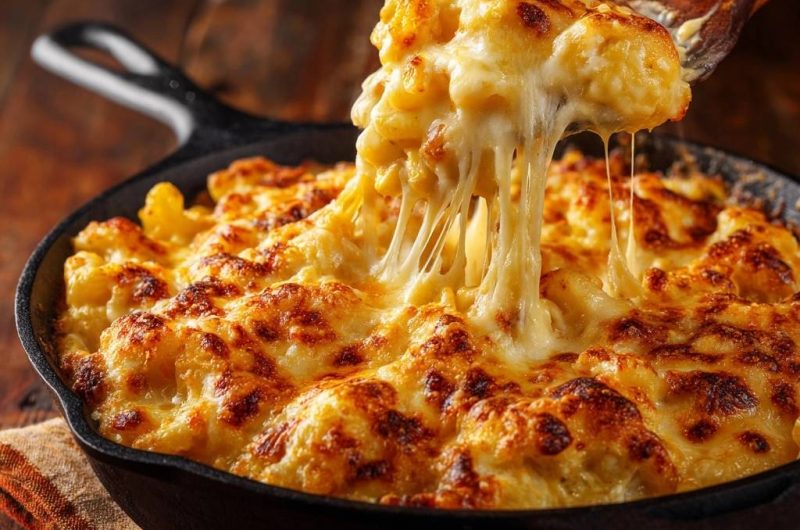
Cast Iron Skillet Mac and Cheese
Course: Main CourseCuisine: AmericanDifficulty: easy4
servings15
minutes25
minutes40
Minutes650
kcalAmerican
Ingredients
8 ounces elbow macaroni
3 tablespoons unsalted butter
3 tablespoons all-purpose flour
3 cups whole milk
4 cups shredded sharp cheddar cheese, divided
1 teaspoon mustard powder
1/2 teaspoon salt
1/4 teaspoon black pepper
1/4 teaspoon garlic powder
Directions
- grate cheese finely, make a smooth roux, and melt cheese off the heat while stirring constantly for silky results every time. Perfect creamy comfort in a skillet.
- Ingredients:
- ounces elbow macaroni
- tablespoons unsalted butter
- tablespoons all-purpose flour
- cups whole milk
- cups shredded sharp cheddar cheese, divided
- teaspoon mustard powder
- /2 teaspoon salt
- /4 teaspoon black pepper
- /4 teaspoon garlic powder
- Directions:
- Preheat oven to 400 degrees F. Cook macaroni in salted boiling water for 1 minute less than package directions for al dente. Drain and set aside.
- In a 10-inch cast iron skillet over medium heat, melt butter. Whisk in flour and cook 1-2 minutes until bubbly and golden, stirring constantly to form smooth roux (this base prevents graininess).
- Slowly whisk in milk, 1/2 cup at a time, until thickened and smooth, about 5 minutes. Remove from heat.
- Add 3 cups shredded cheese (finely grated for quick melting), mustard powder, salt, pepper, and garlic powder. Stir vigorously off heat until cheese fully melts into silky sauce with no lumps (key step: off-heat melting emulsifies proteins for creaminess).
- Stir cooked macaroni into sauce until evenly coated. Sprinkle remaining 1 cup cheese on top.
- Bake 10-12 minutes until top is golden and bubbly. Broil 1-2 minutes for extra crisp if desired. Let rest 5 minutes before serving.
Notes
- Finely grate cheese for quick melting and smooth sauce. Stir vigorously off heat to emulsify proteins and prevent graininess. Use whole milk for best creaminess.