Why Cast-Iron Skillet Mac and Cheese Transforms Weeknights
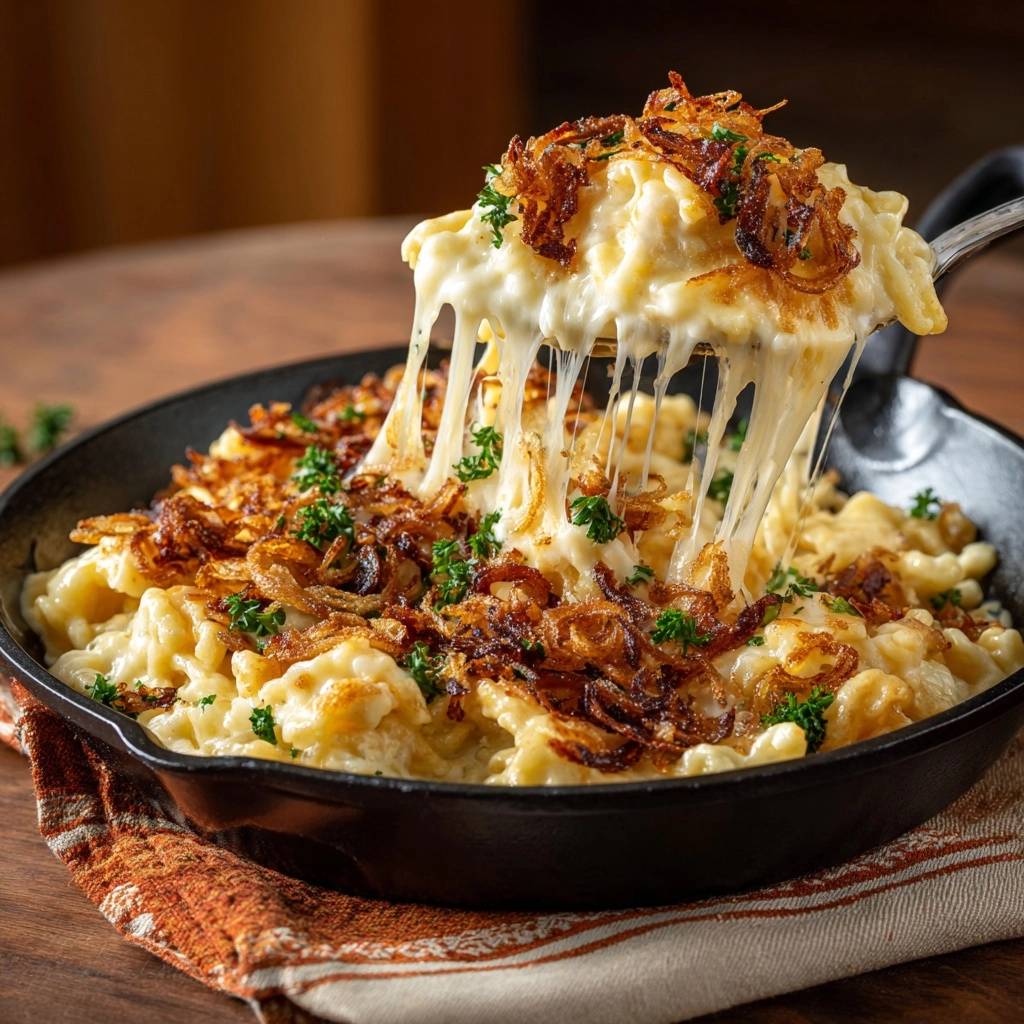
Nothing kills the mac and cheese vibe like a grainy, separated sauce that turns creamy dreams into disappointment. You’ve been there, right? This cast-iron skillet version fixes that forever with one game-changing move: adding the cheese off the heat for that ultra-stretchy, silky melt. Plus, crispy onions deliver crunch that stays crisp, not soggy.
So why does this recipe stand out? It skips the hassle of a boxed mix or fussy baked versions. Instead, you get dinner on the table in under 30 minutes, with bubbling edges from the cast-iron’s heat retention that make every bite irresistible. Families devour it, and it’s perfect for busy weeknights.
Here’s the expertise pro tip: shred your own sharp cheddar right before using it. Pre-shredded stuff has starch blockers that cause clumps, but fresh shreds melt evenly into pure silkiness. That simple step guarantees success every time.
Equipment: Why Cast-Iron Skillet Defines This Mac and Cheese
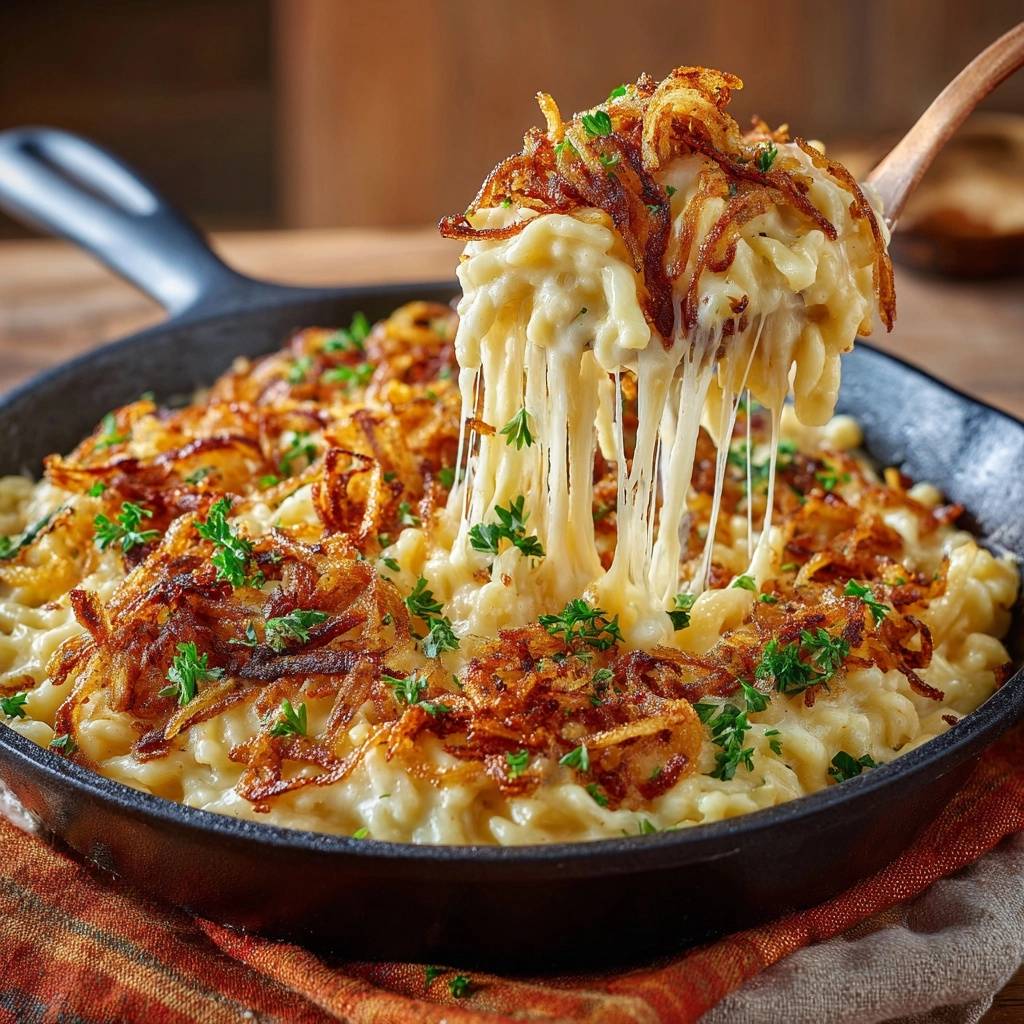
Cast-iron skillets shine here because they distribute heat evenly, so your sauce thickens without hot spots. That 10-inch size holds just the right amount of pasta for two to four servings, and it transitions seamlessly from stovetop to broiler for those golden, bubbly edges.
Nonstick pans can’t compete; they warp under broiler heat and don’t retain warmth like cast-iron, which keeps your mac hot longer at the table. In addition, the skillet’s natural seasoning enhances flavors without adding any off tastes.
For maintenance, wipe it down with a paper towel after cooling, then season lightly with oil if needed. It’ll last generations and make this mac and cheese even better each time you use it.
Selecting the Right Cast-Iron Size for Mac and Cheese
Stick to a 10-inch skillet for this recipe; it prevents overcrowding, so the pasta gets full sauce coverage and crisp edges. Larger 12-inch ones work if you’re doubling the batch, but they’ll spread the mixture too thin.
Therefore, vintage Lodge or modern Lodge skillets both perform great. Avoid tiny ones under 10 inches, as they’ll boil over during broiling. Pick pre-seasoned for instant use.
Key Ingredients for Smooth Cast-Iron Skillet Mac and Cheese
Elbow macaroni is your best friend here because its ridges cling to the sauce like nobody’s business. Use 8 ounces, cooked al dente, so it holds up without turning mushy.
Unsalted butter keeps the roux controlled; salted can make things too briny fast. Whole milk delivers creaminess that skim just can’t match, creating that velvety base. However, if you’re out, mix 2% with a splash of cream.
Freshly shredded sharp cheddar, 3 cups worth, brings bold tang without overpowering. Crispy fried onions add crunch, and parsley gives a fresh pop at the end. For sourcing, grab block cheese from the dairy case and shred it yourself.
Fresh Shredding: Secret to Melted Cheese in Skillet Mac
Pre-shredded cheese has anti-caking starch that turns grainy when heated. Freshly grate yours on the large holes of a box grater for even melts that emulsify perfectly.
Sharp cheddar balances sharpness with smoothness. Therefore, shred just before adding to keep it from drying out. You’ll see the difference in that glossy sauce.
Mastering Roux for Cast-Iron Skillet Mac and Cheese Base
Start by boiling salted water and cook 8 ounces elbow macaroni for 6 minutes until al dente. Drain it, but don’t rinse; that starch helps the sauce stick later.
In your 10-inch cast-iron over medium heat, melt 2 tablespoons unsalted butter. Whisk in 2 tablespoons flour constantly for 1 minute until it’s a smooth, blonde roux. You’re aiming for a nutty aroma without any browning, or it’ll taste bitter.
Al Dente Pasta Timing in Cast-Iron Mac and Cheese
Boil in heavily salted water, like pasta water should taste like the sea. Six minutes gives that firm bite; test a piece to feel the slight resistance.
Draining without rinsing preserves starches for better sauce adhesion. Set it aside while you build the base.
Building Silky Sauce in Your Cast-Iron Skillet Mac
Slowly whisk in 2 cups whole milk to the roux, then bring to a simmer. Keep whisking for 4-5 minutes until it thickens to coat the back of a spoon. Season with 1/2 teaspoon salt and 1/4 teaspoon pepper right then.
Now the magic: remove from heat completely. Add the 3 cups shredded cheddar in three batches, stirring hard after each until it’s fully melted and silky. Residual heat does the work without breaking the emulsion.
Off-Heat Cheese Emulsion Technique Explained
First batch: stir vigorously for 30 seconds until smooth. Add second, repeat, then third. The off-heat method prevents proteins from seizing up.
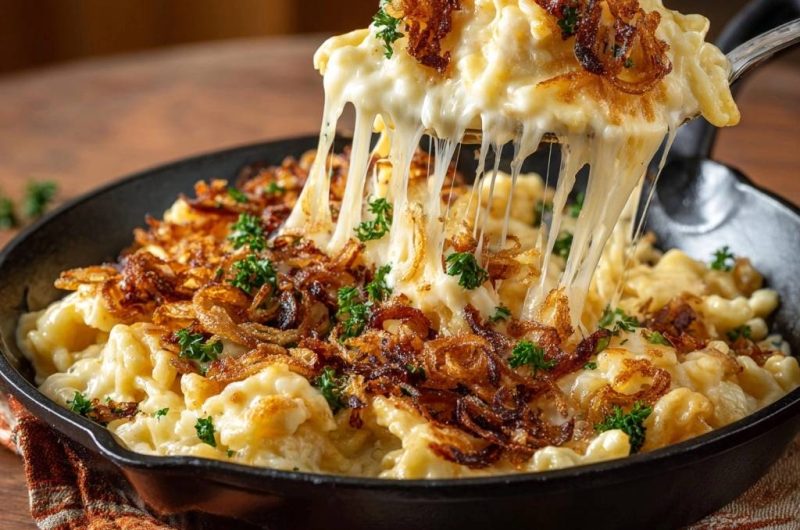
Test for cheese pull by lifting sauce with a spoon; it should stretch. If not, stir more. This nails the smooth texture every time.
Assembling and Broiling Cast-Iron Skillet Mac and Cheese
Stir the drained macaroni into the sauce until every piece is coated. Scatter 1 cup crispy fried onions evenly on top for that crunch factor.
Broil on high, 2-3 inches from the heat, for 1-2 minutes. Watch like a hawk; edges bubble and onions turn golden when done. Finish with 2 tablespoons chopped parsley and serve straight from the skillet.
Broiling Crispy Onions Without Sogginess
Place onions in a single layer for even exposure. Keep the rack 2-3 inches from the broiler to crisp without burning.
Look for bubbling edges as doneness. Pull it out fast to lock in crunch.
Science of Smooth, Stretchy Sauce in Cast-Iron Mac
The roux’s starch gelatinizes with milk fats, binding everything. Off-heat cheese addition lets proteins denature gently, creating emulsion without separation.
Cast-iron’s heat retention keeps residual warmth steady for melting. Whole milk’s higher fat content stabilizes it better than skim, which leads to graininess.
Therefore, no direct heat on cheese avoids clumping. Fresh shreds lack starch blockers, so they integrate seamlessly for that stretchy pull.
Avoiding Grainy Texture in Cast-Iron Skillet Mac and Cheese
Browned roux tastes off and thickens poorly; cook it pale. Pre-shredded cheese clumps due to starches, so grate fresh. Adding cheese on heat causes separation; always go off-heat.
Rinsing pasta strips starch needed for adhesion, making it dry. Over-broiling burns onions and dries edges, so time it precisely.
Pro tip: if sauce splits slightly, whisk in a splash of hot milk off-heat to rescue it. Prevention beats fixes every time.
Fixing Separated Sauce During Skillet Mac Prep
If sauce breaks, remove from heat and blend with an immersion blender, or whisk in 2 tablespoons hot cream. It re-emulsifies fast.
But prioritize off-heat cheese and fresh shreds to avoid it. Taste as you go for seasoning balance.
Flavor Variations for Cast-Iron Skillet Mac and Cheese
Swap half the cheddar for smoked gouda for a smoky twist that pairs perfectly with the onions. Add steamed broccoli florets before broiling for veggie boost without sogginess.
Mix in 1 teaspoon mustard powder to the roux for tangy depth. For heat, sprinkle cayenne before cheese. Gluten-free elbows work great; just check al dente timing.
Vegan? Use plant-based butter, oat milk, and shredded vegan cheddar. It emulsifies similarly off-heat. Each tweak keeps the silky core intact.
Make-Ahead Guide for Cast-Iron Skillet Mac and Cheese
Assemble up to the onion step, cover, and fridge for 24 hours. When ready, broil straight from cold, adding 1 extra minute.
Reheat leftovers in the skillet on low stovetop with a milk splash, then broil onions fresh. Freeze unbaked portions in the skillet, wrapped tight, up to 2 months.
Thaw overnight, then cook as directed. Portion into singles for easy meals. Keeps quality high.
Pairing Sides with Cast-Iron Skillet Mac and Cheese
Balance the richness with a crisp green salad tossed in vinaigrette; it cuts through the cheese perfectly. Roasted broccoli gets nutty edges that complement the onions.
Grilled corn on the cob adds sweet crunch. For drinks, iced tea refreshes, or try sparkling water with lemon. Simple sides let the mac shine.
Troubleshooting Cast-Iron Skillet Mac and Cheese Issues
Why is my sauce grainy?
Graininess comes from pre-shredded cheese’s starch blockers or adding cheese on direct heat, which seizes proteins. Fix by always shredding fresh and stirring off-heat in batches. Residual skillet heat melts it smoothly without clumps. Taste the silkiness you’ll get.
Why is my pasta dry?
Rinsing after draining washes away starch that helps sauce cling. Don’t rinse, and ensure full coating by stirring vigorously. If needed, add a tablespoon milk when reheating. Proper al dente cook prevents mush too.
Why are my onions soggy?
Over-broiling steams them, or piling too thick blocks heat. Scatter evenly, broil 1-2 minutes at 2-3 inches from heat, and watch for golden crisp. Fresh onions from a can crisp best under quick high heat.
Is my mac too salty?
Salted pasta water or oversalting the sauce builds up. Season roux lightly, taste before cheese, since cheddar adds saltiness. Use unsalted butter always. Adjust next time by halving salt if needed.
How do I double the recipe?
Use a 12-inch cast-iron skillet to avoid overcrowding. Double all ingredients exactly, but cook pasta in two batches if pot’s small. Roux takes same 1 minute; sauce thickens fine. Broil time stays 1-2 minutes.
What’s the best reheating method?
Stovetop in the skillet over low with 1-2 tablespoons milk, stirring until hot. Then broil fresh onions on top for 1 minute. Microwave works but loses crisp; oven at 350°F for 10 minutes revives edges best.
Cast-Iron Skillet Mac and Cheese
Course: Main CourseCuisine: AmericanDifficulty: easy4
servings10
minutes15
minutes25
Minutes550
kcalAmerican
Ingredients
8 ounces elbow macaroni
2 tablespoons unsalted butter
2 tablespoons all-purpose flour
2 cups whole milk
3 cups freshly shredded sharp cheddar cheese
1/2 teaspoon salt
1/4 teaspoon black pepper
1 cup crispy fried onions
2 tablespoons chopped fresh parsley
Directions
- Cook macaroni in salted boiling water until al dente, about 6 minutes. Drain and set aside. Do not rinse.
- In a 10-inch cast-iron skillet over medium heat, melt butter. Whisk in flour and cook, stirring constantly, for 1 minute to form a smooth roux without browning.
- Slowly whisk in milk. Bring to a simmer, whisking until thickened, about 4-5 minutes. Season with salt and pepper.
- Remove skillet from heat. This is the key no-grainy-sauce step: immediately add shredded cheese in three batches, stirring vigorously after each until fully melted and sauce is silky smooth. Shredding your own cheese (never pre-shredded) ensures it melts evenly without clumping.
- Stir cooked macaroni into the sauce until fully coated.
- Scatter crispy fried onions evenly over top. Broil on high 2-3 inches from heat for 1-2 minutes until onions are golden and edges bubble. Watch closely to avoid burning.
- Sprinkle with parsley and serve hot for that perfect cheese pull.
Notes
- Shred your own cheese for best melting results. Watch closely under the broiler to prevent burning.