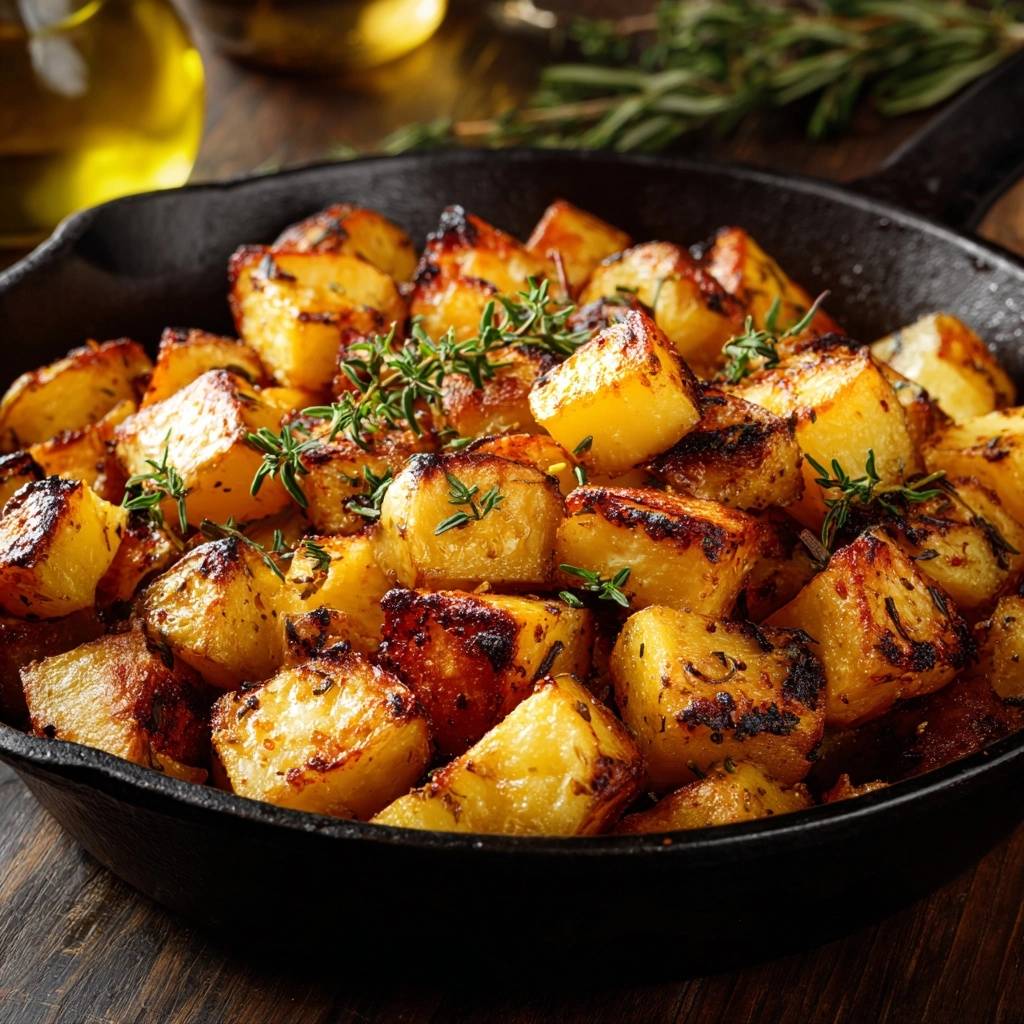
Tired of pulling roasted potatoes from the oven only to find soggy, steamed centers instead of that irresistible crunch? You’ve hit the jackpot with Cast Iron Thyme Roasted Potatoes. This method uses a quick parboil, rough-up trick, and a screaming-hot cast iron skillet to deliver shatteringly crispy edges every single time.
So why does this beat dumping potatoes on a sheet pan? Sheet pans lose heat fast, turning your roast into a steam fest. However, cast iron holds onto that 425-degree blaze, searing the exteriors instantly while keeping insides fluffy. In addition, the rough edges trap oil and seasonings for non-stop browning.
Here’s the pro tip that seals the deal: after parboiling, steam them dry in the hot pot for one minute. That extra step evaporates moisture you can’t see, preventing mush forever. Oh man, the first bite cracks like glass then melts into potato heaven.
Why Cast Iron Elevates Thyme Roasted Potatoes
Cast iron changes everything for Thyme Roasted Potatoes. It retains heat like no baking sheet can, creating an instant sear when you add those potatoes. Therefore, you get crispy outsides without flipping every five minutes.
Baking sheets cool down fast from the cold food, so moisture builds up. In contrast, a preheated cast iron skillet stays scorching, driving off steam through dehydration. Plus, its weight distributes heat evenly, so no raw spots.
For 2 pounds of potatoes, grab a 10- to 12-inch skillet. It fits a single layer perfectly, maximizing contact with the hot surface. You’ll notice the difference immediately in those golden, crunchy results.
Selecting Your Cast Iron Skillet
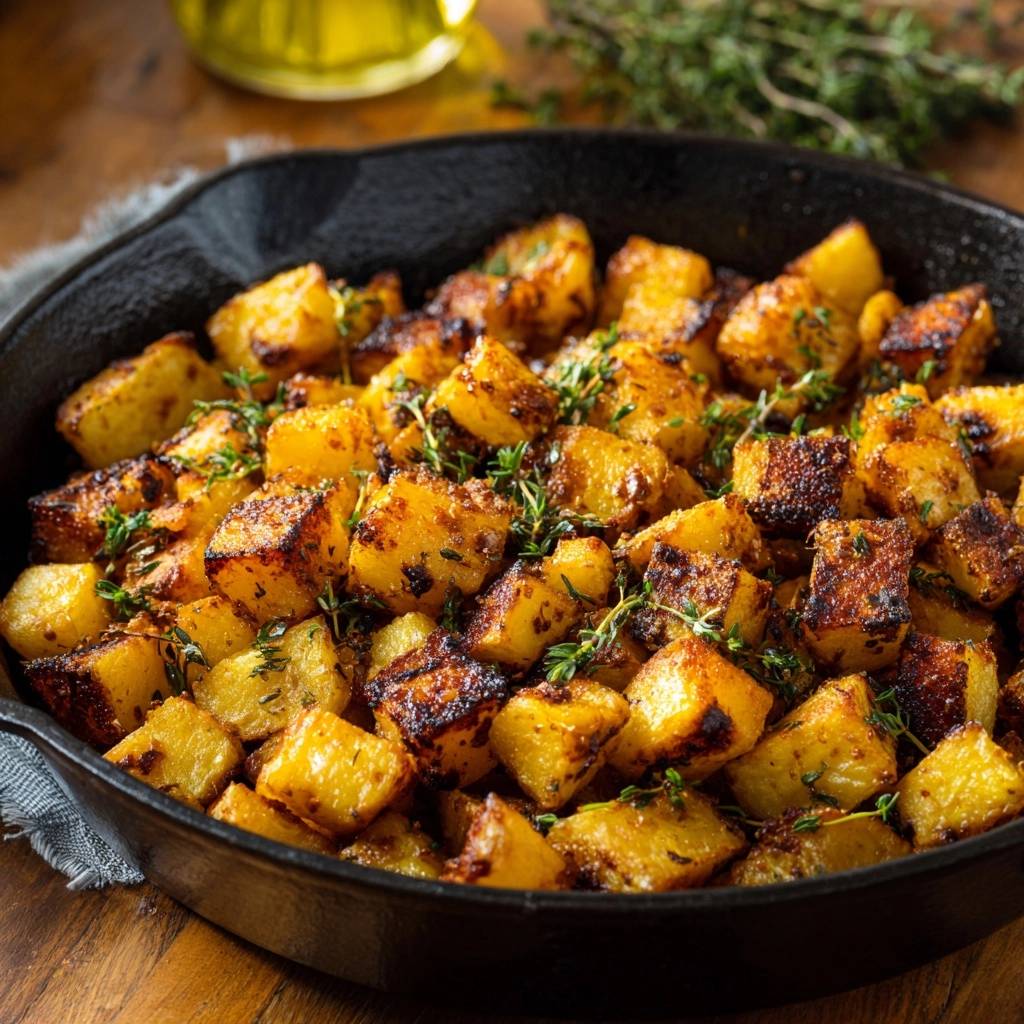
Pick a well-seasoned 12-inch cast iron skillet for Cast Iron Thyme Roasted Potatoes. Seasoned raw cast iron builds flavor over time and releases potatoes easily. Enameled works too, but it lacks that subtle seasoning depth.
To prevent sticking, wipe with oil after washing and heat dry. Avoid soap on the cooking surface. A quick scrub with salt keeps it pristine for perfect crisps next time.
Preheating for Maximum Crispiness
Preheat your skillet at 425°F for exactly 10 minutes. This thermal shock hits the rough potato edges, kickstarting the Maillard reaction for deep browning. The science? Extreme heat vaporizes surface water fast.
Always use thick oven mitts to pull it out. Tilt carefully and swirl in oil. If you skip this, potatoes steam instead of crisp. Safety first, but that hiss when they hit the pan means victory.
Key Ingredients for Perfect Thyme Roasted Potatoes
Yukon Gold potatoes shine in Cast Iron Thyme Roasted Potatoes with their waxy skin and creamy flesh. They hold shape during parboil yet fluff up inside. Use 2 pounds cut into 1.5-inch chunks for 4-6 servings.
Three tablespoons olive oil coats evenly without greasiness; its smoke point handles 425°F no problem. Fresh thyme leaves, 2 tablespoons, pack way more punch than dried, use a 3:1 ratio if substituting. Kosher salt, 1 teaspoon, draws out moisture for better browning, while 1/2 teaspoon black pepper adds bite.
Fresh ingredients matter here. However, if thyme’s scarce, rub leaves off stems firmly. That releases oils for aroma that fills your kitchen.
Yukon Gold Potatoes: The Ideal Choice
Yukon Golds balance starch and waxiness perfectly for Thyme Roasted Potatoes. Cut to 1.5 inches so exteriors crisp while centers stay fluffy. Russets fall apart too easily from high starch.
Scrub well but skip peeling; skins add texture and nutrients. Uniform chunks ensure even cooking. Test one: it should pierce easily outside but resist in the middle post-parboil.
Fresh Thyme and Seasoning Balance
Strip thyme leaves by holding the top and sliding fingers down the stem backward. Fresh beats dried for vibrant flavor. Freshly grind pepper coarsely so it toasts without burning.
Oil quantity prevents sogginess; too much pools and steams. Toss potatoes right in the hot pan for even cling. Taste a cooled one pre-roast to adjust salt.
Science of Crispy Cast Iron Thyme Roasted Potatoes
Parboiling gelatinizes starch on potato exteriors without softening centers. Then roughing creates fuzzy surfaces for Maillard browning. Cast iron’s steady heat dehydrates them into crisps.
Potato starch facts: about 20% in Yukons, perfect for fluff when boiled briefly. Excess moisture kills crisp, so the dry step is non-negotiable. Therefore, every bite shatters then yields softly.
This combo beats sheet-pan roasting hands down. No flipping needed early on, just pure science delivering restaurant-level results at home.
Parboiling: Locking in Fluffy Centers
Start in cold water to heat evenly; jumping to boil cooks outsides too fast. Parboil 5-7 minutes until fork pierces exterior but core resists. Add a pinch of salt to season water and firm skins.
Overdo it and centers mush. Drain immediately. You’ll smell sweet potato steam rising, signaling it’s time for the next step.
Roughing Edges for Shatteringly Crisp Surfaces
Post-drain, return to hot pot over low heat for 1 minute. Steam evaporates hidden moisture. Gently shake or toss to ruffle edges without breaking chunks.
Those nooks grab oil and thyme, browning deeply. Aggressive tossing mashes them; go easy for maximum surface area.
Step-by-Step: Mastering Cast Iron Thyme Roasted Potatoes
Phase 1: Parboil and Rough Up Potatoes
Fit chunks in a large pot, cover with cold water by 1 inch, salt lightly. Bring to boil, then parboil 5-7 minutes. Drain well; potatoes look matte and tender-edged.
Put pot back on low heat 1 minute to steam dry. Shake gently; edges fuzz up beautifully. Let cool 5 minutes if needed. Pro tip: this kills sogginess forever.
Phase 2: Superheat the Cast Iron Skillet
While parboiling, preheat oven to 425°F with skillet inside for 10 minutes. Pull with mitts, add oil, swirl to coat fully. Hear that sizzle? Perfect.
Work fast to keep heat in. Single layer only; overcrowd and they steam.
Phase 3: Season, Roast, and Flip
Add potatoes to hot oiled skillet, sprinkle salt, pepper, thyme. Toss to coat every nook. Roast undisturbed 25 minutes for crusty bottoms.
Flip gently with spatula, roast 15-20 more until all sides golden. Check: lift one, it should crunch. Garnish with thyme sprigs for fresh pop. Serve hot.
Avoiding Pitfalls in Thyme Roasted Potatoes
Common woes hit every cook: soggy centers from skipping dry step or overcrowding. Burnt edges? Oven runs hot; calibrate with thermometer. Bland? Thyme burns if added too early.
Therefore, follow timings exactly. Middle rack prevents uneven crisping. Taste before roasting if you’re unsure on seasoning.
Preventing Soggy Centers Forever
Over-parboil turns them mushy; stick to 5-7 minutes. Skip steam-dry and moisture hides inside. If rushed, air-dry on towel 10 minutes as backup.
Single layer in skillet is key. Wet potatoes never crisp.
Ensuring Even Crisping Everywhere
Flip once at 25 minutes to brown all sides. Use middle oven rack for steady heat. Convection crisps faster; drop temp 25°F if using.
Rotate pan halfway if your oven hotspots. Edges stay intact with spatula slide-under.
Flavor Twists on Cast Iron Roasted Potatoes
Stick to the core method but swap herbs for fun. All keep Cast Iron Thyme Roasted Potatoes vegan and gluten-free. Experiment after mastering basics.
These upgrades build on thyme’s earthiness without overwhelming.
Herb and Spice Swaps
Try rosemary-thyme blend, 1:1 ratio for woodsy depth. Or swap all thyme for oregano, double potency since it’s stronger. Fresh dill post-roast adds bright tang.
Garlic powder, 1 teaspoon, toasts nutty. Each amps Maillard without muddling.
Bold Seasoning Upgrades
Sprinkle parmesan pre-roast for cheesy crust; it melts in. Chili flakes, 1/2 teaspoon, bring heat but add late to avoid char. Lemon zest at end brightens.
Timing matters: delicate spices last 10 minutes only.
Pairing Cast Iron Thyme Roasted Potatoes
Thyme Roasted Potatoes pair with roasted chicken for juicy-crisp contrast. Grilled fish loves the herb echo. Veggie stir-fries gain heartiness.
Portion 1 cup per person. Thyme bridges proteins beautifully.
With Main Courses
Roast chicken: potatoes soak up juices. Grilled salmon: thyme matches herbs. Tofu stir-fry: crunch balances soft textures.
Each highlights fluffy centers against tender mains.
Meal Prep and Storage
Fridge in airtight container up to 4 days. Freeze baked potatoes in bags 1 month; thaw overnight. Reheat in hot skillet 10 minutes to revive crisp, never microwave.
Spread out, add oil drop. Crisps return like fresh.
Frequently Asked Questions About Thyme Roasted Potatoes
Can I Use a Different Skillet for Thyme Roasted Potatoes?
Stainless or carbon steel works but expect less retention than cast iron. Preheat equally hot, use more oil to compensate. They crisp decently, however cast iron’s mass sears better, preventing steam. For 2 pounds, 12-inch size still ideal. Results close but not shatteringly perfect. Stick close to timings.
How Long Do Cast Iron Roasted Potatoes Stay Crispy?
Serve immediately for peak crunch; they soften after 30 minutes as steam builds. Reheat in 425°F skillet with oil splash, 8-10 minutes shaking halfway. Avoid covering post-roast. Leftovers crisp up nearly as good this way. Pro move: undercook slightly if prepping ahead.
Are Thyme Roasted Potatoes Healthy?
Yes, packed with potassium, vitamin C, and fiber from skins. Olive oil adds heart-healthy fats; 2 pounds serves 4-6 at about 200 calories per cup. Reduce oil to 2 tablespoons for lighter version, use spray. Whole food, no processed junk. Pairs well in balanced plates.
Scaling Up Cast Iron Thyme Roasted Potatoes?
Double to 4 pounds? Use two skillets or 14-inch. Keep single layer; overcrowd and they steam. Oven time adds 5-10 minutes. Parboil in bigger pot. Season proportionally. Great for crowds, just watch edges don’t burn in longer roast.
Best Potatoes Besides Yukon Gold?
Red potatoes work well; similar waxiness, cut same size. Avoid starchy russets or bakers; they disintegrate. Fingerlings halve lengthwise for edges. All need 1.5-inch scale for fluffy-crisp balance. Taste test parboil time per type. Yukons still top for reliability.
How Do I Store Leftovers of Cast Iron Thyme Roasted Potatoes?
Cool completely, store airtight in fridge up to 4 days. Freeze in single layers on sheet then bag, up to 1 month; potatoes freeze well unlike watery veggies. Thaw fridge overnight. Reheat skillet-hot at 425°F, 10 minutes with oil toss. Crisp revives fully, no mush.
Why Are My Thyme Roasted Potatoes Soggy?
Most likely skipped steam-dry or overcrowded pan. Parboil too long softens centers. Ensure single layer, full preheat, rough edges well. No lid ever. Fix next batch: dry extra 2 minutes post-shake. You’ll get perfect fluff and crunch guaranteed.
Can I Substitute Dried Thyme in Cast Iron Roasted Potatoes?
Yes, use 2 teaspoons dried for 2 tablespoons fresh; dried’s more potent. Add during toss for oil infusion. Flavor milder, so boost with garlic powder if needed. Fresh wins for aroma, but dried works in pinch. No other changes needed.
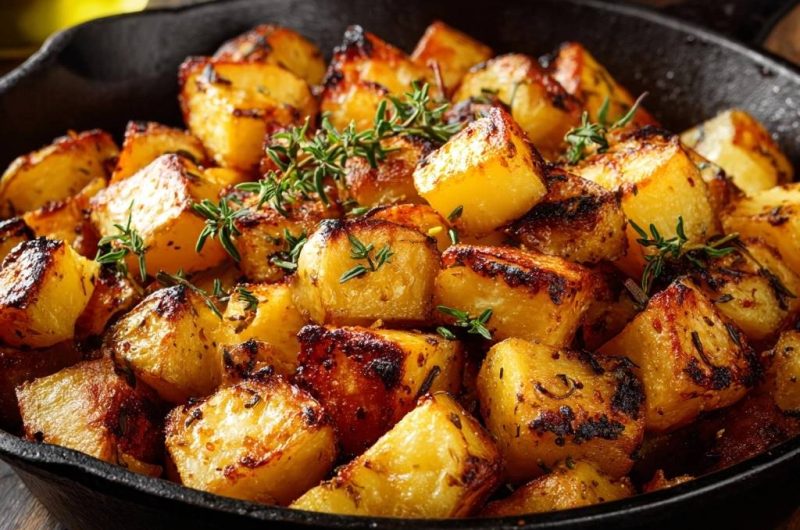
Cast Iron Thyme Roasted Potatoes
Course: Side DishCuisine: AmericanDifficulty: easy4
servings15
minutes45
minutes60
Minutes250
kcalAmerican
Ingredients
2 pounds Yukon gold potatoes, cut into 1.5-inch chunks
3 tablespoons olive oil
2 tablespoons fresh thyme leaves, plus sprigs for garnish
1 teaspoon kosher salt
1/2 teaspoon black pepper
Directions
- Place potato chunks in a large pot, cover with cold water by 1 inch, add a pinch of salt, and bring to a boil. Parboil for 5-7 minutes until exteriors are just tender but centers are still firm. Drain well.
- Return potatoes to the hot pot over low heat for 1 minute to steam off excess moisture, the key to ending soggy centers forever. Gently shake the pot or toss with a spoon to rough up the edges, creating nooks for ultimate crispiness.
- Preheat oven to 425 degrees F. Place a large cast iron skillet in the oven for 10 minutes to get screaming hot.
- Carefully remove skillet, add olive oil, and swirl to coat. Add potatoes in a single layer, sprinkle with salt, pepper, and thyme leaves. Toss to coat evenly.
- Roast undisturbed for 25 minutes, then flip potatoes and roast another 15-20 minutes until golden and crispy on all sides. Garnish with fresh thyme sprigs. Serve hot for side-dish perfection.
Notes
- Use Yukon gold potatoes for best texture. Ensure skillet is screaming hot for maximum crispiness. Shake pot gently after parboiling to create rough edges.