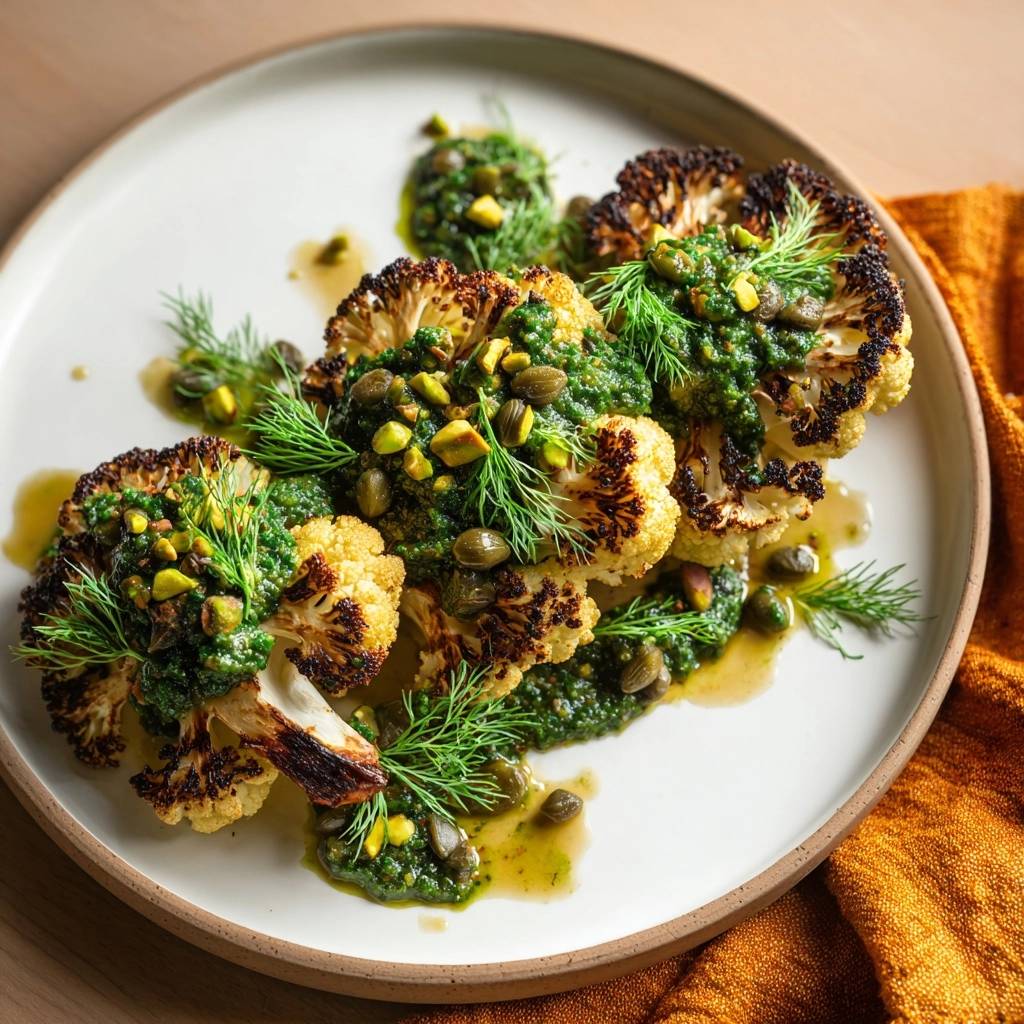
Forget everything you know about mushy, bland cauliflower. When you treat this vegetable like a prime cut of meat, it transforms into something deeply savory with crispy, blackened edges that rival any steakhouse side. The secret lies in high-heat caramelization and a vibrant, crunchy pistachio gremolata that cuts right through the earthy richness of the roast.
Most home cooks struggle with cauliflower because it’s a moisture-heavy vegetable. If you crowd the pan or use too much oil, you end up steaming it rather than searing it. This recipe fixes that by using a dry-roast philosophy that prioritizes texture above all else. You’re going to love the contrast between the hot, charred florets and the cold, zesty herb topping.
The real trick to success here is thermal mass. By preheating your baking sheet until it’s screaming hot before the cauliflower even touches it, you create an instant sear. This locks the structure of the vegetable in place so it stays tender-crisp instead of collapsing into a watery mess. Let’s get into how to master this technique.
The Physics of the Perfect Cauliflower Sear
Achieving that deep, mahogany char requires the Maillard reaction. This is a chemical reaction between amino acids and reducing sugars that gives browned food its distinctive flavor. Because cauliflower has a high water content, you have to evaporate that surface moisture quickly to let the browning begin. If the heat is too low, the water just sits there, and you get “soggy bottom” syndrome.
Overcrowding the pan is the biggest enemy of a good sear. When the steaks are too close together, the steam escaping from one piece gets trapped by the next. This creates a humid environment that prevents crisping. By giving each steak plenty of “breathing room” on a bare, hot surface, you ensure the air stays dry and the edges get wonderfully brittle.
Why Preheating the Baking Sheet is Mandatory
Think of your baking sheet as a flat-top grill. When you slide a cold tray into the oven with the food already on it, the cauliflower slowly warms up and begins releasing its juices before the surface is hot enough to sear them. This leads to a limp, greyish result that lacks any real depth of flavor.
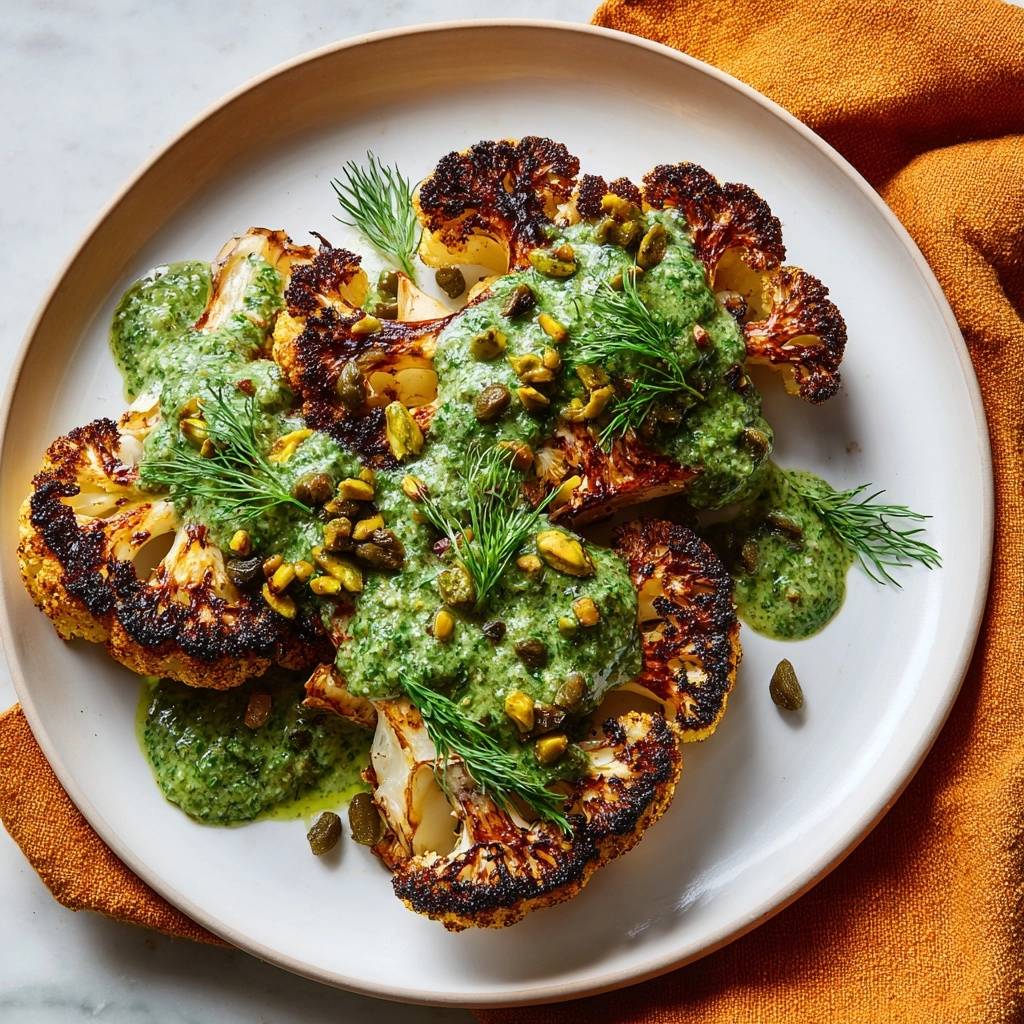
A heavy-rimmed baking sheet holds onto heat beautifully. When you place your oiled cauliflower onto that preheated metal, you’ll hear a loud, satisfying sizzle. That sound is the moisture on the surface evaporating instantly. This creates a protective crust that keeps the interior of the steak juicy while the outside turns dark and nutty.
The Role of Surface Area in Caramelization
Cutting the cauliflower into one-inch thick “steaks” isn’t just for aesthetics. This shape maximizes the surface area in direct contact with the hot pan. Unlike small florets, which have irregular shapes and gaps, a flat steak acts like a sponge for heat. This uniform contact ensures that every single bite has a bit of that smoky, charred flavor we’re after.
Essential Components for Charred Cauliflower Steaks
Quality matters when you’re working with such simple ingredients. I always recommend using a high-quality extra virgin olive oil. Since we are roasting at 450°F, you want an oil that can handle the heat without smoking excessively, but one that still carries a peppery bite to complement the parsley and lemon.
Sea salt is another non-negotiable for me. The larger grains don’t just season the vegetable; they help draw out surface moisture during the initial roast, which aids in the browning process. Table salt is often too fine and can make the dish taste one-dimensionally salty rather than seasoned and complex.
Selecting the Right Head of Cauliflower
When you’re at the grocery store, look for a head of cauliflower that feels heavy for its size. This indicates it’s full of moisture and hasn’t started to dry out. The curds should be tight and creamy white with no brown spots or “fuzziness,” which are signs of age.
Size is also important for the steak technique. A larger, jumbo-sized head will give you more “center-cut” steaks where the core holds the florets together. Smaller heads might only yield two good steaks before you’re left with loose florets. Don’t worry, though; those loose bits roast up beautifully alongside the main event.
Pistachio Gremolata: A Modern Herbaceous Profile
Traditional gremolata is just parsley, lemon, and garlic, but we’re adding dill and pistachios for a massive texture upgrade. The dill adds a refreshing, grassy note that pairs perfectly with the sulfurous undertones of roasted cauliflower. Pistachios provide a buttery crunch that makes the dish feel like a complete, satisfying meal.
The addition of capers and a tiny bit of honey is the “secret sauce” here. The capers bring a briny, vinegary punch, while the honey bridges the gap between the bitter char of the vegetable and the sharp acid of the lemon. It creates a balanced, mouth-watering finish that keeps you coming back for another forkful.
Step-by-Step: Mastering the High-Heat Roast
Mastering this dish is all about timing and temperature. You want to move quickly once that oven is hot to keep the heat inside the kitchen and the tray. Preparation is your best friend here, so make sure your steaks are sliced and oiled before you even think about opening that oven door.
Phase 1: The Precision Cut
Start by trimming the green leaves from the base of the cauliflower, but leave the tough stem intact. This core is what holds the “steak” together. Place the cauliflower on a cutting board, stem-side down, and slice directly through the center to create two halves. From there, cut one-inch thick slices moving outward.
You’ll likely get 3 to 4 solid steaks from a large head. The outer edges will naturally crumble into florets. Don’t toss those! Toss them in the same oil, salt, and pepper and roast them right on the same tray. They’ll get extra crispy and are often the “chef’s snack” while plating the main steaks.
Phase 2: The Sizzle and First Roast
Once your oven hits 450°F and your tray has been in there for at least 10 minutes, it’s go-time. Brush your steaks generously with olive oil. Don’t just drizzle it; use a brush to get into all the nooks and crannies of the florets. This ensures even browning and prevents dry spots.
Carefully pull the rack out and lay the steaks down. You should hear that immediate sizzle. If you don’t, your pan wasn’t hot enough. Slide them back in and let them roast for about 10 to 12 minutes. You’ll start to smell a nutty, almost popcorn-like aroma filling your kitchen as the natural sugars begin to caramelize.
Phase 3: The Flip and Finish
After the first 12 minutes, use a thin metal spatula to peek under one of the steaks. You’re looking for a deep, dark brown color. If it’s just golden, give it another two minutes. Flip them carefully to keep the core intact. The second side usually roasts faster, about 8 to 10 minutes, because the vegetable is already hot through.
You’ll know they’re done when the stems are fork-tender but not mushy. The edges of the florets should look almost blackened. This isn’t burnt; it’s flavor! That char provides a smoky contrast to the bright, fresh gremolata we’re about to add.
Assembling the Pistachio Gremolata
While the cauliflower is finishing its roast, it’s time to prep the topping. Make sure your parsley and dill are bone-dry before you start chopping. If the herbs are wet, they’ll turn into a green paste rather than a fluffy, vibrant garnish. Mince them finely with a sharp knife to avoid bruising the leaves.
Whisk the lemon juice, olive oil, and honey together first to dissolve the honey. Then, fold in your herbs, grated garlic, lemon zest, and chopped pistachios. When you spoon this over the hot cauliflower, the residual heat “blooms” the garlic and lemon oils. This creates an incredible aroma that hits you the moment it touches the plate.
Troubleshooting Common Cauliflower Mistakes
If your cauliflower comes out soggy despite preheating the pan, you likely used too much oil. Oil is a heat conductor, but too much of it can actually fry the vegetable in its own juices. Stick to a light, even brush on both sides. Also, ensure your oven is truly at 450°F; many home ovens run cold, so an oven thermometer is a great investment.
If the edges are burning before the center is soft, your oven rack might be too high. Move the tray to the middle or lower-middle rack. This allows the ambient heat to cook the thick stem while the direct heat from the bottom of the oven chars the flat surface of the steak.
Flavor Variations and Ingredient Swaps
This recipe is a fantastic canvas for whatever you have in your pantry. While the pistachio and dill combo is my personal favorite, you can easily pivot based on what’s in season or what’s in your fridge. The goal is always to balance the “char” with something bright and something crunchy.
Nut-Free and Seed-Based Alternatives
If you have a nut allergy, you don’t have to miss out on the crunch. Toasted pepitas (pumpkin seeds) or sunflower seeds are excellent substitutes for pistachios. They offer a similar earthy flavor and hold up well against the acidic lemon juice. Just make sure to toast them in a dry pan for a minute or two first to wake up their oils.
Adjusting the Acid and Brine
No capers? No problem. You can use finely chopped green olives or even pickled red onions to get that salty, briny kick. If you want a deeper citrus flavor, try using preserved lemon peel instead of fresh lemon zest. It adds a fermented, salty depth that is absolutely addictive with the charred cauliflower.
Pairing Suggestions for a Complete Meal
These steaks are hearty enough to be the star of the show. I love serving them over a bed of creamy whipped feta or a thick swipe of hummus. The creaminess of the dip contrasts beautifully with the crispy edges of the cauliflower. It turns a simple vegetable into a luxury experience.
If you want to add more bulk, serve them alongside a warm grain salad like farro or quinoa tossed with more fresh herbs. For a protein boost, these are incredible with a side of garlic-rubbed roasted chicken or even a simple lentil stew. The gremolata is so versatile it basically acts as a sauce for the entire plate.
Expert Tips for Preparation and Storage
This dish is at its absolute peak the moment it leaves the oven. The “char” is crisp, and the herbs are bright. However, if you have leftovers, don’t even think about using the microwave. The microwave will turn your beautiful steaks into a rubbery, soggy mess in seconds.
To reheat, use an air fryer at 375°F for about 3 to 4 minutes, or pop them back onto a hot baking sheet in the oven. This helps recrisp the edges and warms the center without overcooking it. Keep the leftover gremolata in a separate container so the nuts don’t get soft.
How to Prep Components in Advance
You can slice the cauliflower steaks up to two days in advance. Just store them in an airtight container with a paper towel to absorb any excess moisture. You can also chop the pistachios and zest the lemon ahead of time. I recommend waiting to chop the fresh herbs until you’re ready to eat, as they lose their punch quickly once minced.
Frequently Asked Questions
Can I use frozen cauliflower for this recipe?
I don’t recommend using frozen cauliflower for steaks. Frozen vegetables are blanched before freezing, which breaks down their cell walls. When they thaw, they release a lot of water, making it impossible to get that firm, steak-like texture or a proper char. Stick to fresh heads for this specific method.
Why did my cauliflower steaks fall apart when I cut them?
This usually happens if you trim too much of the bottom stem off. The core is the “glue” that holds the florets to the center. Make sure you only remove the very bottom woody tip and the leaves. Also, using a large, sharp chef’s knife is essential for a clean, straight cut through the dense core.
Is the honey really necessary in the gremolata?
While you can leave it out, the honey serves a specific purpose. Charred vegetables have a natural bitterness. The honey doesn’t make the sauce “sweet,” but it balances that bitterness and the sharp acidity of the lemon and capers. It rounds out the flavor profile so no single ingredient is too overwhelming.
Can I use a cast iron skillet instead of a baking sheet?
Absolutely! A large cast iron skillet is actually one of the best tools for this. It has incredible heat retention and will give you an even better sear than a standard baking sheet. Just make sure not to crowd the skillet; you may need to sear the steaks in batches if your pan is small.
How should I store leftovers?
Store the roasted cauliflower and the gremolata in separate airtight containers in the refrigerator for up to 3 days. Keeping them separate prevents the cauliflower from getting soggy and keeps the herbs in the gremolata from wilting too much. Reheat the cauliflower using dry heat (oven or air fryer) before topping with the cold gremolata.
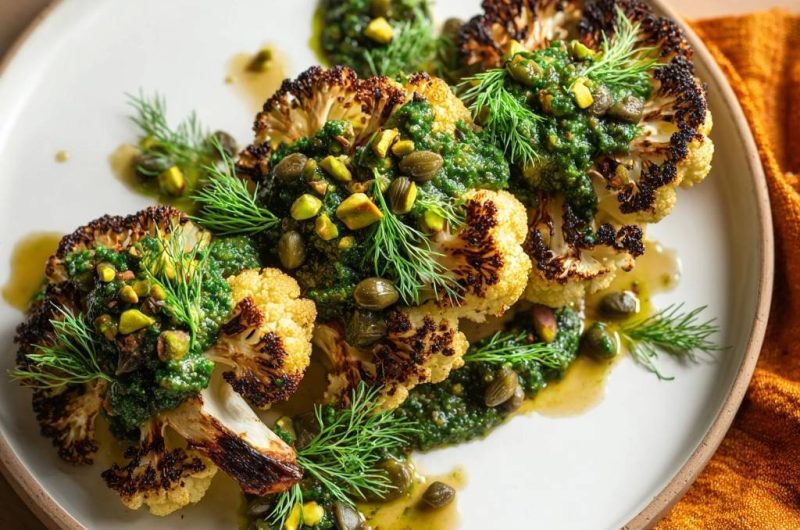
Charred Cauliflower Steaks with Pistachio Gremolata
Course: Main CourseCuisine: AmericanDifficulty: easy4
servings15
minutes25
minutes40
Minutes265
kcalAmerican
Ingredients
1 large head of cauliflower, sliced into 1-inch thick steaks (reserve florets that break off for roasting alongside)
4 tablespoons extra virgin olive oil, divided
1/2 teaspoon sea salt
1/4 teaspoon cracked black pepper
1/2 cup fresh parsley, very finely minced
1/4 cup fresh dill, finely chopped (plus extra sprigs for garnish)
1/3 cup roasted pistachios, roughly chopped
2 tablespoons capers, drained
1 clove garlic, grated or finely minced
1 tablespoon lemon zest
2 tablespoons lemon juice
1 teaspoon honey or agave (to balance the acidity of the capers)
Directions
- Place a heavy-rimmed baking sheet inside your oven and preheat to 450°F (230°C). Heating the pan first is the secret to an instant sear that prevents the vegetable from releasing too much water and becoming mushy.
- Carefully brush both sides of the cauliflower steaks with 2 tablespoons of the olive oil and season generously with salt and pepper.
- Remove the hot tray from the oven and quickly place the steaks onto the dry, hot surface. You should hear a loud sizzle.
- Roast for 10 to 12 minutes, then flip the steaks. Roast for another 8 to 10 minutes until the edges are dark brown, almost blackened, and the stems are fork-tender.
- While the cauliflower roasts, prepare the gremolata. In a small bowl, whisk together the remaining 2 tablespoons of olive oil, lemon juice, and honey. Fold in the minced parsley, chopped dill, garlic, and lemon zest until it forms a thick, vibrant green paste.
- Plate the hot cauliflower immediately. Spoon the gremolata paste generously over the center of each steak.
- Top with the chopped pistachios, whole capers, and fresh dill sprigs as shown in the image. The residual heat will bloom the aromatics in the sauce without wilting the fresh herbs. Serve immediately while the edges are crisp.
Notes
- Preheating the baking sheet is essential to prevent sogginess. Use the broken florets to fill the gaps on the tray so nothing goes to waste.