Why This Cheesy Potato Casserole Stays Crisp
Nothing ruins a cheesy potato casserole faster than a soggy cornflake topping. You’ve seen it happen at potlucks, right? That once-crisp crust turns mushy after sitting out. But this recipe fixes it with a smart two-stage bake.
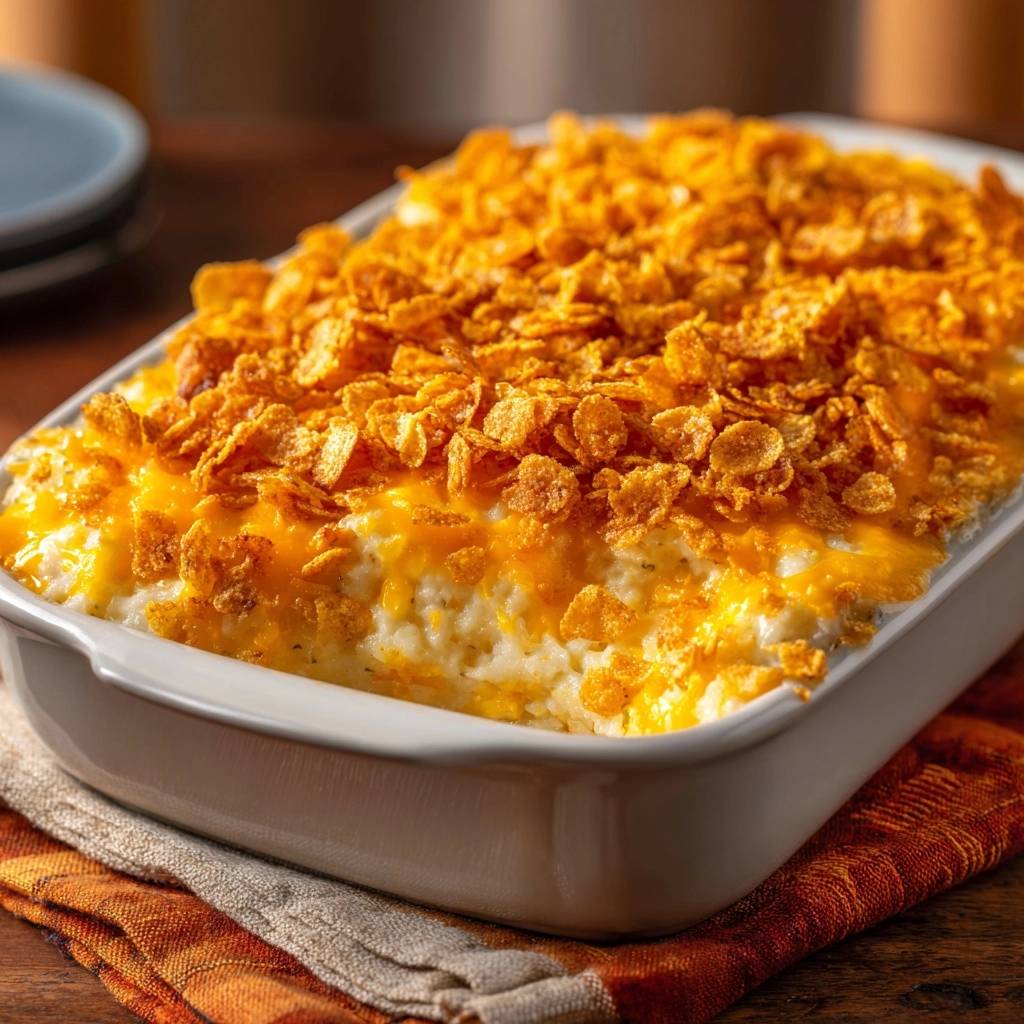
Therefore, you cook the creamy base covered first. This sets the potatoes without drying them out. Then, you add the buttered cornflakes for a final uncovered crisp-up. In addition, it delivers foolproof crunch every time, perfect for holidays.
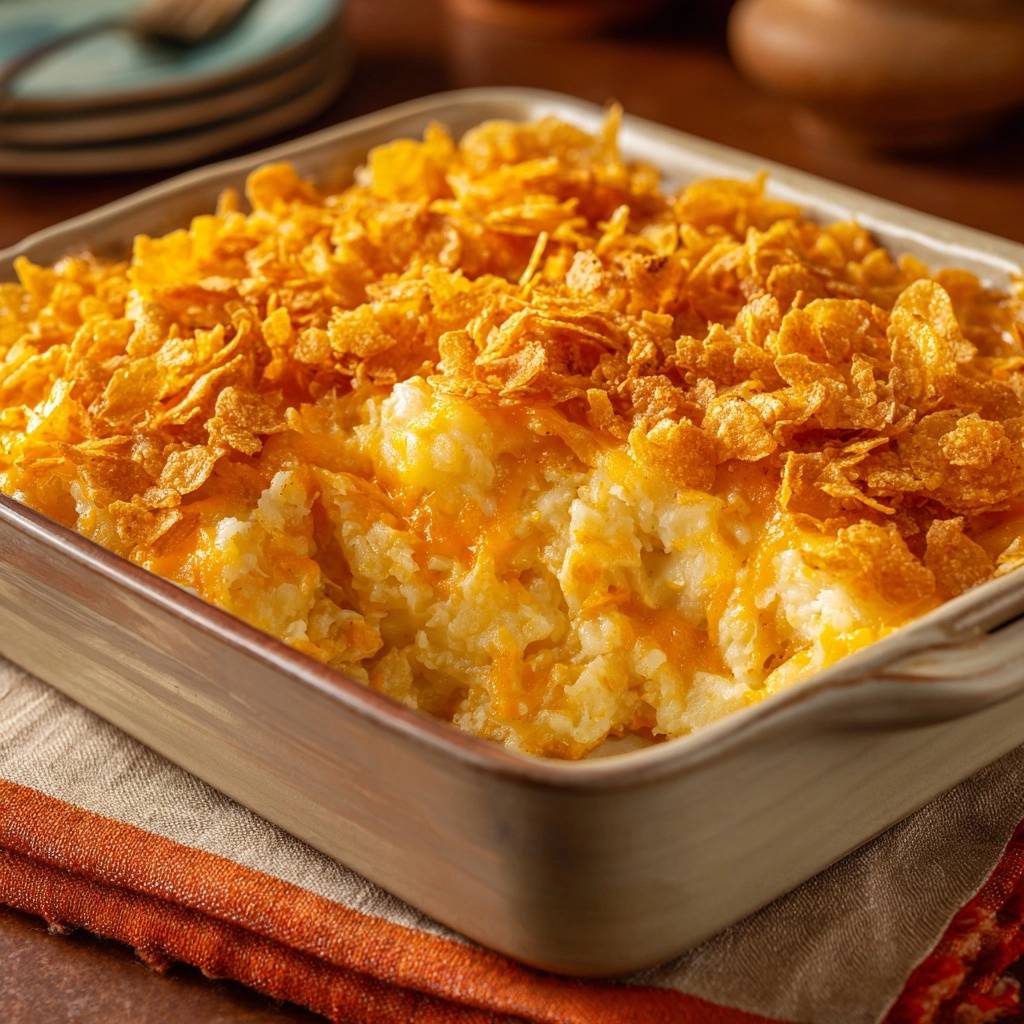
Oh man, I remember dodging potluck disasters with this method. The secret lies in the butter barrier on those cornflakes. It repels moisture perfectly, so your cheesy potato casserole shines. You’ll get that golden, crunchy top that lasts for hours, even as leftovers.
Key Ingredients for Creamy Cheesy Potato Casserole
Frozen shredded hash brown potatoes form the base of this cheesy potato casserole. Thaw them fully to release excess water, which prevents a watery dish. In addition, they hold up better than fresh ones during baking.
Sharp cheddar cheese brings bold flavor and meltability. Divide it, using most in the base for creaminess and the rest on top for a gooey layer. Freshly shredded melts smoother than pre-shredded, thanks to no anti-caking agents.
Sour cream and milk create that rich, velvety texture without separating. However, use full-fat sour cream for stability. Melted unsalted butter binds everything, with half going into the base and half coating the cornflakes for crunch.
Garlic powder adds subtle savoriness that pairs with potatoes. For substitutions, try Greek yogurt instead of sour cream. It thickens nicely and cuts tang a bit. Salt and pepper season simply, while parsley garnishes fresh.
Selecting Perfect Shredded Hash Browns
Frozen shredded hash browns beat fresh in cheesy potato casserole for moisture control. Fresh potatoes release too much starch and water, leading to gumminess. Thaw frozen ones in the fridge overnight, then pat dry if needed.
Cheese Choices for Ultimate Melt
Sharp cheddar rules for cheesy potato casserole flavor balance. It cuts through richness without overpowering. Always shred your own, as pre-shredded has starch coatings that resist melting and create clumps.
Science of Two-Stage Baking in Cheesy Potato Casserole
The two-stage bake makes this cheesy potato casserole texture perfect. First, cover at 350°F to gently steam the potatoes. This triggers starch gelatinization, setting a creamy interior without drying it out.
Therefore, the foil traps steam for even cooking. Next, uncover for the Maillard reaction on the cornflakes. That golden browning happens as sugars caramelize, creating irresistible crunch.
Butter on the cornflakes forms an emulsion barrier. It repels steam, so the topping stays crisp. Single-bake methods fail here, as moisture soaks everything. This approach guarantees your cheesy potato casserole wows.
Moisture Lock During Covered Phase
Foil creates convection steam in cheesy potato casserole. It keeps hash browns tender and prevents sogginess. Check for bubbly edges after 30 minutes, signaling perfect set.
Crisp Activation in Final Uncovered Bake
Buttered cornflakes crisp via Maillard browning in cheesy potato casserole. The fat coating blocks moisture chemically. You’ll see golden edges in 15 to 20 minutes.
Equipment Essentials for Cheesy Potato Casserole Success
A 9×13-inch glass dish ensures even heat for cheesy potato casserole. Glass retains moisture better than metal, which can over-brown edges. Grease it well to avoid sticking.
Heavy-duty foil seals tightly for the covered bake. Use a large mixing bowl for easy combining. An oven thermometer confirms 350°F accuracy, as ovens vary.
Crush cornflakes in a zip-top bag with a rolling pin for coarse texture. This keeps pieces sturdy. Pro tip: Glass pans may need 2 extra minutes, so watch closely.
Phase 1: Assembling the Cheesy Potato Base
Preheat your oven to 350°F and grease a 9×13 dish. In a large bowl, combine thawed hash browns, 1 1/2 cups shredded cheddar, sour cream, milk, 1/4 cup melted butter, salt, pepper, and garlic powder. Mix until evenly coated; the mixture should look creamy and hold together.
Spread it evenly in the dish. Press gently for uniform thickness. Cold ingredients mix best first, so don’t warm anything.
This base transforms from loose shreds to a cohesive, bubbly layer after baking. Even spreading prevents dry spots.
Mixing Techniques for Even Distribution
Fold gently in cheesy potato casserole to keep hash brown shreds intact. Overmixing mashes them into mush. Aim for just combined, with visible potato strands.
Phase 2: Covered Bake for Creamy Set
Cover the dish tightly with foil. Bake 30 minutes until edges bubble and the center feels hot. This locks moisture for a tender cheesy potato casserole heart.
Don’t peek early, or steam escapes. The aroma shifts to rich and garlicky. Resting now helps structure set before adding topping.
Phase 3: Cornflake Crust Preparation and Crisp Finish
While baking, crush 4 cups cornflakes coarsely. Toss with remaining 1/4 cup melted butter until every piece glistens. This even coat repels moisture perfectly.
Remove foil, sprinkle 1/2 cup cheese on top, then add buttered cornflakes evenly. Bake uncovered 15 to 20 minutes until golden and crisp. Cheese melts into a bubbly seal.
Let rest 10 minutes; it firms up for clean slices. Garnish with parsley for color. Total time: about 55 minutes, plus rest. Pro tip: Crust stays crunchy for hours thanks to the method.
Butter-Coated Cornflake Toss Method
Toss cornflakes in a bowl with butter for uniform adhesion in cheesy potato casserole. Drizzle slowly while stirring. This prevents dry spots that absorb moisture.
Make-Ahead and Freezing Cheesy Potato Casserole
Assemble the base up to 24 hours ahead; cover and chill. Bake straight from fridge, adding 5 minutes. For freezing, portion into dishes up to 2 months.
Thaw overnight in fridge before baking. Reheat leftovers at 350°F covered, then uncover to recrisp. The method keeps crust texture intact even after storing.
Portion for potlucks easily. Store leftovers in the fridge up to 3 days; reheat slices individually for best crunch.
Freezing Without Texture Loss
Par-bake the base covered before freezing cheesy potato casserole. Thaw fully in fridge, then add topping and finish. This skips excess moisture release.
Avoiding Pitfalls in Cheesy Potato Casserole
Soggy crust? Underbutter the cornflakes. Dry base means skimped milk; measure precisely. Uneven melt comes from cold cheese clumps, so shred fresh.
Overbaking dries edges, so use a timer. At high altitude, add 2 tablespoons milk and bake 5 minutes longer. Check doneness visually: bubbly and golden.
Dairy separation fixes with thorough mixing. Always rest 10 minutes post-bake for sliceable texture.
Fixing Soggy Cornflake Topping
The two-stage method prevents sogginess in cheesy potato casserole. Butter fully and bake uncovered last. If soggy, broil 1-2 minutes to recrisp.
Flavor Twists on Cheesy Potato Casserole
Swap sharp cheddar for pepper jack for heat. Add finely chopped onions or vegetarian bacon bits to the base for savoriness. Keep the crunchy cornflake crust intact.
Upgrade with thyme instead of parsley. For vegan, use plant-based cheese and sour cream; they melt well. Low-carb? Sub cauliflower rice for hash browns.
These keep the cheesy potato casserole core while boosting variety. Garlic powder amps up any twist.
Spicy or Herbed Variations
Boost garlic powder or add fresh chives for herbaceous lift in cheesy potato casserole. Pairs great with roasted turkey or veggie roasts at holidays. A dash of paprika adds smoke.
Perfect Pairings for Cheesy Potato Casserole
Balance the richness with roasted veggies like broccoli or a crisp green salad. Grilled chicken slices add lean protein. For holidays, serve alongside turkey.
Sparkling cranberry juice cuts the creaminess nicely. Potlucks love this with veggie trays. It feeds 10-12 generously, vanishing fast.
Cheesy Potato Casserole FAQ
Can I Use Fresh Potatoes?
Yes, but shred them finely, rinse under cold water to remove excess starch, then squeeze dry thoroughly. Pat with towels to mimic thawed hash browns in cheesy potato casserole. This controls moisture for creamy texture without gumminess.
How to Keep Crust Crunchy Longer?
The two-stage bake is key; it sets the base before adding buttered cornflakes. Store leftovers uncovered briefly or recrisp in a 400°F oven for 5 minutes. Crust stays firm for hours, even at room temp.
Gluten-Free Cheesy Potato Casserole?
Absolutely, use certified gluten-free cornflakes like Nature’s Path brand. Check garlic powder and other seasonings for gluten. Hash browns and dairy are naturally GF, so it works seamlessly.
Scaling for Smaller Batches?
Halve everything for an 8×8 dish; it serves 4-6. Bake covered 25 minutes, uncovered 12-15. Watch closely, as smaller batches cook faster. Full fat ratios stay the same for creaminess.
Vegetarian or Dairy-Free Options?
It’s already vegetarian. For dairy-free, swap cheddar for vegan shreds like Daiya, sour cream for cashew-based, and milk for almond or oat. Butter becomes plant-based; crust still crisps perfectly.
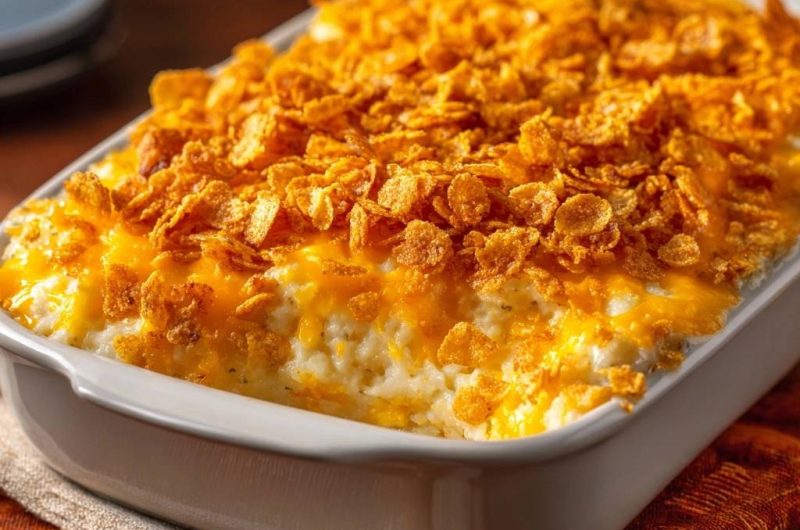
Cheesy Potato Casserole
Course: Side DishCuisine: AmericanDifficulty: easy12
servings15
minutes50
minutes60
Minutes320
kcalAmerican
Ingredients
2 pounds frozen shredded hash brown potatoes, thawed
2 cups shredded sharp cheddar cheese, divided
1 cup sour cream
1 cup milk
1/2 cup unsalted butter, melted and divided
1 teaspoon salt
1/2 teaspoon black pepper
1/2 teaspoon garlic powder
4 cups cornflakes, coarsely crushed
2 tablespoons chopped fresh parsley (optional, for garnish)
Directions
- Preheat oven to 350 degrees F. Grease a 9×13-inch baking dish.
- In a large bowl, mix thawed hash browns, 1 1/2 cups cheddar cheese, sour cream, milk, 1/4 cup melted butter, salt, pepper, and garlic powder until well combined. Spread evenly in the prepared dish.
- Cover tightly with foil and bake for 30 minutes, until edges are bubbly and center is hot. This covered step locks in moisture without steaming the future topping.
- While baking, prepare the cornflake crust: In a bowl, toss crushed cornflakes with remaining 1/4 cup melted butter until fully coated. This butter barrier repels moisture for guaranteed crispiness.
- Remove foil from casserole. Sprinkle remaining 1/2 cup cheese over top, then evenly distribute buttered cornflakes. Return to oven uncovered and bake 15 to 20 minutes more, until cornflakes are golden and crisp, and cheese is melted.
- Let rest 10 minutes before serving. Garnish with parsley if desired. The two-stage method ensures the crust stays crunchy for hours, even as leftovers.
Notes
- The two-stage method ensures the crust stays crunchy for hours, even as leftovers. Foolproof for holidays or potlucks.