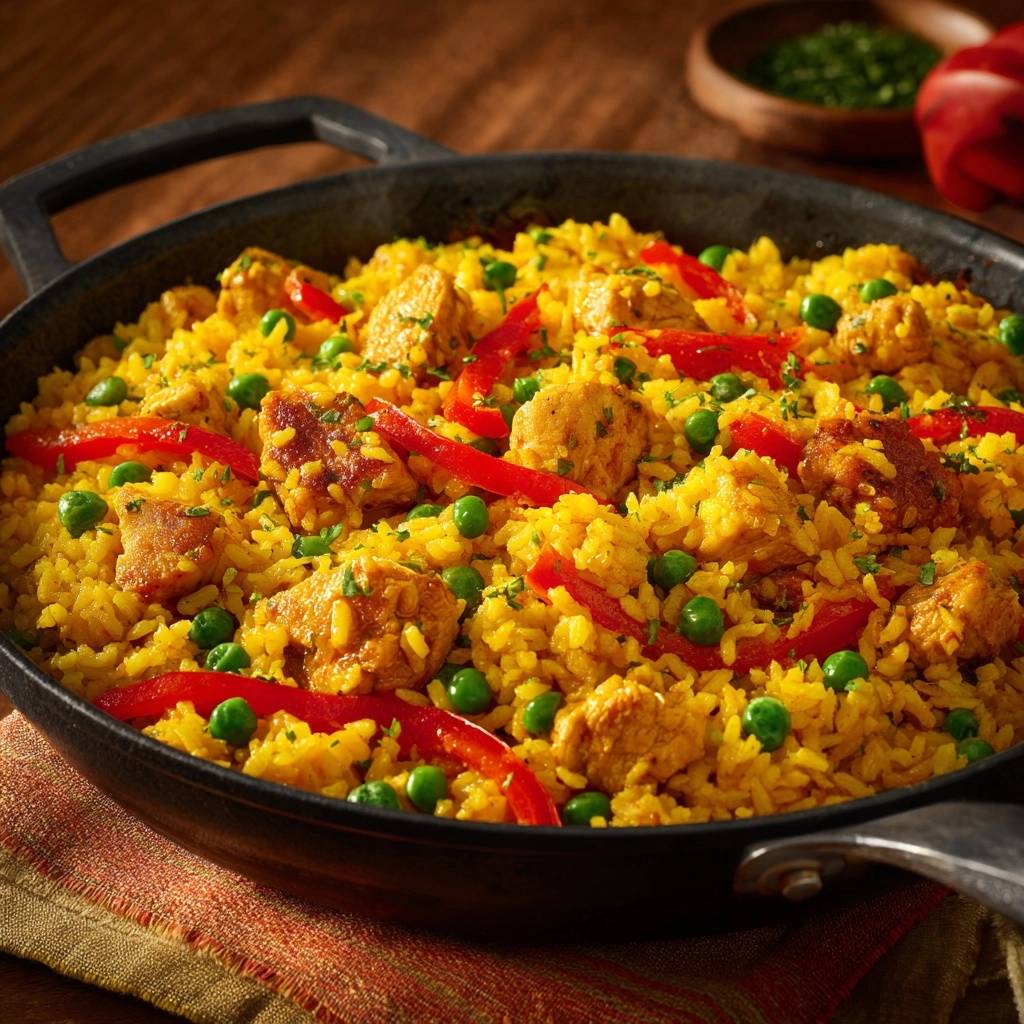
Ever bitten into home-cooked paella only to find the rice a gluey mess? Restaurants nail those fluffy, separate grains every time, but most home versions fall flat. This Chicken Paella fixes that with a dead-simple no-stir technique and precise 2:1 liquid ratio.
Therefore, you get restaurant-perfect texture without the hassle. The golden hues from turmeric or saffron pop against tender chicken chunks, crisp bell peppers, and that irresistible socarrat crust at the bottom. It’s Spanish comfort adapted for your kitchen.
Here’s the expertise booster: toasting the rice first seals in the starch, so it stays fluffy no matter what. Prep takes 15 minutes, cooking 30 more. Serves 4-6 generously, and it beats generic recipes hands down for flavor and foolproof results.
Key Ingredients for Chicken Paella Success
Short-grain rice like bomba or arborio forms the backbone. It absorbs three times its volume in liquid without bursting, unlike long-grain that stays dry. Use 2 cups for perfect fluffiness.
Grab 1 lb chicken thighs, cut into bite-sized chunks. Thighs stay juicy during simmering, while breasts dry out fast. Season them with salt, pepper, and 1 teaspoon smoked paprika for deep, smoky flavor.
One large red bell pepper sliced into strips adds crunch and sweetness. Frozen green peas (1 cup) bring pop without extra work; fresh work too if you thaw them first. In addition, 4 cups warmed chicken broth ensures even cooking.
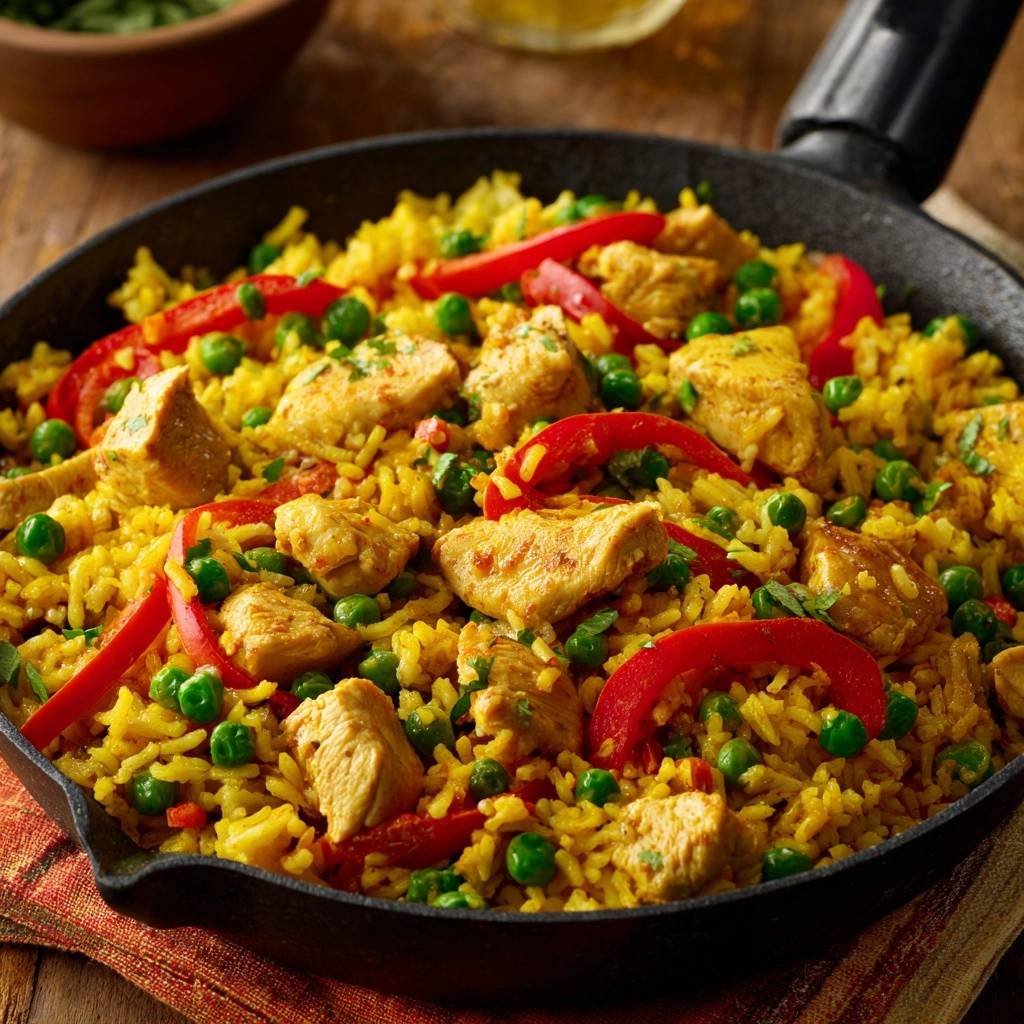
Three tablespoons olive oil coats everything for toasting. A teaspoon of turmeric or pinch of saffron threads delivers that authentic yellow glow without bitterness; turmeric’s cheaper and just as vibrant. Chopped fresh parsley finishes it bright.
- 2 cups short-grain rice (bomba or arborio)
- 1 lb chicken thighs, bite-sized
- 1 large red bell pepper, sliced
- 1 cup frozen green peas
- 4 cups warmed chicken broth
- 3 tbsp olive oil
- 1 tsp turmeric or pinch saffron
- 1 tsp smoked paprika
- Salt and pepper
- Parsley for garnish
Why Short-Grain Rice Prevents Mushiness
Bomba rice soaks up liquid like a champ without breaking down. Arborio works but risks creaminess if overdone. Long-grain fails here; it doesn’t absorb enough for paella’s tender bite.
Therefore, toasting seals the outer starch layer. This blocks excess release during cooking, guaranteeing separate grains. You’ll see them turn translucent, a sure sign it’s ready.
Chicken Choices for Tender Paella Bites
Thighs beat breasts for moisture retention in the long simmer. Skin-on thighs add extra flavor from rendered fat. Cut into even chunks so they cook uniformly.
Season early with salt, pepper, and paprika. This lets flavors penetrate deeply. Brown them well for that Maillard umami boost everyone craves.
History and Essence of Chicken Paella
Paella hails from Valencia, Spain, where wood fires cooked original versions with rabbit and snails. Families gathered around huge pans for these communal feasts. UNESCO even recognizes it as cultural heritage.
Chicken paella evolved for home cooks worldwide. It keeps the no-stir tradition that forms socarrat, that crunchy bottom crust Spaniards fight over. However, this recipe tweaks it with easy ingredients for fluffy perfection.
In addition, the wide pan and even heat mimic those Valencia fires. You’ll capture the essence without traveling.
Essential Tools for Authentic Chicken Paella
A paella pan’s wide, shallow shape lets liquid evaporate evenly. It creates the socarrat crust skillets can’t match. Go for 15-inch size to fit 2 cups rice comfortably.
Cast iron or carbon steel holds heat steadily for perfect browning. No paella pan? A large, shallow skillet works, but watch the edges. Use a wooden spoon just for toasting; metal scratches.
Warm broth on the stove or microwave to avoid shocking the rice. A clean kitchen towel for resting traps steam just right. These tools make success simple.
Mastering the No-Stir Chicken Paella Technique
This recipe breaks into five phases: sear chicken, toast rice, add veggies and spices, pour broth and simmer without stirring, then rest. Each builds flavor and texture.
Stick to timings for fluffy results. The no-stir science prevents starch from turning gummy. You’ll smell the aroma building, hear the sizzle fade. Get ready for that golden pan of joy.
Phase 1: Searing Chicken for Deep Flavor
Heat 3 tablespoons olive oil in your paella pan over medium-high until it shimmers. That’s your cue it’s hot enough. Season chicken chunks with salt, pepper, and 1 teaspoon smoked paprika.
Brown for 5 minutes, turning for golden crusts on all sides. Maillard reaction kicks in here, building rich umami. Remove and set aside; don’t skip draining excess fat for cleaner rice.
Pro tip: If pan’s crowded, sear in batches. This keeps heat high and prevents steaming.
Phase 2: Toasting Rice to Lock in Fluffiness
Add 2 cups rice to the hot pan with chicken bits. Stir constantly for 2-3 minutes until grains look translucent and smell nutty. Oil fully coats them now, sealing starch inside.
Don’t rush this; under-toasting leads to clumps. You’ll feel the grains separate easily. This step’s your insurance against mush.
Phase 3: Vegetables and Spices Integration
Toss in sliced red bell pepper and 1 cup peas. Cook 2 minutes until peppers soften slightly and release sweetness. Sprinkle 1 teaspoon turmeric or saffron now for even color bloom.
Stir just once to mix. Turmeric gives bold yellow without saffron’s price tag; both avoid bitterness if not overcooked. Veggies add pops of color and texture.
Phase 4: Broth Addition and No-Stir Simmer
Pour in 4 cups warmed chicken broth, that exact 2:1 ratio to rice. Crank heat to high for a boil, then drop to medium-low. Nestle chicken back evenly.
Here’s the key: no stirring from now on. Simmer uncovered 18-20 minutes until liquid’s gone and rice tenders. Listen for bottom crackle signaling socarrat. If edges dry first, tilt pan gently.
Pro tip: At high altitude, add 1/4 cup extra broth and extend simmer 2 minutes.
Phase 5: Resting and Fluffing Perfection
Pull pan off heat. Cover with a clean towel for 5 minutes; it absorbs excess steam for even hydration. Grains finish cooking gently.
Fluff with a fork in outward strokes to keep them separate. Scatter parsley for fresh brightness. Serve hot; that socarrat awaits.
Science of Fluffy Chicken Paella Rice
Short-grain rice’s amylopectin starch gelatinizes with heat and liquid. Stirring breaks grains, releasing gluey starch. No-stir lets it evaporate controlled, keeping grains intact.
The 2:1 ratio matches bomba’s absorption perfectly. Heat gradients caramelize bottom sugars into socarrat. Broth’s slight acidity tenderizes chicken too.
In addition, toasting hardens the exterior, blocking inner starch burst. Result? Fluffy tops, crunchy bottoms, no gumminess. Science serves flavor here.
Avoiding Chicken Paella Pitfalls
Over-stirring after broth is the biggest killer; it releases starch for mush. Wrong ratio drowns or dries rice. Always measure precisely.
Cold broth shocks rice into uneven cooking. Covered simmering traps steam, making it soggy. Keep uncovered. Low-quality pans prevent socarrat.
Pro tip: Taste rice at 18 minutes. If needed, add hot broth 2 tablespoons at a time.
Fixing Undercooked or Gluey Rice
Undercooked shows hard centers; gluey means stirred too much. Rescue undercooked by adding 1/4 cup hot broth, simmer 3 minutes more. For gluey, spread thin and bake 10 minutes at 400F.
Prevent with exact ratio and no-stir discipline.
Perfecting the Socarrat Crust
Socarrat forms when liquid vanishes; tilt pan to check golden bottom. Increase heat last 2 minutes if needed, but watch for burning. Carbon steel pans excel here.
Crackle sound confirms it. Patience rewards that crisp bite.
Flavor Twists on Chicken Paella
Swap in shrimp for seafood vibe; add them phase 4. Artichoke hearts boost veggies without losing fluff. Lemon zest at end brightens it up.
Extra smoked paprika amps heat. For vegan, use seitan chunks and veg broth. These keep the no-stir magic intact.
Seafood paella nods to coastal variants, but chicken stays hearty and simple.
Pairing Sides with Chicken Paella
Crisp arugula-tomato salad cuts the richness. Garlic aioli for dipping chicken and socarrat. Simple steamed green beans add green balance.
Albariño’s acidity pairs perfectly. Sparkling water with lemon refreshes too. Serve family-style straight from the pan for fun.
Chicken Paella Storage and Reheating
Store leftovers in airtight container in fridge up to 4 days. Freezes well for 2 months; rice texture holds thanks to short-grain.
Reheat stovetop on low with splash of broth for steam, covered 5 minutes. Oven at 350F foil-covered works too. Revive socarrat by crisping uncovered last minute.
Meal prep in portions; it tastes even better day two.
Troubleshooting Chicken Paella Issues
Why is my rice mushy?
You stirred after adding broth, releasing starch. Or ratios were off. Fix next time with strict no-stir and exact 2:1 measure. If it happens, spread thin on sheet pan, bake 400F 10 minutes to dry.
Why no golden color?
Saffron needs soaking in warm broth 10 minutes first, or turmeric wasn’t bloomed. Stir spices well in phase 3. Fresh high-quality threads make a big difference without overpowering.
Why is chicken dry?
Breasts overcook fast; use thighs. Or simmer went too long. Check at 18 minutes, remove if done. Browning first locks in juices.
Why no socarrat crust?
Pan wasn’t hot enough at end, or wrong pan type. Use cast iron, crank heat last 2 minutes after liquid absorbs. Listen for sizzle; tilt to peek.
Can I make this ahead?
Yes, but best fresh for socarrat. Prep veggies and season chicken morning of. Cook fully, then reheat as above. Flavors deepen overnight.
Vegetarian version?
Skip chicken, add mushrooms or chickpeas phase 1 for heartiness. Use veg broth. Same no-stir keeps rice fluffy.
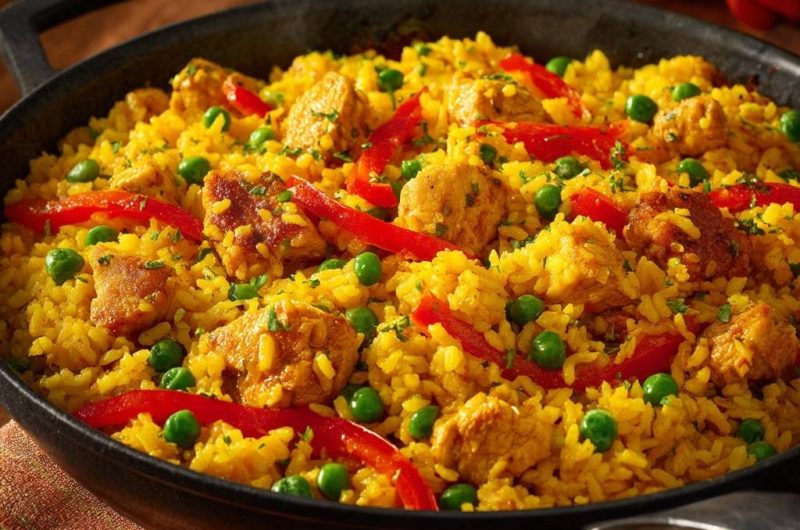
Chicken Paella
Course: Main CourseCuisine: SpanishDifficulty: easy4
servings15
minutes25
minutes40
Minutes450
kcalSpanish
Ingredients
2 cups short-grain rice (like bomba or arborio)
1 lb chicken breast or thighs, cut into bite-sized chunks
1 large red bell pepper, sliced into strips
1 cup frozen green peas
4 cups chicken broth (warmed)
3 tablespoons olive oil
1 teaspoon turmeric or pinch saffron threads (for yellow color)
1 teaspoon smoked paprika
Salt and pepper to taste
Chopped fresh parsley for garnish
Directions
- Heat olive oil in a large paella pan over medium-high heat until shimmering. Season chicken chunks with salt, pepper, and paprika. Brown chicken for 5 minutes until golden on all sides. Remove and set aside.
- In the same pan, add rice. Toast for 2-3 minutes, stirring constantly, until grains are translucent and coated in oil. This step prevents mushiness by sealing the starch.
- Stir in sliced red bell pepper and peas. Cook 2 minutes to soften slightly. Sprinkle in turmeric or saffron.
- Pour in warmed chicken broth (exact 2:1 rice-to-liquid ratio for fluffiness). Bring to a boil over high heat. Nestle browned chicken back into the rice.
- Once boiling, reduce to medium-low. DO NOT STIR from this point. Simmer uncovered for 18-20 minutes until liquid is fully absorbed and rice is tender with a slight crust (socarrat) forming on the bottom. This no-stir method is the game-changer: it allows even evaporation, prevents starch release that causes gumminess, and guarantees fluffy grains.
- Remove from heat. Cover with a clean towel and rest 5 minutes. Fluff gently with a fork. Garnish with parsley. Serve hot for restaurant-perfect texture.
Notes
- Use short-grain rice like bomba or arborio for best results. The no-stir method after adding broth is key to preventing mushy rice and forming the socarrat crust.