Ever bitten into chicken piccata only to get tough, dry disappointment? You’re not alone. Most recipes skip the crucial step of pounding chicken breasts super thin. That simple move sears them fast while keeping every bite juicy and golden.
Therefore, this chicken piccata delivers restaurant results in under 30 minutes. The bright lemon-caper sauce clings perfectly to those tender cutlets. You’ll wonder why you ever settled for takeout versions.
Here’s the expertise booster: pound to exactly 1/4-inch thickness. It ensures even cooking without overdoing it. Follow these foolproof steps, and your chicken piccata will shine every time.
Why Pound Chicken for Piccata Perfection
Pounding chicken breasts to 1/4-inch thinness changes everything in chicken piccata. Thick pieces dry out because the outside overcooks before the inside hits 165F. Thin cutlets cook in seconds, locking in juices through even heat penetration.
In addition, this technique breaks down tough proteins gently. You get that silky texture without chewiness. Compare a puffy breast to a flat, uniform cutlet, and the difference screams perfection.
However, don’t skip the plastic wrap. It prevents sticking and tearing. Your piccata chicken emerges pristine and ready to sear.
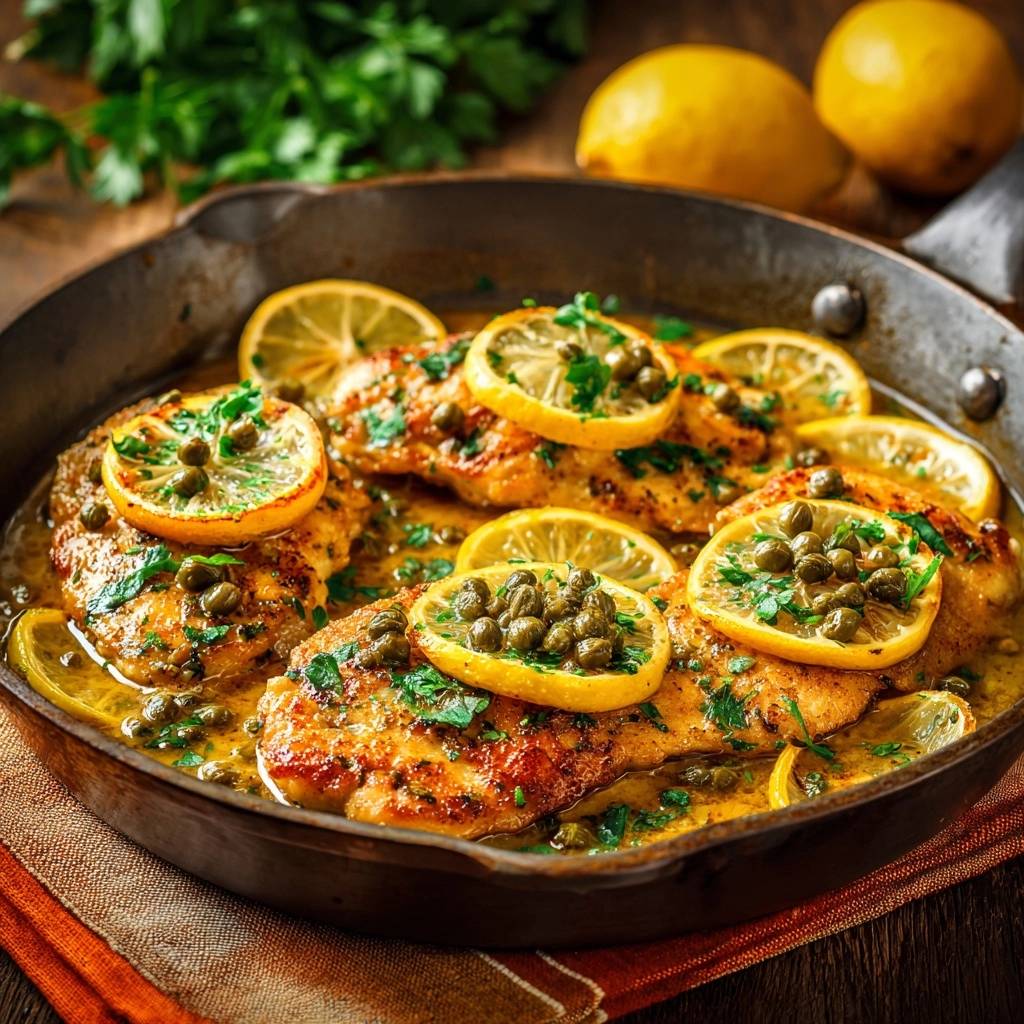
Selecting Best Chicken Breasts
Choose uniform, fresh boneless skinless chicken breasts around 6-8 ounces each. They slice evenly into 8 thin cutlets for consistent cooking. Smaller ones work too, but avoid huge ones that unevenly pound.
Therefore, check for plump, moist look at the store. Store in the fridge up to 2 days pre-prep. Pat dry before slicing for better searing.
Mastering the Pounding Technique
Slice each breast horizontally into 2 cutlets. Place between plastic wrap or parchment. Use a meat mallet’s flat side, starting from the center and working out with firm, even strokes.
A rolling pin works if you lack a mallet. Aim for 1/4-inch; check by feel, not guess. Over-pounding tears the meat, so stop once uniform.
Safety first: hold the wrap steady and pound away from your hands. Season now with salt and pepper. Dredge lightly in flour, shaking off excess for crisp results.
Key Ingredients for Bright Chicken Piccata
Flour dredging gives that golden crust without heaviness. Use 1 cup all-purpose, seasoned with salt and pepper to taste. It seals juices during the quick sear.
Olive oil (3 tablespoons) and unsalted butter (3 tablespoons, divided) build flavor layers. Oil handles high heat; butter adds richness later. Capers (1/2 cup, drained) bring briny pop that balances lemon tang.
Fresh lemon juice and zest from 3 lemons cut through richness perfectly. One medium onion, thinly sliced, softens fast for subtle sweetness. Chicken broth (1 cup) deglazes fond into silky sauce, finished with 1/4 cup chopped parsley.
Lemon Zest and Juice Balance
Three lemons yield bright zest and juice without bottled bitterness. Zest infuses oils for aroma; juice tenderizes with acid. Use a microplane for fine zest, avoiding white pith.
This ratio keeps chicken piccata tangy, not puckery. Taste sauce and add a squeeze if needed.
Capers and Onion Sauté Dynamics
Drain capers well to control saltiness; they amplify umami in every bite. Thin onion slices soften in 2 minutes, releasing sweet juices without mushiness.
Sauté onions first for base flavor. Capers go in next, blooming their brininess instantly.
Equipment Essentials for Chicken Piccata
A 12-inch stainless steel skillet shines here. It builds fond for sauce depth, unlike nonstick which lacks grip. Heat oil-butter mix until shimmering for perfect sear.
Grab a meat mallet, tongs for flipping, and instant-read thermometer for 165F doneness. Tongs prevent piercing juicy cutlets. Budget rolling pin doubles as mallet.
Pro tip: wide skillet fits batches without crowding. Stainless wins for piccata chicken every time.
Skillet Heat and Shimmer Test
Heat 2 tablespoons oil and 1 tablespoon butter over medium-high. Shimmer means tiny bubbles and faint smoke; test by flicking water, it should dance.
Too low steams chicken; too hot burns flour. Safety note: use long tongs and vent hood.
Seared Chicken Piccata Cutlets Step-by-Step
Prep cutlets as pounded and dredged. Heat skillet hot, add in batches of 4 max. Sear 2-3 minutes per side till golden; juices run clear at 165F.
Transfer to plate; they finish cooking in sauce later. Crisp exterior yields to moist inside. Don’t overcrowd, or steam ruins the crust.
Building the Lemon-Caper Sauce Base
In same skillet, sauté onion slices 2 minutes till soft and fragrant. Stir in drained capers, lemon zest, and juice. Pour in broth; scrape browned bits vigorously for flavor bomb.
Simmer 3-4 minutes till slightly thick. Aroma shifts to bright, tangy heaven. This fond makes chicken piccata sauce unbeatable.
Emulsifying Butter into Piccata Sauce
Off heat, swirl in 2 tablespoons cold butter chunks. Whisk constantly for glossy emulsion; heat breaks it otherwise. Return chicken; spoon sauce over 1 minute to infuse.
Butter thickens without separating. Pro tip: cold butter is key for silkiness.
Science of Juicy Chicken Piccata Sauce
Maillard reaction during searing browns cutlets, creating fond packed with umami. Lemon acid tenderizes proteins gently. Chicken piccata sauce builds as broth dissolves those bits into depth.
Butter emulsifies off-heat, fat droplets binding for sheen. Simmer control thickens without reducing lemon brightness. Even thin cutlets denature proteins at 165F precisely, no dryness.
Therefore, temp mastery keeps everything juicy. Fond transforms simple broth into pro-level chicken piccata sauce.
Why Thin Cutlets Stay Moist
Thin 1/4-inch cutlets heat penetrates evenly to 165F. Proteins tighten uniformly, trapping moisture. Thick ones overcook exterior waiting for center.
Quick sear minimizes juice loss. Pound first, thank me later.
Avoiding Dry Chicken Piccata Pitfalls
Top mistake: skipping pound, leading to dry chicken piccata. Fix with 1/4-inch thinness. Overcrowding drops temp, steaming instead of searing; batch cook always.
Post-sauce overcooking dries cutlets. Warm just 1 minute. Rest on plate tented with foil if needed.
Visual check: golden crust, clear juices. These tweaks guarantee success.
Overcrowding and Temp Drops
Crowded pan traps steam, yielding pale, soggy chicken. Batch in single layer; wipe skillet if needed between. Heat rebounds fast for next round.
Sauce Separation Fixes
Hot pan splits butter; add cold off-heat and whisk. If broken, whisk in teaspoon cold water. Stays glossy through serving.
Flavor Twists on Classic Chicken Piccata
Add minced garlic with onions for punch. Artichoke hearts boost earthiness. Swap parsley for basil if you crave herbal lift.
Gluten-free flour dredges fine; dairy-free butter emulsifies well. Keep lemon-caper core intact. Broth-only stays bright without subs.
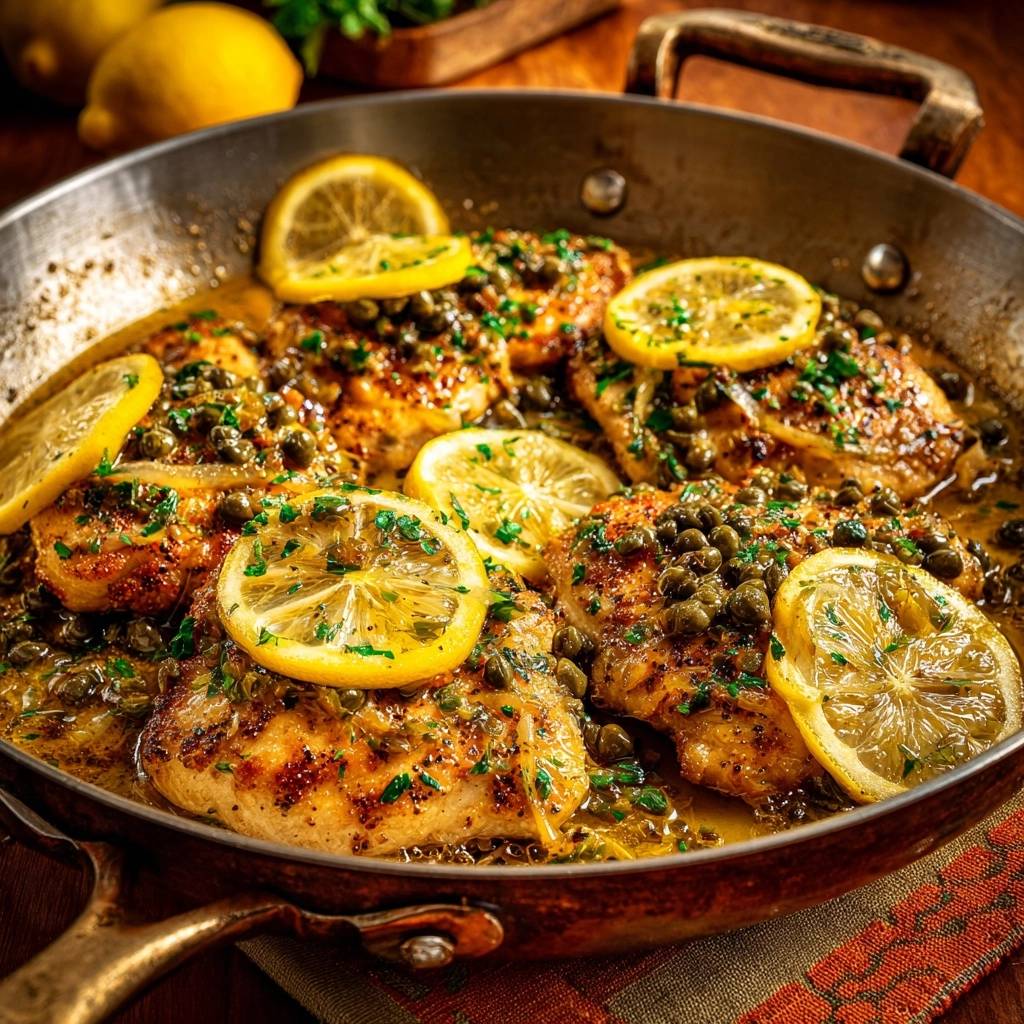
Pro tip: extra lemon slices on plate amp freshness.
Make-Ahead Chicken Piccata Storage
Store leftovers in airtight container fridge up to 3 days. Reheat gently in skillet with splash broth to revive sauce. Freezes 2 months; thaw overnight, avoid microwave dryness.
Perfect Pairings for Chicken Piccata
Angel hair pasta soaks up lemon-caper sauce beautifully. Roasted asparagus adds crisp green bite. Couscous bulks it family-style.
Plate with parsley sprinkle and lemon slices. Crisp white wines cut richness perfectly.
Chicken Piccata Troubleshooting FAQ
Why is my chicken piccata dry?
Thick cutlets overcook before center reaches 165F. Always pound to 1/4-inch thinness for quick, even searing. Check temp early; rest briefly if ahead. Thin is your juiciness insurance.
Can I use chicken thighs for chicken piccata?
Yes, boneless skinless thighs work great; pound same way for uniformity. They stay extra moist due to fat, but trim excess. Sear same time; flavor holds up to bright sauce.
Why is my chicken piccata sauce too thin?
Short simmer or weak fond. Scrape pan bits thoroughly after searing, then simmer 4 full minutes. Cold butter swirl thickens it glossy. If needed, cornstarch slurry (1 tsp in water) boosts without dulling lemon tang.
Vegetarian version of chicken piccata?
Tofu or tempeh cutlets pound and dredge perfectly; sear crisp. Eggplant slices mimic texture too. Same sauce doubles brininess; serve over pasta for hearty plant-based piccata.
Is the 30-minute prep time realistic for chicken piccata?
Absolutely, with practice. Pounding takes 5 minutes, searing 8-10 in batches, sauce 7 minutes. Mise en place speeds it: slice onion and zest lemons first. First try might hit 40, but it’s fast forever after.
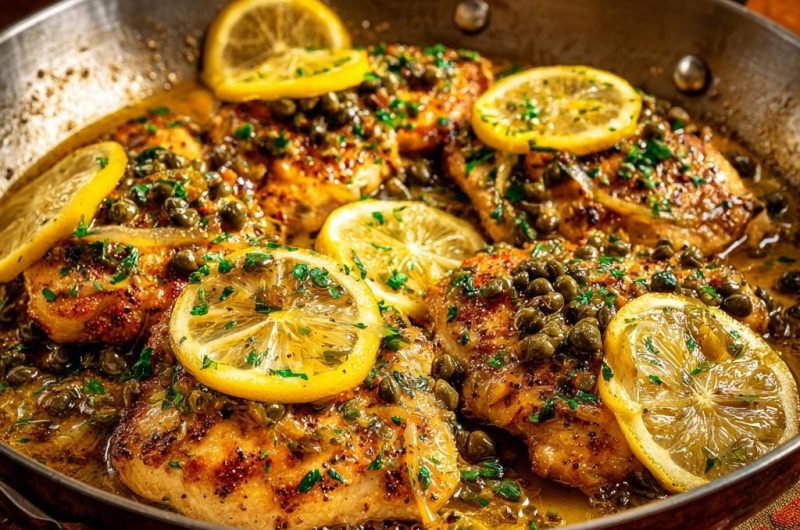
Chicken Piccata
Course: Main CourseCuisine: Italian-AmericanDifficulty: easy4
servings15
minutes15
minutes30
Minutes450
kcalItalian-American
Ingredients
4 boneless skinless chicken breasts
1 cup all-purpose flour
Salt and black pepper, to taste
3 tablespoons olive oil
3 tablespoons unsalted butter, divided
1 medium onion, thinly sliced
1/2 cup capers, drained
Juice and zest of 3 lemons, plus lemon slices for serving
1 cup chicken broth
1/4 cup chopped fresh parsley
Directions
- Slice each chicken breast horizontally into 2 thin cutlets (8 total). Place between plastic wrap and pound to 1/4-inch thickness with a meat mallet. This even thinness is the key to no more dry chicken: it cooks through in seconds without toughening. Season with salt and pepper, then dredge lightly in flour, shaking off excess.
- Heat 2 tablespoons olive oil and 1 tablespoon butter in a large skillet over medium-high heat until shimmering hot (about 2 minutes). Add chicken in batches; sear 2-3 minutes per side until golden and cooked through (internal temp 165F). Transfer to a plate; do not overcrowd for crisp sear.
- In same skillet, add onion slices; saute 2 minutes until softened. Stir in capers, lemon zest, and juice. Pour in broth; scrape up browned bits. Simmer 3-4 minutes until slightly thickened.
- Swirl in remaining 2 tablespoons butter for glossy sauce. Return chicken to skillet; spoon sauce over top and warm 1 minute. This quick sauce bath infuses juiciness without overcooking.
- Garnish with parsley and lemon slices. Serve hot for restaurant-worthy, never-dry piccata.
Notes
- Pound chicken to 1/4-inch thickness for best results. Use a meat thermometer to ensure 165°F internal temperature. Do not overcrowd the skillet for a crisp sear.