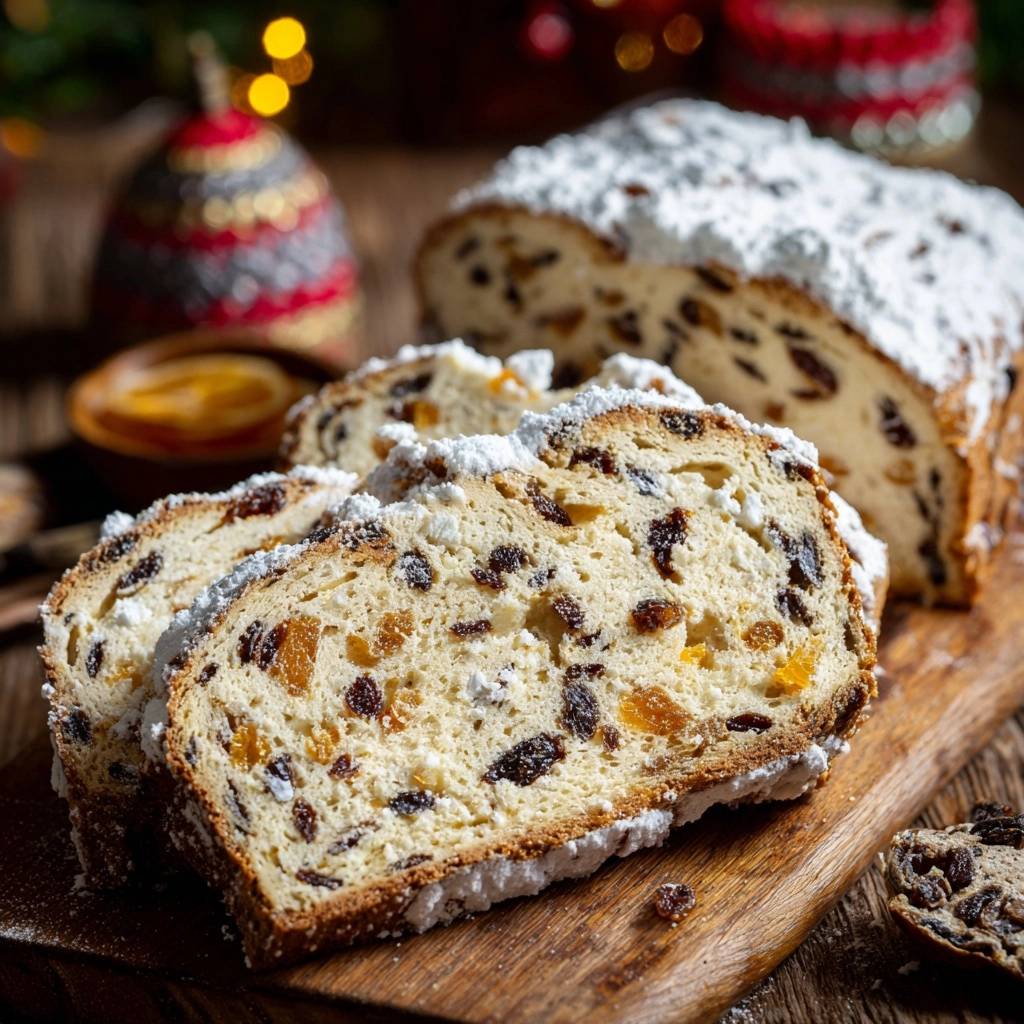
Store-bought Christmas stollen crumbles into dry disappointment every holiday season. You’ve bitten into those dense, flavorless slices that leave you wishing for the real deal. But this homemade Christmas stollen recipe changes everything with its butter bath that keeps it tender for weeks.
Therefore, you get plump fruits and a rich crumb without the usual letdown. In addition, the soaking step plumps raisins perfectly, and that post-bake treatment seals in all the moisture. It’s the moist Christmas stollen you’ve craved.
The secret lies in the triple butter brushing while hot. This traps steam and lets butter penetrate deeply, so each slice melts with buttery goodness. You’ll never go back to store versions after this.
Christmas Stollen Ingredients Breakdown
Flour and Yeast Foundation
Start with 4 cups all-purpose flour for the perfect structure in your Christmas stollen. It gives that tender yet sturdy crumb without toughness. Bread flour works too, but it makes a chewier loaf, so stick to all-purpose for classic softness.
Next, activate one packet of active dry yeast in 1 cup warm milk at exactly 110 degrees F. This creates a bubbly sponge that builds flavor and lift. If the milk’s too hot, it kills the yeast, so use a thermometer for success.
Butter, Eggs, and Sweeteners
Soften 1/2 cup unsalted butter for unbeatable richness in the dough. Unsalted lets you control the saltiness perfectly. Room temperature butter creams smoothly into the mix.
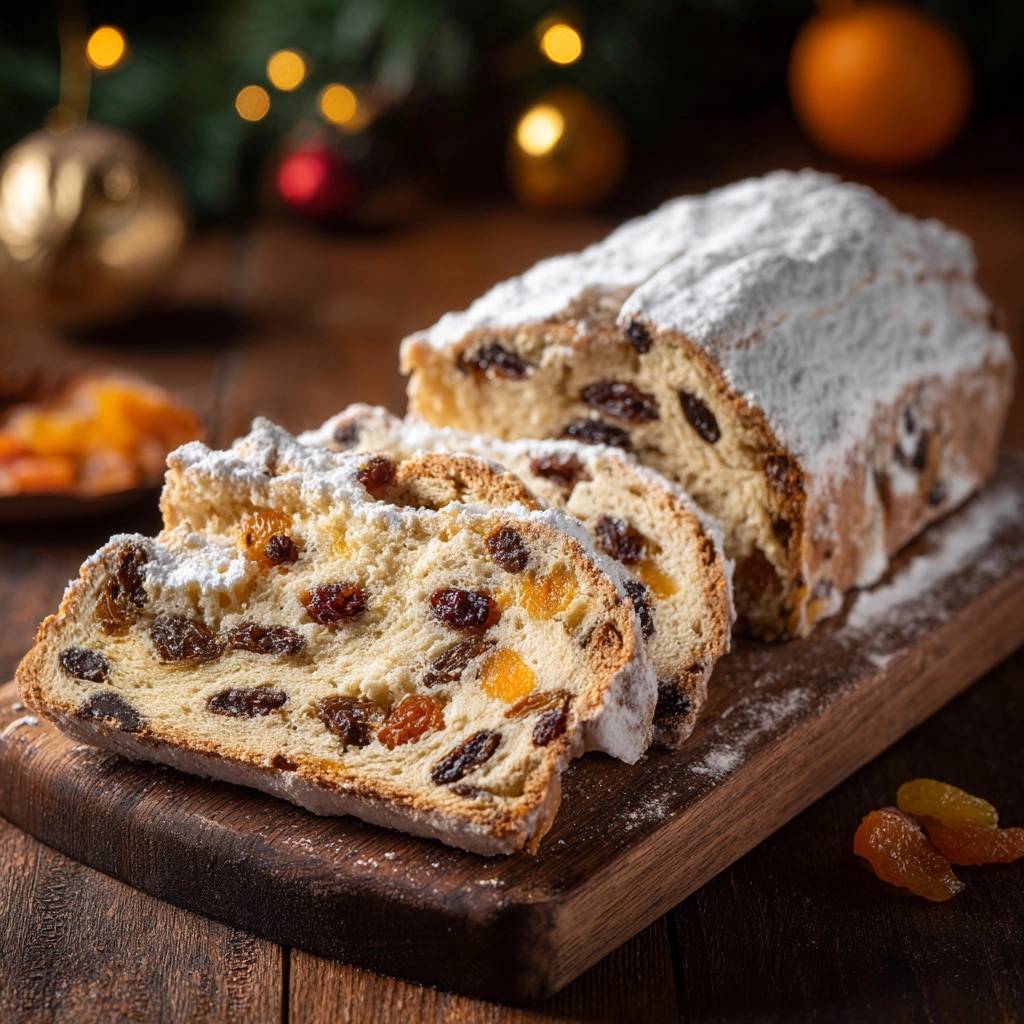
Two large eggs bind everything and add moisture, while 1/2 cup granulated sugar feeds the yeast and sweetens gently. Therefore, don’t skip unsalted butter, or the flavor overpowers the fruits.
Fruits: Raisins and Candied Peel
Soak 1 cup raisins and 1/2 cup diced candied orange peel in 1/4 cup orange juice for 30 minutes. This plumps them up, so they burst with juiciness instead of drying out the crumb. Drain well to avoid soggy dough.
In addition, the citrus soak infuses subtle brightness that cuts through the buttery richness. Fresh peels work best, but quality candied ones save time without sacrificing taste.
Post-Bake Butter and Sugar Layers
Reserve 1 cup melted unsalted butter and 2 cups powdered sugar for the magic finish. You’ll brush and dust in three layers right after baking. This seals in tenderness like nothing else.
However, use melted butter hot from the pan for best absorption. The sugar forms a crisp shell that keeps moisture locked inside for days.
Yeast Activation for Christmas Stollen
Dissolve the yeast in warm milk, then stir in 1 cup flour and 1/4 cup sugar. Cover it and let it rise in a warm spot for 30 minutes until bubbly and doubled. This sponge develops deep flavors through fermentation.
Look for a foamy top and yeasty aroma, proof of active yeast. If it doesn’t bubble, your yeast is dead, so start over with fresh. A draft-free spot around 80 degrees F speeds things perfectly.
Pro tip: Place the bowl over a pan of hot water for consistent warmth. This prevents flat dough every time.
Kneading the Base Dough
Add the remaining flour, sugar, butter, eggs, salt, and vanilla to the sponge. Mix into a soft dough, then knead on a floured surface for 8-10 minutes until smooth and elastic. It should pass the windowpane test, stretching thin without tearing.
Therefore, knead vigorously to develop gluten for structure. Short kneading leaves dense stollen, so push through until satiny.
Incorporating Fruits into Stollen Dough
Flatten the dough and press in the drained fruits evenly. Knead gently just until distributed, about 1-2 minutes. Rough handling tears the fruits, releasing juice that toughens the crumb.
This step keeps fruits plump and intact for juicy bites. In addition, even distribution means no dry spots. Feel the dough firm up slightly from the fruit’s sugar.
Pro tip: Lightly flour your hands to prevent sticking during this delicate knead.
First Rise Technique
Place the fruited dough in a greased bowl, cover with plastic, and let rise 1 hour until doubled. Keep it humid by spritzing the cover or using a proofing box. Overproofing makes it collapse later.
Therefore, poke it gently; it springs back slowly when ready. A warm kitchen works wonders here.
Shaping Traditional Stollen Loaf
Punch down the dough and shape into a 12×8-inch oval on parchment-lined sheet. Slash 1-inch deep down the center lengthwise. Fold one long side over the other, overlapping slightly into a crescent.
This classic shape mimics a swaddled Christ child and ensures even baking. Cover loosely and rise 30 minutes until puffy. Visual cue: It should jiggle slightly when nudged.
In addition, parchment prevents sticking and eases transfer. Press gently to seal the fold.
Baking Christmas Stollen Perfectly
Preheat to 350 degrees F and bake 40-45 minutes on the middle rack until golden. Tap for a hollow sound and check 190 degrees F internal temp. A bit of steam from a pan of water crisps the bottom nicely.
However, rotate halfway if your oven heats unevenly. Underbaking leaves a gummy center, so trust the thermometer over color alone.
Post-Bake Butter Bath Method
Pull the hot stollen and brush immediately with 1/3 cup melted butter all over, even the bottom. Dust generously with 2/3 cup powdered sugar. Cool 10 minutes on a rack.
Repeat twice more with remaining butter and sugar. Each layer melts into the crumb, trapping steam for supreme moistness. Work fast while steaming hot for deep penetration.
The aroma hits heavenly here, buttery and sweet. This transforms good stollen into legendary.
Why Triple Layers Work
Single brushing leaves dry edges, but triple layers build a butter barrier. Butter emulsifies with steam, while sugar crystallizes into a protective crust. Therefore, flavors intensify over time.
In addition, each dusting absorbs excess butter, preventing greasiness. Compare to store-bought: theirs skips this, so it dries fast.
Resting Christmas Stollen for Moisture
Wrap the warm stollen tightly in foil right after the final dust. Rest at room temp 1-2 days, or fridge up to a week. Butter soaks in fully, melding flavors into pure holiday bliss.
Slice thin for sharing; thicker for indulgent bites. Perfect for gifting in festive tins. The wait’s worth it, trust me.
Pro tip: Label the foil with rest date to track perfection.
Science of Moist Christmas Stollen
Fruit soaking adds hydration from orange juice, preventing dry pockets. Butter emulsifies during rests, softening gluten strands. Resting lets enzymes break down starches for tenderness.
Therefore, homemade crushes store-bought dryness every time. Steam trapping in the butter layers keeps it fresh weeks longer. Gluten develops just right from proper kneading.
In addition, yeast fermentation creates airy pockets that hold moisture. Skip any step, and it crumbles.
Yeast Fermentation Effects
The bubbly sponge produces CO2 for lift and flavor compounds like esters for fruitiness. Keep temps below 85 degrees F to avoid off-flavors. Therefore, controlled proofing equals pro results.
Short fermentation keeps it sweet; longer builds complexity.
History of Christmas Stollen Tradition
Christmas stollen started in 15th-century Dresden as a lean fasting bread of flour, water, and oats. Bakers petitioned for butter, but a “butter tax” limited it until the 1700s.
Therefore, it evolved into the rich, fruit-studded loaf we love. Today, moist versions like this honor that tradition with modern twists. Germans still celebrate with massive Stollenfest loaves.
In addition, the shape symbolizes baby Jesus’ swaddling clothes. It’s a holiday staple across Europe and beyond.
Avoiding Dry Christmas Stollen Mistakes
Skipping fruit soak leaves chewy raisins that suck moisture from dough. Overkneading fruits bursts them, toughening everything. Underbaking means dense, wet centers.
Single butter brush or no rest dries it out fast. Always hit 190 degrees F internal. Therefore, follow the triple treatment religiously.
Pro tip: Weigh flour for precision; scooping packs too much, drying the loaf.
Temperature Troubleshooting
Milk over 115 degrees F kills yeast, flattening your stollen. Oven below 350 degrees bakes gummy. Drafts during proofing stall rise.
Fix with instant-read thermometer everywhere. Warm proofs in off oven with light on. Therefore, steady temps guarantee fluff.
Christmas Stollen Make-Ahead Guide
Soak fruits and mix dough a day ahead; fridge overnight for flavor boost. Bake, butter, and rest as directed. Freezes whole or sliced up to 3 months airtight.
Thaw overnight in fridge, then room temp. Ideal for holiday prep. For gifting, wrap in parchment then ribboned boxes.
In addition, slice and freeze individually for grab-and-go treats.
Pairing Christmas Stollen Slices
Slice 1/2-inch thick and serve with strong coffee for breakfast. Mulled tea complements the fruits beautifully. Add to cheese boards with sharp cheddar.
Therefore, enjoy as dessert or snack. Kids love it toasted with butter. Pairs perfectly with holiday gatherings.
Christmas Stollen FAQ
Can I Use Instant Yeast?
Yes, swap for active dry without proofing. Mix it directly with dry ingredients, and add warm milk to the dough. Rise times stay the same, but watch closely as it acts faster. This skips the sponge step for quicker prep.
Why Is My Stollen Dense?
Density comes from underkneading, old yeast, or excess flour. Knead to windowpane, proof yeast first, and measure flour by weight. Cold ingredients slow rise too, so warm eggs and butter help. Fix next time with fresh yeast and precise measuring.
How Long Does It Stay Moist?
Properly buttered and rested stollen stays moist 1-2 weeks at room temp in foil. Fridge extends to 3 weeks. Freezes 3 months airtight; thaw in fridge. Slice only after full rest for best texture.
Gluten-Free Christmas Stollen Possible?
Yes, use a 1:1 gluten-free flour blend with xanthan gum. Add extra 2 tablespoons milk for hydration, as GF absorbs more. Texture is softer, not as lofty, but fruits and butter keep it tasty. Knead less to avoid gumminess.
Scaling for Smaller Batches?
Halve all ingredients for one smaller loaf. Shape to 8×6-inch oval, bake 35-40 minutes. Same temps and rests apply. Perfect for small households; double fruit soak time for proportion.
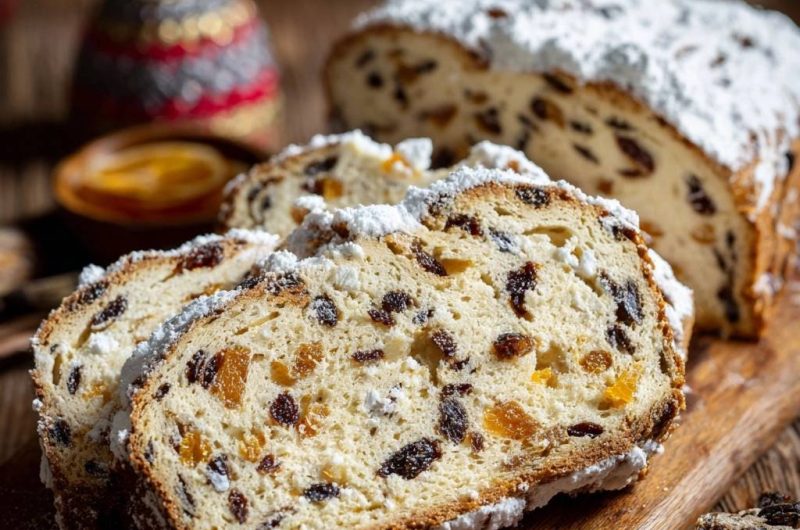
Christmas Stollen
Course: DessertCuisine: GermanDifficulty: easy1
loaf (12-16 servings)45
minutes45
minutes180
Minutes350
kcalGerman
Ingredients
4 cups all-purpose flour
1 packet (2 1/4 teaspoons) active dry yeast
1 cup warm milk (110 degrees F)
1/2 cup granulated sugar
1/2 cup unsalted butter, softened
2 large eggs
1 teaspoon salt
1 teaspoon vanilla extract
1 cup raisins
1/2 cup diced candied orange peel
1/4 cup orange juice (for soaking fruits)
1 cup melted unsalted butter (for post-bake brushing)
2 cups powdered sugar (for dusting)
Directions
- Soak the raisins and candied orange peel in orange juice for 30 minutes to plump them up and add moisture to the dough. Drain excess juice before using.
- In a large bowl, dissolve yeast in warm milk. Stir in 1 cup flour and 1/4 cup sugar. Cover and let rise in a warm spot for 30 minutes until bubbly.
- Add remaining flour, sugar, softened butter, eggs, salt, and vanilla. Mix to form a soft dough. Knead on a floured surface for 8-10 minutes until smooth and elastic.
- Flatten dough, press in soaked fruits evenly, and knead gently to distribute without breaking them. Place in a greased bowl, cover, and let rise 1 hour until doubled.
- Punch down dough, shape into an 12×8-inch oval loaf on a parchment-lined baking sheet. Make a 1-inch deep lengthwise slash down the center. Fold one long side over the other, overlapping slightly like a giant crescent. Cover and let rise 30 minutes.
- Preheat oven to 350 degrees F. Bake 40-45 minutes until golden and hollow-sounding when tapped (internal temp 190 degrees F).
- The moisture miracle: As soon as stollen comes out of the oven, brush generously with 1/3 cup melted butter. Dust with 2/3 cup powdered sugar. Cool 10 minutes, then brush with another 1/3 cup melted butter and dust with more powdered sugar. Repeat once more with remaining butter and sugar. This seals in steam and infuses butter for unbeatable tenderness.
- Wrap tightly in foil while still warm. Let rest at room temperature 1-2 days (or up to a week in fridge). The resting allows butter to penetrate fully, transforming it from dry to irresistibly moist. Slice and serve. Stores well for holiday gifting.
Notes
- The post-bake butter brushing and resting in foil is key to moisture. Stores well for up to a week in the fridge. Ideal for holiday gifting.