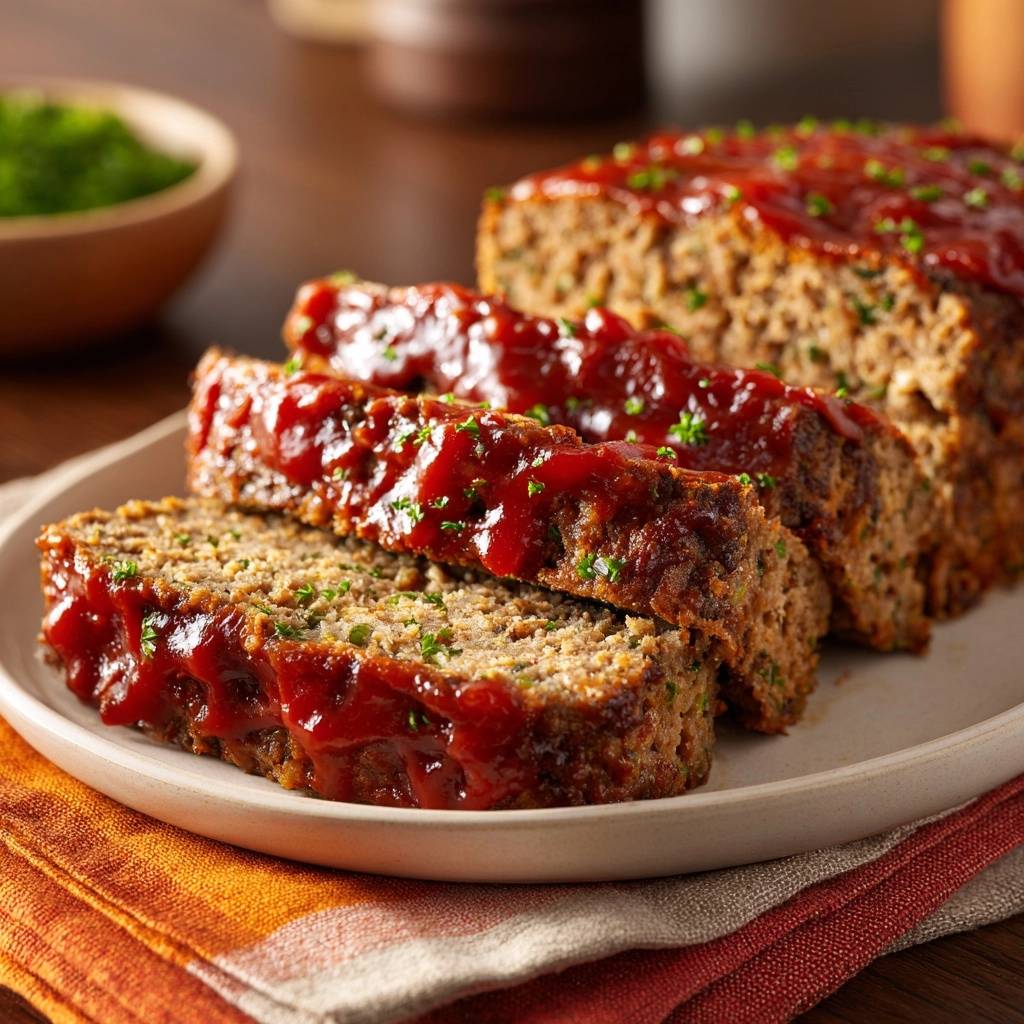
Remember those family dinners where classic meatloaf came out dry and crumbly? You know, the kind that needs a river of gravy just to swallow. This recipe fixes that forever with a simple milk-soaked breadcrumb panade. It locks in juices so every slice stays tender and flavorful.
Therefore, you get weeknight comfort without the disappointment. The glossy ketchup glaze adds that sweet-tangy crust everyone craves. Plus, it outperforms bland versions by balancing moisture and bold seasoning.
Here’s the expertise booster: soak those breadcrumbs in milk for exactly 5 minutes. They turn into a gel that traps meat juices during baking and releases them back out. No more sawdust slices in your classic meatloaf.
Classic Meatloaf Ingredients Breakdown
Ground Beef and Panade Base
Grab 2 pounds of 80/20 ground beef for classic meatloaf. That fat ratio keeps it juicy; leaner cuts dry out fast. In addition, soak 1 cup breadcrumbs in 1 cup milk for 5 minutes. The starch gelatinizes, creating a hydrophilic matrix that absorbs and redistributes fats.
Aromatics and Binders
Finely chop 1 small onion and mince 2 garlic cloves. They distribute evenly for punchy flavor without big chunks. Then, use 2 large eggs as binders; they emulsify everything. Fresh parsley (1/4 cup chopped) beats dried for bright, herby pop, unlike the dusty version.
Seasonings and Glaze Essentials
Split 1/2 cup ketchup: 1/4 cup mixes in for tang, 1/4 cups tops for shine. Worcestershire sauce (2 tablespoons) delivers umami depth. Finally, salt (1 teaspoon), pepper (1/2 teaspoon), and thyme (1/2 teaspoon) build the balanced classic meatloaf profile. No skimping here.
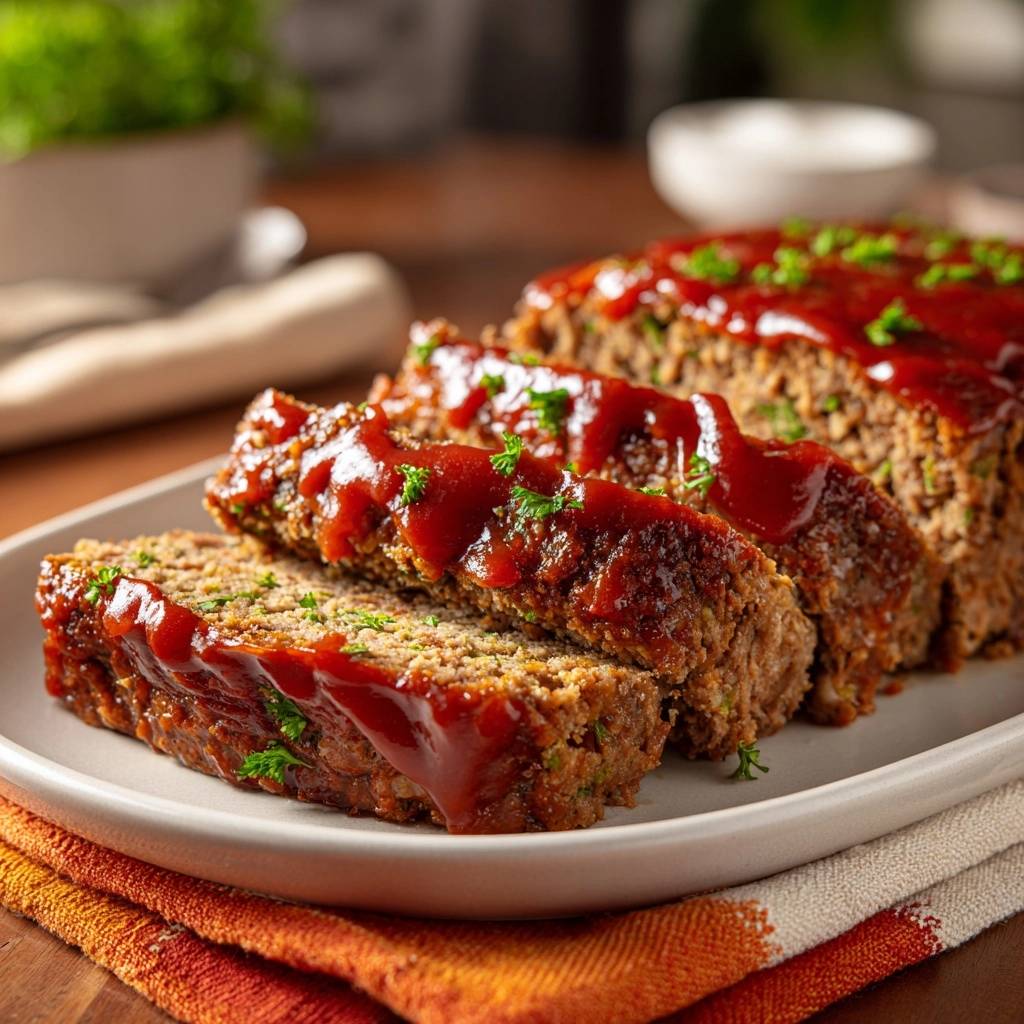
Science of Moist Classic Meatloaf
Panade: Moisture-Locking Mechanism
The panade in classic meatloaf is genius. Milk softens breadcrumbs into a gel matrix. During baking, it soaks up juices, then starches release them back into the beef. Without it, meat squeezes out moisture; with it, slices stay succulent.
Resting and Temperature Control
Hit 160°F internal for safe, juicy classic meatloaf. Carryover cooking adds 5-10°F while resting. That 10-minute wait lets proteins relax and juices redistribute. Skip the thermometer, and you risk dry edges or underdone centers.
Step-by-Step Classic Meatloaf Assembly
Prep Oven and Panade
Preheat to 350°F and line a baking sheet with greased foil. Soak breadcrumbs in milk 5 minutes; they plump up soft and fragrant. Freeform loaf crisps edges better than a pan, which steams it mushy.
Mix Ingredients Gently
In a big bowl, add beef, panade, eggs, onion, garlic, 1/4 cup ketchup, parsley, Worcestershire, salt, pepper, and thyme. Mix with hands just until combined; it feels tacky. Overmix, and it toughens.
Shape, Glaze, and Bake
Form a 9×5-inch loaf on the sheet. Spread 1/4 cup ketchup on top for glossy crust. Bake 55-60 minutes to 160°F, rest 10 minutes. Juices settle for perfect slices.
History of Classic Meatloaf
Evolution from Scraps to Staple
Classic meatloaf started as 18th-century scrap meat patties from German immigrants, like scrapple. By the 1950s, it became an American staple with post-WWII ketchup glaze. Regional twists popped up, from Southern BBQ to Midwest herb versions.
Why Panade Became Essential
During the Depression, panade stretched cheap, tough beef into tender loaves. Milk and breadcrumbs trapped scarce fats efficiently. That’s why this trick endures in classic meatloaf today.
Avoiding Dry Classic Meatloaf Pitfalls
Overmixing and Beef Choice Errors
Overmixing activates myosin proteins, squeezing out moisture for tough classic meatloaf. Stick to 80/20 beef; leaner dries fast. Mix gently, just until you see no streaks.
Baking and Resting Blunders
Loaf pans trap steam, making soggy centers. Freeform on a sheet crisps edges. Always rest 10 minutes; cutting early spills juices, leaving dry slices.
Make-Ahead Freezer Guide for Classic Meatloaf
Freezing Raw vs Baked Loaf
Freeze raw classic meatloaf airtight for 3 months; it bakes fresher. Wrap shaped loaf in plastic then foil. Baked freezes well too, but raw preserves texture best.
Thawing and Reheating Best Practices
Thaw raw loaf overnight in fridge, bake as directed. For baked, reheat slices in 350°F oven to 165°F. Microwave works but dries edges; oven keeps it moist.
Perfect Pairings for Classic Meatloaf
Starchy Sides That Complement
Creamy mashed potatoes soak up juices from classic meatloaf. Loaded baked potatoes add crunch contrast. Both balance the richness perfectly.
Vegetable and Salad Matches
Steamed broccoli cuts through with crisp green bite. Glazed carrots echo the ketchup sweetness. Simple salads add freshness too.
Troubleshooting Classic Meatloaf Issues
Why Is My Meatloaf Dry?
You skipped the panade or overbaked past 160°F. Always use the milk soak and thermometer. Resting helps redistribute juices.
Meatloaf Falling Apart?
Not enough eggs or overmixing weakened binders. Add an extra egg next time. Chill 30 minutes before slicing.
Glaze Not Sticking?
Apply ketchup before baking, not after. Use thicker, low-sugar ketchup. Pat loaf dry first.
Too Greasy or Bland?
Tilt pan to drain fat midway if greasy. Boost bland with extra Worcestershire or thyme. Fat drains better on a sheet.
FAQ
How do I store leftovers of classic meatloaf?
Cool slices completely, then store in an airtight container in the fridge for up to 4 days. It freezes well wrapped tightly for 3 months; thaw overnight in fridge before reheating. Avoid freezing if you want crisp edges, as they soften.
Why did my classic meatloaf turn out dry?
Dryness comes from skipping the panade, using lean beef, overmixing, or baking too long. The milk-breadcrumb soak is crucial; it creates a gel that holds 20-30% more moisture. Always check 160°F internal and rest 10 minutes for juice redistribution.
Can I substitute ingredients in classic meatloaf?
Swap 80/20 beef for turkey, but add extra panade for moisture. Use gluten-free breadcrumbs if needed; they work identically. No Worcestershire? Try soy sauce plus a dash of vinegar for umami. Fresh parsley sub with 1 tablespoon dried.
What’s the best beef for juicy classic meatloaf?
80/20 ground beef shines because 20% fat melts and bastes during baking. Leaner 90/10 dries out. If grinding your own, mix chuck and sirloin for perfect balance. Fat equals flavor and tenderness here.
How long does classic meatloaf take to bake?
Bake at 350°F for 55-60 minutes for a 2-pound loaf to hit 160°F. Thicker loaves need 65-70 minutes; use a thermometer, not time alone. Foil tent if top browns too fast.
Can I make classic meatloaf ahead for meal prep?
Yes, assemble raw loaf, wrap airtight, and freeze up to 3 months. Thaw 24 hours in fridge, bake fresh. Baked leftovers reheat best at 325°F covered until 165°F internal. Great for busy weeks.
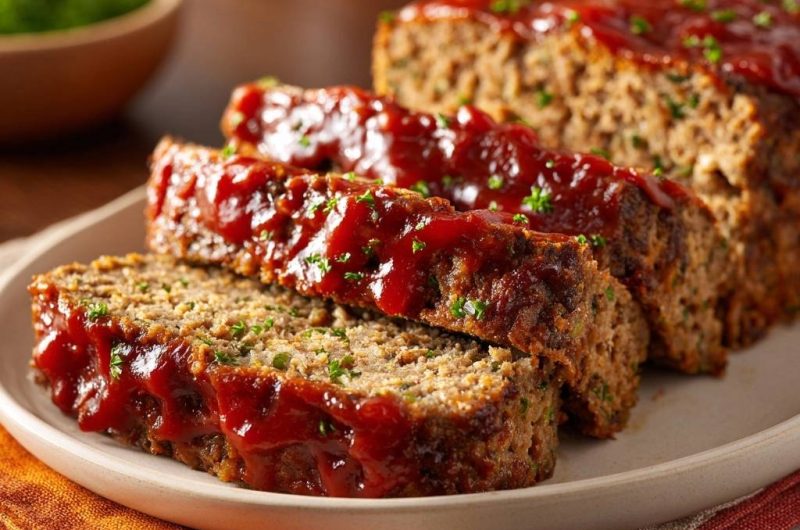
Classic Meatloaf
Course: Main CourseCuisine: AmericanDifficulty: easy8
servings15
minutes1
hour60
MinutesAmerican
Ingredients
2 pounds ground beef
1 cup breadcrumbs
1 cup milk
2 large eggs
1 small onion, finely chopped
2 cloves garlic, minced
1/2 cup ketchup, divided
1/4 cup fresh parsley, chopped (plus extra for garnish)
2 tablespoons Worcestershire sauce
1 teaspoon salt
1/2 teaspoon black pepper
1/2 teaspoon dried thyme
Directions
- Preheat oven to 350 degrees F. Line a baking sheet with foil and lightly grease.
- In a small bowl, soak breadcrumbs in milk for 5 minutes until soft. This panade is the key to no-more-dry meatloaf: it absorbs juices during baking and releases them back into the meat for ultimate moisture.
- In a large bowl, combine ground beef, soaked breadcrumbs with milk, eggs, onion, garlic, 1/4 cup ketchup, parsley, Worcestershire sauce, salt, pepper, and thyme. Mix gently with hands just until combined; overmixing squeezes out moisture.
- Shape into a 9×5-inch loaf on the prepared baking sheet. Spread remaining 1/4 cup ketchup on top for a glossy glaze.
- Bake for 55 to 60 minutes, until internal temperature reaches 160 degrees F. Let rest 10 minutes before slicing; resting redistributes juices to prevent dryness. Garnish with extra parsley. Serve with steamed broccoli.
- Slice into perfect, juicy pieces every time!
Notes
- The milk-soaked breadcrumb panade is key to moisture. Mix gently to avoid squeezing out juices. Let rest 10 minutes before slicing for juicy results.