Forget those sad, lukewarm trays from the frozen food aisle or the cafeteria lunches of your childhood. Real Salisbury steak is a culinary masterpiece that sits right in the sweet spot between a juicy burger and a sophisticated French onion soup. While it might look like a simple hamburger patty at first glance, the texture and flavor profile are entirely different. A true Salisbury steak is seasoned deeply with aromatics and smothered in a silky, savory gravy that demands a side of mashed potatoes.
The biggest hurdle most home cooks face is the dreaded “hockey puck” effect. You know the one—where the meat becomes so dense and rubbery that you need a serrated knife just to get through it. This happens because meat proteins naturally tighten and squeeze out moisture when they hit a hot pan. However, there is a simple, foolproof way to stop this from happening before the beef even touches the heat.
The secret to a tender, melt-in-your-mouth patty is the panade. By soaking breadcrumbs in milk to create a thick paste, you create a physical barrier that keeps those beef proteins from knitting together too tightly. I’ve found that this single step changes the entire structural integrity of the dish. It ensures every bite is soft, juicy, and packed with flavor rather than being a tough, chewy chore.
The Science of the Panade for Tender Beef
When you cook ground beef, the proteins (specifically myosin) want to bond with each other. As the temperature rises, these bonds tighten, which is why a plain burger can sometimes feel a bit firm. A panade acts as a molecular “interrupter” in this process. The starch in the breadcrumbs absorbs the milk and expands, creating tiny pockets of moisture throughout the meat mixture.
Therefore, when the heat is applied, the starch molecules stand in the way of the protein fibers. Instead of the fibers locking together into a dense mass, they stay separated by the hydrated starch. This results in a texture that is remarkably tender, almost like a delicate meatball but in steak form. It is a classic French technique that elevates humble ground beef into something truly elegant.
To make this work perfectly, you must use the right fat ratio. I always recommend an 80/20 ground beef blend for this recipe. While it might be tempting to go lean, the fat provides the necessary lubrication for the panade to do its job. If you use 90/10 or 95/5 beef, the meat will likely turn out dry despite the breadcrumb mixture. The fat renders out during the sear, leaving behind flavor and a succulent mouthfeel.
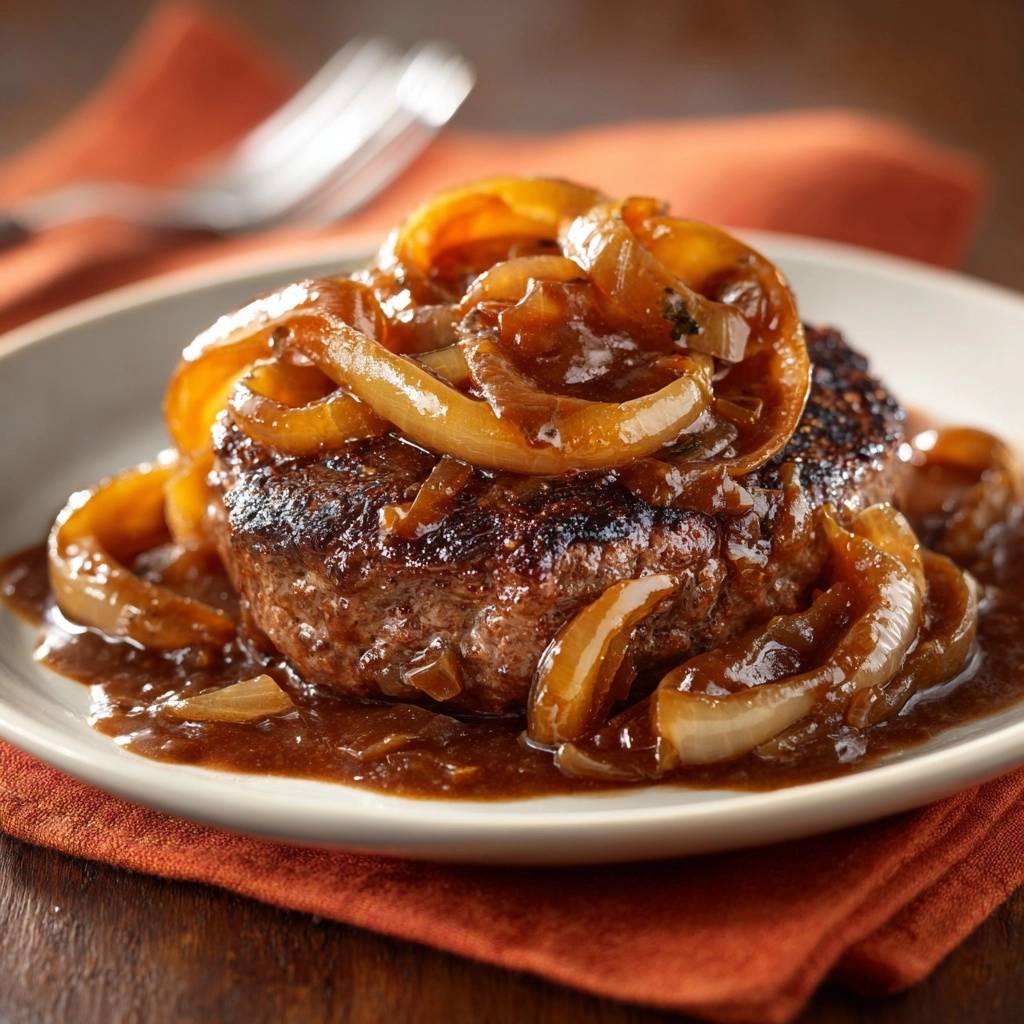
Essential Components for Classic Salisbury Steak with Onion Gravy
Quality ingredients are the backbone of this comfort food classic. Since the ingredient list is relatively short, each item needs to pull its weight. Worcestershire sauce is the heavy hitter here, providing a massive punch of umami that mimics the depth of a long-simmered roast. It adds that fermented, salty, and slightly sweet complexity that defines the “steak” flavor profile.
The onions are equally important because they provide the bulk of the gravy’s character. I prefer large yellow onions because they contain a high sugar content, which is essential for caramelization. White onions can be a bit too sharp, and red onions turn a muddy color when simmered in brown gravy. Yellow onions soften beautifully and turn into “onion jam” consistency, which is exactly what you want.
Finally, don’t overlook your beef broth. Since the gravy is the star of the show, using a high-quality, low-sodium beef stock or bone broth makes a world of difference. A cheap, overly salty broth will result in a one-dimensional sauce. You want a liquid that tastes like beef, not just salt, so you can control the final seasoning yourself.
Choosing the Right Ground Beef Blend
As mentioned, the 80/20 ratio is your best friend for a juicy result. Extra-lean beef lacks the connective tissue and fat needed to stay moist during the two-stage cooking process of searing and simmering. If you want to take this to a premium level, ask your butcher to grind a mix of chuck and brisket. The brisket adds a rich, buttery flavor that makes the Salisbury steak taste like a high-end steakhouse meal.
The Role of Aromatics and Seasoning
While fresh garlic is great, I actually prefer garlic and onion powder for the patties themselves. The powders distribute more evenly throughout the meat without adding chunks that might cause the patties to break apart. However, I insist on using freshly cracked black pepper. The coarse grind creates a beautiful crust during the searing phase and provides a spicy bite that cuts through the richness of the gravy.
Step-by-Step: Preparing the Beef Patties
The first step is creating the panade by mixing your breadcrumbs and milk. You are looking for a thick, paste-like consistency. Let it sit for at least five minutes so the breadcrumbs can fully hydrate. If the mixture looks too dry, add a teaspoon of milk; if it is soupy, add a pinch more breadcrumbs. It should look like a heavy mash before you introduce the beef.
When you add the beef and seasonings, the “gentle touch” rule is mandatory. If you squeeze or knead the meat like bread dough, you will activate the proteins and end up with that rubbery texture we are trying to avoid. Use your fingertips to lightly toss and fold the ingredients together. Stop the very second everything looks uniform. You should still be able to see the individual “grains” of the ground beef.
Forming the Oval: Size and Thickness Matters
Traditionally, Salisbury steak is shaped into an oval to distinguish it from a round hamburger. Aim for a thickness of about 3/4 of an inch to one inch. This thickness is the “sweet spot” because it allows you to get a dark, flavorful sear on the outside without overcooking the middle. If they are too thin, they will dry out during the simmering phase; if they are too thick, the center might stay raw while the gravy thickens.
Mastering the Sear and Fond Development
Heat your oil until it is shimmering but not smoking. When you drop the patties in, you should hear a loud, aggressive sizzle. This is the Maillard reaction in action, creating that deep brown crust that provides 50% of the dish’s flavor. Do not move the patties for at least four minutes. If you try to flip them too early, they will stick to the pan and tear.
Once you flip them and sear the other side, you will notice brown bits stuck to the bottom of the skillet. This is called “fond,” and it is culinary gold. These bits are concentrated beef flavor and caramelized sugars. We will use the onions and broth to lift this fond off the pan and incorporate it directly into the gravy. Never wash the pan between searing the meat and making the sauce!
Building the Rich Onion Gravy Base
After removing the meat, melt your butter in the same skillet. Toss in those thinly sliced onions and turn the heat down to medium. You aren’t looking for a quick sauté here; you want a slow soften. As the onions release their moisture, they will naturally deglaze the pan, picking up all those tasty browned bits from the beef.
Stir them occasionally for about 10 to 12 minutes. You want them to reach a rich, golden-brown color. If they start to look dry or begin to burn, add a tablespoon of water to the pan to slow things down. The goal is a soft, jammy texture that will melt into the gravy. This patience is what separates a mediocre gravy from a professional-grade sauce.
The Roux Technique: Cooking Out the Flour
Once the onions are perfect, sprinkle the flour over them. Stir constantly for about two minutes. This step is crucial because it coats the onions and cooks the “raw” taste out of the flour. You will notice the smell change from a dusty, floury scent to something slightly nutty. The flour should absorb all the butter and onion juices, forming a thick coating on the vegetables.
Deglazing and Incorporating the Beef Broth
Now, slowly pour in your beef broth while whisking or stirring constantly. Start with just a half cup, stirring until it forms a thick paste, then gradually add the rest. This prevents lumps from forming. If you want that deep, dark mahogany color seen in high-end restaurants, this is the time to add a teaspoon of browning sauce or tomato paste. It adds a visual richness that makes the dish look incredibly appetizing.
The Braising Phase: Finishing the Steak
Once the gravy is simmering and starting to thicken, nestle the beef patties back into the pan. Make sure to pour in any juices that collected on the plate while the meat was resting! That liquid is pure flavor. Cover the skillet with a lid and turn the heat down to medium-low. This is the braising phase, and it is the final insurance policy for tender meat.
By simmering the patties in the liquid, you are essentially poaching them. The gentle heat finishes cooking the center of the beef without the harsh, direct heat of the pan. This keeps the interior temperature stable and ensures the meat stays incredibly juicy. After about 8 to 10 minutes, the patties will be fully cooked, and the gravy will be thick enough to coat the back of a spoon.
Troubleshooting Common Salisbury Steak Issues
If your gravy feels too thin after the simmering time, simply remove the lid and let it bubble for another two or three minutes. The evaporation will naturally thicken the sauce. Conversely, if the gravy becomes too thick or “gloopy,” whisk in a splash of beef broth or water to loosen it back up. It should be pourable but substantial enough to cling to the meat.
If your patties are falling apart, it usually means the panade was too wet or the meat was handled too much during the mixing phase. Next time, ensure the breadcrumb paste is firm. If you find the onions are still a bit crunchy, it means the heat was too high during the softening phase. You can fix this by adding a splash of water and covering the pan for a few minutes before adding the flour.
Optimal Side Dish Pairings
This dish is the ultimate “gravy delivery system,” so you need sides that can handle the sauce. Garlic mashed potatoes are the gold standard here. The creamy texture of the potatoes mixed with the savory onion gravy is a match made in heaven. If you aren’t a fan of potatoes, buttered egg noodles are a fantastic alternative, as the wide ribbons catch the onions and sauce perfectly.
To balance out the heavy, rich flavors of the beef and butter, I always serve a green vegetable with a bit of a “bite.” Sautéed kale with a squeeze of lemon or roasted broccolini works wonders. The slight bitterness and acidity of the greens cut through the richness of the gravy, refreshing your palate between bites of the savory steak. It makes the whole meal feel much more balanced.
Make-Ahead Strategies and Storage
You can easily prep the patties a day in advance. Just shape them, place them on a parchment-lined plate, and cover them tightly with plastic wrap. This actually helps the flavors meld together. If you have leftovers, store them in an airtight container in the fridge for up to three days. The gravy will thicken significantly as it cools, so don’t be alarmed if it looks like jelly the next morning.
To reheat, place the patties and gravy in a small skillet over low heat. Add a tablespoon or two of water to the pan and cover it with a lid. This creates steam that thaws the gravy and warms the meat gently without drying it out. I don’t recommend freezing the cooked dish, as the texture of the onions and the emulsion of the gravy can become grainy once thawed.
Expert Tips for the Home Cook
To check if your panade is the right consistency, it should feel like wet sand—moist but capable of holding its shape. If you have a cast-iron skillet, use it! Cast iron retains heat much better than stainless steel, which helps you get that superior dark sear on the beef. It also distributes heat more evenly when you are simmering the gravy, preventing hot spots that might burn the onions.
Unlike a thick ribeye steak, these patties don’t need a long resting period. Since they finish cooking in the gravy, the juices are already redistributed throughout the meat. You can serve them almost immediately. For a final touch of professional flair, sprinkle some fresh chopped parsley or a few thyme leaves over the top. The pop of green and the fresh herbal scent brighten up the deep, earthy flavors of the dish.
How do I store leftovers?
Store any leftover patties and gravy in an airtight container in the refrigerator for up to 3 days. When reheating, do so gently on the stovetop over low heat with a splash of water or broth to loosen the gravy. Avoid the microwave if possible, as it can make the beef rubbery. This dish does not freeze well because the gravy texture often breaks and becomes grainy upon thawing.
Why is my Salisbury steak rubbery?
Rubbery meat is usually caused by two things: over-mixing the beef or skipping the panade. When you over-work ground beef, the proteins link together tightly, creating a dense texture. Using a panade (the breadcrumb and milk paste) provides a physical barrier that prevents this. Additionally, make sure you aren’t using beef that is too lean; 80/20 is the ideal ratio for a tender result.
Can I use something other than breadcrumbs?
Yes, you can substitute the breadcrumbs with crushed saltine crackers or panko. If you need a gluten-free option, gluten-free breadcrumbs or even quick-cooking oats (pulsed in a blender) will work to create the panade. The goal is to have a dry starch that can absorb the milk and create that moisture-locking paste.
What if I don’t have Worcestershire sauce?
If you’re out of Worcestershire, you can use soy sauce or liquid aminos as a substitute. While the flavor profile will be slightly different, you will still get that essential umami punch. You might want to add a tiny pinch of sugar and a drop of lemon juice to mimic the sweet and tangy notes found in traditional Worcestershire sauce.
My gravy is too salty, how can I fix it?
Gravy often becomes too salty if the beef broth was high in sodium or if it reduced too much. To fix this, add a splash of unsalted broth, water, or even a little bit of heavy cream. The cream will mellow out the saltiness and add a luxurious texture. In the future, always use low-sodium broth so you have total control over the salt levels.
Can I use fresh onions instead of onion powder in the meat?
While you can use very finely minced fresh onions, they release a lot of moisture which can cause the patties to fall apart during the sear. If you prefer fresh, sauté the minced onions first to remove the excess water and let them cool before adding them to the beef. This ensures the patties stay structural while still giving you that fresh onion flavor.
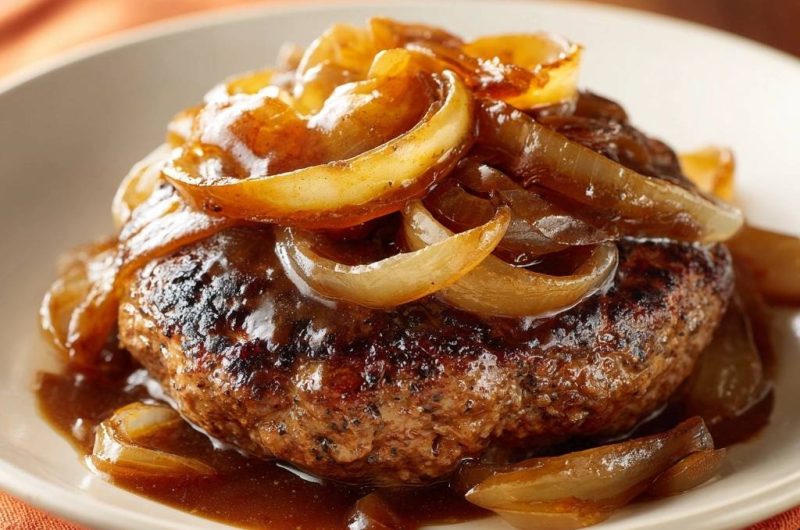
Classic Salisbury Steak with Onion Gravy
Course: Main CourseCuisine: AmericanDifficulty: easy4
servings15
minutes30
minutes45
MinutesAmerican
Ingredients
1.5 lbs ground beef (80/20 blend for best flavor)
1/2 cup plain breadcrumbs
1/4 cup milk
1 large egg
1 tablespoon Worcestershire sauce
1 teaspoon garlic powder
1/2 teaspoon onion powder
1/2 teaspoon salt
1/2 teaspoon cracked black pepper
2 large yellow onions, thinly sliced into rings
2 cups beef broth
2 tablespoons all-purpose flour
2 tablespoons butter
1 tablespoon vegetable oil
1 teaspoon browning sauce (such as Kitchen Bouquet) or 1 teaspoon tomato paste (optional, for deep gravy color)
Directions
- In a large bowl, combine the breadcrumbs and milk. Let this sit for 5 minutes until it forms a paste. This is your panade, the key to preventing rubbery meat.
- Add the ground beef, egg, Worcestershire sauce, garlic powder, onion powder, salt, and pepper to the breadcrumb mixture. Mix gently with your hands just until combined. Do not overwork the meat, as over-mixing leads to toughness.
- Shape the mixture into 4 thick oval patties, about 3/4 inch to 1 inch thick.
- Heat the vegetable oil in a large skillet over medium-high heat. Sear the patties for 4 minutes per side until a deep, dark brown crust forms. They do not need to be cooked through yet. Remove patties from the pan and set aside on a plate.
- In the same skillet, melt the butter. Add the sliced onions and cook over medium heat for 10-12 minutes, stirring occasionally, until they are soft and a rich golden brown.
- Sprinkle the flour over the onions and stir for 2 minutes to cook out the raw flour taste and allow the flour to absorb the fat.
- Slowly whisk in the beef broth (and browning sauce/tomato paste if using). Bring the mixture to a simmer, scraping the bottom of the pan to release the flavorful browned bits (fond). Stir constantly until the gravy begins to thicken.
- Place the beef patties and any accumulated juices back into the skillet, nesting them into the gravy and onions.
- Lower the heat to medium-low, cover the pan, and simmer for 8-10 minutes. This gentle poaching in the gravy ensures the center stays tender and juicy while finishing the cook.
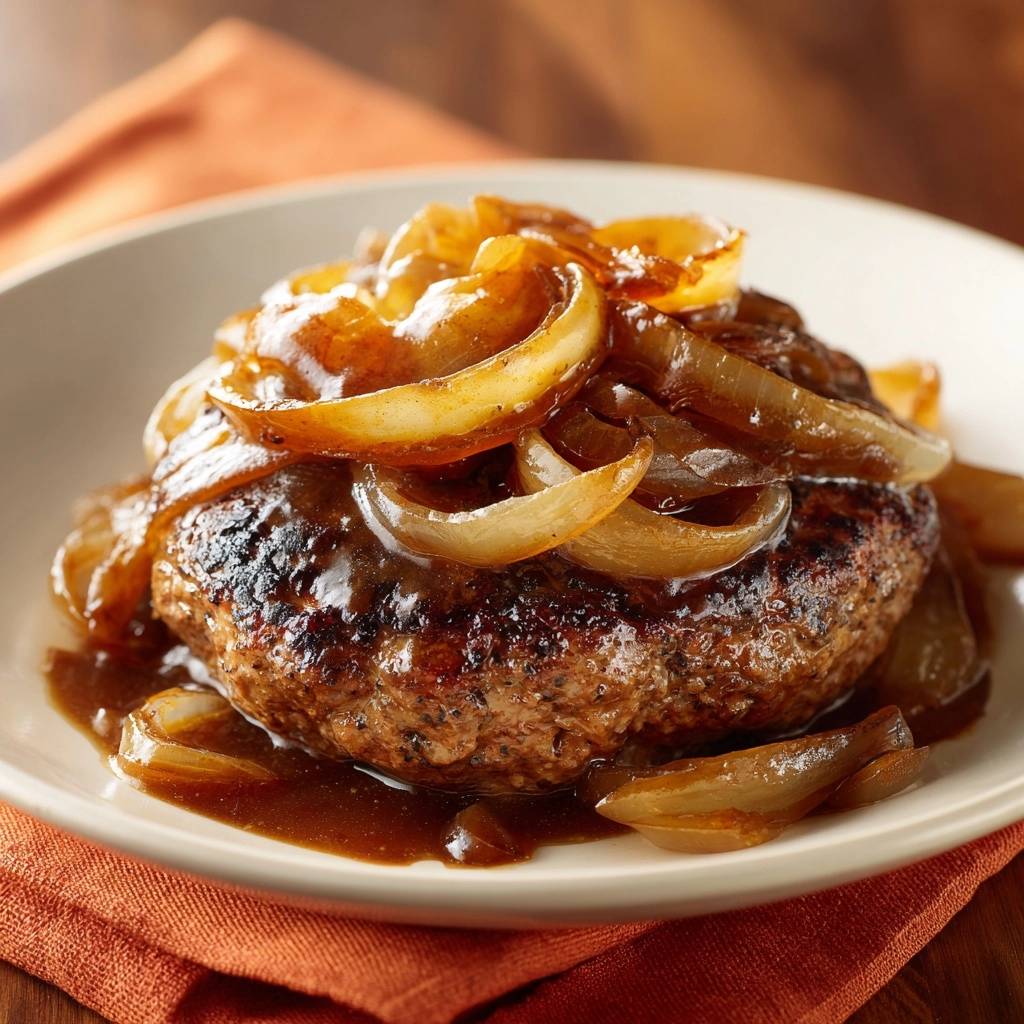
- Serve the patties immediately, piled high with the caramelized onions and smothered in the rich gravy.
Notes
- The secret to the texture is the panade (breadcrumbs and milk). Do not overwork the meat when mixing to ensure the patties remain tender. Using a browning sauce or tomato paste is optional but recommended for a deeper gravy color.