Why These Cream-Filled Pumpkin Donut Holes Shine
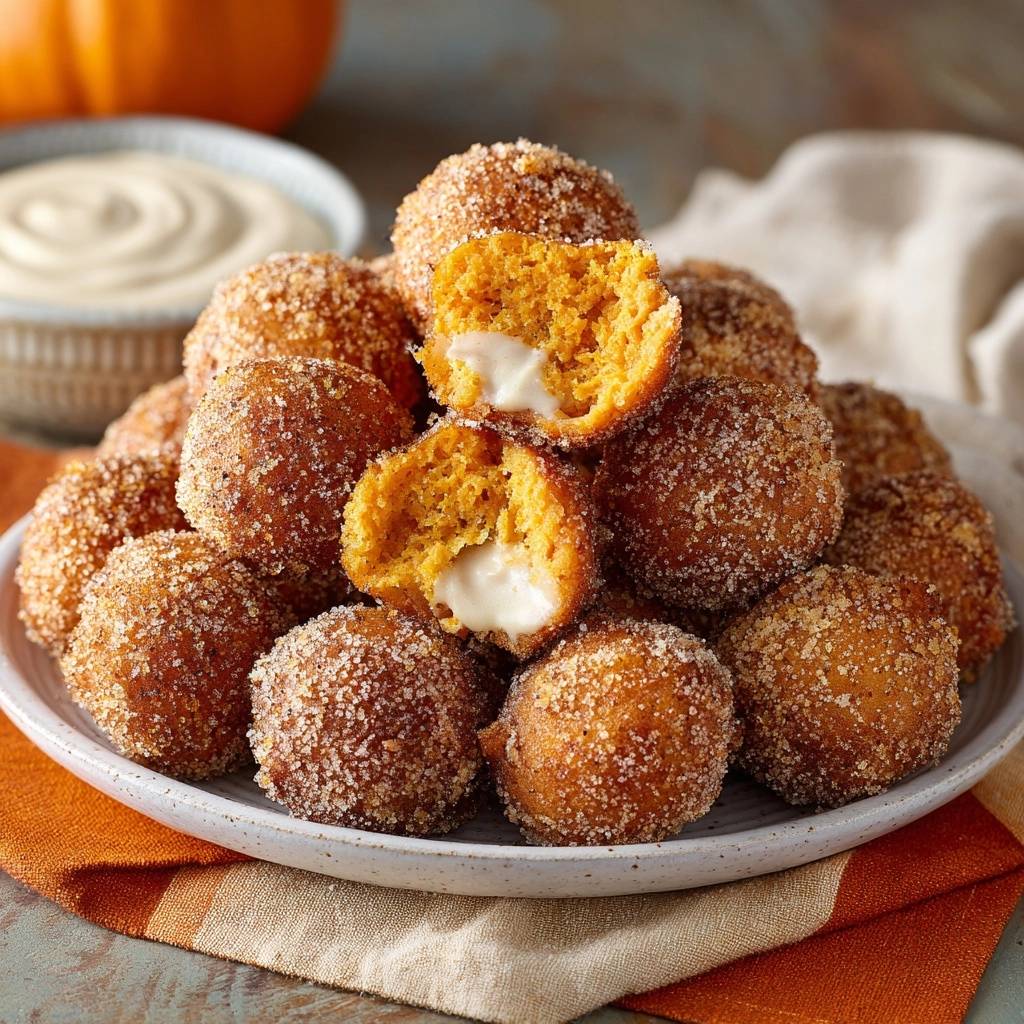
Picture this: you bite into a cream-filled pumpkin donut hole, and instead of that familiar dense chew, it melts into fluffy, spiced perfection. Most pumpkin treats turn heavy because folks overmix the batter, waking up the gluten. These cream-filled pumpkin donut holes fix that with a simple fold technique, delivering airy bites coated in cinnamon sugar.
I’ve battled soggy, brick-like pumpkin donuts before, the kind that sit like rocks in your stomach. But this method? Oh man, it changed everything. You get fall flavors without the weight, perfect for quick cravings or brunch surprises.
Therefore, the secret lies in folding dry ingredients just 10-12 times. This traps air bubbles while dodging toughness. Get ready for cream-filled pumpkin donut holes that vanish fast.
Pumpkin Batter Ingredients Breakdown
Key Wet Ingredients for Moisture
Pumpkin puree drives tenderness in your pumpkin donut holes batter, adding moisture without sogginess if you measure precisely. It pairs with 1/2 cup granulated sugar and 1/4 cup brown sugar for balanced sweetness; brown sugar’s molasses keeps things soft. Meanwhile, 1/4 cup vegetable oil beats butter here, ensuring even softness without curdling.
Room-temp eggs emulsify smoothly, preventing lumps in the pumpkin donut holes batter. No oil? Swap in applesauce for similar tenderness. Vanilla extract ties it all, amplifying those cozy spices.
Dry Mix Essentials for Lift
Flour forms the structure in cream-filled pumpkin donut holes dry ingredients, but sift it first to banish clumps. Baking powder and soda work in tandem; the soda reacts with pumpkin’s acidity for extra lift. Cinnamon and nutmeg add warmth without overpowering.
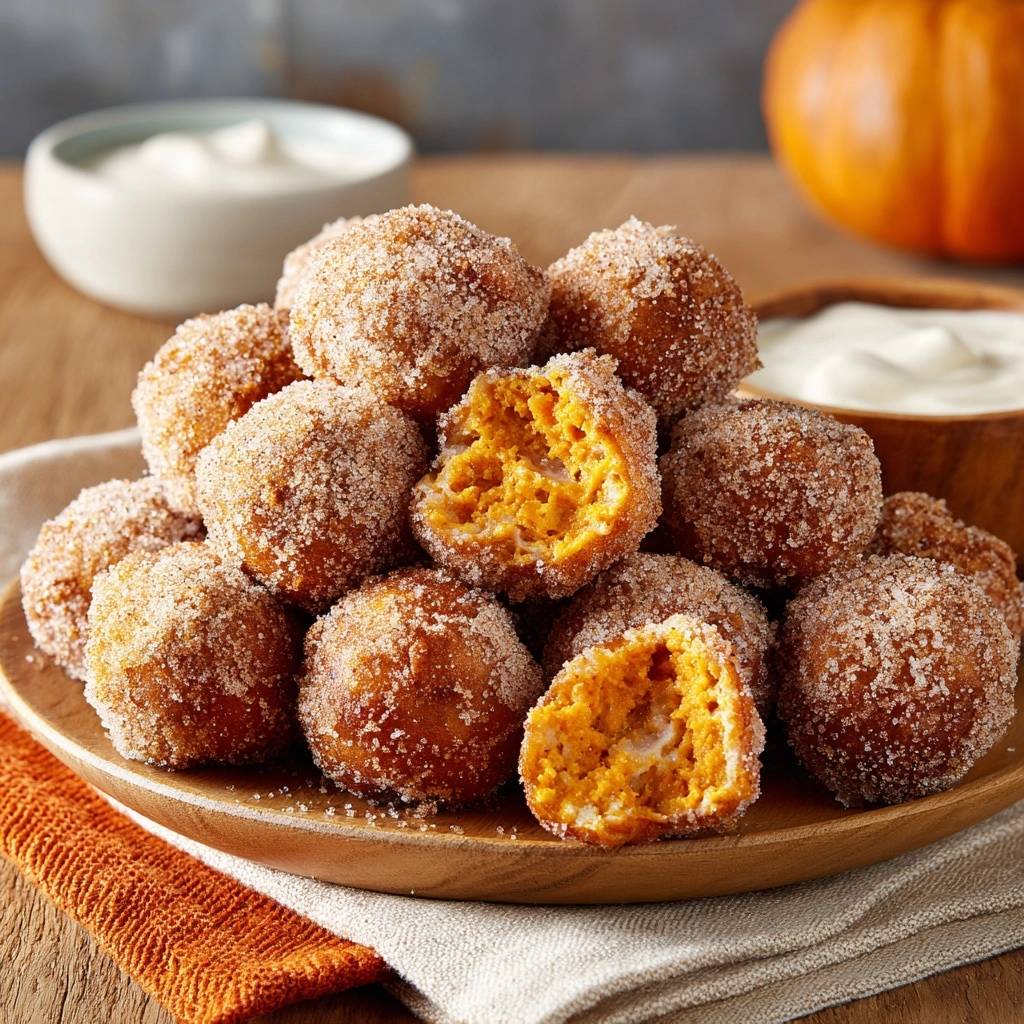
In addition, that 1/2 teaspoon soda ensures fluffiness. Skip sifting, and you’ll fight dense spots. Fresh spices make the biggest difference over dusty jars.
Cream Filling and Cinnamon Coating Components
Cream cheese forms the rich base for cream-filled pumpkin donut holes filling, softened to blend seamlessly with 1/4 cup powdered sugar. Heavy cream thins it to pipeable perfection, unlike milk which can make it runny. The 2 teaspoons cinnamon in the coating clings best to warm bites, creating that signature crunch.
Therefore, this filling contrasts pumpkin’s earthiness with creamy sweetness. Soften cream cheese at room temp for 30 minutes; microwaving risks lumps. It’s the duo that makes these donut holes irresistible.
Perfecting Pipeable Cream Filling
Beat softened cream cheese with powdered sugar, vanilla, and heavy cream until silky, about 2 minutes. Heavy cream stabilizes better than milk, holding shape inside the donut holes. For tweaks, add a dash of maple extract, but don’t overpower the pumpkin.
However, if it’s too thick, whip in extra cream one teaspoon at a time. This ensures smooth piping every time.
Science of Fluffy Pumpkin Donut Holes
Gluten hates overmixing, especially in pumpkin donut holes where moisture tempts toughness. Fold dry into wet just 10-12 times; this minimal mixing traps air for lift while keeping cream-filled pumpkin donut holes tender. Baking soda reacts with pumpkin’s acid, releasing gas bubbles that expand at 350F.
In contrast, overmixing develops gluten strands, squeezing out air and creating density. Therefore, the batter stays thick but light. Science backs the muffin method here: quick combine, gentle fold.
Plus, precise leavening ratios guarantee rise. These cream-filled pumpkin donut holes prove pumpkin can be fluffy, not heavy.
Non-Dense Mixing Technique Explained
Use a spatula to fold dry into wet in 10-12 gentle strokes; stop when flour streaks vanish. Unlike whisking, this preserves air pockets. Thick batter signals success, like muffin batter but spiced.
Visualize broad sweeps under and over. This beats the whisk for control in pumpkin donut holes.
Spice Reactions in Pumpkin Baking
Cinnamon and nutmeg bloom at 350F, releasing oils that deepen pumpkin flavor. Cinnamon leads with warmth, while nutmeg adds subtle nuttiness. Heat activates them fully, so fresh-ground packs more punch.
Equipment Choices for Donut Holes
A greased mini muffin tin shapes perfect cream-filled pumpkin donut holes; spray with oil for easy release. Skewer pokes clean filling holes without mangling tops. Piping bag beats ziplocks for control, but snip a corner if needed.
Therefore, preheat your oven accurately; even heat ensures uniform rise. Cooling rack prevents soggy bottoms. These picks make baking foolproof.
Mini Muffin Tin Prep Tips
Non-stick tins release best, but metal works with thorough greasing via oil spray over butter. It avoids sticking. Cool on a rack post-5 minutes in tin to firm up structure.
Step-by-Step: Baking Fluffy Donut Holes
Preheat to 350F and grease mini muffin tin generously. This sets you up for pop-out success.
Whisking Wet Pumpkin Base
In a large bowl, whisk pumpkin, sugars, eggs, oil, and vanilla until smooth, about 1 minute. Sugars dissolve fully, releasing a sweet aroma. Avoid over-whisking to prevent excess air.
The mix turns glossy orange. Room-temp eggs blend seamlessly here.
Folding Dry into Wet Precisely
Sift dry ingredients, then add to wet all at once. Fold 10-12 times with spatula until barely combined; thick batter is right. Overmixing toughens, so trust the count.
You’ll smell spices waking up. This step makes cream-filled pumpkin donut holes fluffy.
Baking and Initial Cooling
Fill cups 3/4 full; bake 10-12 minutes until toothpick-clean and tops spring back. They emit a spiced scent. Cool 5 minutes in tin to set, then rack.
Filling and Coating Cream-Filled Donut Holes
Beat filling smooth, fill piping bag. Poke skewer halfway into cooled bottoms. Pipe until full, feeling gentle resistance.
Roll warm donut holes in cinnamon sugar; it sticks perfectly. Reserve extra cream for dipping. These cream-filled pumpkin donut holes glow with coating.
Piping Cream into Cooled Bites
Poke small hole, pipe slowly to fill without bursting. Stop at slight puff. If air pockets form, pipe a bit more. Fully cooled bites hold filling best.
Avoiding Common Donut Hole Pitfalls
Overmixing builds gluten for density; stick to folds. Underbaking leaves soggy centers, so test with toothpick. Insufficient greasing causes sticking; spray well.
Cold cream cheese lumps filling; soften first. Skimpy coating falls off; roll while warm. Fixes keep your cream-filled pumpkin donut holes perfect.
Fixing Dense Texture Issues
Dense means overmixing activated gluten. Measure flour light and fold minimally. Precise leaveners lift despite pumpkin’s weight.
Flavor Twists on Pumpkin Donut Holes
Boost with ginger for zing, or swap chai spices for variety. Chocolate cream filling swaps powdered sugar for cocoa. Gluten-free flour works 1:1, keeping non-dense method.
Vegan cream? Cashew-based mimics richness. These tweaks keep pumpkin cream bites fluffy and fun.
Storage Guide for Donut Holes
Store airtight at room temp up to 2 days; filling holds. Fridge extends to 5 days, but soften before eating. Freeze unfilled up to 1 month; thaw, fill, coat fresh.
Reheat at 300F for 5 minutes to crisp. Batter makes ahead: mix wet/dry separate, combine before baking.
Pairing Ideas for Donut Holes
Pair with strong coffee to cut richness, or chai tea for spice harmony. Dip in hot chocolate, or stack in yogurt parfaits. Fruit salad adds freshness to fall brunches.
Troubleshooting Cream-Filled Pumpkin Donut Holes
Why Are My Donut Holes Dense?
Overmixing develops gluten, trapping less air. Fold only 10-12 times next batch. Check leaveners aren’t stale too.
Why Does Filling Leak Out?
Overfilling or warm donuts cause bursts. Cool fully, pipe slowly until resistance. Smaller holes help contain it.
Why Aren’t They Rising?
Stale baking powder/soda fails reaction. Test by mixing with hot water; fizz means fresh. Pumpkin acidity needs both for lift.
Why Won’t Coating Stick?
Cold donuts shed sugar. Roll while warm for adhesion. Light oil brush pre-roll boosts grip if needed.
Is My Batter Too Thick?
Pumpkin brands vary; add milk 1 teaspoon if needed. But thick is normal for fluffiness, so don’t thin much.
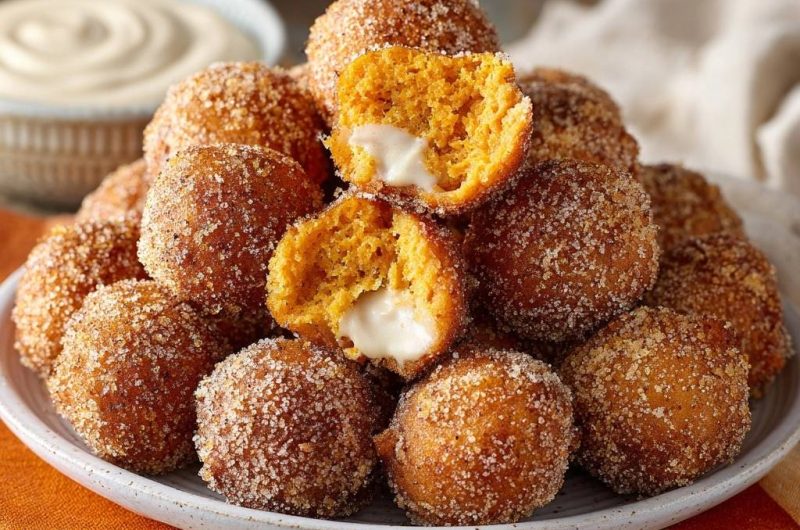
Cream-Filled Pumpkin Donut Holes
Course: DessertCuisine: AmericanDifficulty: easy4
24 donut holes20
minutes12
minutes35
MinutesAmerican
Ingredients
Batter:
1 cup pumpkin puree
1/2 cup granulated sugar
1/4 cup brown sugar
2 large eggs
1/4 cup vegetable oil
1 teaspoon vanilla extract
1 1/2 cups all-purpose flour
2 teaspoons baking powder
1/2 teaspoon baking soda
1 teaspoon ground cinnamon
1/2 teaspoon ground nutmeg
1/4 teaspoon salt
Cream Filling and Dip:
8 oz cream cheese, softened
1/4 cup powdered sugar
1 teaspoon vanilla extract
2 tablespoons heavy cream
Coating:
1/2 cup granulated sugar
2 teaspoons ground cinnamon
Directions
- Preheat oven to 350 degrees F. Grease a mini muffin tin well.
- In a large bowl, whisk pumpkin puree, granulated sugar, brown sugar, eggs, oil, and vanilla until smooth.
- In a separate bowl, sift together flour, baking powder, baking soda, cinnamon, nutmeg, and salt.
- Add dry ingredients to wet all at once. Stir gently with a spatula using the non-dense pumpkin trick: fold just 10-12 times until no large flour streaks remain. Overmixing creates gluten for dense texture; this minimal mixing traps air for fluffiness. Batter will be thick.
- Spoon batter into mini muffin tin, filling each cup 3/4 full. Bake 10-12 minutes until a toothpick comes out clean and tops spring back. Cool 5 minutes in tin, then transfer to a rack.
- For filling, beat cream cheese, powdered sugar, vanilla, and heavy cream until smooth and pipeable. Transfer half to a piping bag.
- Once donut holes are cool, poke a hole in the bottom of each with a skewer. Pipe cream filling inside until full. Reserve remaining cream for dipping.
- Mix coating sugar and cinnamon. Roll warm donut holes in mixture to coat. Stack and serve with extra cream dip. Enjoy fluffy perfection!
Notes
- Use the non-dense pumpkin trick: fold dry ingredients into wet just 10-12 times to trap air and prevent dense texture.