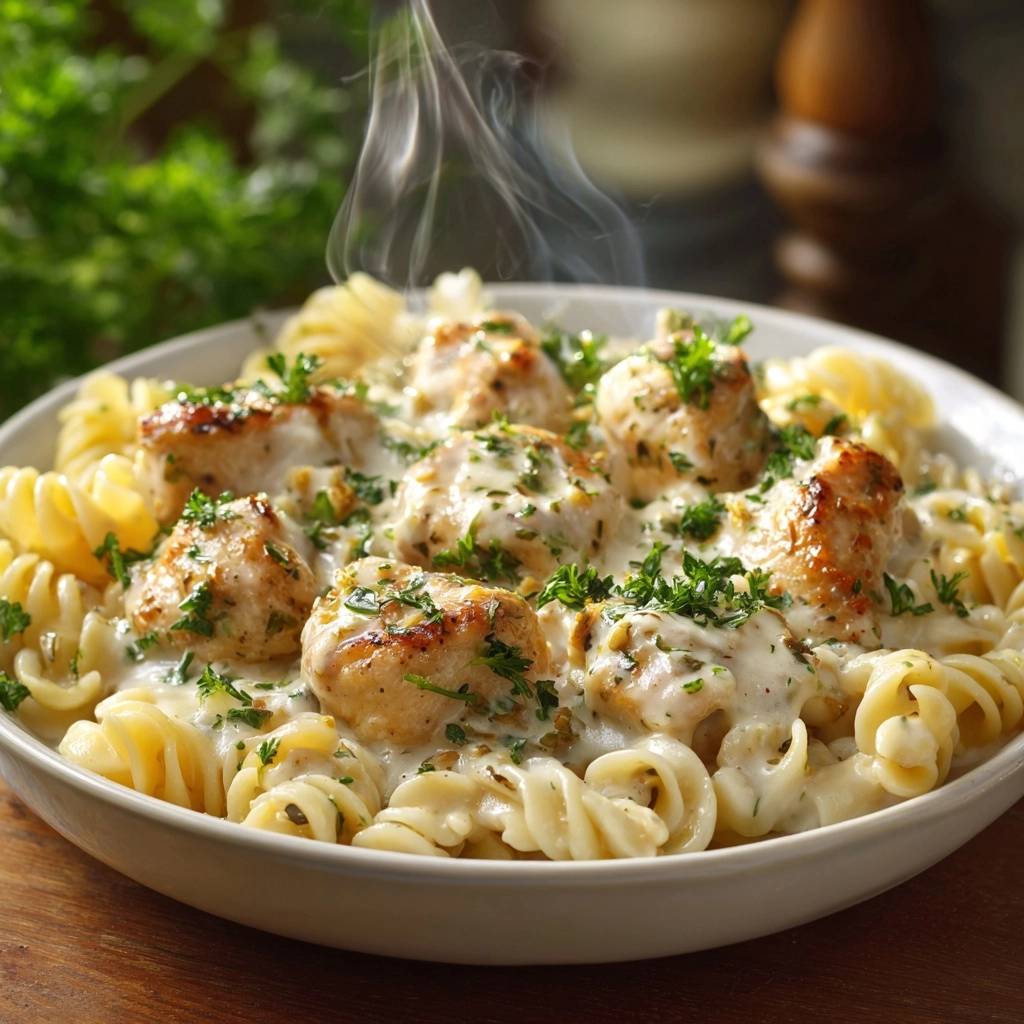
Ever bite into creamy pasta only to hit dry, tough chicken that ruins the whole plate? This Creamy Chicken Rotini fixes that fast. You get golden, juicy chicken chunks seared hot then finished in silky sauce, all wrapped around al dente rotini. The garlicky aroma hits first, followed by cheesy richness that clings perfectly.
Therefore, it beats takeout every time because you control the freshness and juiciness. No more bland disappointment. Plus, the whole thing’s ready in 30 minutes flat, perfect for busy weeknights.
Here’s the pro tip that seals it: pat the chicken completely dry before seasoning. That moisture removal lets the high-heat sear create a crust instantly, locking in all the juices. You’ll taste the difference right away.
Why Creamy Chicken Rotini Solves Dry Chicken Woes
The High-Heat Sear Secret
The high-heat sear triggers the Maillard reaction, where proteins and sugars brown fast at around 375°F in shimmering oil. This builds a flavorful crust that contracts and traps moisture inside. In contrast, low-heat cooking steams the chicken, squeezing out juices and leaving it dry.
Therefore, you aim for oil rippling hot before adding chicken. After 2-3 minutes per side, a golden edge forms while the center stays pink. That texture shift from raw to crusty happens quick, and it sets up juicy results.
From Skillet to Silky Sauce Finish
Once seared, the chicken gently poaches in the cream sauce at low heat. This preserves juices without evaporation. The sauce emulsifies as heavy cream, Parmesan, and starchy pasta water bind together smoothly.
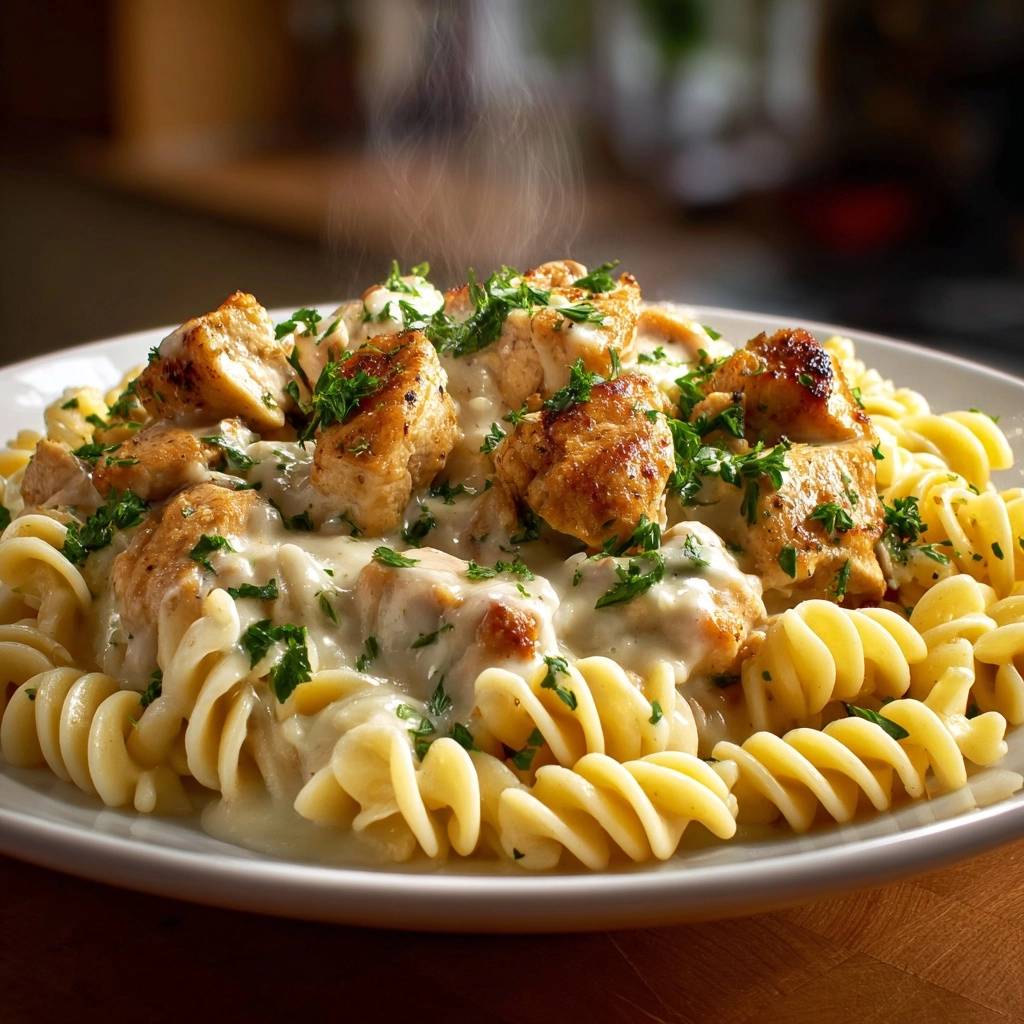
Parmesan melts best because its low moisture content blends into the fat without separating. However, other cheeses like cheddar can clump if overheated. Keep the simmer gentle for that perfect clingy texture.
Key Ingredients for Perfect Creamy Chicken Rotini
Chicken Breast Prep Essentials
Start with 1 pound boneless chicken breast cut into 1-inch chunks for even cooking. Pat them bone-dry with paper towels so the sear sticks and doesn’t steam. Season with 1 teaspoon each salt and pepper per pound.
Fresh chicken sears better than thawed frozen, which releases extra water. In addition, boneless thighs work great as a backup; they’re juicier thanks to more fat. That swap keeps things forgiving.
Pasta and Cream Base Breakdown
Rotini’s ridges trap the creamy sauce way better than smooth spaghetti. Use 8 ounces for hearty coating without waste. Heavy cream gives superior thickness over half-and-half, which can split under heat.
Mince 3 garlic cloves fine to release sweetness without bitterness; smash then chop. Grate 1/2 cup Parmesan fresh for smooth melt, as pre-shredded has anti-caking agents. Chop 1/2 cup parsley fine for bright pops throughout.
Fats and Seasonings That Elevate Flavor
Olive oil’s high smoke point handles the sear, while 2 tablespoons butter builds rich fond in the pan. Reserve 1/2 cup pasta water; its starch glues the sauce together silkily.
Salt early on the chicken for a brine effect that tenderizes. Freshly ground black pepper adds bite; use coarse for visible flecks. These fats carry flavors deep into every bite.
Mastering the Sear: First Phase of Creamy Chicken Rotini
Heating Skillet to Shimmering Perfection
Heat 2 tablespoons olive oil and 1 tablespoon butter in a large skillet over medium-high until it shimmers and ripples. On gas, that’s a steady blue flame; electric might need high. This hits 375°F+ for instant crust.
Add chicken in a single layer, no crowding, or it steams gray. Sear 2-3 minutes per side until golden edges appear. The sizzle tells you it’s working right.
Seasoning and Pat-Dry Precision
Pat-dry removes surface moisture that causes sticking and pale meat. Salt generously 10 minutes ahead; it draws out then reabsorbs water for juicier insides. Pepper follows for even coverage.
Don’t overcrowd; cook in batches for a family of four. Aim for pink centers after searing. Pro tip: use tongs to flip gently and preserve that crust.
Building the Luscious Cream Sauce Layer
Garlic Aroma Activation
Lower heat to medium, melt the remaining butter in the fond-rich skillet. Add minced garlic and stir 30 seconds until fragrant and lightly golden. Watch closely; burnt garlic turns bitter fast.
The temp drop prevents scorching while deglazing those tasty bits. That aroma fills the kitchen instantly.
Simmering Cream and Parmesan Emulsion
Pour in 1 cup heavy cream and whisk in 1/2 cup grated Parmesan. Simmer 3-4 minutes on low until it thickens; test by dragging a spoon across the back. Add pasta water splash by splash for silky flow.
Avoid boiling, or it breaks. The starch binds everything into a cohesive sauce that coats beautifully.
Finishing Creamy Chicken Rotini in Sauce
Gentle Chicken Return and Simmer
Return seared chicken to the skillet. Simmer gently 3-5 minutes until it hits 165°F inside; stir occasionally for even juiciness. The sauce clings to each bite, keeping everything moist.
Low heat breaks down collagen softly without drying. Check with a thermometer for safety.
Pasta Toss and Parsley Integration
Meanwhile, cook 8 ounces rotini al dente, drain but save water. Toss pasta into the sauce-chicken mix until fully coated. Stir in chopped parsley for freshness.
Garnish with extra parsley. Serve hot to hold that just-cooked heat and twirlability. Pro tip: al dente pasta absorbs sauce without getting mushy later.
Science of Juicy Chicken in Creamy Rotini
Maillard Reaction in High-Heat Sear
At 300°F+, the Maillard reaction creates over 100 flavor compounds from amino acids and sugars. The surface proteins denature and contract, sealing juices inside at 140°F core temp. That’s your golden crust.
Without it, low heat evaporates moisture. This quick blast transforms bland chicken into savory bites.
Sauce Poaching Preserves Moisture
Low-temp poaching in cream melts collagen into gelatin without protein tightening. The fat protects against drying. Skillet beats oven here for even heat and sauce integration.
Cream’s slight acidity tenderizes further. Juices stay locked, unlike dry baking.
Avoiding Pitfalls in Creamy Chicken Rotini
Preventing Dry, Rubbery Chicken
Overcrowding steams instead of sears; low heat from the start toughens meat. Always pat dry and use high heat first 2-3 minutes per side. Hit 165°F exactly, no more.
Thermometer’s your friend. Batch cook if needed.
Sauce Separation and Pasta Mush Fixes
Boil hard breaks the emulsion; simmer only. Too much pasta water dilutes starch, so add gradually. Cook pasta al dente and shock in cold water if holding.
Burnt garlic? Wipe pan and restart. Bite-test pasta firmness before tossing.
Flavor Twists on Creamy Chicken Rotini
Herb and Cheese Swaps
Swap parsley for basil or oregano for Italian flair. Try asiago or gouda instead of Parmesan; they melt creamy too. Add red pepper flakes for heat, starting with 1/4 teaspoon.
Sun-dried tomatoes chopped fine bring tang. These keep the base juicy while boosting taste.
Protein and Veggie Boosts
Use thighs or shrimp for variety; shrimp cooks in 2 minutes post-sauce. Stir in spinach, mushrooms, or broccoli florets in the last simmer for bulk.
For vegan, blend soaked cashews into cream sub. Veggies wilt perfectly without sogginess.
Ideal Pairings for Creamy Chicken Rotini
Crisp Veggie Sides
Arugula salad with lemon vinaigrette cuts the richness perfectly. Roasted broccoli adds crunch and char. Focaccia soaks up sauce without overpowering.
These contrasts make the meal balanced and fresh.
Make-Ahead and Storage Tactics
Sear chicken ahead and fridge up to 2 days. Assemble sauce and pasta day-of. Keeps 3 days in airtight container; reheat gently with splash of cream to revive.
Freeze sauce separate from pasta up to 1 month; pasta gets mushy otherwise. Steam reheat works best.
Troubleshooting Creamy Chicken Rotini
Sauce Too Thick or Thin?
Too thick? Whisk in more pasta water or cream 1 tablespoon at a time. Thin? Simmer longer until spoon drags clean. Blend lumps if needed.
Chicken Not Browning Evenly
Check pan size; too small crowds. Verify oil shimmers hot before adding. Cook in batches for even heat.
Pasta Sticking Post-Toss
Toss immediately after draining; don’t rinse in oil. Serve right away. Extra sauce prevents clumping.
Cheese Not Melting Smoothly
Grate fresh and use room-temp cheese. Insist on low heat; high scorches it.
FAQ
How do I store leftovers of Creamy Chicken Rotini?
Store in an airtight container in the fridge for up to 3 days. Reheat gently on stovetop with a splash of cream or milk to loosen the sauce and restore creaminess. It freezes decently if you separate the sauce from pasta; sauce alone keeps 1 month, but pasta gets mushy after thawing, so portion accordingly.
Why is my chicken dry in Creamy Chicken Rotini?
Dry chicken usually comes from skipping the pat-dry step, overcrowding the pan, or starting on low heat. Moisture on the surface steams it gray instead of searing a crust. Always heat oil to shimmering, cook in single layer batches, and finish gently in sauce to 165°F; that high-low method locks juices perfectly.
Can I substitute ingredients in Creamy Chicken Rotini?
Swap chicken breast for thighs or shrimp for juicier or quicker protein; thighs need 1 extra minute. No heavy cream? Coconut cream works for thickness, or full-fat Greek yogurt thinned with milk. Use asiago for Parmesan if needed, but grate fresh. Rotini subs like penne hold sauce well too.
Why did my sauce separate or break?
High heat boils the cream, causing fats to split from liquids. Always simmer low after adding cheese, whisk constantly, and incorporate pasta water gradually for starch binding. If it breaks, whisk vigorously off heat or blend smooth; it’ll recover with patience.
How do I know when the rotini is al dente?
Test 1-2 minutes before package time; it should have a firm bite with a white center dot when snapped. Drain immediately to stop cooking. Undercook slightly if finishing in sauce, as residual heat firms it up without mush.
Can I make Creamy Chicken Rotini dairy-free?
Yes, use coconut cream or cashew cream for the base; blend 1 cup soaked cashews with water for silky texture. Skip Parmesan or sub nutritional yeast. Butter swaps to olive oil or vegan butter; sauce still emulsifies with pasta water starch for creaminess.
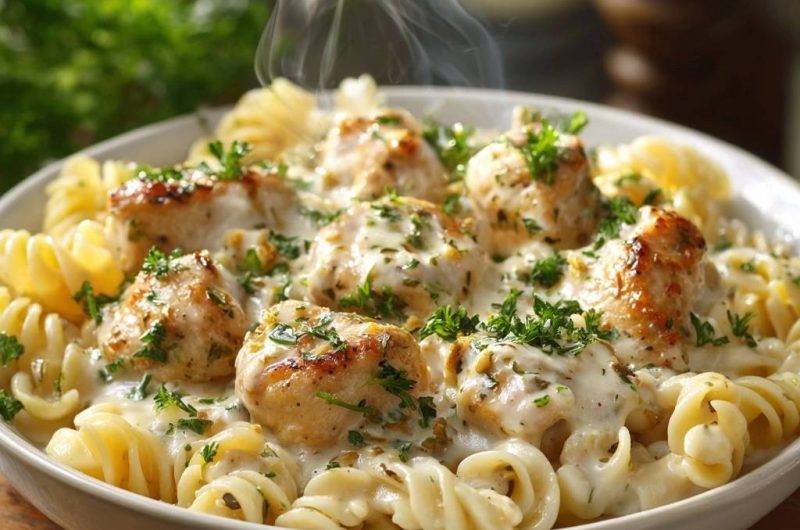
Creamy Chicken Rotini
Course: Main CourseCuisine: AmericanDifficulty: easy4
servings15
minutes25
minutes40
Minutes650
kcalAmerican
Ingredients
8 ounces rotini pasta
1 pound boneless chicken breast, cut into 1-inch chunks
2 tablespoons olive oil
2 tablespoons butter
3 cloves garlic, minced
1 cup heavy cream
1/2 cup grated Parmesan cheese
1/2 cup fresh parsley, chopped (plus extra for garnish)
Salt and black pepper to taste
Directions
- Cook rotini in salted boiling water according to package for al dente. Drain and set aside, reserving 1/2 cup pasta water.
- Pat chicken chunks completely dry with paper towels. Season generously with salt and pepper.
- Heat olive oil and 1 tablespoon butter in a large skillet over medium-high heat until shimmering hot (key to preventing dryness: oil must be very hot for instant sear). Add chicken in a single layer without crowding; sear 2-3 minutes per side until golden crust forms but centers are still pink. This high-heat blast seals juices inside, solving dry chicken forever. Remove chicken to a plate.
- Lower heat to medium. Melt remaining 1 tablespoon butter in skillet; add garlic and cook 30 seconds until fragrant.
- Stir in heavy cream and Parmesan; simmer 3-4 minutes until sauce thickens slightly. Add reserved pasta water if needed for silky texture.
- Return chicken to skillet; simmer gently 3-5 minutes until cooked through (internal temp 165F) and juicy from the low-heat finish. Stir in chopped parsley.
- Toss in cooked rotini until fully coated. Garnish with extra parsley. Serve hot.
Notes
- Key to juicy chicken: Pat dry, season generously, and sear in very hot oil for golden crust without crowding the pan. Finish gently in sauce to lock in moisture.