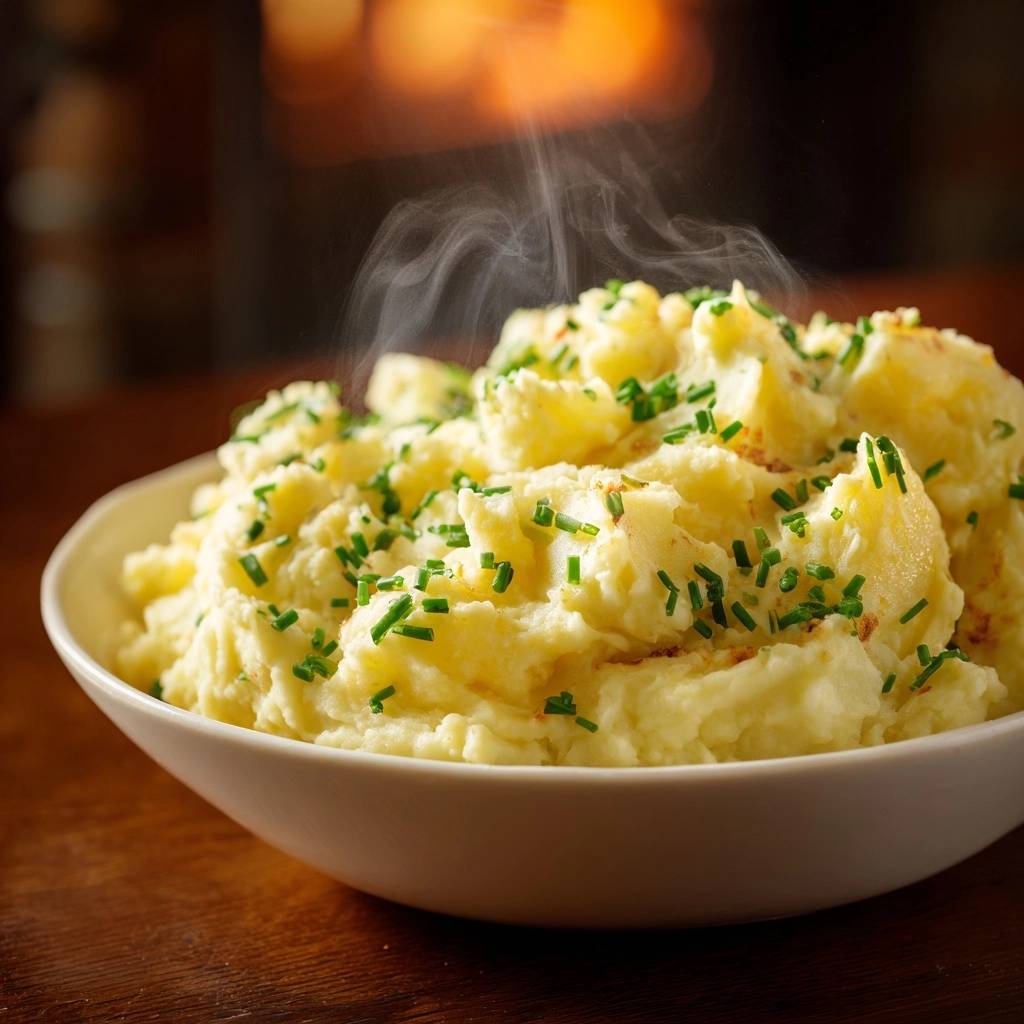
Ever ended up with a gluey mound of mashed potatoes that no one wants to touch? You’re not alone. This creamy chive mashed potatoes recipe fixes that frustration with a simple ricing technique and hot liquid folding. Dinner’s side dish lands on the table restaurant-style, smooth and fluffy every time.
Why does this method win? It controls starch release, the real culprit behind gummy disasters. Russets boil up starchy perfect, and gentle handling keeps things velvety. In addition, fresh chives add a bright pop that elevates the whole plate.
Here’s the expertise kicker: steam the drained potatoes dry for one minute. That quick step evaporates excess moisture. Therefore, when you rice them back into the warm pot, they absorb hot milk and butter without turning pasty.
Why Creamy Chive Mashed Potatoes Transform Sides
Picture velvety smoothness from starchy russets, rich buttery depth, and chives’ fresh zing cutting through. Most mashed potatoes fail because home cooks overwork them into glue. However, this version delivers that cloud-like texture you crave for holidays or weeknights.
These creamy chive mashed potatoes shine as a side that pairs with anything. Oh man, the way they steam up the bowl gets everyone digging in fast. Plus, they’re a staple that beats boring versions hands down.
Texture Science: Starch vs Smoothness
Potato starches like amylose and amylopectin gelatinize when overworked, creating gumminess. Boiling releases them, but rough mashing makes it worse. This recipe’s ricing gently breaks cells without excess starch activation.
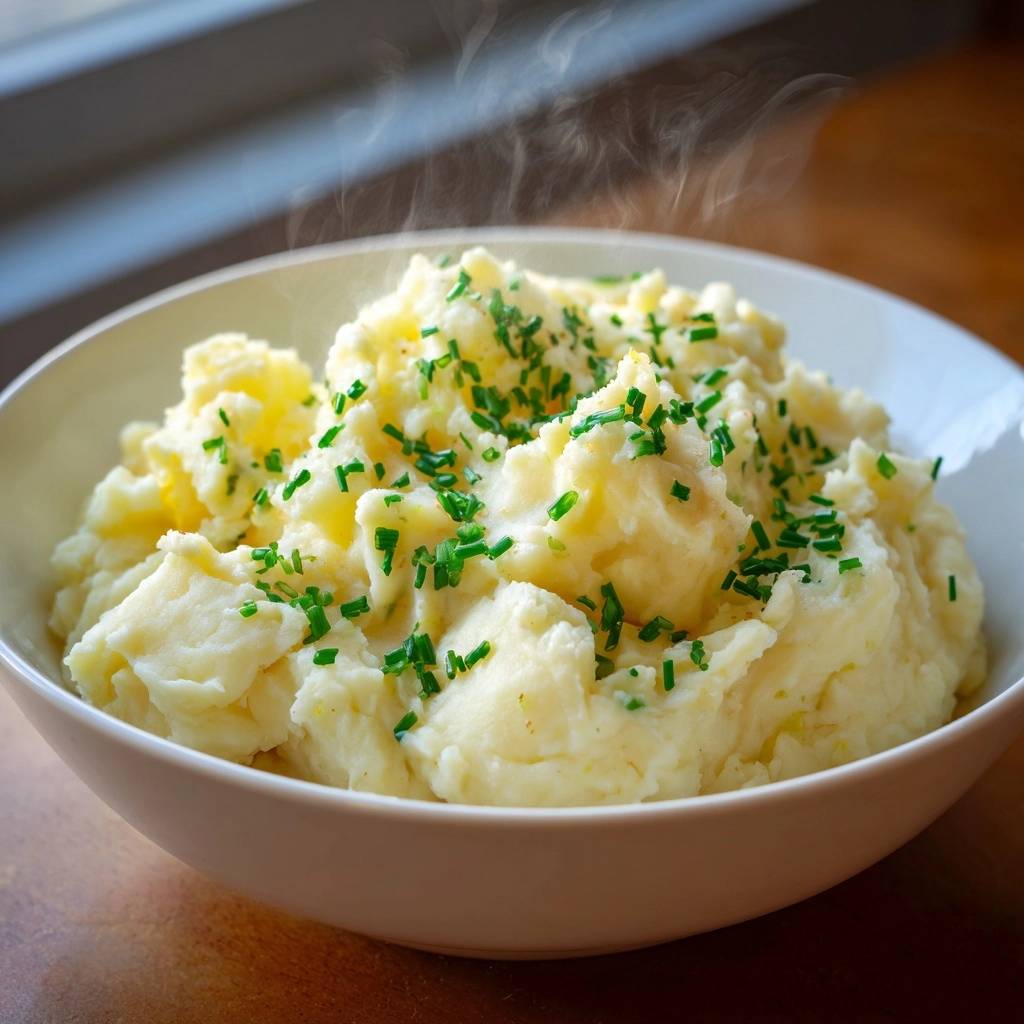
Steam-drying post-drain pulls out surface water. Therefore, hot potatoes meet steaming milk for perfect emulsion. You get fluff, not paste.
Key Ingredients for Creamy Chive Mashed Potatoes
Russets provide high starch for fluffiness; waxy potatoes stay dense. Whole milk’s fat emulsifies smoothly, while unsalted butter lets you control salt. Fresh chives deliver volatile oils for punch, way better than dried.
Start with 4 pounds russet potatoes, peeled into 2-inch chunks for even cooking. One cup whole milk, half cup butter in tablespoons, 1.5 teaspoons salt, half teaspoon pepper, and a quarter cup chopped chives round it out. These chive mashed potatoes demand quality for peak creaminess.
No whole milk? Mix 2% with a splash of cream. Fresh chives matter; snip them fine to release flavors without bruising.
Russet Potatoes: Starchy Powerhouse Choice
Russets beat waxy reds or Yukon Golds for mashing; their starch absorbs liquid into fluff. Cut into 2-inch chunks so they cook evenly in 15-20 minutes. Peel them first; skins toughen texture.
Store in a cool, dark spot up to two weeks. Pick firm ones without sprouts for best results.
Butter and Milk: Emulsification Duo
Cut cold butter into tablespoons; it melts evenly into hot milk without separating. Whole milk’s 3.5% fat binds starches better than skim. Heat to steaming, not boiling, for optimal absorption.
This duo creates silky emulsion. Skim milk works in a pinch but adds less richness.
Fresh Chives: Final Flavor Lift
Chop fresh chives finely right before stirring in; it preserves grassy oils. A quarter cup balances cream without overpowering. Green onions sub in if needed, but chives give authentic lift.
Essential Tools for Perfect Mashed Potatoes
A potato ricer minimizes starch release over a masher. Use a rubber spatula for folding; it aerates without deflating. Large pot for boiling, colander for draining, and small saucepan for liquids complete the kit.
Budget ricers under $30 work fine; avoid food processors entirely. Warm the pot post-ricing to keep heat in. These tools prevent common texture fails.
Ricer Advantage Over Mashing
Ricing extrudes potatoes through holes, releasing less starch than mashing’s crushing action. Handheld versions beat electric for control. Rinse immediately with hot water for easy cleanup.
Mashers work okay if gentle, but ricers guarantee smoothness.
Step-by-Step: Boiling Creamy Chive Mashed Potatoes
Place 4 pounds peeled russet chunks in a large pot, cover with cold water by one inch. Add one teaspoon salt. Bring to a boil high heat, then simmer until fork-tender, 15-20 minutes.
Drain in a colander. Let steam one minute; you’ll see vapor rise, drying surfaces. This stops waterlogging for fluffier results. At high altitude, add five minutes cook time.
Steam-Drying to Eliminate Gumminess
One-minute steam-dry evaporates clinging moisture, preventing watery mash. Shake the colander gently to expose all pieces. Skipping this leads to soupy potatoes every time.
Heating Liquids for Chive Mashed Potato Creaminess
While potatoes drain, warm one cup whole milk and half cup butter pats in a small saucepan over low. Stir until butter melts and milk steams, about three minutes. Don’t boil, or it toughens proteins.
Hot liquids absorb instantly into hot potatoes. Pro tip: add a garlic clove for subtle infusion, then remove.
Gentle Ricing and Folding Technique
Rice steaming potatoes straight back into the warm pot. Sprinkle on half teaspoon salt and pepper. This minimal-agitation step keeps starch dormant.
Pour hot milk-butter in three additions. Fold gently with a rubber spatula after each; pause to check smoothness. Total mixing under one minute avoids glue.
Folding vs Stirring: Texture Key
Folding with a spatula preserves air pockets unlike vigorous stirring. Aim for creamy waves, not stiff peaks. Stop at smooth; it’ll look perfect.
Finishing Creamy Chive Mashed Potatoes
Stir in quarter cup chopped chives last for color and vibrancy. Taste; add salt if needed, as potatoes soak it up. Serve immediately steaming to hold fluff.
Platter in a warm bowl; fluff peaks with a fork for appeal. Keeps heat better than flat spreading.
Avoiding Gluey Mashed Potatoes Mistakes
Hot potatoes plus cold dairy causes lumps; always heat liquids. Over-boiling turns them mushy. Food processors explode starch everywhere. This creamy chive mashed potatoes troubleshooting covers it all.
Reheating dries them out unless you steam with milk. Follow this, and failures vanish. Readers often skip steam-dry; don’t.
Overmixing Trap and Recovery
Overmixing activates starch in seconds; it sets like glue. Add hot milk to loosen slightly, but if grainy, start over. Prevention beats salvage.
Flavor Variations for Chive Mashed Potatoes
Swap chives for roasted garlic or parsley-tarragon mix. Add sharp cheddar for cheesiness. Keep vegan with oat milk and olive oil; ratios stay one cup liquid to half cup fat.
Spice with smoked paprika. These tweaks maintain creaminess while boosting flavor.
Cheese-Infused Creamy Upgrades
Stir in one cup shredded sharp cheddar or gouda post-folding; residual heat melts it smooth. Avoid watery cheese; grate fresh. Perfect for 4 pounds potatoes.
Make-Ahead Guide for Mashed Potatoes
Cool completely, then store airtight in fridge up to three days. Reheat in a covered oven at 350°F with a milk splash for moisture. Or steam gently.
Scale for holidays by doubling; use bigger pots. Freezes well if done right.
Freezing Without Texture Loss
Portion into quart bags, flatten for quick thaw. Freeze up to two months. Revive by heating with hot milk fold; avoids graininess.
Pairing Creamy Chive Mashed Potatoes
Roast chicken juices soak in perfectly; beef tenderloin gets a creamy foil. Baked salmon or veggie roasts balance the richness. Add glazed carrots and greens for color.
Recipe serves eight generously, half-cup portions. Holiday tables love it next to turkey.
Common Questions on Chive Mashed Potatoes
Can I Use a Blender?
No, blenders shear potatoes violently, releasing massive starch for instant glue. Stick to ricer or gentle masher. Even hand mixers overdo it on high speed.
Yukon Gold Instead of Russets?
Yukon Golds are waxier, so expect denser, less fluffy results. Reduce milk by quarter cup to compensate. Still creamy, but russets fluff superior.
How to Reheat Without Drying?
Add two tablespoons milk per cup, cover in 350°F oven 20 minutes, or steam on stovetop. Microwave last resort: stir every 30 seconds with milk. Keeps original creaminess.
Dairy-Free Creamy Chive Version?
Use one cup full-fat oat milk and quarter cup olive oil or coconut oil. Heat same way; blends smoothly with russets’ starch. Taste for salt boost.
Scaling for Crowds?
Maintain per-pound ratios: quarter cup milk, two tablespoons butter. Double pot size to avoid overflow. Cook in batches if needed; ricing scales easy.
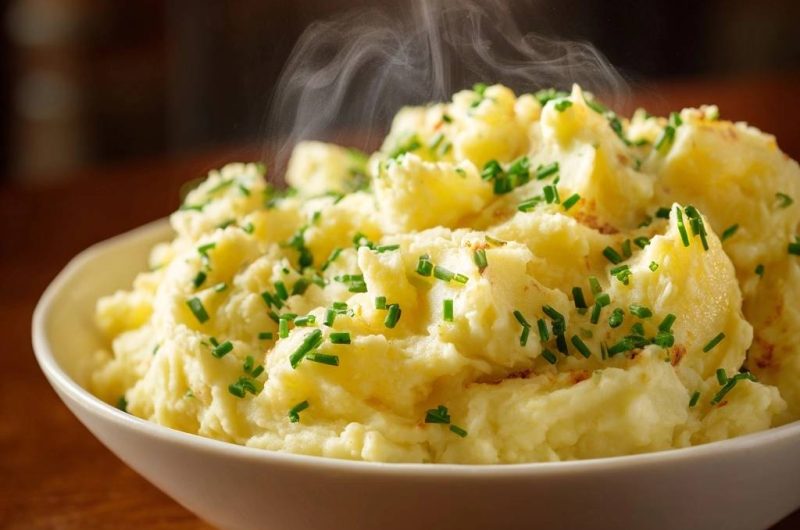
Creamy Chive Mashed Potatoes
Course: Side DishCuisine: AmericanDifficulty: easy8
servings20
minutes20
minutes40
Minutes250
kcalAmerican
Ingredients
4 pounds russet potatoes, peeled and cut into 2-inch chunks
1 cup whole milk
1/2 cup unsalted butter, cut into tablespoons
1 1/2 teaspoons salt
1/2 teaspoon black pepper
1/4 cup finely chopped fresh chives
Directions
- Place potato chunks in a large pot and cover with cold water by 1 inch. Add 1 teaspoon salt. Bring to a boil over high heat, then reduce to a simmer and cook until fork-tender, about 15-20 minutes. Drain well in a colander and let steam dry for 1 minute to evaporate excess moisture, preventing gumminess.
- While potatoes drain, heat milk and butter in a small saucepan over low heat until butter melts and milk is steaming hot, about 3 minutes. Do not boil.
- Pass hot potatoes through a ricer (or use a potato masher for minimal agitation) back into the warm pot. This gentle technique breaks them down without releasing excess starch that causes gluey texture. Sprinkle with remaining 1/2 teaspoon salt and pepper.
- Pour hot milk-butter mixture over potatoes in 3 additions, folding gently with a rubber spatula after each pour. Stop mixing once creamy and smooth, about 1 minute total. Overmixing activates starch for gumminess, so fold just to combine.
- Stir in chives. Taste and adjust seasoning. Serve immediately while steaming hot for peak fluffiness.
Notes
- Use a ricer for the best texture to avoid releasing excess starch. Serve immediately for peak fluffiness. Do not overmix to prevent gumminess.