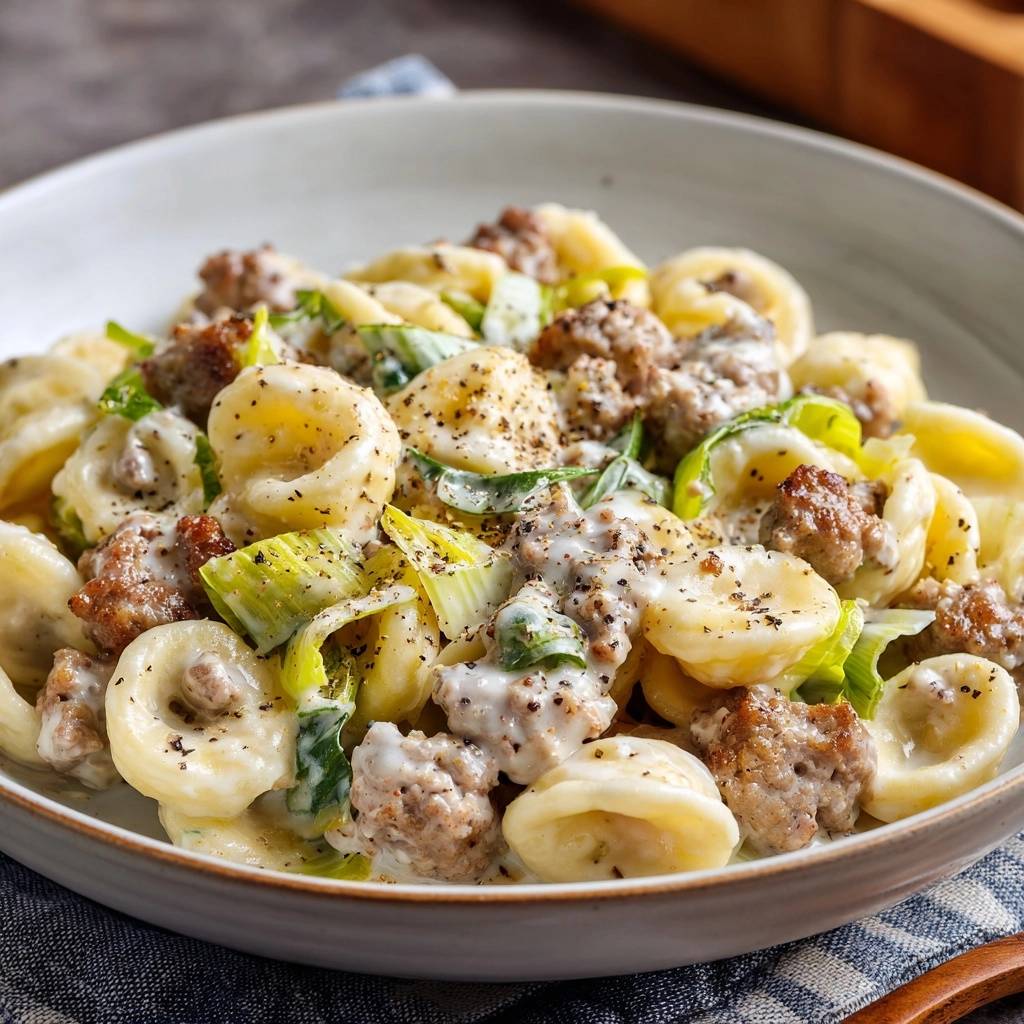
Why This Creamy Leek and Sausage Orecchiette Stands Out
Ever end up with a watery cream sauce that just slides off your pasta? Most creamy pasta recipes fail because they skip the roux and dump everything together. This Creamy Leek and Sausage Orecchiette fixes that with sausage fat as the base, plus starchy pasta water for a thick, velvety coat that clings to every little ear-shaped noodle.
That’s why you’ll love it. In addition, it comes together in about 30 minutes, perfect for weeknights when you’re starving but don’t want takeout. The leeks bring a sweet, grassy brightness that cuts through the richness, and oh man, that first forkful melts in your mouth with silky perfection.
Here’s the expertise: don’t drain the sausage fat. It renders out just enough to mix with a touch of flour, creating a roux that locks everything in. No more separation, just glossy sauce every time.
Key Ingredients for Creamy Leek and Sausage Orecchiette
Orecchiette pasta’s cup shape traps the creamy sauce inside each bite. Therefore, it delivers more flavor per forkful than smoother shapes. Use 12 oz for four servings.
Chicken Italian sausage, 1 lb removed from casings, renders fat for the roux base. Unlike pork, it stays lighter without greasiness. The seasoning adds fennel and herbs that boost the dish’s savoriness.
Three large leeks, sliced thin from white and light green parts, offer mild onion sweetness. They’re less sharp than onions, so they soften into tender bites. Heavy cream, 1 cup, provides stable richness, while 1/2 cup grated Parmesan melts in umami. One tbsp flour thickens without lumps, and 1/4 cup chopped fresh basil lifts it all with peppery freshness. Fresh beats dried here for brighter aroma. Add 2 tbsp olive oil, salt, and pepper to taste.
Orecchiette Pasta Selection Tips
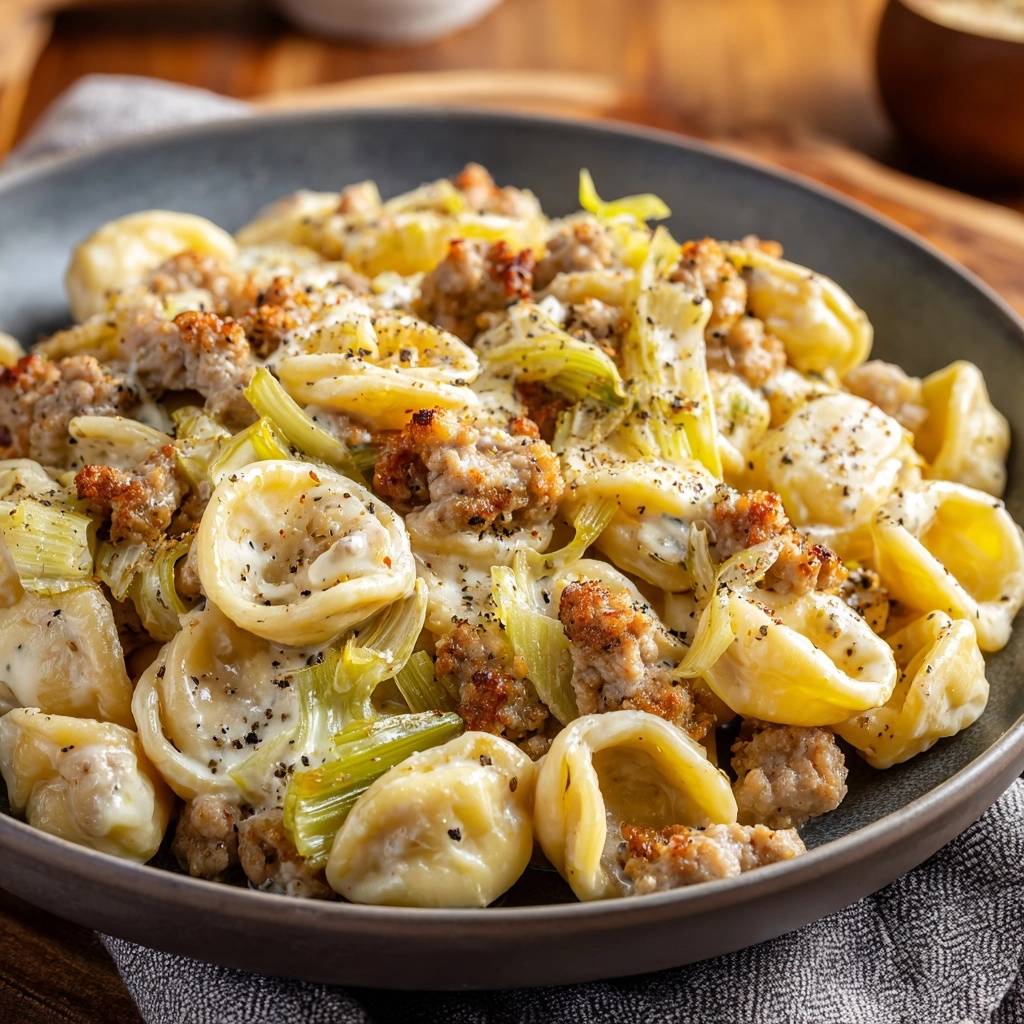
Orecchiette excels because its ear-like cups hold the silky leek and sausage sauce. Go for bronze-cut if you can; it releases more starch for better binding. Cook to al dente, about 10 minutes, so the pasta finishes in the sauce without getting mushy.
Leeks and Sausage Fat Synergy
Slice leeks thin from white and light green parts only; soak to remove grit. Remove sausage casings first for easy crumbling. Chicken Italian keeps it lean yet flavorful. As it browns, the fat renders out, forming the roux foundation that prevents watery sauce disasters.
Science of Roux in Creamy Leek and Sausage Orecchiette
The roux starts with sausage fat and flour, cooking together for one minute. This gelatinizes the starch in flour, creating a stable thickener. Unlike butter roux, sausage fat adds meaty depth without extra grease.
Next, heavy cream simmers in slowly, and starchy pasta water emulsifies it all. Starch molecules bind fat and water, forming a glossy suspension. Gradual addition, 1/4 cup at a time, prevents breaking. Leeks and Parmesan tweak the pH for even better stability.
Without this, cream sauces separate into oily pools. Here, you get lush coating. Visual cue: the sauce turns shiny and clings to a spoon, not runny. That’s the science making it foolproof.
Pasta Water’s Emulsifying Power
Al dente orecchiette releases the most starch into the boiling water. Reserve 1 cup right after draining. Add it gradually while stirring; it thickens without flour overload. Test by coating the back of a spoon perfectly smooth.
Step-by-Step Creamy Leek and Sausage Orecchiette Build
Start two things at once for speed. First, boil pasta. Meanwhile, build the sauce. Total time stays under 30 minutes with this overlap.
Phase 1: Boiling Orecchiette Perfectly
Bring a large pot of well-salted water to a boil; it seasons the pasta. Cook 12 oz orecchiette until just al dente, about 10 minutes. Reserve 1 cup pasta water before draining. Don’t rinse; the starch helps emulsify.
Phase 2: Browning Sausage for Roux Base
Heat 2 tbsp olive oil in a large skillet over medium. Add 1 lb sausage, casings removed, and break it up with a spoon. Cook 5-7 minutes until browned and cooked through. Keep all that fat; it’s your roux gold.
Phase 3: Leeks Meet Flour Magic
Add sliced leeks to the skillet. Season with salt and pepper, then saute 4-5 minutes until soft but crisp-tender with a sweet aroma. Sprinkle 1 tbsp flour and stir one minute. No browning, just a nutty smell to avoid lumps.
Phase 4: Cream and Water Emulsification
Pour in 1 cup heavy cream slowly, stirring constantly. Simmer 2 minutes until it thickens slightly. Add reserved pasta water 1/4 cup at a time, stirring vigorously for a glossy sauce. Melt in 1/2 cup Parmesan off heat.
Avoiding Pitfalls in Creamy Leek and Sausage Orecchiette
Overcook leeks to mush, and they lose brightness; stop at tender-crisp. Draining sausage fat kills the roux, leading to thin sauce. High heat on cream causes curdling, so simmer gently.
Dumping all pasta water at once breaks the emulsion. Add gradually. If sauce seems off, low-heat toss with pasta fixes most issues. Pro tip: taste for salt before adding pasta; sausage brings some.
Fixing Sauce Separation Fast
If sauce separates, whisk in extra grated Parmesan off heat; it rebinds with proteins. A cold butter swirl helps too, but prevention rules: gradual additions and low heat. Science says fat droplets need starch bridges to stay suspended.
Flavor Twists on Creamy Leek and Sausage Orecchiette
Swap turkey sausage for leaner texture without losing flavor. Add mushrooms for earthiness or kale for greens. Pecorino replaces Parmesan for sharper tang. Sun-dried tomatoes or lemon zest brighten it up.
Boost spice with chili flakes. Garlic cloves sauteed early add punch. These keep the roux intact, so sauce stays silky. Experiment, but test small batches first.
Vegetarian Creamy Leek Orecchiette Adaptation
Use plant-based Italian sausage or lentils with extra olive oil for the roux fat. Saute mushrooms first for umami depth. Same flour and pasta water method maintains thick texture. Basil stays key for lift.
Pairing Sides with Creamy Leek and Sausage Orecchiette
Balance the richness with a crisp arugula salad dressed in lemon vinaigrette. Roasted broccoli rabe adds bitter crunch. Garlic bread soaks up extra sauce perfectly.
Sparkling cranberry juice cuts through the creaminess. Or try a light ginger beer for fizz. These simple sides make the meal complete without overpowering.
Storage Guide for Creamy Leek and Sausage Orecchiette
Store leftovers in an airtight container in the fridge for 3-4 days. Reheat gently on stovetop with a splash of water or milk to re-emulsify. Microwave works too, but stir often.
Freezes well for 2 months; portion into bags. Thaw overnight in fridge, then reheat low and slow. Add basil fresh upon serving; it wilts in storage.
Troubleshooting Creamy Leek and Sausage Orecchiette
How do I store Creamy Leek and Sausage Orecchiette leftovers?
Keep it in an airtight container in the fridge for 3-4 days max. Reheat on the stovetop over low heat with a tablespoon of pasta water or milk per serving to revive the silky sauce. It freezes beautifully for up to 2 months; thaw in the fridge overnight first to avoid grainy textures from rapid changes.
Why did my sauce turn out watery?
The top mistake is draining the sausage fat or skipping the flour stir. Fat and flour form the roux base that thickens everything. If it happens, simmer longer uncovered or add a slurry of 1 tsp cornstarch in water, but next time, retain that fat and cook flour fully for 1 minute.
Can I make this gluten-free?
Yes, swap all-purpose flour for 1:1 gluten-free flour blend, and use gluten-free orecchiette. The roux still works since GF flours thicken similarly when cooked properly. Reserve extra pasta water; GF pasta releases less starch.
Why are my leeks bitter?
Bitterness comes from thick slices or dark green parts. Use only white and light green, slice paper-thin, and soak in cold water 10 minutes to rinse grit and milden flavor. Saute gently to sweeten without browning.
Sauce too thick after adding pasta?
Add more reserved pasta water, 2 tbsp at a time, while tossing over low heat. The pasta absorbs some sauce, so it firms up. If none left, use warm tap water. Aim for a lush coat that clings but flows.
How do I prevent sausage from drying out?
Cook over medium heat just until browned, 5-7 minutes, and don’t over-crumb. Chicken sausage dries faster than pork, so add leeks early to steam it slightly. The cream finishes cooking it gently.
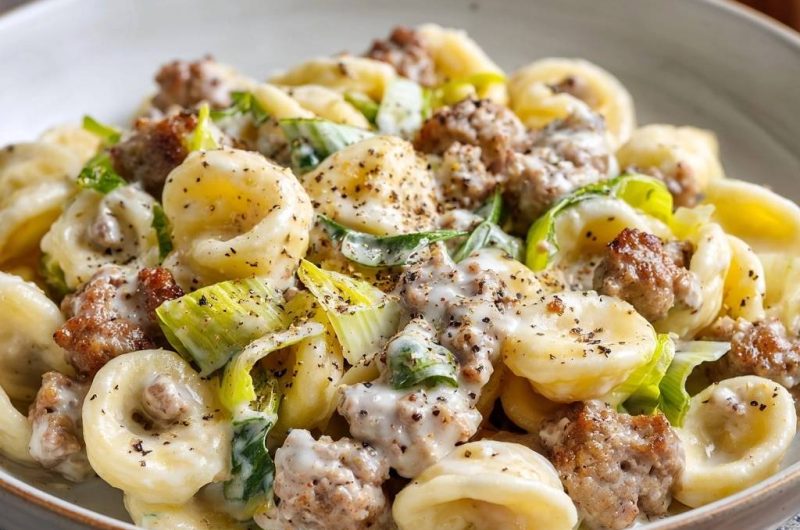
Creamy Leek and Sausage Orecchiette
Course: Main CourseCuisine: AmericanDifficulty: easy4
servings15
minutes20
minutes35
Minutes650
kcalAmerican
Ingredients
12 oz orecchiette pasta
1 lb chicken Italian sausage, removed from casings
3 large leeks, white and light green parts sliced thin (dark greens reserved for stock if desired)
1 cup heavy cream
1/2 cup grated Parmesan cheese
1/4 cup fresh basil leaves, chopped
1 tbsp all-purpose flour
Salt and black pepper to taste
2 tbsp olive oil
Directions
- Bring a large pot of salted water to a boil. Cook orecchiette until just al dente, about 10 minutes. Reserve 1 cup pasta water, then drain.
- While pasta cooks, heat olive oil in a large skillet over medium heat. Add chicken sausage, breaking it up with a spoon. Cook 5-7 minutes until browned and cooked through, letting fat render out. Do not drain fat; this is key to the roux.
- Add sliced leeks to skillet with sausage. Season with salt and pepper. Saute 4-5 minutes until leeks soften but stay tender-crisp. Sprinkle 1 tbsp flour over mixture and stir 1 minute to cook flour without browning; this builds the thick base that prevents watery sauce.
- Slowly pour in heavy cream, stirring constantly. Simmer 2 minutes until slightly thickened. Gradually add reserved pasta water, 1/4 cup at a time, stirring vigorously to emulsify into a glossy sauce that clings without separating. Stir in Parmesan until melted.
- Add cooked orecchiette directly to skillet. Toss over low heat 1-2 minutes, using pasta starch and roux to perfect sauce consistency; it will coat pasta lushly, never watery.
- Remove from heat. Stir in chopped basil. Serve immediately with extra pepper.
- This roux-plus-pasta-water method guarantees silky sauce that stays emulsified, solving the
Notes
- This roux-plus-pasta-water method guarantees silky sauce that stays emulsified, solving the #1 creamy pasta fail. Do not drain sausage fat; it’s key to the roux.