Why Creamy Lemon Shrimp Tortellini Wins Dinners
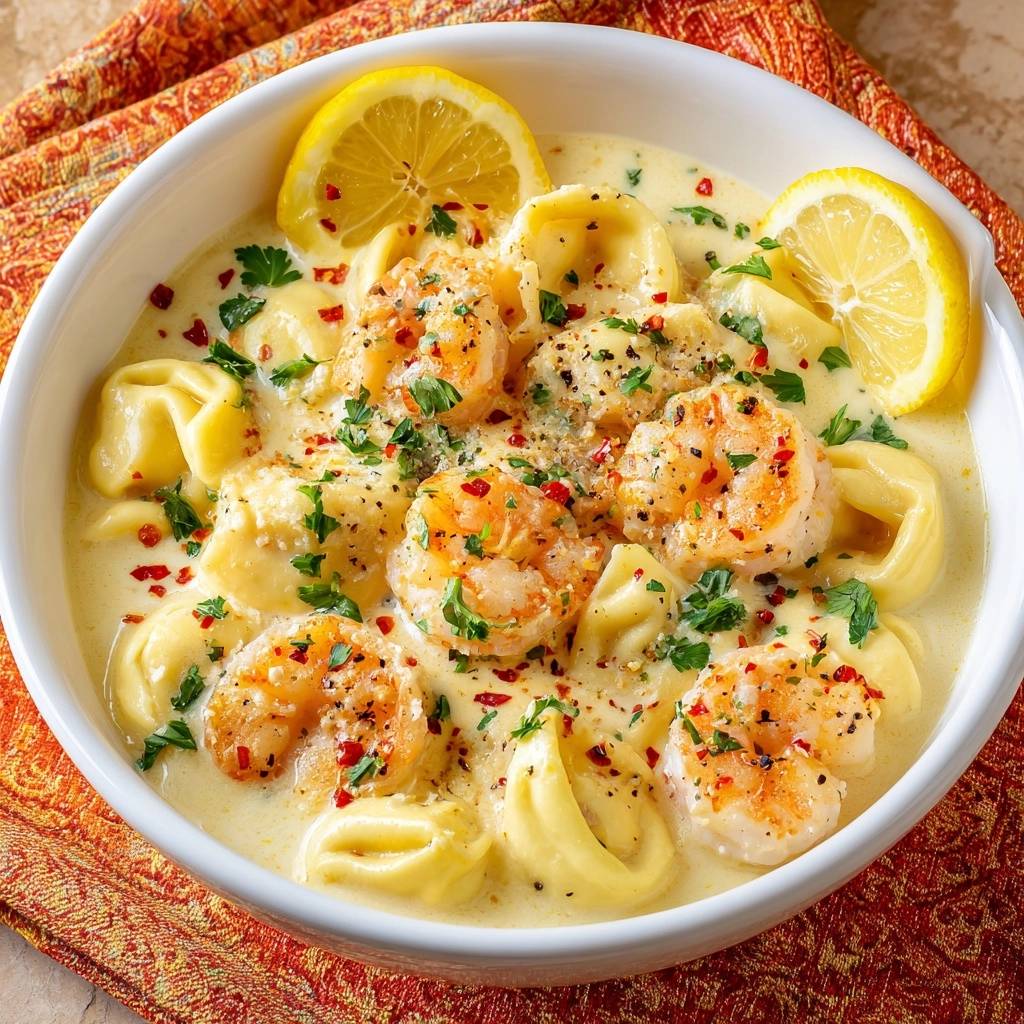
Tired of rubbery shrimp ruining your pasta night? This creamy lemon shrimp tortellini fixes that with a quick-sear method that locks in juices for plump, tender bites every time. You’ll have dinner ready in 20 minutes, faster than delivery.
Therefore, it beats takeout because you control the freshness and flavors. The bright lemon cream sauce clings perfectly to cheese tortellini, balancing richness with zing. Plus, it’s weeknight-friendly without sacrificing taste.
The secret lies in patting shrimp bone-dry before searing. That simple step triggers browning, not steaming, so they stay juicy. Trust me, once you nail this, you’ll never go back to tough shrimp.
Key Ingredients for Creamy Lemon Shrimp Tortellini
Start with 1 pound large shrimp, peeled and deveined. They cook evenly and feel luxurious in every bite. Heavy cream, 1 cup, builds a stable sauce that doesn’t break, unlike half-and-half.
In addition, juice and zest from 2 lemons add brightness without bitterness. Freshly grated Parmesan, 1/2 cup, melts smoothly for umami depth. Cheese tortellini, 9 ounces, pairs best fresh from the fridge for that pillowy texture.
Don’t skip 2 tablespoons butter; it foams up for searing and emulsifies the sauce. Chopped fresh parsley elevates over dried, and red pepper flakes bring a gentle kick. Salt and pepper season simply but effectively.
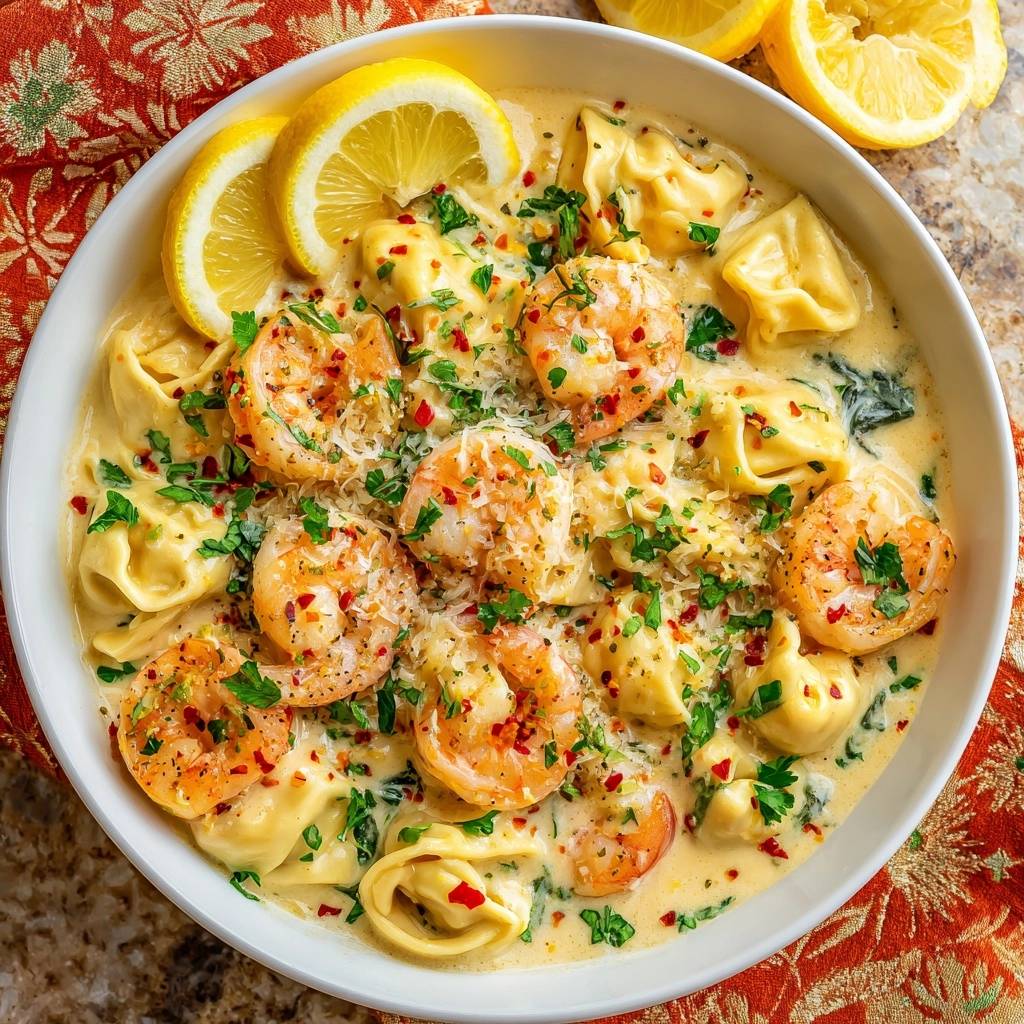
Large Shrimp: Peeling and Deveining Essentials
Grab 16/20 count large shrimp for even cooking. Peel by gripping the shell at the head end and pulling toward the tail. Devein by slicing along the back with a paring knife and rinsing under cold water.
Fresh beats frozen, but if thawing frozen ones, do it overnight in the fridge. Pat dry immediately after. This prevents excess water that leads to steaming instead of searing.
Lemon Zest and Juice Balance
Zest lemons with a microplane, avoiding the white pith that tastes bitter. Roll lemons first to loosen juices, then cut and squeeze for max yield. Meyer lemons offer a sweeter upgrade.
The acidity cuts through the cream’s richness perfectly. Add zest early for infused flavor, juice later to preserve punch.
Science of Juicy Shrimp in Lemon Cream Sauce
High-heat searing causes protein denaturation in shrimp, locking juices via the Maillard reaction for golden edges. Overcooking tightens myosin proteins, squeezing out moisture and turning them rubbery.
However, residual heat finishes them gently in the sauce. Butter and Parmesan emulsify the cream into silkiness, while lemon’s acid tenderizes slightly and balances pH for harmony.
Therefore, the quick sear plus low simmer keeps everything plump. No jargon needed; just follow the cues, and science does the work.
High-Heat Searing Mechanism
A single layer in a screaming-hot skillet browns without steaming, thanks to a dry surface. Sear undisturbed for 1 minute until pink on bottom and edges curl. Flip once, 1 minute more till opaque.
That timing creates a crust that seals juices. Remove right away to stop cooking.
Equipment Choices for Perfect Tortellini Shrimp
Use a wide skillet for even high-heat searing; it fits shrimp in one layer. A large pasta pot boils tortellini without crowding. Paper towels dry shrimp thoroughly.
In addition, a microplane zests lemons finely. Tongs flip shrimp better than a spatula for grip. Cast iron upgrades heat retention, but nonstick works fine too.
No fancy tools required. These basics ensure pro results every time.
Step-by-Step: Boiling Tortellini Precisely
Bring a large pot of salted water to a rolling boil; use 1 tablespoon salt per quart. Drop in 9 ounces cheese tortellini and cook 3-4 minutes till al dente, firm to bite.
Drain but reserve 1/2 cup starchy pasta water; it thickens sauce later. Avoid shocking in ice; just drain and set aside. Overboiling makes them mushy, so test early.
Step-by-Step: Quick-Searing Plump Shrimp
Pat shrimp completely dry with paper towels; moisture is the enemy. Heat skillet over high, add 1 tablespoon butter till foaming. Add shrimp in a single layer, undisturbed for 1 minute.
Watch edges curl and bottoms pinken. Flip, sear 1 more minute till just opaque. Remove to a plate fast; overcrowding steams them tough.
Step-by-Step: Building Silky Lemon Cream Sauce
Drop heat to medium. Add remaining butter, red pepper flakes, black pepper, and salt; stir 30 seconds till fragrant. Pour in heavy cream, Parmesan, lemon zest, and juice.
Simmer 3-4 minutes, stirring till it coats a spoon. Too thick? Whisk in reserved pasta water bit by bit for perfect emulsion. Aromas will bloom beautifully.
Step-by-Step: Combining Tortellini and Shrimp
Add tortellini and shrimp back to sauce. Toss gently for 1 minute; residual heat warms shrimp without overcooking. Ensure even coating without breaking pasta.
Divide into bowls. Garnish with parsley, lemon wedges, extra flakes, and pepper. Serve hot for peak silkiness.
Avoiding Rubbery Shrimp Disasters
Overcrowding the pan traps steam, not sear. Always single layer. Low heat boils shrimp instead of browning them.
However, post-sear overcooking in sauce ruins them too. Time strictly and remove early. For sauce too thick, pasta water fixes it; too thin, simmer longer.
Tortellini sticks if not stirred initially; generous salt prevents that. Lemon too sharp? Stir in more Parmesan to mellow.
Overcooking Recovery Tactics
Tough shrimp show as curled tight and dry. Prevention beats cure; you can’t un-overcook. If sauce curdles, whisk over low heat with a splash of cream.
Flavor Variations for Lemon Shrimp Tortellini
Swap shrimp for scallops or chicken breast. Add minced garlic for depth. Try dill or basil over parsley.
In addition, amp spice with Cajun seasoning. For vegan, coconut cream works. Gluten-free tortellini fits easily; stir in spinach for greens.
Pecorino swaps for Parmesan with sharper tang. These tweaks keep it fresh.
Spice and Herb Twists
Swap red flakes for smoked paprika or harissa paste. Chives or tarragon sub parsley nicely. Lime or orange zest refreshes the citrus profile.
Ideal Pairings with Creamy Lemon Shrimp Tortellini
Sauvignon Blanc cuts the cream with crisp acidity. Pair with arugula salad, garlic bread, or roasted asparagus. Start with caprese skewers.
For dessert, berry sorbet contrasts richness. Expand for family with extra tortellini and a green side. Simple sides let the dish shine.
Make-Ahead Strategies for Shrimp Tortellini
Sear shrimp ahead and fridge up to 2 days; store sauce separate. Boil tortellini fresh. Reheat sauce low on stove, add shrimp last to avoid toughness.
Freeze sauce and tortellini separately up to 1 month; thaw overnight. Don’t freeze shrimp. Batch for meal prep; it reheats like new.
Troubleshooting Creamy Lemon Shrimp Tortellini
How do I store leftovers and does it freeze well?
Store in an airtight container in the fridge for up to 2 days. Reheat gently on the stovetop over low heat with a splash of cream or pasta water to loosen. It freezes decently if you freeze sauce and cooked tortellini separately for 1 month; thaw in fridge and reheat slowly. Avoid freezing shrimp as they turn tough and watery.
Why are my shrimp still rubbery?
Usually from not patting dry enough or overcrowding the pan, causing steaming instead of searing. Always dry thoroughly and use high heat in a single layer. If overcooked post-sear, they tighten; next time, remove at exact opacity and finish in residual sauce heat only.
Can I substitute the heavy cream?
Yes, Greek yogurt or half-and-half works for lighter versions, but whisk well to prevent curdling. Coconut cream fits vegan swaps with a tropical twist. Add pasta water to adjust thickness since these are less stable than heavy cream.
Why did my sauce separate or curdle?
High heat or acid added too soon breaks the emulsion. Transition to medium heat after searing, and stir in lemon after cream simmers. Fix by whisking vigorously off heat, then low simmer with a tablespoon cold butter or pasta water.
How do I prevent tortellini from getting mushy?
Cook to al dente, exactly 3-4 minutes for fresh cheese tortellini, tasting one minute early. Generous salted water helps, and don’t boil post-drain. Toss gently in sauce to avoid breaking.
Is the dish too lemony or acidic?
Balance with extra grated Parmesan, which adds fat and umami. Zest lightly if pith sneaks in, causing bitterness. Taste sauce before adding tortellini and adjust with a pinch more salt too.
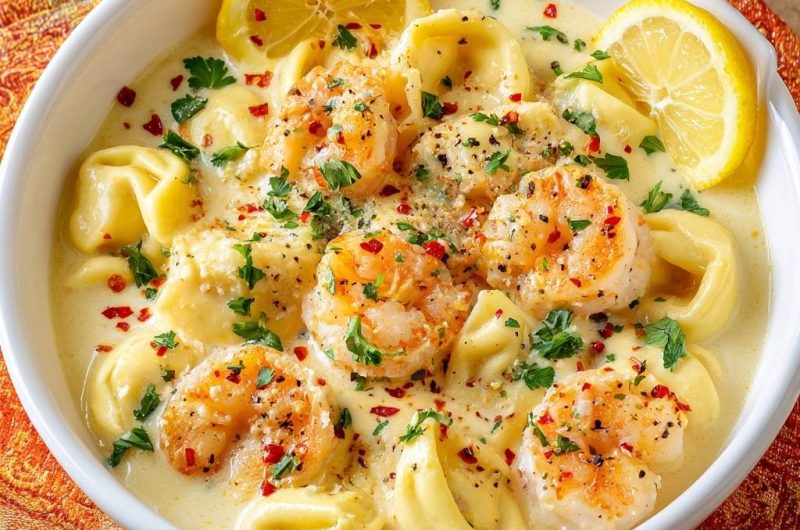
Creamy Lemon Shrimp Tortellini
Course: Main CourseCuisine: AmericanDifficulty: easy4
servings10
minutes15
minutes25
Minutes550
kcalAmerican
Ingredients
1 pound large shrimp, peeled and deveined
9 ounces cheese tortellini
1 cup heavy cream
1/2 cup grated Parmesan cheese
2 tablespoons butter
Juice and zest of 2 lemons
2 tablespoons fresh parsley, chopped
1 teaspoon red pepper flakes
1 teaspoon black pepper
Salt to taste
Directions
- Bring a large pot of salted water to a boil. Cook tortellini according to package until al dente, about 3-4 minutes. Drain, reserving 1/2 cup pasta water, and set aside.
- Pat shrimp completely dry with paper towels. This is key for the no-rubbery trick.
- Heat a large skillet over high heat. Add 1 tablespoon butter. Once melted and foaming, add shrimp in a single layer. Sear undisturbed for 1 minute until pink on bottom and edges curl. Flip and sear 1 minute more until just opaque. Do not overcook. Remove shrimp to a plate immediately.
- Reduce heat to medium. Add remaining butter, red pepper flakes, black pepper, and a pinch of salt to skillet. Stir 30 seconds. Pour in heavy cream, Parmesan, lemon zest, and juice. Simmer 3-4 minutes, stirring until thickened. If too thick, add reserved pasta water 1 tablespoon at a time.
- Add cooked tortellini and shrimp back to sauce. Toss gently 1 minute to warm through and coat evenly. Shrimp stay juicy since they finish cooking in residual heat.
- Divide into bowls. Garnish with extra parsley, lemon wedges, red pepper flakes, and black pepper. Serve hot.
Notes
- Pat shrimp completely dry before searing for the key no-rubbery trick. Do not overcook shrimp; they finish in residual heat. Adjust sauce thickness with reserved pasta water.