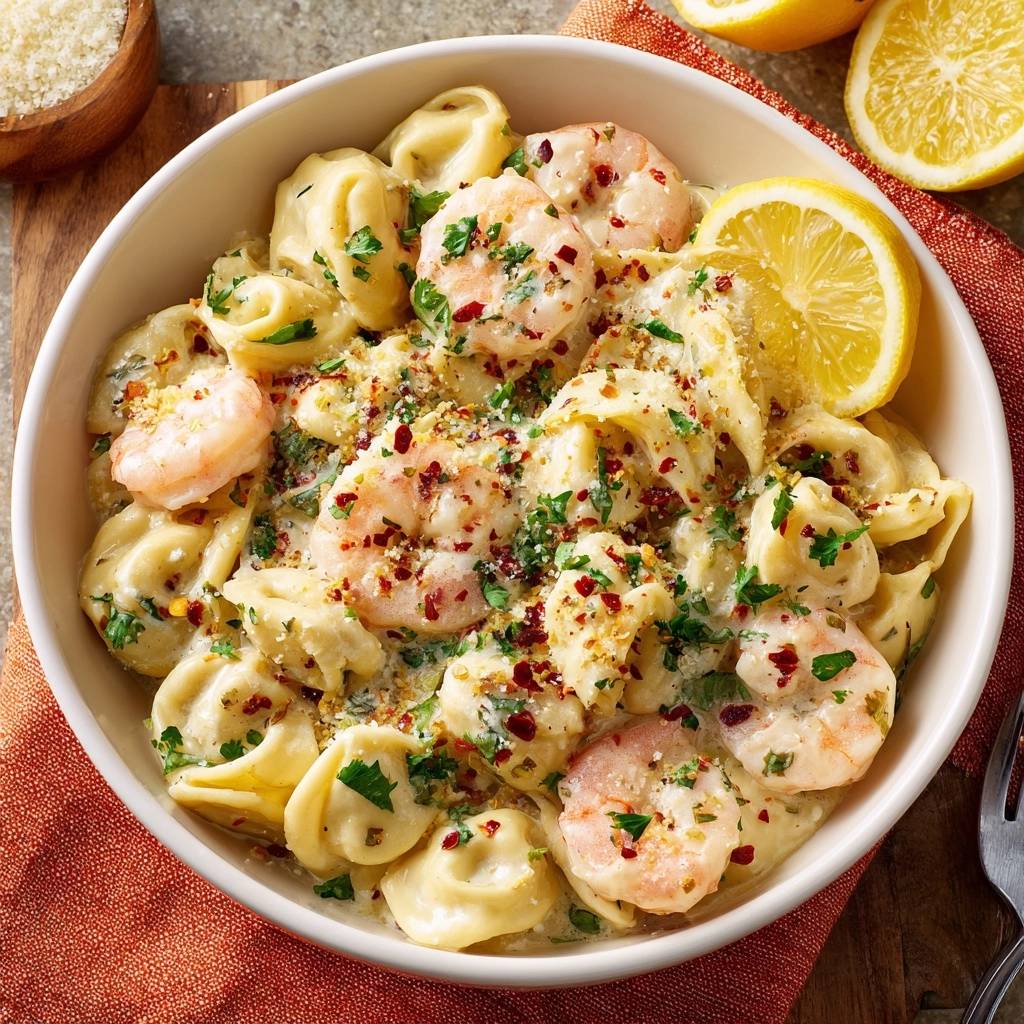
Nothing ruins a creamy pasta night faster than rubbery shrimp. You’ve been there, right? That tough, chewy bite that turns excitement into disappointment. But this Creamy Lemon Shrimp Tortellini fixes it all with a high-heat sear-first technique. You’ll get plump, juicy shrimp every time, wrapped in silky lemon cream over cheese tortellini. Dinner’s ready in 30 minutes, serves 4 at about 550 calories per serving.
So why does this recipe deliver restaurant-quality results on a weeknight? It locks in shrimp moisture with speed and precision. Then, the sauce builds layers of bright lemon and rich cream without breaking. You’ll crave that tender contrast against al dente pasta.
Here’s the expertise pro tip: pat those shrimp bone-dry before searing. Moisture steams them tough, but dry surfaces create a crust that seals juices inside. Trust me, this one change elevates everything.
Key Ingredients for Creamy Lemon Shrimp Tortellini
Selecting Perfect Shrimp for Tenderness
Large shrimp, peeled and deveined with tails on, shine here because they sear quickly without overcooking. Their size holds up in the sauce. Pat them completely dry with paper towels first. Otherwise, they steam instead of sear.
Fresh shrimp work best, but frozen ones thaw perfectly in cold water for 10 minutes. Season generously with salt and pepper right before cooking. This timing draws out excess moisture for better browning. Don’t skip it.
Cheese Tortellini and Pasta Water Role
Grab a 9 oz package of refrigerated cheese tortellini. It cooks to al dente in just 3-4 minutes, keeping that perfect bite. The filling melts into the sauce for extra creaminess.
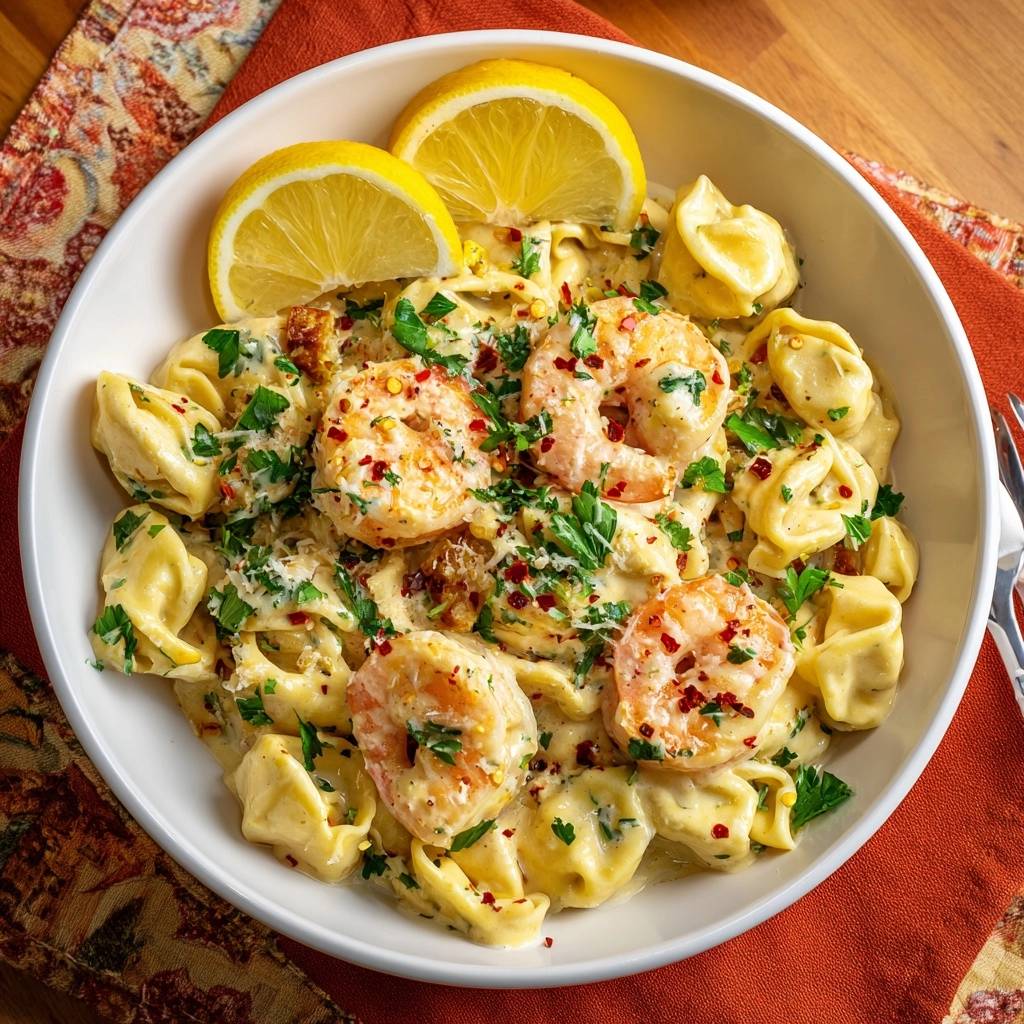
Always reserve 1/2 cup pasta water. Its starch emulsifies the sauce into silkiness. No rinsing, or you lose that magic. Spinach tortellini adds a fun green twist if you want variety.
Lemon Zest, Juice, and Cream Base Breakdown
Fresh juice and zest from 2 lemons cut through the richness with bright acidity. Zest brings oils for aroma, juice adds punch. Use room-temperature lemons for max yield.
Heavy cream thickens beautifully, unlike half-and-half which stays runny. Grate Parmesan fresh; it melts smooth without graininess from pre-shredded anti-caking agents. This combo balances creamy and zingy perfectly.
Butter, Oil, and Flavor Boosters
Olive oil handles high-heat searing without smoking. Butter then builds the sauce base, scraping up flavorful fond. They partner for depth.
Red pepper flakes add subtle heat; start with 1/2 teaspoon if you’re sensitive. Chop fresh parsley fine for even distribution. No parsley? Try basil. Salt and pepper to taste keep it precise.
Mastering the High-Heat Shrimp Sear Technique
Prepping Shrimp for Juicy Results
Start by patting shrimp super dry. Lay paper towels on both sides and press gently. This removes surface water that causes steaming.
Season with salt and pepper. Heat 1 tablespoon olive oil in a skillet over high until it shimmers. Add half the shrimp in a single layer. Crowding drops the temp and steams them tough.
Searing in Batches Without Overcooking
Sear 1-2 minutes per side until just pink and opaque in the center. A golden crust forms fast. Remove them immediately; they’ll finish in the sauce.
This quick high-heat method denatures proteins into a moisture barrier. Low heat? You get rubbery results. Watch for curling edges as doneness cues. Repeat with fresh oil for the second batch.
Building the Silky Lemon Cream Sauce
Infusing Flavors Post-Sear
Drop heat to medium. Melt butter, toss in red pepper flakes and lemon zest. Stir 30 seconds. Aromas bloom without burning.
The skillet’s fond from shrimp mixes in for umami depth. This step infuses everything beautifully. Don’t rush it.
Simmering and Thickening Heavy Cream
Pour in heavy cream. Bring to a simmer and cook 2-3 minutes. It nappes the spoon nicely.
Avoid boiling, or it breaks. You’ll see it thicken from translucent to coating. Perfect sauce body forms here.
Off-Heat Parmesan Whisk for Smoothness
Remove from heat. Whisk in Parmesan until melted and smooth. Residual heat does the work without clumping.
Too thick? Add reserved pasta water 1 tablespoon at a time. Starch binds it into emulsion. On-heat cheese turns grainy every time.
Combining Elements for Creamy Lemon Shrimp Tortellini
Reheating Shrimp Gently in Sauce
Return shrimp to the skillet. Toss over low heat for 1 minute. They warm and coat evenly without toughening.
Gentle heat finishes cooking safely. You’ll feel their plumpness return. Even coating happens with a quick stir.
Final Tortellini Integration and Seasoning
Add drained tortellini, lemon juice, and parsley. Toss to combine. Taste and tweak salt, pepper, or lemon.
Serve right away with extra Parmesan. Waiting makes pasta soggy. Hot plates keep it restaurant-fresh.
Science of Tender Shrimp in Creamy Sauces
Why High-Heat Sear Locks in Moisture
High heat denatures shrimp proteins fast, forming a crust. This Maillard barrier traps juices inside. Low-and-slow steaming squeezes them out.
Studies show seared shrimp retain 20% more moisture. That crust also browns for nutty flavor. Contrast it with boiled shrimp’s bland toughness. Science makes them pop.
Acid Balance: Lemon in Dairy Emulsions
Lemon juice risks curdling cream if added hot. Off-heat addition stabilizes proteins. Zest’s oils disperse evenly first.
Cream’s fat buffers the acid perfectly. This keeps sauce velvety. Fresh lemons ensure balanced pH every time.
Avoiding Common Mistakes with Shrimp Tortellini
Preventing Rubbery Overcooked Shrimp
Oversearing shows as tight curls and dryness. Always batch and pull early. Optional thermometer: aim for 140°F internal.
Tough shrimp? Slice thin and sauce-soak revives some juiciness. But prevention beats rescue. Sear smart.
Sauce Separation and Grainy Cheese Fixes
High heat splits sauce; control it strictly. Low-fat dairy worsens separation. Stick to heavy cream.
Grainy? Whisk in pasta water off-heat. It re-emulsifies proteins smoothly. Heat management saves it.
Pasta Overcooking and Water Management
Cook tortellini al dente only. Overdone gets mushy in sauce. Time it precisely at 3-4 minutes.
Reserve exactly 1/2 cup water. Rinsing strips starch needed for binding. Drain right and use it.
Flavor Variations for Creamy Lemon Shrimp Tortellini
Spicy Garlic or Herb Twists
Sauté minced garlic with the zest for punch. Up red pepper flakes to 1 teaspoon for heat lovers. It builds bold layers.
Swap parsley for basil or cilantro. Fresh herbs brighten differently. Taste as you go for balance.
Protein and Pasta Swaps
Scallops sear similarly; pat dry and batch them. Diced chicken works too, cooked through first. Mushrooms add earthiness.
For vegan, use cashew cream and spinach tortellini. Lobster ravioli amps luxury. Keep the sear method.
Perfect Pairings for Creamy Lemon Shrimp Tortellini
Simple Green Sides and Wines
Arugula salad with lemon vinaigrette echoes the flavors. Steamed asparagus keeps it light. Crusty bread sopps up sauce perfectly.
Sauvignon Blanc cuts the cream crisply. Sparkling cranberry juice refreshes too. Simple sides let the pasta star.
Make-Ahead and Storage Strategies
Prep shrimp and zest a day ahead. Cook fresh for best texture. Components hold well separately.
Fridge leftovers 2 days in airtight container. Reheat gently on stovetop with splash of cream. No freezing; sauce breaks.
Troubleshooting Creamy Lemon Shrimp Tortellini
Sauce Too Thick or Thin?
Thin? Simmer longer to reduce. Thick? Stir in pasta water or cream gradually. It adjusts fast.
Shrimp Not Pink Enough?
Sear longer if translucent. Safe at 140°F internal. Visual pink opaque centers guide you.
Tortellini Sticking Together?
Toss immediately in sauce. Skip oil post-drain. Heat separates them perfectly.
Lemon Flavor Overpowering?
Reduce juice to 1 lemon next time. Balance with extra Parmesan. Zest dominates aroma less harshly.
Cheese Not Melting Smoothly?
Grate fresh and whisk off-heat. Low moisture prevents clumping. Room-temp cheese blends best.
FAQ
How do I store leftovers of Creamy Lemon Shrimp Tortellini?
Store in an airtight container in the fridge for up to 2 days. Reheat gently on the stovetop over low heat with a splash of heavy cream or pasta water to loosen the sauce. Avoid microwaving; it makes shrimp tough and sauce oily. Do not freeze, as the cream separates and tortellini get mushy upon thawing.
Why did my shrimp turn out rubbery?
Rubberiness comes from overcooking or steaming instead of searing. Pat dry thoroughly, use high shimmering heat, and sear in single-layer batches for 1-2 minutes per side only. Remove early since they finish in the sauce. If crowded, the pan steams them. Check for pink opaque centers, not full white.
Can I substitute ingredients in Creamy Lemon Shrimp Tortellini?
Swap heavy cream for full-fat coconut milk in a pinch for dairy-free, but it alters flavor slightly. No lemons? Use bottled juice (2 tablespoons) with a teaspoon lime zest. Tortellini can become ravioli or gnocchi; adjust cook time to al dente. Skip red pepper flakes for mild, or double for spice.
Why is reserving pasta water important?
Pasta water’s starch emulsifies the sauce into a silky coating that clings to tortellini and shrimp. Without it, sauce stays thin and separates. Use 1/2 cup exactly, adding tablespoons as needed off-heat. It prevents grainy cheese too by binding proteins smoothly.
How do I prevent the sauce from separating?
Add Parmesan off-heat and whisk vigorously. Simmer cream gently without boiling to avoid breaking fat globules. If it splits, whisk in cold pasta water rapidly; starch re-emulsifies it. Use full-fat dairy always, as low-fat lacks stability in acids like lemon.
Can I make Creamy Lemon Shrimp Tortellini ahead of time?
Prep shrimp, chop parsley, and zest lemons up to 4 hours ahead; store covered in fridge. Cook tortellini and sauce fresh for best texture. Assemble just before serving. Leftovers reheat okay but lose some plumpness in shrimp after day 1.
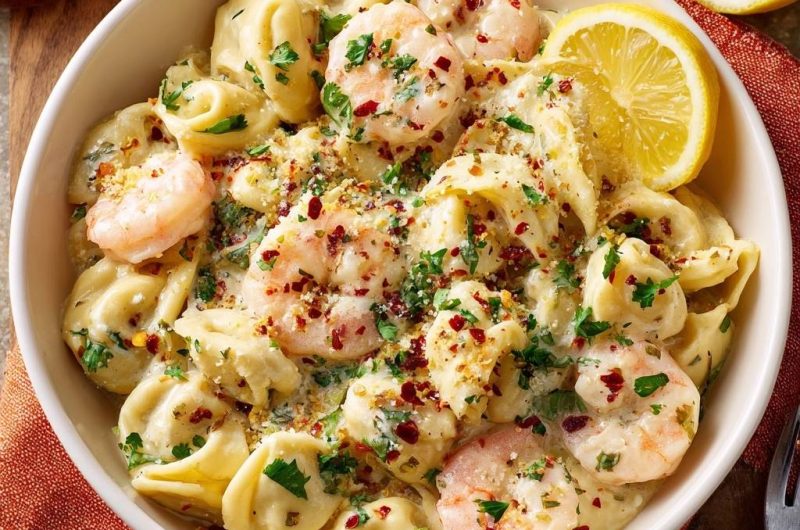
Creamy Lemon Shrimp Tortellini
Course: Main CourseCuisine: AmericanDifficulty: easy4
servings15
minutes15
minutes30
Minutes550
kcalAmerican
Ingredients
1 package (9 oz) refrigerated cheese tortellini
1 lb large shrimp, peeled and deveined, tails on
2 tablespoons olive oil
2 tablespoons butter
1 cup heavy cream
1/2 cup grated Parmesan cheese, plus extra for serving
Juice and zest of 2 lemons
1 teaspoon red pepper flakes
1/4 cup chopped fresh parsley
Salt and black pepper to taste
Directions
- Bring a large pot of salted water to a boil. Cook tortellini according to package until al dente, about 3-4 minutes. Drain, reserving 1/2 cup pasta water, and set aside.
- Pat shrimp completely dry with paper towels. Season generously with salt and black pepper. Heat 1 tablespoon olive oil in a large skillet over high heat until shimmering. Add half the shrimp in a single layer. Sear 1-2 minutes per side until just pink and opaque in centers, no more. They will finish cooking in the sauce. Remove to a plate. Repeat with remaining 1 tablespoon oil and shrimp. This high-heat, quick-sear method creates a crust that seals juices inside, preventing toughness.
- In the same skillet, reduce heat to medium. Melt butter, add red pepper flakes and lemon zest. Stir 30 seconds for flavor infusion without scorching. Pour in heavy cream, bring to a simmer, and cook 2-3 minutes to thicken slightly.
- Remove skillet from heat. Whisk in Parmesan cheese until smooth and melted. If too thick, add reserved pasta water 1 tablespoon at a time. This off-heat addition prevents graininess.
- Return shrimp to skillet, gently toss to coat and warm through for 1 minute over low heat. Add cooked tortellini, lemon juice, and parsley. Toss to combine. Taste and adjust salt, pepper, or lemon.
- Serve immediately topped with extra Parmesan. Enjoy plump, tender shrimp that stay juicy, not rubbery.
Notes
- Pat shrimp completely dry before searing for the best crust. Sear in batches over high heat to avoid overcrowding. Add reserved pasta water to thin sauce if needed. Off-heat Parmesan addition prevents graininess.