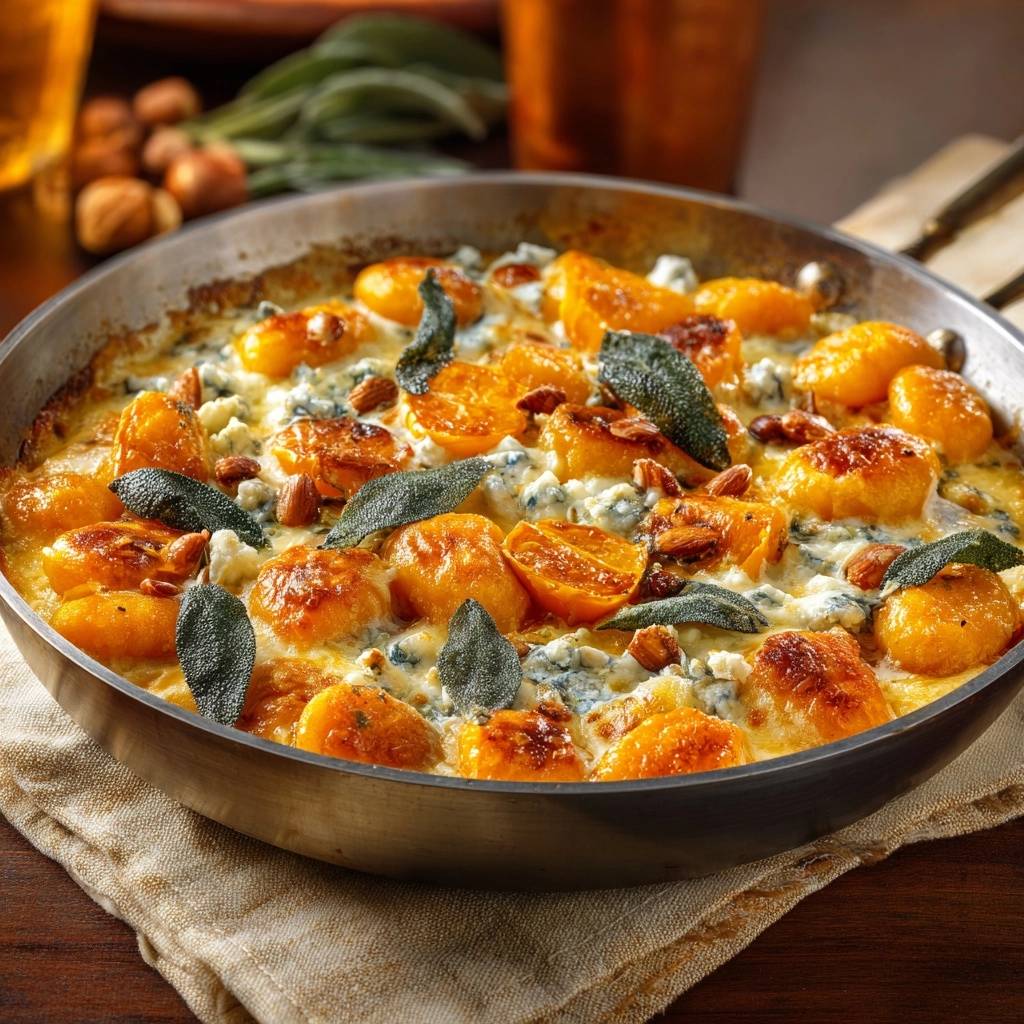
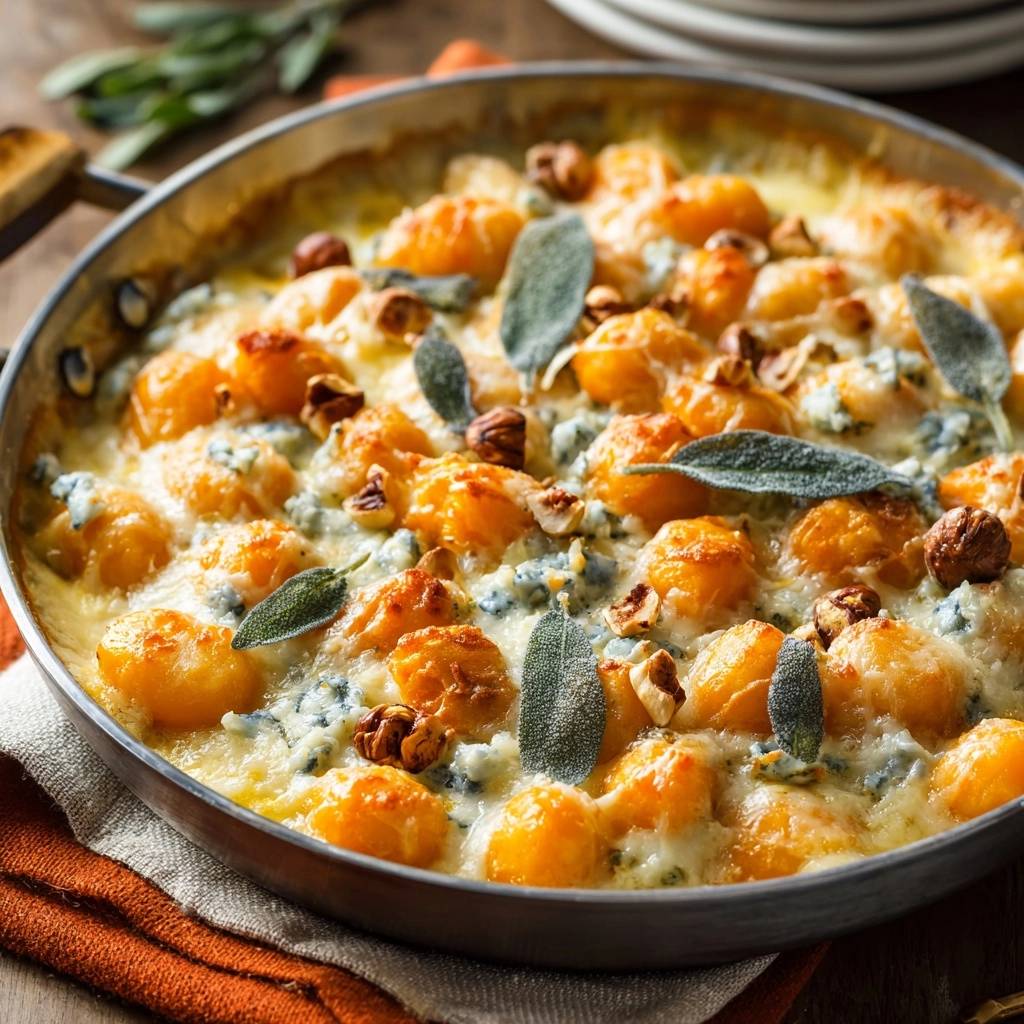
Imagine biting into a golden, crispy shell that immediately gives way to a pillowy, velvet pumpkin center. Most people struggle with gnocchi because it often turns out gummy, gluey, or resembles wet dough more than pasta. This recipe changes that by ditching the boiling water entirely and focusing on a high-heat sear that creates a stunning structural crust.
The contrast here is what makes the dish a showstopper. You get the earthy sweetness of the pumpkin, the sharp punch of melted Gorgonzola, and the buttery crunch of fried sage leaves. It’s a sophisticated meal that feels like it came from a high-end bistro, yet it takes less than thirty minutes to pull together in your own kitchen.
The secret to this restaurant-quality texture is using a heavy skillet and resisting the urge to move the gnocchi too soon. When you let them sit undisturbed in foaming butter, you trigger the Maillard reaction, which develops deep flavor and a protective crunch. This prevents the gnocchi from absorbing too much moisture from the cream sauce later, keeping them light and airy.
The Science of Searing vs. Boiling Gnocchi
When you boil gnocchi, especially the shelf-stable varieties found in most grocery stores, the starch on the surface hydrates instantly. This often results in a sticky, “mucilaginous” layer that feels heavy on the tongue. By pan-searing the gnocchi while they are dry, you are essentially “toasting” the outer starches before they ever touch liquid.
This dry-heat method maintains the structural integrity of the pumpkin dough. The heat from the skillet causes the moisture inside the gnocchi to steam, cooking the interior perfectly while the outside browns. Therefore, you end up with a pasta that holds its shape and provides a satisfying “snap” when you bite into it, rather than a mushy texture.
Furthermore, the searing process creates a foundation of flavor in the pan. As the gnocchi brown, they leave behind tiny caramelized bits known as fond. When you later add your cream, these bits dissolve into the sauce, adding a complex, nutty undertone that you simply cannot achieve with traditional boiling methods.
Essential Components for the Pumpkin Cream Sauce
Quality ingredients are the backbone of this sauce because the flavor profile is so concentrated. Heavy cream is a requirement here; its high fat content allows it to reduce into a thick, luscious coating without curdling. If you try to use milk or half-and-half, the sauce will likely remain thin and won’t cling to the ridges of the gnocchi.
The choice of Gorgonzola also dictates the final mood of the dish. Gorgonzola Dolce is milder and creamier, which is perfect if you want a subtle tang. However, if you love a bold, pungent kick, go for Gorgonzola Piccante. This aged version has a firmer texture and a sharper bite that cuts through the sweetness of the pumpkin beautifully.
Fresh sage is another non-negotiable element. Dried sage often tastes dusty or medicinal, whereas fresh leaves become crisp and almost candy-like when fried in butter. Finally, a pinch of freshly grated nutmeg acts as a bridge between the savory cheese and the sweet pumpkin, highlighting the earthy notes of the squash without making it taste like dessert.
Selecting the Right Store-Bought Gnocchi
For this specific searing technique, vacuum-packed or shelf-stable gnocchi are actually superior to the “fresh” refrigerated kind. Vacuum-packed varieties have a lower moisture content and a firmer density, which allows them to withstand the high heat of the skillet without falling apart. Frozen gnocchi can also work, but you must thaw them completely and pat them dry before they hit the hot butter.
The Role of Toasted Nuts for Texture
Toasted almonds or hazelnuts provide a necessary textural counterpoint to the soft pasta and creamy sauce. Hazelnuts offer a classic, buttery pairing for pumpkin, while almonds provide a clean, sharp crunch. In addition, the slight bitterness from the toasted nut skins helps balance the richness of the heavy cream and the saltiness of the Parmesan cheese.
Step-by-Step: Achieving the Perfect Golden Crust
Start by heating your skillet over medium-high heat until it’s hot enough that a drop of water sizzles away instantly. Add your butter and wait for the “foaming” stage. This happens when the water in the butter evaporates, leaving behind the fat and milk solids. Once the foam subsides and the butter smells slightly nutty, it’s time to drop the gnocchi.
Arrange the gnocchi in a single layer, ensuring they aren’t crowded. If you put too many in the pan at once, they will release steam and end up soggy instead of crisp. Now comes the hardest part: don’t touch them. Let them sear undisturbed for at least four minutes. You want to see a deep, mahogany brown crust on the bottom before you even think about tossing them.
Once that crust is established, give the pan a good shake or use a spatula to flip them. Cook for another two to three minutes until they look toasted all over. At this point, the gnocchi should feel firm to the touch. Remove them from the pan and set them aside so they don’t overcook while you prepare the delicate cream sauce.
Building the Gorgonzola and Sage Emulsion
After frying your sage leaves until they are brittle and dark green, lower the heat to medium-low. Pour in the heavy cream and use a wooden spoon to scrape the bottom of the skillet. This process, known as deglazing, incorporates all those flavorful browned bits into the liquid. It’s the secret to a sauce that tastes like it took hours to simmer.
Whisk in the Parmesan and half of the Gorgonzola slowly. You are looking for a stable emulsion where the fats and liquids stay bonded together. If the heat is too high, the cheese might “break,” resulting in an oily mess. Keep the temperature gentle and stir constantly until the sauce is thick enough to coat the back of a spoon, then gently fold your crispy gnocchi back into the fold.
The Broiler Finish: Why High Heat Matters
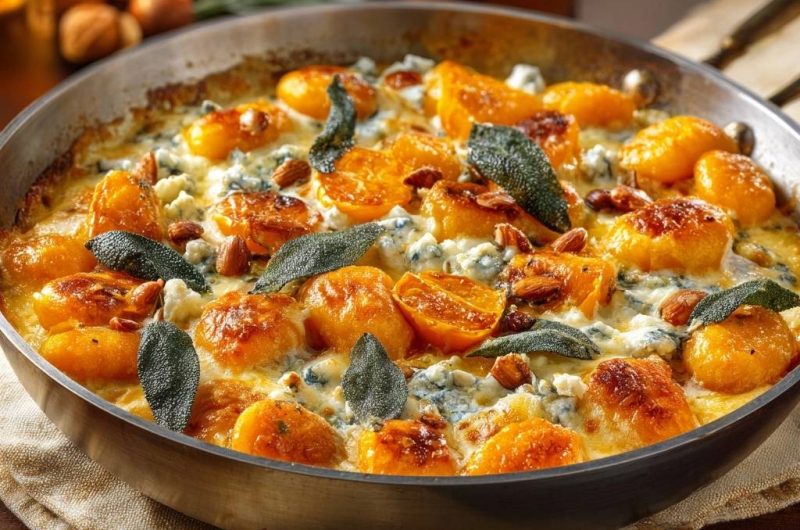
The final step under the broiler is what separates a good home meal from a professional dish. By topping the skillet with the remaining Gorgonzola and nuts and placing it under high heat, you create a “leopard-spotted” effect on the cheese. The high heat causes the sugars in the cream and cheese to caramelize rapidly, adding a smoky depth to the flavor.
Keep a very close eye on the oven during these two to three minutes. You want the cheese to be bubbling and the tops of the gnocchi to develop dark, toasted spots. However, if you leave it too long, the cream will evaporate and the gnocchi can become tough. Remove the skillet the moment the aroma of toasted cheese fills the kitchen and the edges are golden brown.
Troubleshooting Common Gnocchi Texture Issues
If your gnocchi are sticking to the pan during the searing phase, it usually means one of two things: your pan wasn’t hot enough when you added the butter, or you tried to move them too early. Starch needs time to cook and release from the surface of the metal. If they stick, just wait another minute; they will often release themselves once the crust is fully formed.
Sometimes the sauce can become too thick while you are waiting for the broiler to heat up. If this happens, don’t panic. Simply stir in a tablespoon of warm water or a splash more cream to loosen it back up. If you find the Gorgonzola flavor too intense, you can mellow it out by adding a small squeeze of lemon juice or a tiny bit more honey or nutmeg to balance the pungency.
Flavor Variations and Ingredient Swaps
While Gorgonzola is the star here, you can easily adapt this dish to your preference. If blue cheese isn’t your favorite, try using a creamy Goat cheese for a tart finish or Fontina for a mild, nutty melt. You can also swap the pumpkin gnocchi for sweet potato or even traditional potato gnocchi using the exact same searing method.
To add more greens to the meal, stir in a handful of baby spinach right before the gnocchi go back into the pan; the residual heat will wilt it perfectly. Sautéed mushrooms also make a fantastic addition, as their earthy flavor complements the sage and pumpkin beautifully. Just ensure you sauté the mushrooms separately so they don’t release excess water into your crispy gnocchi.
What to Serve with Creamy Pumpkin Gnocchi
Because this dish is incredibly rich and decadent, you want to pair it with something that offers high acidity or a bit of bitterness. A simple arugula or radicchio salad tossed in a sharp lemon vinaigrette is the perfect companion. The peppery bite of the greens cuts right through the heavy cream and cheese, refreshing your palate between bites.
Roasted balsamic Brussels sprouts are another excellent side dish. The vinegar in the sprouts provides a bright contrast to the sweet pumpkin. If you want to keep things light, a side of steamed green beans with a touch of garlic and lemon zest works wonders. Avoid serving this with heavy breads or other starches, as the gnocchi are quite filling on their own.
Expert Tips for Success
For the best results, use a cast-iron or stainless steel skillet. These materials hold heat much better than non-stick pans, which is essential for getting that deep, golden sear on the gnocchi. A non-stick pan often results in “steamed” pasta rather than fried, which defeats the purpose of this technique.
Always fry your sage leaves separately and remove them before making the sauce. If you leave them in the cream, they will lose their crunch and become soggy. By adding them back at the very end, you preserve that delightful “shatter” texture that makes the dish so interesting to eat. Also, make sure your nuts are freshly toasted; the oils in the nuts are most fragrant right after they’ve been heated.
Can I make this ahead of time?
You can prepare the cream sauce and toast the nuts a few hours in advance, but the gnocchi themselves must be seared and broiled right before serving. If you sear them too early, they will lose their crispness. If you have leftovers, avoid the microwave, as it will make the gnocchi rubbery. Instead, reheat them in a lightly oiled skillet over medium heat until the edges crisp up again.
Is there a substitute for heavy cream?
If you need an alternative to heavy cream, full-fat coconut milk is a viable option, though it will introduce a slight tropical flavor that changes the dish’s profile. Cashew cream (soaked cashews blended with water) also provides a similar richness. However, avoid using skim or 1% milk, as these lack the fat necessary to create a thick emulsion and will likely curdle when mixed with the acidic cheese.
How do I prevent the sage from burning?
Sage goes from perfectly crisp to burnt and bitter in a matter of seconds. Watch for the leaves to stop bubbling in the butter; this indicates the moisture is gone. The leaves should be a dark, translucent green and feel brittle when touched with a fork. If they turn black or the butter starts to smoke excessively, they are overdone and should be discarded.
Can I use homemade pumpkin gnocchi?
Yes, you can use homemade gnocchi, but be aware that they are significantly softer than store-bought versions. To prevent them from falling apart in the skillet, give them a very light dusting of flour before searing. You may also need to use a bit more butter to ensure they don’t stick, as the fresh dough is much more delicate than the vacuum-packed variety.
Creamy Pumpkin Gnocchi with Gorgonzola and Sage
Course: Main CourseCuisine: Italian-AmericanDifficulty: easy4
servings10
minutes20
minutes30
Minutes510
kcalItalian-American
Ingredients
1 pound pumpkin gnocchi (shelf-stable or vacuum-packed work best for searing)
4 tablespoons unsalted butter
12-15 fresh sage leaves
1/2 cup heavy cream
1/2 cup freshly grated Parmesan cheese
5 ounces Gorgonzola cheese, crumbled (divided)
1/3 cup whole almonds or hazelnuts, toasted and roughly chopped
1/2 teaspoon sea salt
1/4 teaspoon cracked black pepper
Optional: 1/4 teaspoon nutmeg
Directions
- Preheat your oven broiler to high.
- Heat a large oven-safe stainless steel or cast iron skillet over medium-high heat. Add 2 tablespoons of butter. Once the butter is foaming and slightly browned, add the gnocchi in a single layer.
- To solve the gummy texture issue, let the gnocchi sear undisturbed for 4 minutes until the bottoms are deeply golden and crisp. Toss and cook for another 2-3 minutes. Remove the gnocchi from the pan and set aside.
- In the same pan, add the remaining 2 tablespoons of butter and the fresh sage leaves. Fry the sage for 1 minute until crisp and dark green. Remove the leaves and set on a paper towel.
- Lower the heat to medium-low. Pour in the heavy cream, scraping up the browned bits (fond) from the bottom of the pan. Stir in the Parmesan cheese, salt, pepper, and nutmeg. Whisk until the sauce is smooth and begins to thicken.
- Stir in half of the crumbled Gorgonzola until melted. Return the seared gnocchi to the pan and toss gently to coat in the cream sauce.
- Top the dish with the remaining Gorgonzola crumbles, the fried sage leaves, and the toasted nuts.
- Place the entire skillet under the broiler for 2-3 minutes. Watch closely; remove once the cheese is bubbling and the tops of the gnocchi have developed deep golden-brown toasted spots as seen in the photo.
- Serve immediately directly from the skillet.
Notes
- To avoid gummy texture, skip the boiling water and sear the gnocchi directly in the skillet. Use shelf-stable or vacuum-packed gnocchi for the best searing results.