
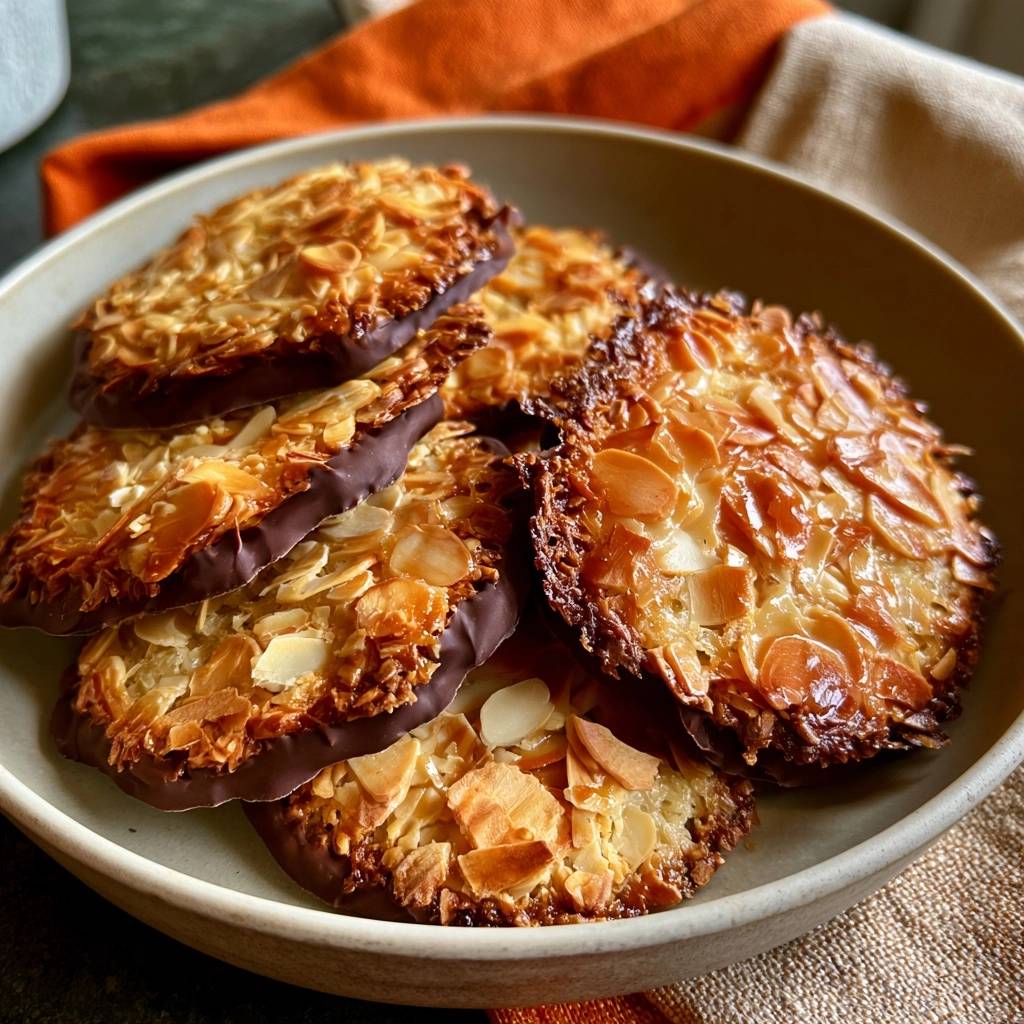
Crispy almond Florentines look like something from a bakery case, yet the method is simple enough for an ordinary weeknight. Thin, golden, and studded with sliced almonds, they have a chewy, caramel-like center and a snap at the edges. The dark chocolate on the underside turns them into a dessert that feels special without a lot of fuss.
This article explains the ideas behind the recipe: why each ingredient matters, how to read the cookies as they bake, and how to get a clean, glossy chocolate layer. Keep the recipe card nearby for the exact oven settings, timing, and yield.
Why the Ingredients Work Together
Butter, granulated sugar, honey, and heavy cream form the base of the mixture, and each one has a job. Butter adds richness and flavor. Granulated sugar brings sweetness and helps the cookies turn crisp, while honey adds a rounder, more mellow sweetness and a gentle golden tone. Cream keeps the mixture smooth and balanced so it doesn’t taste heavy.
Flour is used in a modest amount, just enough to hold the almonds together without making the cookies cakey. Fine salt is small but important, since it sharpens the sweetness and keeps the flavor bright. Sliced almonds spread across each cookie and give Florentines their signature crunch, so it’s worth using them as the recipe directs.
Reading the Cookies as They Bake
Florentines can look underbaked for longer than you expect, then darken quickly. Watch the edges more than the centers. When the rims turn golden brown, the cookies are usually ready, even if the middle still looks soft. Rotating the sheets and switching their rack positions helps the color stay even from one side of the oven to the other.
Because the dough is dropped as soft mounds, the cookies spread on their own. Give each mound plenty of room so the edges don’t fuse into one large sheet. When they come out of the oven, let them rest on the sheets until they’re firm enough to move. They are fragile while hot, and patience here keeps them intact.
Getting a Smooth Chocolate Coating
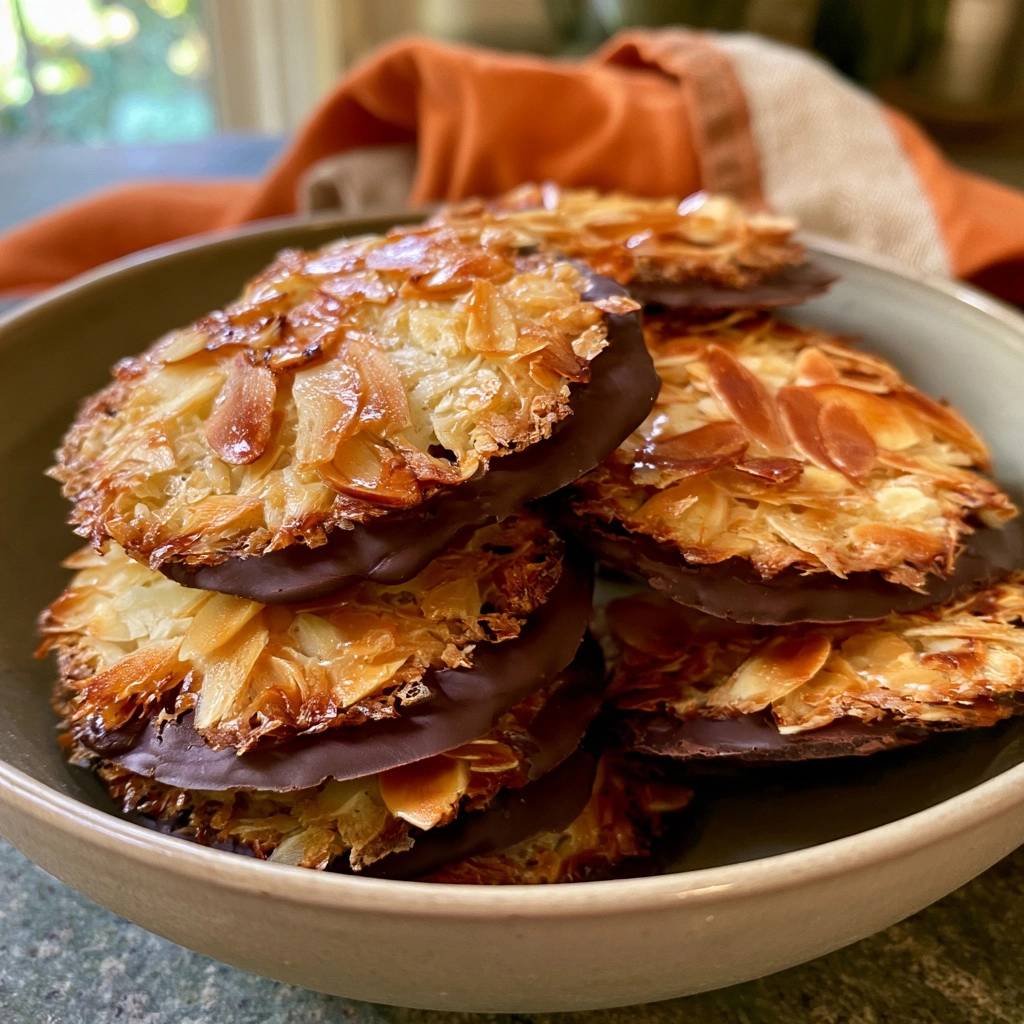
The most common frustration with Florentines is chocolate that slides off or pools in puddles. The fix starts with patience. Cool each cookie completely before you add any chocolate, because warmth is what makes the coating run. Melt the chopped dark chocolate gently, in short bursts with a stir after each, so it turns silky without scorching.
Spread only a thin layer on the flat underside of each cookie. A heavy coat looks clumsy and takes much longer to set. Place the cookies chocolate-side up on parchment and let the coating firm up undisturbed before you handle them.
Common Mistakes to Avoid
Most problems trace back to a few habits. Crowding the cookies causes them to merge into a single lacy sheet. Removing them too early leaves them soft and hard to lift. Adding chocolate to cookies that are still warm turns the coating patchy and streaky. Slow down at each of these points, and your batch will look as polished as you hoped.
Frequently Asked Questions
Why did my Florentines spread into one thin sheet?
Florentines naturally spread as they bake, which is part of their lacy look. If they merged, the mounds were probably too close together. Give each cookie generous room on the parchment so every cookie has its own space to spread.
How do I keep the chocolate from running off the cookies?
Cool each cookie completely before you add chocolate, since warmth is what makes the coating slide. Melt the chopped chocolate gently in short bursts, stirring until smooth, and spread only a thin layer on the flat underside. A thin, even coat is easier to control and looks neater.
How can I tell when the cookies are fully baked?
Look for golden brown edges, since the rims show color first. The centers stay softer and can look slightly pale until the cookies cool. Rotate the sheets during baking for even color, and let the cookies rest on the sheets before moving them, because they are fragile while hot.
Crispy Almond Florentines with Dark Chocolate
Course: DessertCuisine: AmericanDifficulty: Easy9
servings15
minutes14
minutes265
kcal1
hour4
minutesThese golden almond Florentines have a dark chocolate coating on the bottom. The recipe makes 18 cookies, or 9 servings of 2 cookies each.
Ingredients
3 tbsp unsalted butter
1/3 cup granulated sugar
2 tbsp honey
2 tbsp heavy cream
1/8 tsp fine salt
2 tbsp all-purpose flour
1 1/2 cups sliced almonds
4 oz dark chocolate, chopped
Directions
- Heat the oven to 350°F. Line two large baking sheets with parchment paper.
- In a small saucepan over medium heat, cook the butter, sugar, honey, cream, and salt, stirring, for 2 minutes until the butter melts and the mixture bubbles. Simmer for 1 minute more, then remove from the heat.
- Whisk in the flour until smooth, then fold in the sliced almonds. Drop level tablespoonfuls onto the prepared sheets, leaving about 3 inches between each so the cookies have room to spread.
- Bake both sheets for 10 minutes, switching their rack positions and rotating them halfway through, until the cookies are golden brown at the edges. Cool on the sheets for 5 minutes, then transfer to a wire rack to cool completely, about 10 minutes.
- Microwave the chopped chocolate in three 20-second intervals, stirring after each, until smooth. Spread a thin layer on the flat underside of each cooled cookie and place chocolate-side up on parchment. Let the chocolate set for 20 minutes.
Notes
- Let the cookies cool completely before adding the chocolate; warm cookies can make the coating run.