Why This Duck Breast Recipe Transforms Dinner
Nothing kills a duck breast faster than rubbery, chewy skin that sticks in your teeth. You’ve probably seared it hot and fast, only to end up with tough, greasy results. This recipe fixes that with a two-stage sear: slow render on low to melt the fat away, then high heat for shatteringly crisp gold.
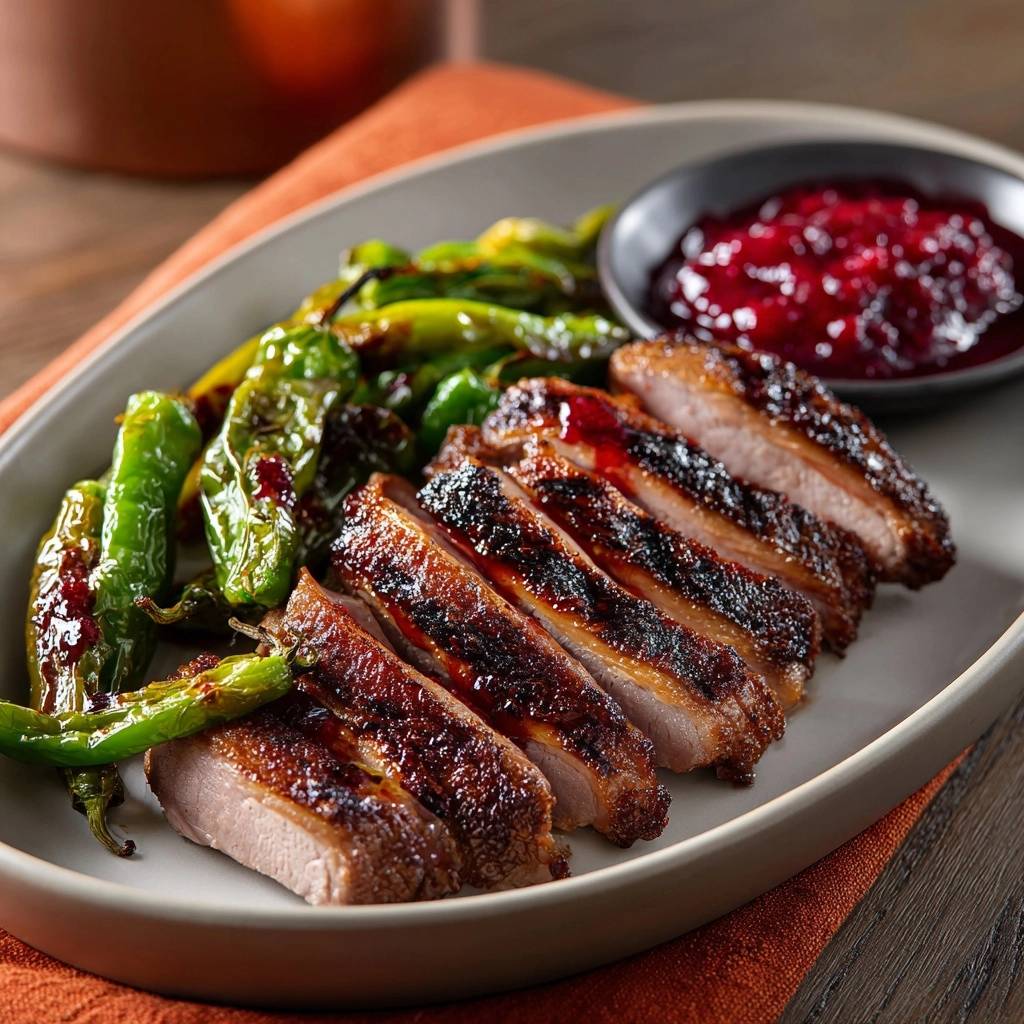
Therefore, you get restaurant-level crispy skin that cracks under your fork, paired with blistered shishitos that pop with mild heat and a tart cranberry glaze that cuts the richness. It’s balanced perfection, rich duck against spicy peppers and sweet-tangy sauce.
The secret lies in starting cold in the skillet. That gradual fat render prevents the proteins from seizing up, so the skin shrinks perfectly and crisps without chew. One tip: score tight crosshatches first, and you’ll never deal with curling again.
Key Ingredients for Crispy Duck and Blistered Peppers
Skin-on duck breasts form the star here. That thick fat layer renders into crispiness, while the meat stays juicy. Choose fatty ones from a good butcher; they deliver the best results.
In addition, shishito peppers bring mild spice and blister beautifully under high heat, creating smoky char. Fresh cranberries provide tart pop that balances duck’s richness, and their pectin thickens the glaze naturally.
Honey adds caramel sweetness, balsamic brings depth, and soy sauce layers umami. Therefore, use a neutral oil if you skip the rendered duck fat; it handles high heat without burning. Pat everything dry first to avoid steaming.
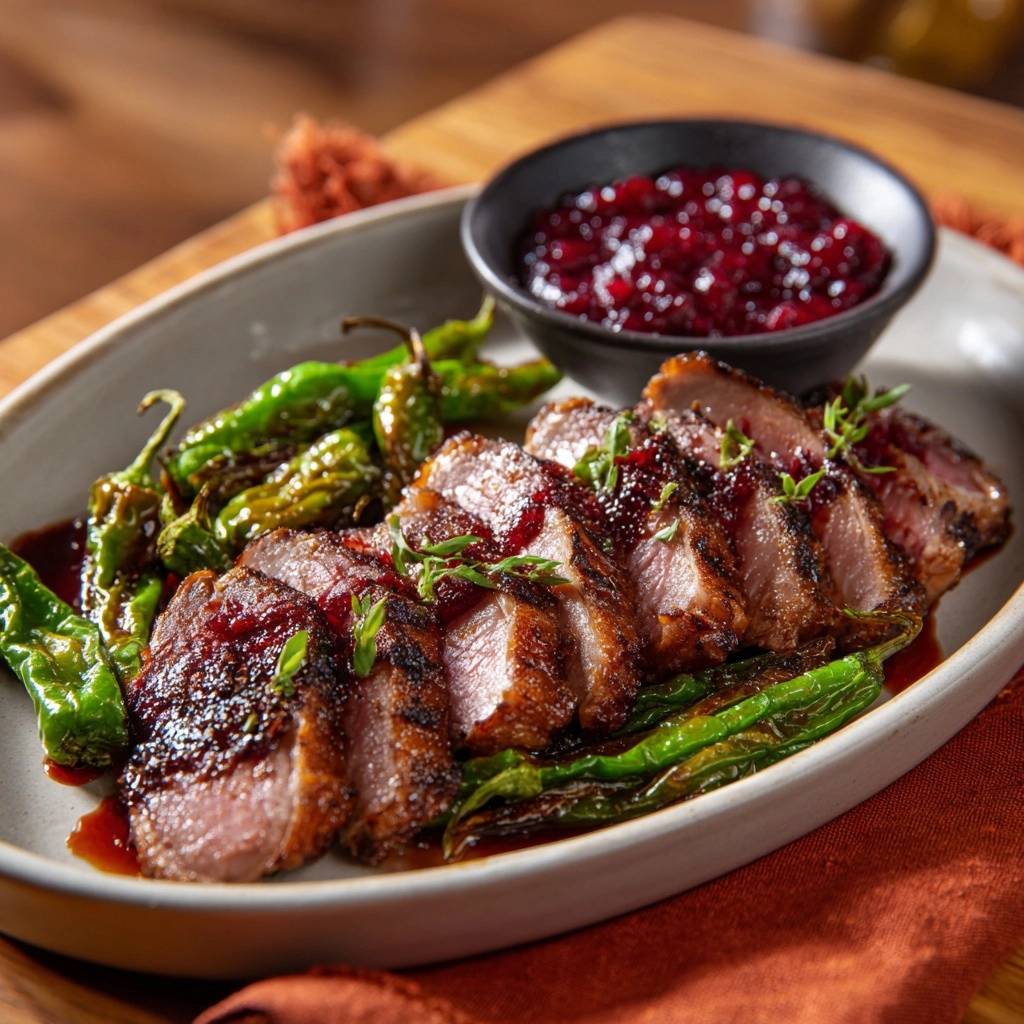
Duck Breasts: Choosing and Prepping for Crisp Skin
Pick duck breasts with plump, fatty skin for optimal rendering. Avoid lean ones; they won’t crisp as well. Score the skin in a tight 1/4-inch crosshatch, cutting just through the fat without nicking meat.
Season both sides generously with salt and pepper. This draws out moisture for better crisping and penetrates deeply. Rest them 10 minutes pre-cook for a dry brine effect that boosts flavor.
Shishitos and Cranberry Elements: Freshness Matters
Grab vibrant green shishitos; they’re milder than padróns and blister perfectly. Fresh cranberries give juicy pop and better texture than frozen, which can make sauce watery.
Honey caramelizes for shine, balsamic adds tangy depth, and soy ties in savory umami. Together, they create a glaze that clings beautifully to the duck.
Science of Rendering Duck Fat for Shatteringly Crisp Skin
Duck skin’s magic comes from slow fat rendering, which melts subcutaneous layers without toughening proteins via the Maillard reaction too soon. Start low in a cold pan, and collagen breaks down gently for tenderness.
High heat first causes chewiness because fat traps steam. Here, low heat first shrinks skin and releases fat, then blast it high for deep brown crunch. Aim for 130F internal for medium-rare juiciness.
Shishitos blister when high heat vaporizes moisture, creating char pockets. Cranberries’ pectin activates with heat and sugar, thickening the glaze into glossy perfection.
Essential Tools for Perfect Crispy Glazed Duck
A heavy cast-iron skillet rules for even heat and easy fat spooning. It holds steady temps, crucial for the cold-start method. Stainless works but heats unevenly, risking hot spots.
Grab a thermometer for precise 130F doneness. Tongs flip without piercing meat, and a small pot reduces the sauce cleanly. These keep things pro-level simple.
Phase 1: Slow-Render Duck Skin in Cold Skillet
Pat duck dry, score skin, and season. Place skin-side down in a cold cast-iron skillet, then heat to low-medium. Cook 12 to 15 minutes, spooning off fat every 3 minutes into a bowl for later use.
Watch the skin turn from white to golden as it shrinks from edges. You’ll smell sweet fat rendering; that’s your cue it’s working. This melts rubbery layers away gently.
Pro tip: Save that fat for roasting potatoes. It adds insane flavor and prevents waste.
Scoring and Seasoning Precision Techniques
Cut tight 1/4-inch crosshatches across the skin. This stops curling and lets fat escape evenly. Use about 1/2 teaspoon salt per breast, plus pepper.
Rest scored duck 10 minutes. Salt pulls moisture, concentrating flavors for crisp results.
Phase 2: High-Heat Crisp and Meat-Side Sear
Crank heat to high. Sear skin-side 2 to 3 more minutes until deep brown and crunchy. It should shatter lightly when pressed.
Flip, cook meat-side 2 minutes to 130F. Rest 5 minutes tented; juices redistribute for tenderness. Slice thin against the grain.
Blistering Shishitos with Rendered Duck Fat
Wipe skillet, add 1 tablespoon duck fat or neutral oil over high heat. Toss in shishitos; cook 4 to 5 minutes. Shake often for charred blisters and slight softening.
Duck fat amps their earthiness. Most are mild, but one in 20 packs heat for thrill. Finish with salt; they pop in your mouth.
Simmering Tart Cranberry Glaze for Duck Shine
In a small pot, combine cranberries, honey, balsamic, soy, and salt. Simmer 5 minutes, stirring as it bubbles and thickens from pectin.
It shifts from chunky to glossy. Spoon half over sliced duck and shishitos for shine; serve rest on side. Tartness cuts the fat perfectly.
Avoiding Rubbery Duck: Troubleshooting Pitfalls
Skipping scores causes curling and trapped fat, leading to chewiness. Always crosshatch tight. Starting hot toughens skin fast; low and slow first prevents that.
Overcook meat past 135F, and it dries out. Use a thermometer. For shishitos, low heat steams them soggy; blast high for blisters.
Sauce too thin? Simmer longer to reduce. Spoon fat religiously during render, or skin steams in its own grease.
Overcoming Curling and Uneven Crisp
Scoring vents steam; press with a spatula if it curls anyway. Check doneness by golden shrink and crisp tap sound. Even heat from cast-iron helps too.
Flavor Twists on Glazed Duck Breast and Shishitos
Add orange zest to the sauce for citrus lift. Swap shishitos for poblanos if you want more heat. Try honey-soy-ginger for Asian vibes.
Tuck thyme under skin before cooking. For vegan, portobello mushrooms mimic duck texture with the same sear method.
Pairing Sides with Crispy Duck and Cranberry Sauce
Roast carrots and parsnips in reserved duck fat; they soak up richness. Creamy polenta catches the sauce beautifully.
Bitter greens salad balances fat. Pair with Pinot Noir or ginger tea to complement the tart glaze.
Storage and Reheating Crispy Glazed Duck
Store leftovers in an airtight container in the fridge up to 3 days. Reheat skin-up in a 250F oven 10 minutes to crisp without drying.
Freeze sliced duck up to 1 month; sauce separate. Thaw overnight, reheat gently. Don’t freeze shishitos; blister fresh ones instead.
Expert Answers on Crispy Glazed Duck Breast
How do I store and reheat leftovers?
Keep cooked duck, shishitos, and sauce in airtight containers in the fridge for up to 3 days. Reheat duck skin-up in a 250F oven for 8-10 minutes to restore crispness without overcooking the meat. Sauce warms gently on stovetop; shishitos crisp in a hot skillet with a touch of oil. Freezing works for sliced duck up to 1 month, but thaw fully before reheating to avoid toughness. Avoid microwaving; it sogs the skin.
Why is my duck skin rubbery, and how do I fix it?
Rubberiness comes from skipping the slow render or poor scoring, trapping fat and steam. Always start in a cold pan on low-medium for 12-15 minutes, spooning fat every few minutes. Score 1/4-inch deep crosshatches to let fat escape evenly. If it curls, press with a spatula. High heat alone seizes proteins; this two-stage method melts fat first for shatter crisp every time.
Can I substitute ingredients like shishitos or cranberries?
Swap shishitos for padróns or mini bell peppers; they blister similarly but expect milder heat. For cranberries, frozen works but thaw and drain to avoid watery sauce, or use lingonberries for tartness. No honey? Maple syrup caramelizes fine. Skip soy with tamari for gluten-free umami. Duck fat is best for shishitos, but neutral oil like avocado handles high heat well.
What’s the best internal temperature for duck?
Aim for 130F for medium-rare after resting; it rises to 135F for pink, juicy meat. Rare hits 125F, medium 135F. Use an instant-read thermometer in the thickest part, avoiding fat. Resting 5 minutes lets juices settle, preventing dry slices. Over 140F toughens it fast, so pull early.
Can I make this for more people or ahead of time?
Double for four: use two skillets or cook in batches to avoid crowding, which steams skin. Method stays the same. Prep ahead by rendering and crisping duck a day early; reheat skin-up low and slow. Sauce holds 3 days in fridge. Blister shishitos fresh for best pop; they don’t reheat well.
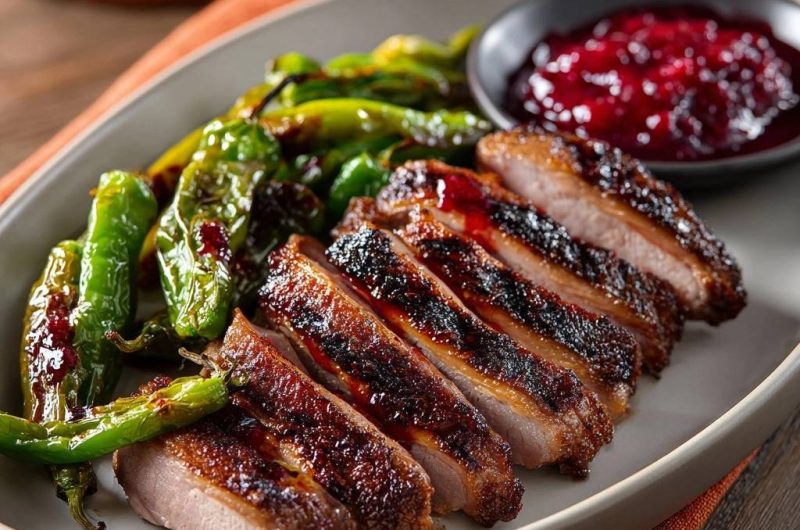
Crispy Glazed Duck Breast with Blistered Shishitos and Cranberry Sauce
Course: Main CourseCuisine: AmericanDifficulty: easy2
servings15
minutes30
minutes45
MinutesAmerican
Ingredients
2 duck breasts, skin-on
12 ounces shishito peppers
1/2 cup fresh cranberries
2 tablespoons honey
1 tablespoon balsamic vinegar
1 teaspoon soy sauce
Salt and black pepper
1 tablespoon neutral oil
Directions
- Pat duck breasts dry. Score skin in a tight crosshatch pattern (1/4-inch deep, without cutting meat). Season both sides with salt and pepper. This prevents curling and ensures even rendering.
- Place duck skin-side down in a cold skillet. Set heat to low-medium. Cook 12 to 15 minutes, spooning off fat every few minutes as it renders. Skin will go from white to golden and shrink away from edges, eliminating rubbery texture by slowly melting fat layer first.
- Increase heat to high. Sear skin-side 2 to 3 minutes until deeply crisp and browned. Flip and cook meat-side 2 minutes for medium-rare (internal 130F). Rest 5 minutes, then slice.
- While duck rests, wipe skillet clean. Add 1 tablespoon rendered duck fat or oil over high heat. Toss in shishitos. Cook 4 to 5 minutes, blistering skins until charred spots form and they soften slightly.
- For glaze and sauce: In a small pot, simmer cranberries, honey, balsamic, soy sauce, and a pinch of salt 5 minutes until thickened. Spoon half over sliced duck and shishitos for shine; serve rest on side.
- Plate sliced duck with blistered peppers and extra sauce. Crispy skin achieved!
Notes
- Score the skin in a tight crosshatch pattern without cutting into the meat for even rendering. Use rendered duck fat for blistering shishitos for extra flavor.