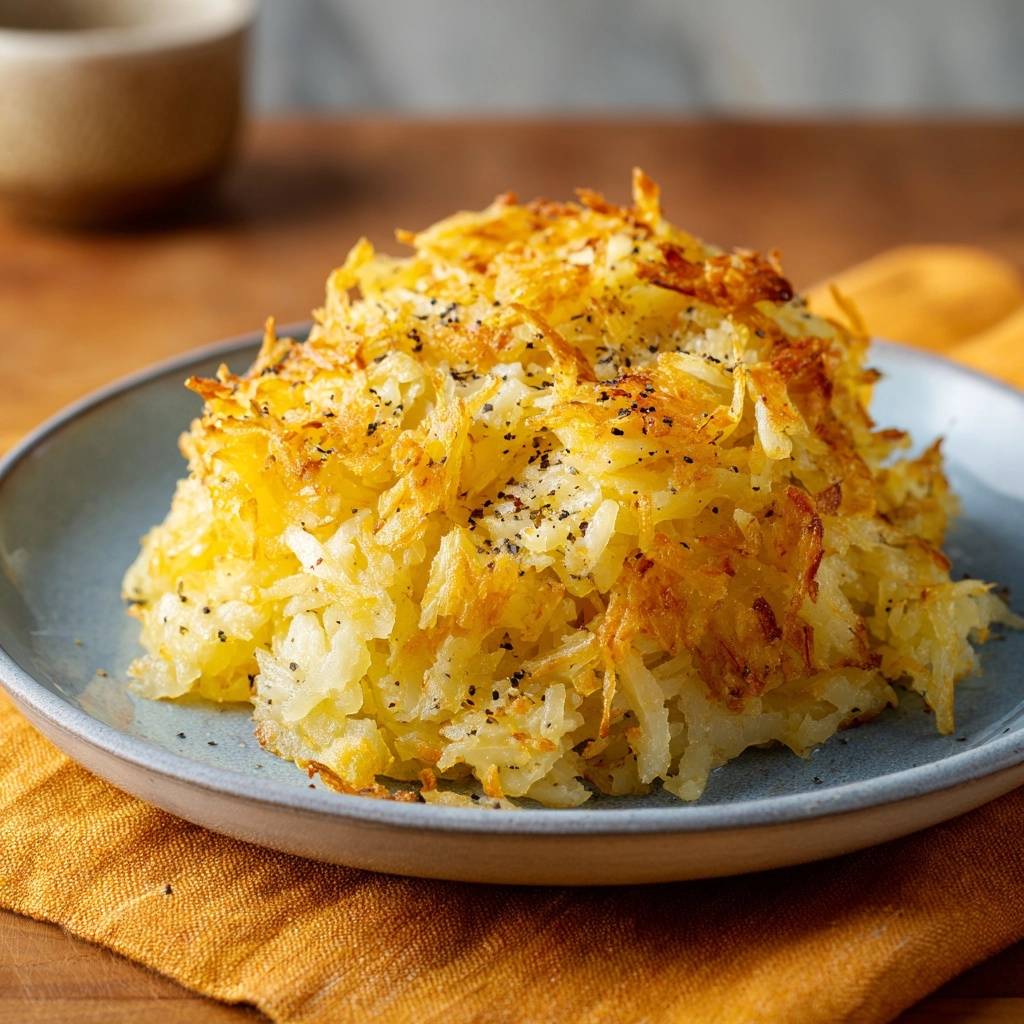
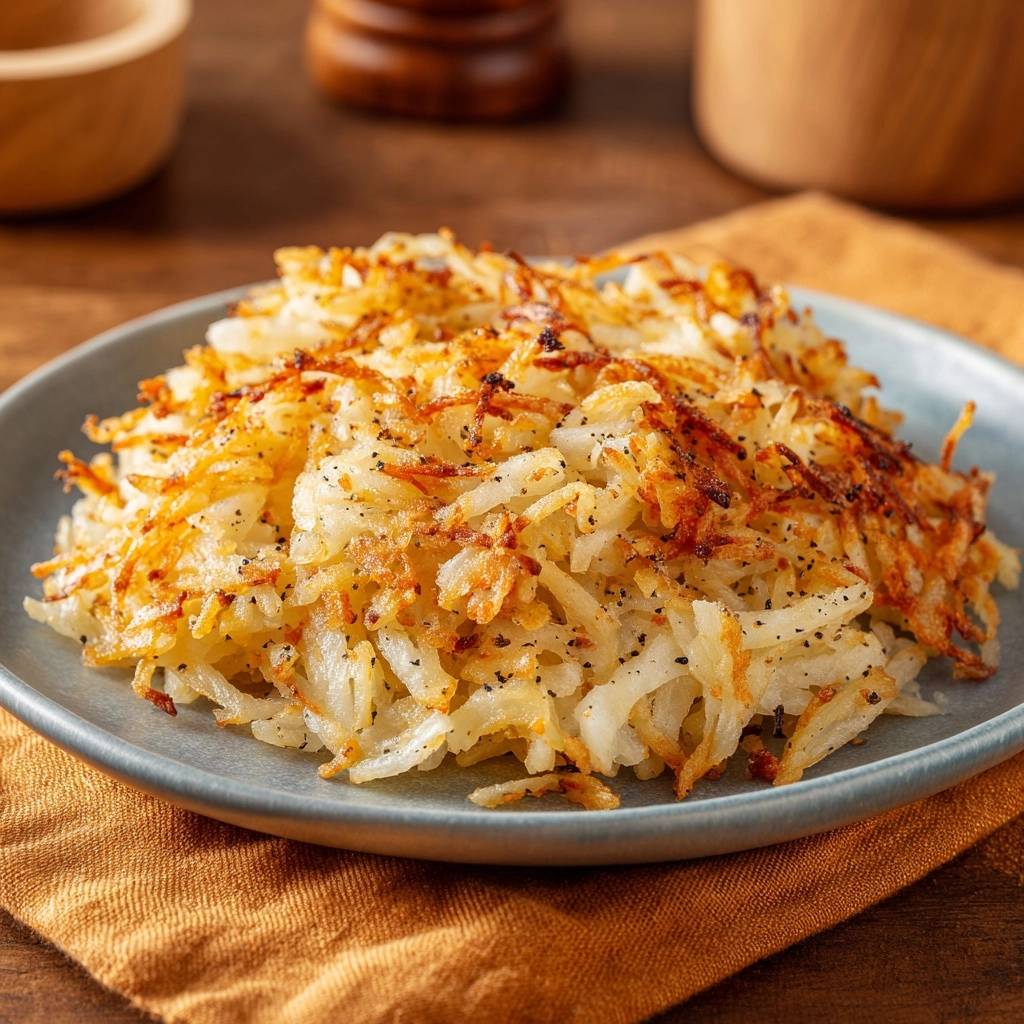
Ever bitten into hash browns that collapse into a soggy pile? You’re not alone. Home cooks and diner pros alike battle mushy results because trapped potato water turns frying into steaming. But this towel-squeeze trick changes everything. You’ll get shatteringly crisp edges that hold shape, diner-style, in just 20 minutes with four ingredients for 2-4 servings.
So why do these work every time? It’s all about controlling starch and moisture. Russets deliver high starch for binding without glue. Rinse away the excess, squeeze dry, and you set up perfect browning.
Here’s the expertise booster: after shredding and rinsing, twist those shreds in a kitchen towel over the sink. Press hard for two full minutes until barely damp. That’s your secret to crisp success, no guesswork.
Why Russet Potatoes Deliver Ultimate Crispiness
Shredding Technique for Even Texture
Russet potatoes shine here because their high starch content soaks up moisture after rinsing. This binds shreds without turning gluey. Use the large holes on a box grater for 2-3 inch strands; they crisp evenly and hold together.
Food processors often over-process into mush, releasing too much starch early. Stick to grating for control. Meanwhile, Yukon Golds hold more water and stay dense, not shatteringly crisp. Grate right before rinsing for best results.
Look for fluffy, separated shreds about pencil-lead thick. If they’re clumping, you’ve gone too fine. This step sets up flawless texture from the start.
Rinsing Removes Excess Starch
Shred your two large russets, then place in a colander. Rinse under cold running water, tossing gently, until it runs clear, about 1-2 minutes. This washes away soluble starches that cause gumminess.
Those soluble bits make potatoes sticky if left behind. Rinsing keeps insoluble starches for structure and crispness. Don’t overdo it, though; excess water rehydrates shreds.
Feel the change: shreds go from cloudy and starchy to clean and ready. Pat lightly if needed before squeezing.
Towel Squeeze: Extracting Every Drop of Moisture
Step-by-Step Draining Process
Gather wet shreds in a clean kitchen towel. Twist the ends tightly over the sink and squeeze hard. Keep pressing for two full minutes; you’ll wring out about 1/2 cup liquid.
Flour sack towels absorb best without tearing, unlike paper towels. Skip this, and moisture steams your hash browns soft. Pro tip: wear gloves if shreds are sharp on your hands.
Unwrap to mostly dry, fluffy shreds. They should barely stick together. This transforms potential mush into crisp gold.
Science of Dry Shreds vs Soggy Failure
Shredding ruptures potato cell walls, releasing water and starch. Heat hits residual moisture and creates steam, softening everything instead of browning. Dry shreds let the Maillard reaction build that golden, crunchy crust.
Food lab tests show 1/2-inch thick patties crisp best at medium-high heat. Wet ones stay pale and fall apart. Therefore, thorough squeezing prevents steam and guarantees crunch.
Notice the difference: dry shreds sizzle on contact, not sputter. That’s your cue for success.
Seasoning Shreds for Balanced Flavor
Salt and Pepper Ratios Explained
Toss dry shreds with 1 teaspoon salt and 1/2 teaspoon black pepper in a bowl. Salt draws out final moisture via osmosis, enhancing crispness. Pepper adds subtle bite without overwhelming the potato.
Mix thoroughly for even distribution; clumps lead to bland spots. For variety, swap in 1/4 teaspoon onion powder. It mellows without sogginess.
Taste a pinch before cooking. Adjust if needed. This simple step builds flavor depth.
Heating Oil for Shatteringly Crisp Base
Nonstick Skillet and Oil Temperature Check
Heat 2 tablespoons vegetable oil in a large nonstick skillet over medium-high until shimmering, about 1 minute. That’s 350-375°F for perfect frying. Vegetable oil’s high smoke point handles heat without breaking down, unlike olive oil.
Nonstick prevents sticking during the flip. Spread shreds into an even 1/2-inch patty. Press firmly with a spatula for compact shape.
Listen for immediate sizzle. If it smokes heavily, lower heat slightly. This base sets up even crisping.
Pressing Patty for Uniform Shape
After spreading, press down hard with your spatula. This compacts shreds for flip-proof hold. Cook undisturbed 4-5 minutes until deep golden and crispy underneath.
Edges will curl slightly, signaling perfect fond formation. Don’t poke or stir; patience builds crunch. Visual check: bottom should release easily.
That firm press makes all the difference in shape retention.
Perfect Flip and Second-Side Crisping
Flipping Technique Without Breakage
Slide a wide spatula under the entire patty. Flip confidently onto the second side. Cook 3-4 more minutes until equally crisp.
Internal temp hits 190°F when done. Rest on a plate 1 minute for clean slices. Sprinkle extra pepper if you like.
Serve hot for peak crunch. The patty holds perfectly now, thanks to dryness and pressing.
Avoiding Common Crispy Hash Browns Mistakes
Overcrowding Skillet Pitfalls
Stick to one patty per pan. Crowding traps steam and softens edges. Cook in batches if needed.
Single layer ensures crisp results. You’ll notice the difference immediately.
Skipping Rinse or Squeeze Errors
No rinse means gluey starch overload. Partial squeeze leaves hidden moisture for partial crisp at best. Always do both fully.
Readers fix this by timing the squeeze religiously. It saves every batch.
Low Heat Cooking Traps
Medium heat yields pale, greasy hash browns. Crank to medium-high post-squeeze. Use a thermometer if unsure.
Avoid high heat right after squeezing; it dries out edges unevenly. Balance is key.
Flavor Variations for Crispy Hash Browns
Adding Shredded Onion or Bell Peppers
Mix in 1/4 cup finely shredded onion or bell peppers during seasoning. Sauté onions first for sweet mellowing. Adds moisture, so squeeze extra.
Carbs rise slightly, but flavor pops. Toss evenly for distribution.
Cheese Melt or Herb Infusions
Sprinkle cheddar shreds on the first side before flipping; it melts perfectly. Add fresh chives or thyme to the mix. For heat, try 1/4 teaspoon paprika or cayenne.
These boost without sogginess. Keep portions light.
Ideal Pairings for Crispy Hash Browns
Breakfast Protein Matches
Fried eggs sunny-side up let yolks soak into cracks. Turkey bacon adds crisp contrast. Veggie sausage works for plant-based meals.
Proteins balance the starch beautifully.
Brunch Beverage and Sauce Sides
Drizzle with hollandaise for richness. Fresh orange juice cuts through with acidity. Ketchup fans love it classic; aioli elevates.
Pick your fave for the perfect bite.
Make-Ahead Crispy Hash Browns Guide
Shred and Squeeze Storage Method
After squeezing, store dry shreds airtight in the fridge up to 24 hours. Or freeze portions flat for 3 months; thaw overnight before cooking.
Label bags with dates. Revives freshness easily.
Reheating for Fresh Crisp Revival
Oven at 425°F on a sheet pan revives crispness in 8-10 minutes. Air fryer works too. Skip microwave; it sogs instantly.
Blot any grease first. Tastes near-fresh.
Troubleshooting Crispy Hash Browns Issues
Patty Falling Apart Fixes
Blame weak pressing or lingering moisture. Add 1 teaspoon cornstarch as binder next time. Press harder.
Not Crispy Enough Solutions
Up oil amount, heat pan hotter, cook longer. Blot excess grease post-flip. Dry shreds prevent this.
Too Salty or Bland Adjustments
Taste pre-cook and tweak. Balance post-cook with lemon zest. Dial in gradually.
Frequently Asked Crispy Hash Browns Questions
Can I Use Sweet Potatoes Instead?
Yes, but their higher sugar browns faster, so use medium heat and squeeze extra hard. Texture stays crisp but softer than russets. Rinse well to cut natural sweetness.
Food Processor vs Box Grater?
Processors make finer shreds that crisp quicker but gum easier; pulse in short bursts. Box grater gives traditional length and control. Grater wins for beginners.
Air Fryer Crispy Hash Browns Adaptation?
Preheat to 400°F, spread single layer, spray oil, cook 12-15 minutes shaking midway. No flip needed. Matches skillet crunch perfectly.
How to Scale for Larger Batches?
Double ingredients, use two skillets or oven sheet pan at 450°F for 20 minutes. Stir once midway. Keeps crispness intact.
Gluten-Free or Low-Carb Confirmation?
Naturally gluten-free. For keto, skip pepper if strict on net carbs; potatoes are the main carb source anyway.
How Do I Store Leftovers?
Keep in an airtight container in the fridge up to 3 days. Reheat in oven or air fryer to restore crispness; microwave ruins texture. Doesn’t freeze well; gets grainy.
Why Are My Hash Browns Soggy?
Usually from skipping the full towel squeeze or rinse. Excess starch and water steam instead of fry. Always squeeze 2 minutes and cook hot; patty must be bone-dry first.
What Can I Substitute for Russet Potatoes?
Yukon Golds work but stay denser; squeeze extra. Avoid red potatoes; too waxy and low-starch. Russets are ideal for max crisp.
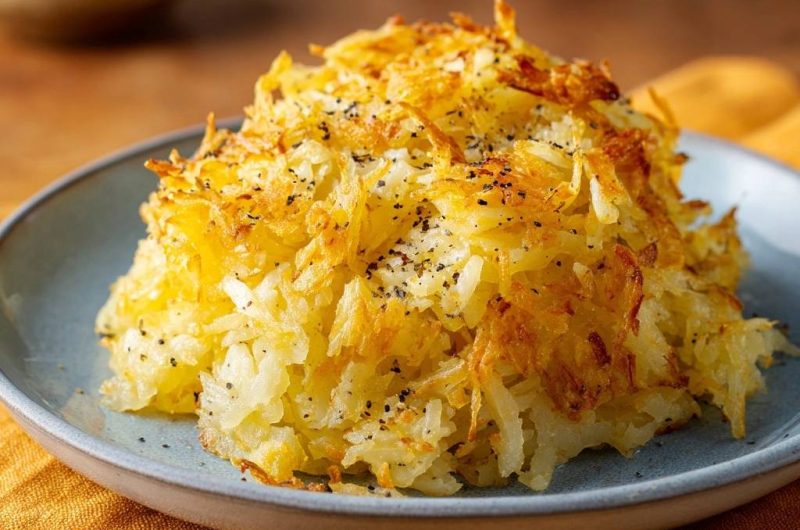
Crispy Hash Browns
Course: Side DishCuisine: AmericanDifficulty: easy2
servings10
minutes10
minutes20
Minutes250
kcalAmerican
Ingredients
2 large russet potatoes
1 teaspoon salt
1/2 teaspoon black pepper
2 tablespoons vegetable oil
Directions
- Shred potatoes using the large holes of a box grater. Place in a colander, rinse under cold water until water runs clear to remove excess starch.
- Gather shreds in a clean kitchen towel. Twist tightly and squeeze over the sink, pressing hard to remove all moisture. This is the key step: soggy hash browns happen from trapped water that steams the potatoes instead of crisping them, so squeeze until no more liquid drips out, about 2 minutes. Unwrap shreds; they should be mostly dry.
- Toss shreds with salt and pepper in a bowl.
- Heat oil in a large nonstick skillet over medium-high heat until shimmering, about 1 minute.
- Add shreds, spreading into an even 1/2-inch thick patty. Press down firmly with a spatula for compact shape. Cook undisturbed 4 to 5 minutes until deep golden and crispy on bottom.
- Slide spatula under patty, flip carefully (it holds together perfectly now). Cook 3 to 4 more minutes until crispy on both sides.
- Transfer to plate, sprinkle extra pepper if desired. Serve hot.
Notes
- The towel-squeeze step is crucial: squeeze until no more liquid drips out to avoid steaming and ensure crispiness.