There is nothing quite like the sound of a knife slicing through a perfectly fried schnitzel. That audible crackle followed by the sight of steam rising from tender meat is the hallmark of a great German meal. However, many home cooks struggle with the heartbreaking reality of a soggy crust that slides right off the meat the moment it hits the plate.
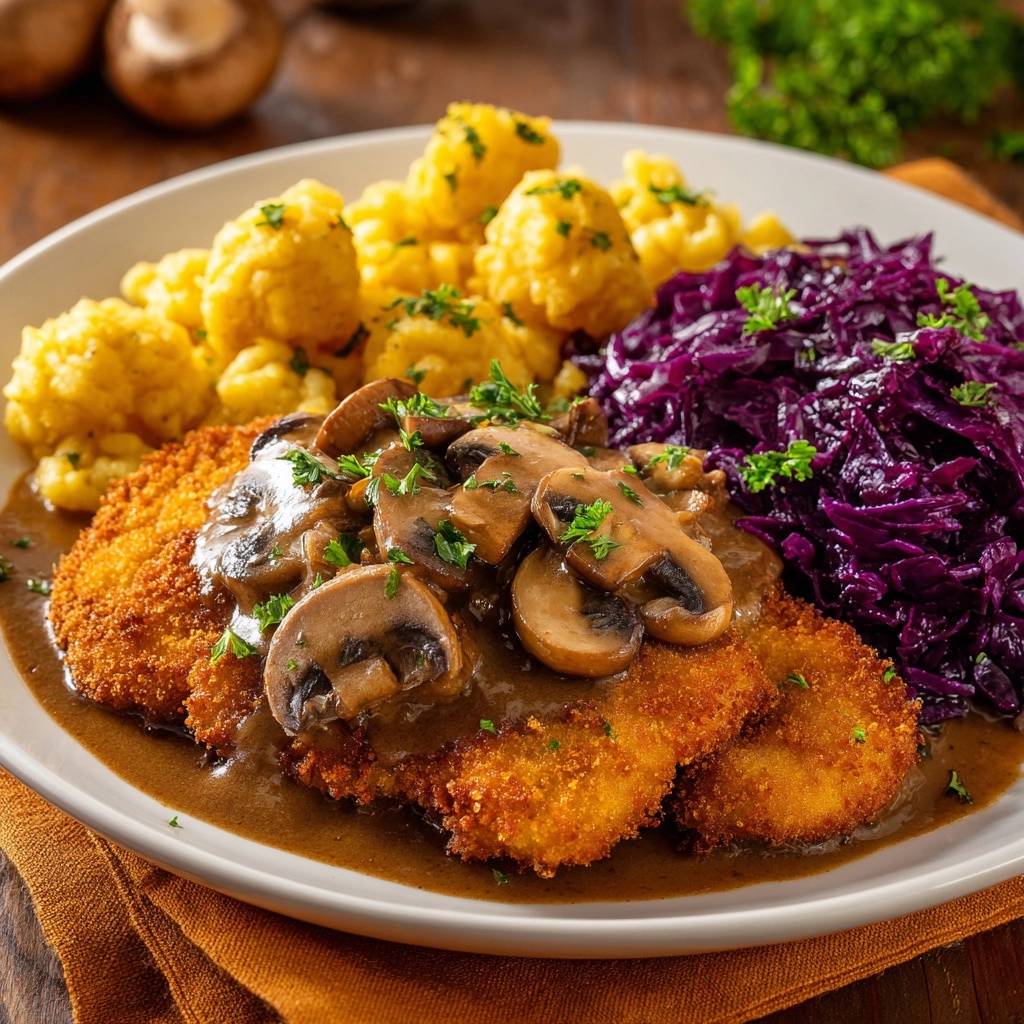
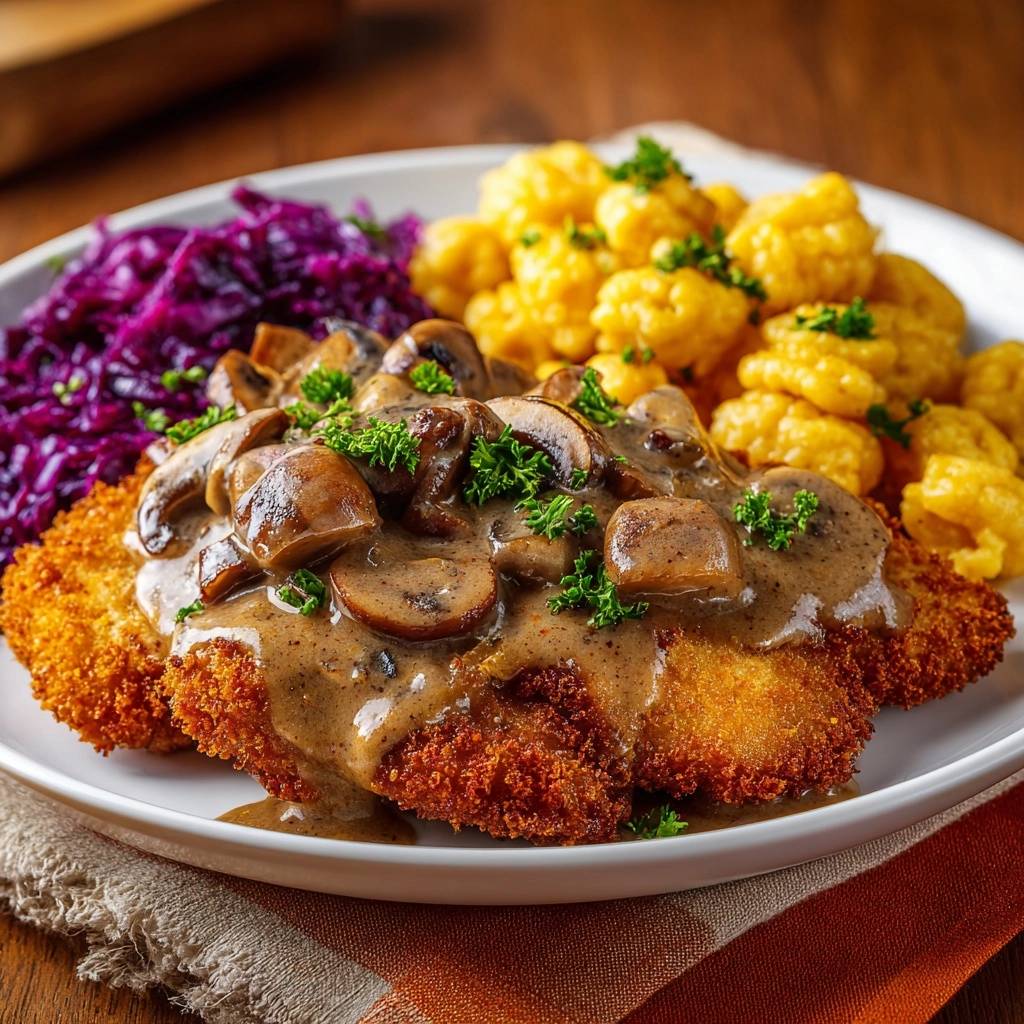
This classic trio of golden cutlets, earthy mushroom gravy, and tangy red cabbage represents the ultimate in European comfort food. The challenge lies in balancing the rich, creamy sauce with a breading that stays shatteringly crisp. By mastering a few simple technical steps, you can create a restaurant-quality meal that feels both rustic and refined.
The secret to success isn’t just in the frying; it’s in the preparation of the crust itself. Most people rush the breading process, but I’ve found that a short resting period is the absolute key to a professional-grade finish. This allows the coating to bond to the protein, ensuring your schnitzel maintains its structural integrity even under a blanket of savory gravy.
The Structural Integrity of a Perfect Schnitzel
Achieving a world-class schnitzel is actually a lesson in physics and moisture management. When you bread a piece of meat, you’re essentially building a protective shell that serves two purposes. First, it creates a delicious, crunchy exterior through the Maillard reaction. Second, it traps the natural juices inside the meat, steaming it to perfection while the outside fries.
The bond between the protein and the starch is where most cooks fail. If the meat is too wet, the flour won’t stick; if the flour doesn’t stick, the egg wash and breadcrumbs will eventually peel away like a loose jacket. You want a “shatteringly crisp” result where the breading puffs slightly away from the meat in waves, creating those iconic air pockets known as the soufflé effect.
Essential Components for the Double-Dredge Method
Quality ingredients make a massive difference in the final texture and flavor of this dish. While standard breadcrumbs work, I always reach for Panko. These Japanese-style crumbs are larger and airier, but for a uniform German-style crust, I recommend pulsing them in a blender for just a second. This creates a fine, consistent coating that browns evenly without leaving large, jagged gaps.
For the frying fat, clarified butter is the gold standard because it offers the rich flavor of dairy with a much higher smoke point. If you don’t have it, a neutral vegetable oil works perfectly well. In the cabbage, red currant jelly is the secret weapon. It provides a subtle, fruity sweetness that balances the sharp acidity of the vinegar, while beef stock gives the mushroom gravy a deep, savory backbone that water or chicken stock simply can’t match.
Selecting and Preparing the Protein
Whether you choose chicken or another lean cut, uniformity is your best friend. You must pound the cutlets to a consistent 1/4-inch thickness using a meat mallet or the bottom of a heavy skillet. This isn’t just about making the meat tender; it’s about timing. If the meat is too thick, the breading will burn before the center is cooked through. A thin, even cutlet ensures the meat and the crust reach perfection at the exact same moment.
The Role of Aromatics and Acids
A heavy meal like fried schnitzel and creamy gravy needs a “bright” counterpoint to keep your palate excited. This is where the braised red cabbage shines. The apple cider vinegar provides a sharp acidic punch, while caraway seeds add a faint, earthy anise note. These elements cut right through the richness of the heavy cream and fried breading, making every bite feel balanced rather than weighed down.
Step-by-Step: Mastering the Braised Red Cabbage
Braised red cabbage is a “low and slow” labor of love that should be started well before you heat the frying pan. As the cabbage simmers with the vinegar and jelly, the tough fibers break down into a silky, tender texture. You aren’t looking for a mushy puree; the cabbage should still have a slight structure, but it should yield easily to the tooth.
Keep an eye on the liquid levels during the 40-minute simmer. If the pot looks dry, add a splash of water to keep the cabbage from scorching. You’ll know it’s ready when the color shifts from a bright purple to a deep, vibrant magenta and the aroma is a perfect mix of sweet and sour. This side dish actually tastes better the longer it sits, as the flavors continue to meld and deepen.
The Secret Resting Phase for Maximum Crunch
If you take only one tip from this recipe, let it be this: let your breaded cutlets rest. After you’ve gone through the flour, egg, and breadcrumb stations, place the cutlets on a wire rack for 10 to 15 minutes. This is the “glue” phase. During this time, the moisture from the egg hydrates the flour, creating a tacky, structural bond that cements the breadcrumbs to the meat.
If you drop a freshly breaded cutlet straight into hot oil, the steam from the meat will immediately push the breading away, causing it to flake off or become soggy. That short rest on the rack ensures the coating stays put. It creates a shell that is strong enough to withstand the bubbling oil and the weight of the mushroom gravy later on.
Technique: Frying for the Classic Soufflé Ripple
To get that beautiful, wavy “soufflé” texture, you need to be active with your skillet. Once the oil reaches 350°F, carefully lay the cutlet in the pan. As it fries, gently swirl the skillet in a circular motion. This causes the hot oil to wash over the top of the schnitzel, cooking the egg wash from both sides and creating steam pockets that lift the breading away from the meat.
Temperature management is vital here. If the oil is too cold, the breading will soak up the fat like a sponge, leaving you with a greasy mess. If it’s too hot, the outside will turn dark brown before the meat is safe to eat. Use a thermometer if you have one, or look for a steady, vigorous sizzle that doesn’t result in immediate smoking.
Developing a Glossy Creamy Mushroom Gravy
The key to a world-class mushroom sauce is the Maillard reaction. Don’t rush the mushrooms! Sauté them in butter until they release all their moisture and turn a deep, chestnut brown. This caramelization is where all the flavor lives. Once they are dark and fragrant, add your shallots and liquids to deglaze the pan, scraping up all those delicious brown bits from the bottom.
To achieve a “nappe” consistency—which is chef-speak for a sauce that is thick enough to coat the back of a spoon—use a cornstarch slurry. Whisk it in slowly and let the gravy simmer for a few minutes. The result should be a glossy, velvet-smooth sauce that clings to the mushrooms and the meat without being gloopy or heavy.
Troubleshooting Common Schnitzel Failures
If your breading is falling off in large sheets, the meat was likely too damp before you started. Always pat the cutlets dry with paper towels before the first flour dredge. Moisture trapped under the flour turns to steam and acts like a wedge, pushing the crust away from the protein during the fry.
A greasy, heavy crust is almost always the result of low oil temperature. If the oil isn’t hot enough to instantly sear the exterior, it will seep into the breadcrumbs instead. Conversely, if the meat is tough, you likely skipped the pounding step or overcooked it. Remember, these are thin cutlets; they only need about three minutes per side to reach a safe and juicy internal temperature.
Finally, if the dish tastes bland despite the gravy, check your seasoning. You must season every layer of the dredging station. Add salt and pepper to the flour, the eggs, and the breadcrumbs. If only the meat is seasoned, the crust will taste like plain toast, which masks the flavor of the protein.
Optimal Side Dish Pairings and Presentation
Traditionally, this dish is served with German potato dumplings, known as Kartoffelklöße. These chewy, starchy rounds are perfect for soaking up the extra mushroom gravy. If you can’t find them, simple boiled yellow potatoes tossed in parsley and butter provide a clean, neutral base that lets the schnitzel shine.
When plating, presentation actually affects the texture. Do not drown the entire cutlet in gravy. Instead, ladle a generous amount over the center, leaving the crispy, golden edges exposed. This allows the diner to experience both the creamy sauce and the crunch of the fried breading in every bite. A shower of fresh parsley adds a necessary pop of color and a hit of herbal brightness.
Make-Ahead Strategies and Storage Logistics
You can easily prepare the braised red cabbage and the mushroom gravy up to two days in advance. In fact, the cabbage often tastes better after a night in the fridge. Simply reheat them gently on the stovetop while you fry the fresh schnitzel. I don’t recommend breading the meat too far in advance, as the crust can become gummy if left in the fridge for more than an hour.
If you have leftover schnitzel, avoid the microwave at all costs. It will turn the breading into a soft, rubbery mess. Instead, use an air fryer at 375°F for about 3-4 minutes or a toaster oven. This dry heat will reactivate the fats in the crust and restore that essential crunch. Store the gravy and cabbage in separate airtight containers to keep the flavors distinct.
Expert Tips for Professional Results
Always drain your fried schnitzel on a wire rack rather than paper towels. Paper towels trap steam underneath the meat, which quickly softens the bottom crust. A rack allows air to circulate, keeping both sides crisp while the excess oil drips away.
If you don’t have a kitchen thermometer, use the wooden spoon trick to test your oil. Dip the handle of a wooden spoon into the oil; if steady bubbles form around the wood and float up, you’re ready to fry. If it bubbles violently, it’s too hot; if there are no bubbles, wait a few more minutes.
For the most uniform golden color, try finely crushing your Panko breadcrumbs. You can put them in a zip-top bag and roll over them with a rolling pin. This creates a tighter “knit” in the breading that looks much more professional than large, shaggy flakes. Also, if your cabbage tastes too tart, stir in an extra teaspoon of red currant jelly or sugar at the very end to mellow the vinegar.
How do I store leftover schnitzel and cabbage?
Store the schnitzel, gravy, and cabbage in separate airtight containers in the refrigerator for up to 3 days. Keeping them separate is vital to prevent the schnitzel from becoming soggy. While the cabbage and gravy freeze well for up to 2 months, I do not recommend freezing the fried schnitzel, as the breading will lose its texture upon thawing.
Why did my breading fall off the meat during frying?
This usually happens for two reasons: moisture or lack of resting. If the meat wasn’t patted dry before dredging, the flour won’t stick properly. More importantly, if you skip the 10-15 minute rest after breading, the “glue” (the egg and flour bond) doesn’t have time to set. That resting period is the most important step for a crust that stays attached.
Can I use a different type of flour or breadcrumb?
Yes, you can use a gluten-free all-purpose flour blend and gluten-free breadcrumbs if needed. However, avoid using very coarse breadcrumbs like uncrushed Panko or very fine “dust” like some canned varieties. For the best results, a medium-fine crumb provides the best balance of crunch and coverage. If you don’t have apple cider vinegar for the cabbage, red wine vinegar is a great substitute.
What is the best way to reheat the schnitzel without it getting soggy?
The oven or an air fryer is your best friend for leftovers. Place the schnitzel on a wire rack set over a baking sheet and heat at 375°F (190°C) for about 5-8 minutes. This allows the heat to circulate around the entire cutlet, crisping the breading back up. Avoid the microwave, as it vibrates water molecules and creates steam, which will make the crust soft and rubbery.
My mushroom gravy is too thin, how can I fix it?
If your gravy hasn’t thickened enough after simmering, mix another teaspoon of cornstarch with a teaspoon of cold water to create a slurry. Stir this into the simmering gravy and cook for another 2 minutes. Never add dry cornstarch directly to hot liquid, or it will clump. The gravy will also naturally thicken slightly as it cools, so aim for a consistency that just coats the back of a spoon.
Can I substitute the beef stock in the gravy?
While beef stock provides the richest color and deepest flavor for mushroom gravy, you can use a high-quality vegetable stock. If using vegetable stock, I recommend adding a teaspoon of soy sauce or a little extra Worcestershire sauce to provide the “umami” depth that beef stock usually offers. Avoid using just water, as the gravy will taste flat and thin.
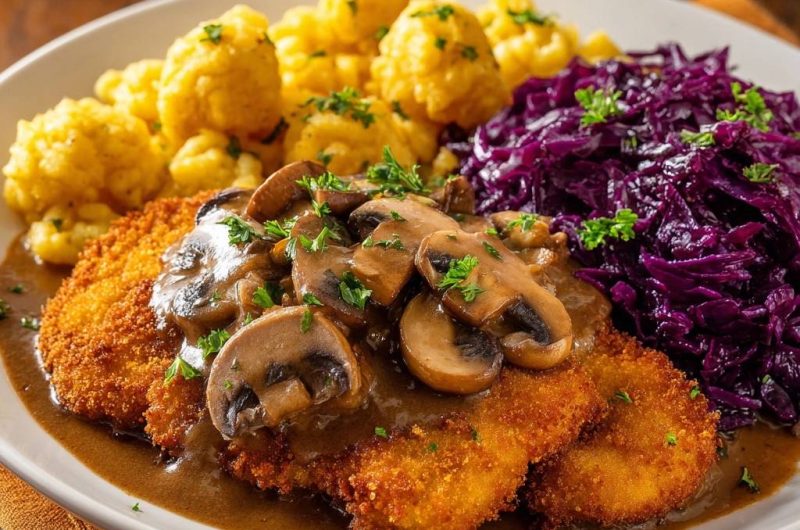
Crispy Mushroom Schnitzel with Braised Red Cabbage
Course: Main CourseCuisine: GermanDifficulty: easy4
servings25
minutes40
minutes65
Minutes610
kcalGerman
Ingredients
4 thin pork or chicken cutlets, pounded to 1/4 inch thickness
1 cup all-purpose flour
3 large eggs, beaten with 1 tablespoon water
2 cups Panko breadcrumbs (finely crushed for a uniform golden crust)
1.5 teaspoons salt, divided
1 teaspoon black pepper
1/2 cup clarified butter or vegetable oil for frying
3 cups sliced cremini mushrooms
3 tablespoons butter
1 small shallot, minced
1.5 cups beef stock
1/2 cup heavy cream
1 tablespoon Worcestershire sauce
1 tablespoon cornstarch mixed with 1 tablespoon cold water
1 small head red cabbage, shredded
1/4 cup apple cider vinegar
3 tablespoons red currant jelly or sugar
1/2 teaspoon caraway seeds (optional)
4 cups prepared German potato dumplings (Kartoffelklöße) or boiled yellow potatoes
Fresh parsley, finely chopped for garnish
Directions
- Braise the Cabbage: In a large pot, combine shredded cabbage, vinegar, red currant jelly (or sugar), caraway seeds, and 1/2 cup water. Season with 1/2 teaspoon salt. Cover and simmer on low for 35-40 minutes, stirring occasionally, until tender and vibrant.
- Prepare the Schnitzel: Set up three wide bowls: flour, beaten eggs, and breadcrumbs. Season the meat generously with salt and pepper.
- The Coating: Dredge each cutlet in flour (shake off excess), dip in egg wash, and finally press into the breadcrumbs. Ensure every millimeter is covered.
- The Secret Step: Let the breaded cutlets rest on a wire rack for 10-15 minutes before frying. This allows the flour and egg to hydrate and “glue” the breadcrumbs to the meat, creating a structural shell that won’t peel or steam off during frying.
- The Mushroom Gravy: While the meat rests, sauté mushrooms and shallots in 3 tablespoons of butter over medium-high heat until deeply browned. Pour in the beef stock and Worcestershire sauce; bring to a simmer. Stir in the heavy cream and the cornstarch slurry. Simmer for 3-5 minutes until the sauce is thick, glossy, and coats the back of a spoon. Keep warm.
- The Fry: Heat oil in a large skillet over medium-high heat (350°F/175°C). Fry the cutlets for 3 minutes per side, gently swirling the pan so the oil washes over the top of the meat (this creates the classic “soufflé” ripple). Fry until deep golden brown. Drain on a clean wire rack to maintain airflow.
- Assembly: Place the crispy schnitzel on a plate. Ladle the creamy mushroom gravy over the center, leaving the edges exposed to showcase the crunch. Serve alongside a generous portion of braised red cabbage and potato dumplings. Garnish the entire plate with fresh parsley.
Notes
- The secret step is letting the breaded cutlets rest on a wire rack for 10 to 15 minutes before frying to ensure the coating adheres perfectly and does not peel.