
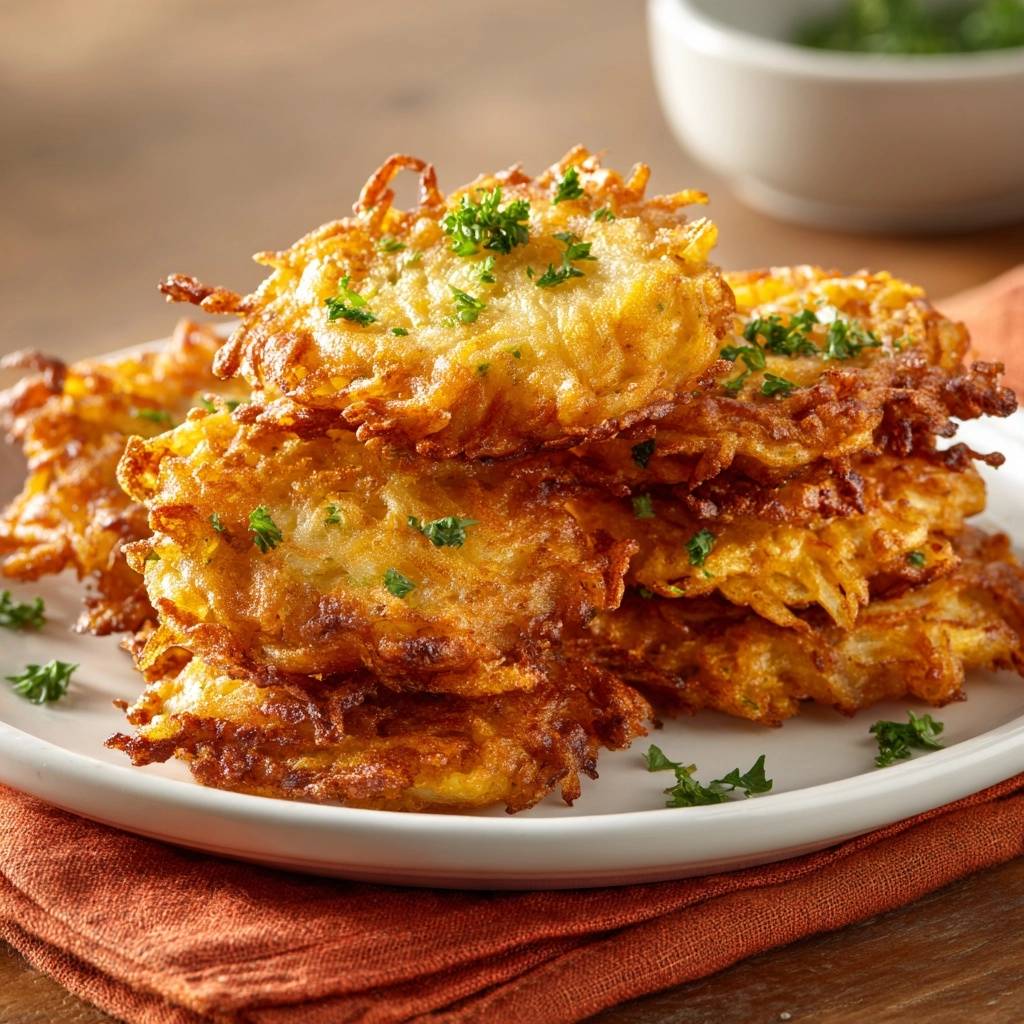
Ever bitten into a latke that steams more than it crunches? You’re not alone. Most crispy potato latkes turn soggy because folks skip the ruthless moisture squeeze. But this method nails that golden, shatter-crisp exterior every time.
These crunchy potato pancakes come from Hanukkah traditions, where frying in oil honors the miracle. You’ll get tender insides with outsides that snap under your teeth. In addition, they vanish fast at gatherings.
Here’s the pro tip: rinse shreds until the water runs clear, then wring them in a towel two or three times. That removes starch and liquid that gum up the works. Therefore, you lock in perfect crunch.
Potato and Onion Prep for Maximum Crisp
Russet potatoes shine here because their high starch content binds everything without falling apart. Peel them firmly to avoid any green bits, which taste bitter. Shred with a box grater for control or a food processor for speed.
Rinsing under cold water washes away excess starch. This prevents a gluey texture. Consequently, your crispy potato latkes stay light and crisp.
Onion adds sweetness and moisture balance. Shred it fine so it cooks evenly. However, don’t skip it, or the latkes lack depth.
Choosing Starchy Russets
Russets beat waxy types like Yukon Golds because they hold structure during frying. Their starch gelatinizes inside for tenderness. Store them in a cool, dark spot to prevent sprouting.
Pick firm ones without soft spots. This ensures better shredding and crisp results. In addition, four large ones yield about 20 latkes.
Shredding Techniques Compared
A box grater gives uniform shreds by hand, perfect for small batches. It takes effort but controls size for even frying. You’ll see fluffy piles ready for rinsing.
Food processors shred fast for crowds. Pulse briefly to avoid mush. Both ways, aim for matchstick length to maximize surface area for crunch.
Ruthless Moisture Removal Secret
After shredding, rinse potatoes and onion until water clears. Then bundle in a kitchen towel. Twist hard over the sink, squeezing two or three times until no drops come out.
This step eliminates moisture that steams latkes during frying. Without it, they sog out fast. Therefore, your crispy potato latkes boast dry exteriors that fry golden.
Test by pinching: shreds should feel almost dry. Science shows less water means faster dehydration outside. Result? Ultra-crisp crunch.
Starch Rinse Method
Run cold water over shreds in a colander for one minute. Swirl gently until it runs clear. This stops oxidation browning too.
Starch causes gumminess if left in. Rinse well, and the batter stays loose. Consequently, frying yields crisp edges.
Wringing Tools Showdown
Kitchen towels absorb best and are sturdy for twisting. Cheesecloth works but tears easier. Nut milk bags squeeze finer but cost more.
Apply firm pressure from top down. You’ll lose half the weight in liquid. Before and after, shreds transform from wet to wrung-dry.
Binding Batter for Golden Edges
Mix wrung shreds with two beaten eggs, flour, salt, and pepper. Eggs add airiness when whisked first. Flour binds without heaviness.
Stir until sticky but not clumpy. Add seasoning last to draw out any hidden moisture. This creates the ideal crispy latkes batter.
Let it rest five minutes. Flavors meld, and starch activates. Therefore, latkes hold shape in the pan.
Egg and Flour Ratios Explained
Two eggs per four potatoes coat evenly for lift. Beat them fluffy for better binding. Flour, at a quarter cup, provides gluten structure lightly.
Salt draws moisture, so add after squeezing. For gluten-free, swap with potato starch or almond flour. It keeps the crisp intact.
High-Heat Frying Mastery
Heat half a cup vegetable oil in a large skillet over medium-high. It shimmers when ready, small bubbles form at edges. Drop a shred; it sizzles instantly.
Scoop quarter cup batter, flatten to quarter-inch thick. Fry three to four minutes per side until deep golden. Drain on paper towels to stay crisp.
Add oil between batches. Work in singles layer. This prevents steaming and ensures every crispy potato latke shines.
Oil Temperature Checks
Listen for steady sizzle, not pops or smoke. Vegetable oil handles heat well; avocado works too for higher smoke point. Test often to maintain 350-375 degrees.
Too low, and they absorb oil soggily. Hot enough crisps fast. Visual cue: edges brown first.
Latke Shaping Precision
Use a quarter cup measure for uniform size. Flatten gently with palm for thin centers. Space two inches apart to avoid crowding.
Thin shapes crisp quicker. Flip when edges lift easily. Perfect stacks await.
Science of Crispy Potato Latkes Crunch
Maillard reaction browns the exterior at high heat, creating flavor and crisp. Inside, starch gelatinizes for tenderness. Moisture migrates out fast when dry-started.
Surface dehydration forms a barrier. Serve hot to halt steam softening. That’s why fresh-fried crispy potato latkes rule.
Hot oil tension repels water, crisping shreds. Cool them on racks post-fry. Crunch lasts longer.
Starch vs. Water Dynamics
Excess water creates steam pockets post-fry. Dry shreds let heat evaporate it quick. Hydrophobic oil seals the deal.
Avoiding Soggy Potato Latkes Pitfalls
Top mistakes include skipping rinse, weak squeezing, low heat frying, overcrowding, and room-temp serving. Rinse always to ditch starch. Squeeze hard multiple times.
Fry hot and spaced. Serve immediately on racks. Fixes turn failures into wins.
Low heat soaks oil in. Crank it up. Therefore, no more soggy potato latkes.
Overcrowding Frying Pan Fixes
Crowding traps steam, softening all. Fry in single layer batches. Rotate pans if needed. Crisp returns guaranteed.
Flavor Twists on Crispy Latkes
Shred onion fine for subtle bite, or puree for even spread. Add minced garlic or herbs into batter. Keep add-ins light to preserve crisp.
For sweet, mix in grated apple. Spice with cumin or paprika. All maintain that crunch.
Herb and Spice Upgrades
Chopped parsley garnishes fresh. Stir in dill or chives for earthiness. They lift without weighing down.
Perfect Pairings for Crispy Potato Latkes
Applesauce cuts richness with tart sweetness. Sour cream’s fat balances grease. Pair with salads or roasted veggies for meals.
Proteins like eggs or smoked fish complete it. These elevate crispy potato latkes simply.
Condiment Matching Guide
Thick applesauce clings without dripping. Quick homemade: simmer apples with cinnamon. Sour cream stays cool and creamy.
Hanukkah Origins of Potato Latkes
Potato latkes trace to Eastern European Jews, symbolizing oil’s miracle lasting eight days. Fried foods honor that. They evolved from cheese pancakes to potato for accessibility.
Grated spuds mimic temple griddles. Regional styles vary grating or fillings. Tradition meets crunch today.
Global Latke Adaptations
Irish boxty uses similar shredding. Korean versions add kimchi spice. Twists keep the crisp core.
Storage and Reheating Crispy Latkes
Cool on racks fully, then fridge airtight up to two days. Freeze stacks with parchment between for three months. Reheat in 400-degree oven ten minutes, no microwave.
Oven revives crunch best. Pro tip: spritz oil lightly before. Make-ahead magic.
Freezer Stacking Method
Freeze flat first, then stack with paper. Thaw overnight, oven-fry fresh. Crisp as day one.
Crispy Potato Latkes FAQ
Can You Bake Instead of Fry?
Baking works at 425 degrees on oiled sheets, flipping halfway for 20-25 minutes. They crisp less than fried but save oil. Brush tops with oil for better color. Still tasty for lighter crispy potato latkes.
Gluten-Free Crispy Latkes Swap?
Replace flour with equal potato starch or a gluten-free blend. It binds starch-heavy russets perfectly. Avoid rice flour alone; it dries out. Crunch holds strong.
Best Reheating for Leftovers?
Oven at 400 degrees on a wire rack for 8-10 minutes restores snap. Avoid microwave; it steams them soggy. Spritz oil for extra golden edges on your crispy potato latkes.
Why Russets for Latkes?
Russets’ high starch (20-22%) absorbs liquid and gelatinizes for fluffy insides. Waxy potatoes release water, causing mush. They structure batter best for reliable crisp exteriors.
How to Fix Soggy Latkes?
If soggy post-fry, re-fry in hot oil two minutes per side or oven at 425 for 10 minutes. Prevention beats cure: squeeze drier next time. Rescue works wonders on under-wrung batches.
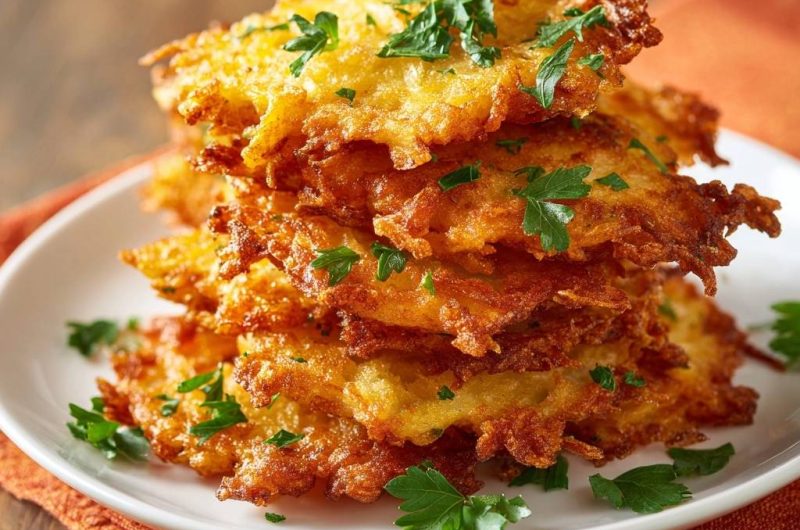
Crispy Potato Latkes
Course: Side DishCuisine: JewishDifficulty: easy4
12 latkes20
minutes20
minutes40
Minutes150
kcalJewish
Ingredients
4 large russet potatoes, peeled and shredded
1 medium yellow onion, shredded
2 large eggs, beaten
1/4 cup all-purpose flour
1 teaspoon salt
1/2 teaspoon black pepper
1/2 cup vegetable oil, for frying
Fresh parsley, chopped, for garnish
Directions
- Shred potatoes and onion using a box grater or food processor. Place in a colander over a bowl. Rinse under cold water until water runs clear, removing excess starch that causes sogginess.
- Gather shreds in a clean kitchen towel or cheesecloth. Twist and squeeze over the sink until no liquid drips out, wringing 2-3 times. This is the game-changer, eliminating moisture for guaranteed crisp exteriors.
- In a large bowl, mix squeezed shreds with eggs, flour, salt, and pepper until evenly coated and sticky.
- Heat 1/4 cup oil in a large skillet over medium-high until shimmering hot (test with a shred; it should sizzle immediately).
- Scoop 1/4 cup batter per latke, flatten slightly, and fry 3-4 minutes per side until deep golden and crispy. Add more oil as needed. Drain on paper towels.
- Stack and garnish with parsley. Serve hot for peak crunch.
Notes
- Rinse shreds under cold water to remove excess starch for extra crispiness. Wring out moisture 2-3 times in a kitchen towel for best results. Serve hot for peak crunch.