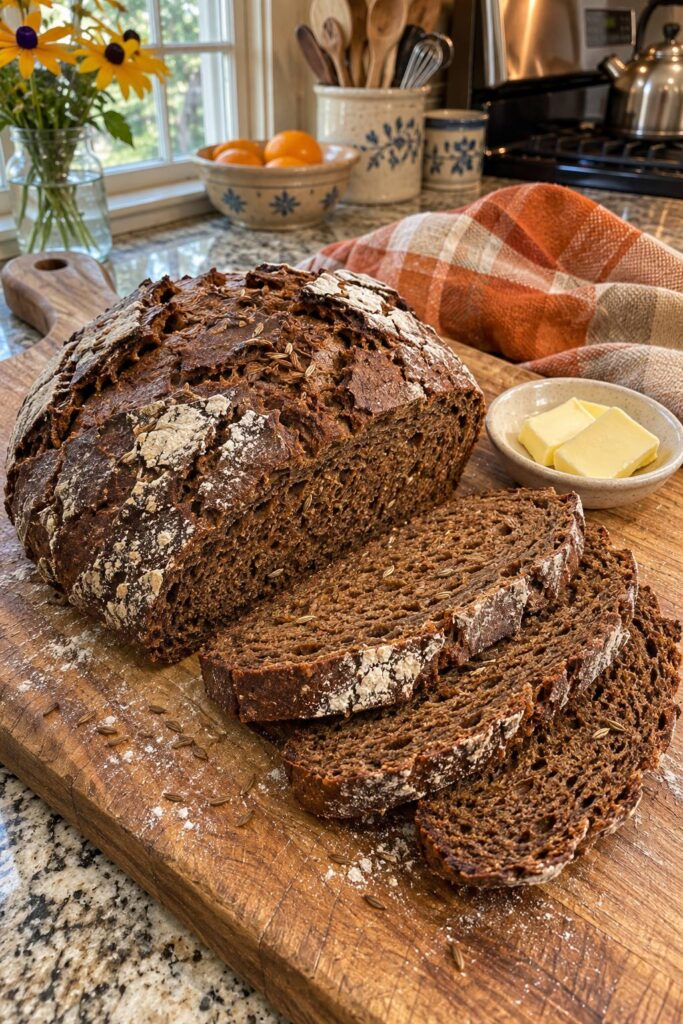
There is something comforting about a round, dark loaf with a crackling crust and a tender, close-textured crumb. This bread combines rye flour and bread flour, is sweetened gently with molasses, and is colored with a little cocoa powder. Caraway seeds finish it with a warm aroma that carries into every slice. It is a home-oven bread that rewards a little patience, and once you understand how rye behaves, it becomes a loaf you will want to bake again and again.
This article explains the choices behind the recipe and the moments that most often trip up home bakers, so you know what to look for as you go. Read it alongside the recipe card, which holds the exact amounts, times and temperatures.
Why rye flour changes the feel of the dough
Rye flour contains less gluten than bread flour, which is why this dough feels stickier than a plain wheat dough and bakes into a denser, more compact loaf. Don’t be alarmed if the mixture looks loose at first. That softness is normal, and it is the reason you should add extra flour slowly.
Bread flour gives the loaf the structure it needs to hold its shape. Add more only when the dough sticks heavily to your hands, and only a little at a time. Too much bread flour leaves the crumb dry and tight, which is the most common mistake in rye baking.
How the ingredients build color and flavor
Dark rye flour and molasses both contribute to the deep brown color. Molasses also adds a rounded sweetness that suits caraway well. Stick with the unsulphured dark molasses called for in the recipe so the sweetness stays deep and full.
Cocoa powder is there for color rather than flavor. It deepens the crust and crumb, and you should not taste chocolate in the finished slices. Caraway seeds bring an earthy, slightly citrusy note that defines this style of rye, so don’t skip the extra sprinkle on top.
Reading the dough by touch
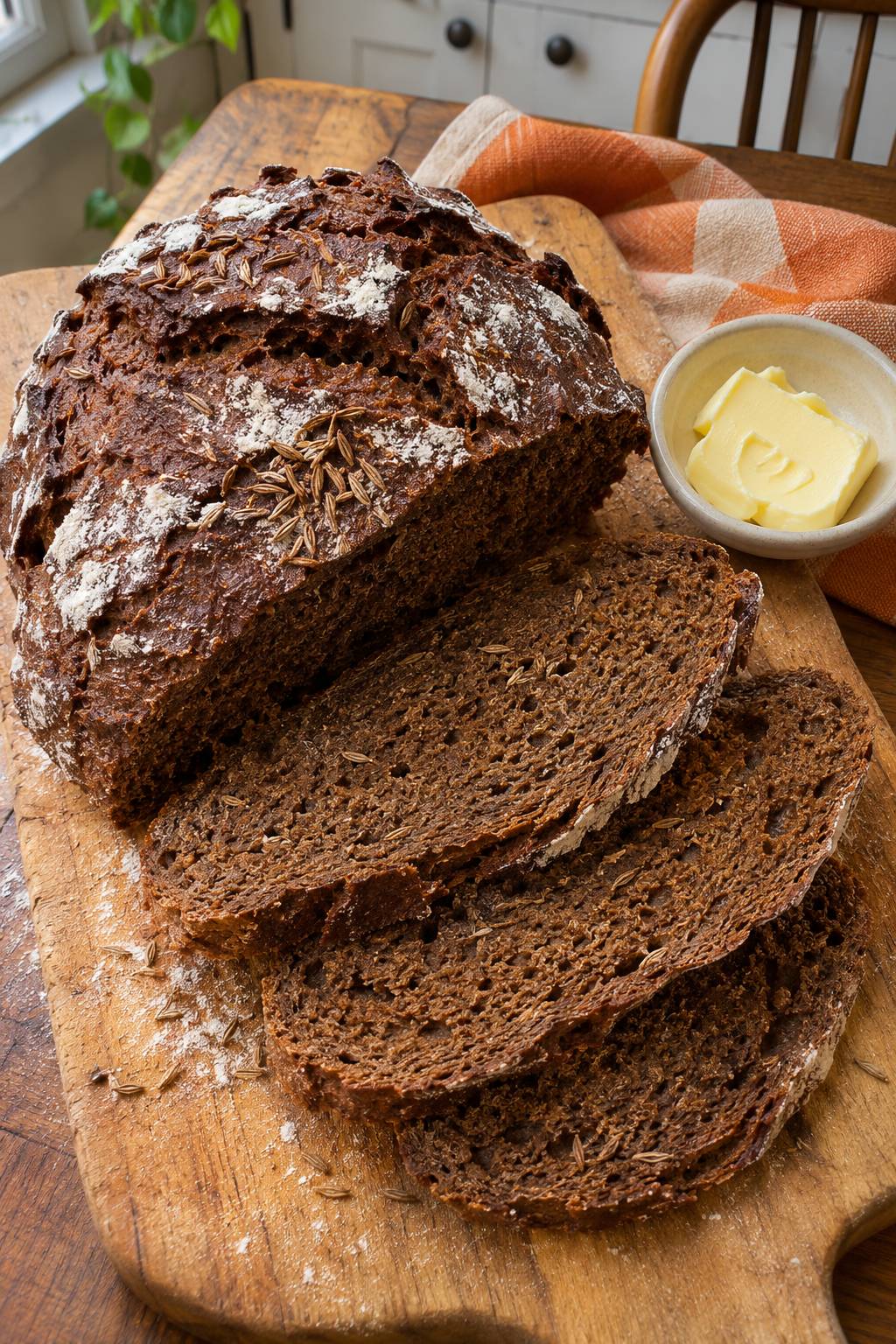
The finished dough should feel soft and slightly tacky, and it should spring back when you press it with a fingertip. If it feels tight and dry, the loaf will be stiff. If it clings to every surface, it will spread and bake flat. Dust your work surface lightly, and keep your hands lightly floured too.
Let the dough rest briefly before you shape it. A relaxed dough is much easier to form into a smooth, tight round. For the rise, cover the bowl and place it somewhere warm. Judge it by the size and soft, puffy look of the dough rather than the clock.
Baking, cooling, and slicing with confidence
Watch for a deep brown crust, then check the internal temperature with an instant-read thermometer. A finished loaf also sounds hollow when you tap the bottom. Those two signs together tell you the crumb is fully set.
Be patient once the bread comes out. Rye crumb sets as it cools, so cutting into a warm loaf leads to a gummy, sticky interior. Let it rest on a wire rack until it is completely cool. Plain butter is a simple, classic match, and it melts nicely into the crumb. Once cooled, keep the loaf in a paper or cloth bag at room temperature, and freeze slices if you want to keep them longer.
Frequently Asked Questions
Why is my dough so sticky?
Rye flour has less gluten than bread flour, so this dough is naturally softer and stickier than a wheat loaf. Resist the urge to add lots of extra flour. Add bread flour sparingly, and only when the dough sticks heavily to your hands, to keep the crumb moist and the loaf from turning dry.
Why does this loaf need cocoa powder?
Cocoa powder deepens the crust and crumb without adding a noticeable chocolate flavor. Together with the dark rye flour and molasses, it gives the loaf its rich brown color. Stir it into the warm water, yeast and molasses at the start so it dissolves smoothly before you add the flours.
How can I tell when the loaf is done?
Look for a deep brown crust and check the internal temperature on an instant-read thermometer. The loaf should also sound hollow when you tap the bottom. Then cool it completely on a wire rack before slicing, because rye crumb continues to set as it cools and slicing early makes it gummy.
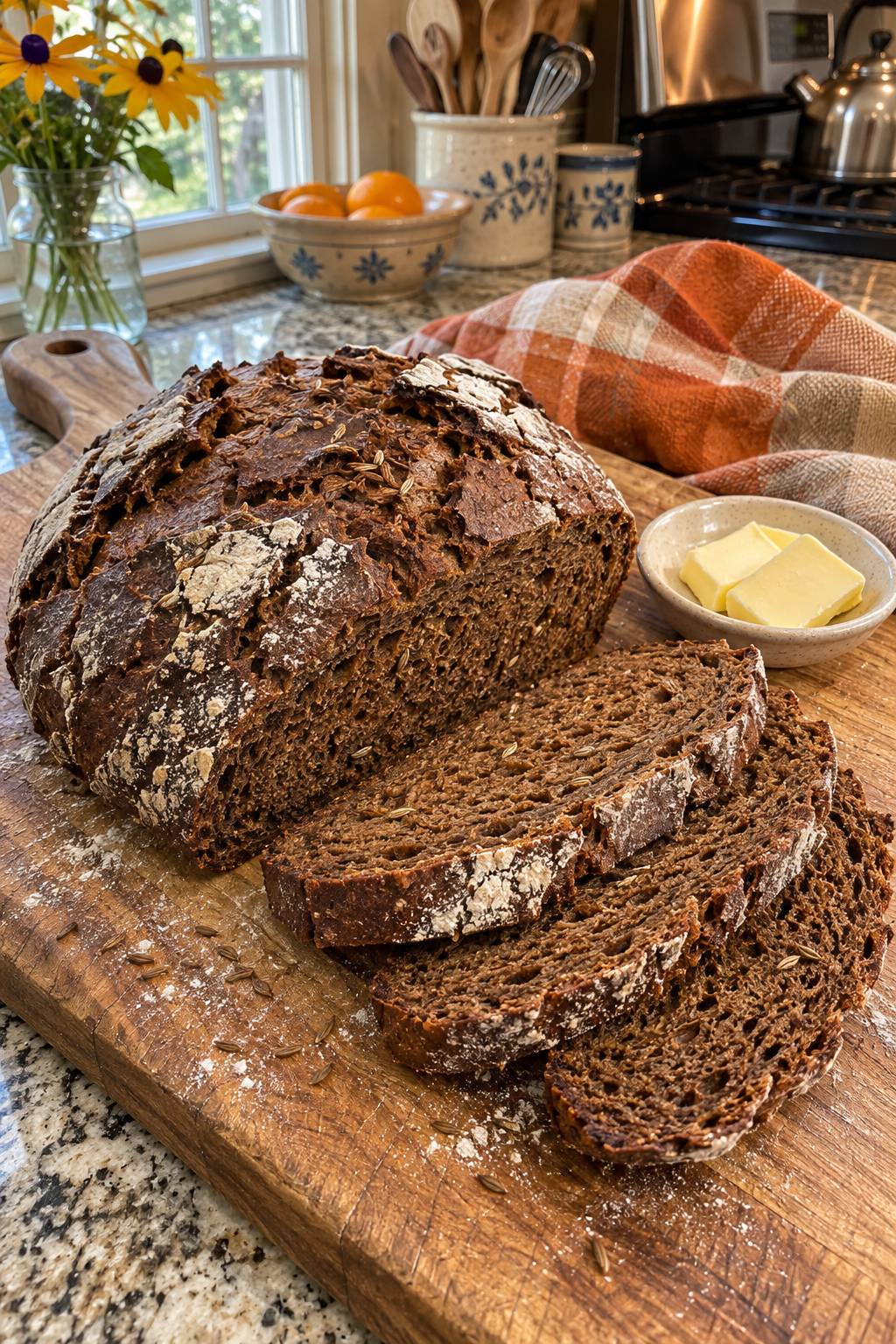
Dark Rye Bread with Molasses and Caraway
Course: BreadCuisine: AmericanDifficulty: Medium12
servings25
minutes40
minutes165
kcal3
hours50
minutesA round, dark loaf made with rye and bread flour, sweetened with molasses and colored with a little cocoa, and flavored with caraway seeds. It is shaped, risen and baked in a home oven, then cooled before slicing.
Ingredients
- Dough
1 1/2 cups warm water (105°F to 110°F)
1 packet (2 1/4 tsp) active dry yeast
3 tbsp unsulphured dark molasses
1 tbsp unsweetened cocoa powder
1 1/2 cups dark rye flour
2 1/2 cups bread flour, plus more for dusting
1 tbsp caraway seeds
2 tsp kosher salt
2 tbsp unsalted butter, softened
1 tsp olive oil, for the bowl
- Topping
1 tbsp water
1 tsp caraway seeds
Directions
- Make the dough
- In a large bowl, stir together the warm water, yeast, molasses and cocoa powder. Let the mixture stand for 5 minutes, until the yeast is foamy.
- Add the rye flour, 1 cup of the bread flour and 1 tablespoon of caraway seeds. Stir with a wooden spoon until a thick, sticky batter forms.
- Add the remaining 1 1/2 cups bread flour, the salt and the softened butter. Stir until a shaggy dough forms and no dry flour remains.
- Turn the dough onto a lightly floured surface and knead for 8 minutes. Add bread flour 1 tablespoon at a time only if the dough sticks heavily to your hands. The finished dough should be soft, slightly tacky and spring back when pressed.
- Shape the dough into a ball and place it in a bowl lightly greased with the olive oil. Cover with plastic wrap or a clean towel and let it rise in a warm spot for 1 hour, until doubled in size.
- Shape and bake
- Punch the dough down and shape it into a round loaf about 7 inches across. Place it on a parchment-lined baking sheet, cover loosely and let it rise for 45 minutes, until slightly puffed.
- While the loaf rises, preheat the oven to 400°F with a rack in the lower third. Stir together the 1 tablespoon water for the topping.
- Brush the top of the loaf with the water and sprinkle with the remaining 1 teaspoon caraway seeds. Dust lightly with bread flour and cut 3 shallow slashes, about 1/2 inch deep, across the top with a sharp knife.
- Bake for 40 minutes, until the crust is deep brown and the internal temperature reaches 205°F on an instant-read thermometer. The loaf should sound hollow when tapped on the bottom.
- Transfer the loaf to a wire rack and cool for at least 1 hour before slicing. Rye crumb sets as it cools, so slicing early makes it gummy. Serve with butter.
Notes
- Rye flour has less gluten than bread flour, so the dough is stickier and the loaf is denser. Add extra bread flour sparingly during kneading, since too much will make the bread dry.
- Dark rye flour and molasses both add color. The cocoa powder deepens the crust and crumb without adding a noticeable chocolate flavor.
- Store cooled bread in a paper or cloth bag at room temperature for up to 3 days. Wrap well and freeze slices for longer storage.