What Makes Fluffy Powdered Beignets Rise Perfectly
Why do most home beignets turn out like dense bricks? Cooks skip the double proof or guess the oil temp, and poof, no fluff. This recipe nails it with a double-proof method and exact 375F frying for cafe-style lightness every time.
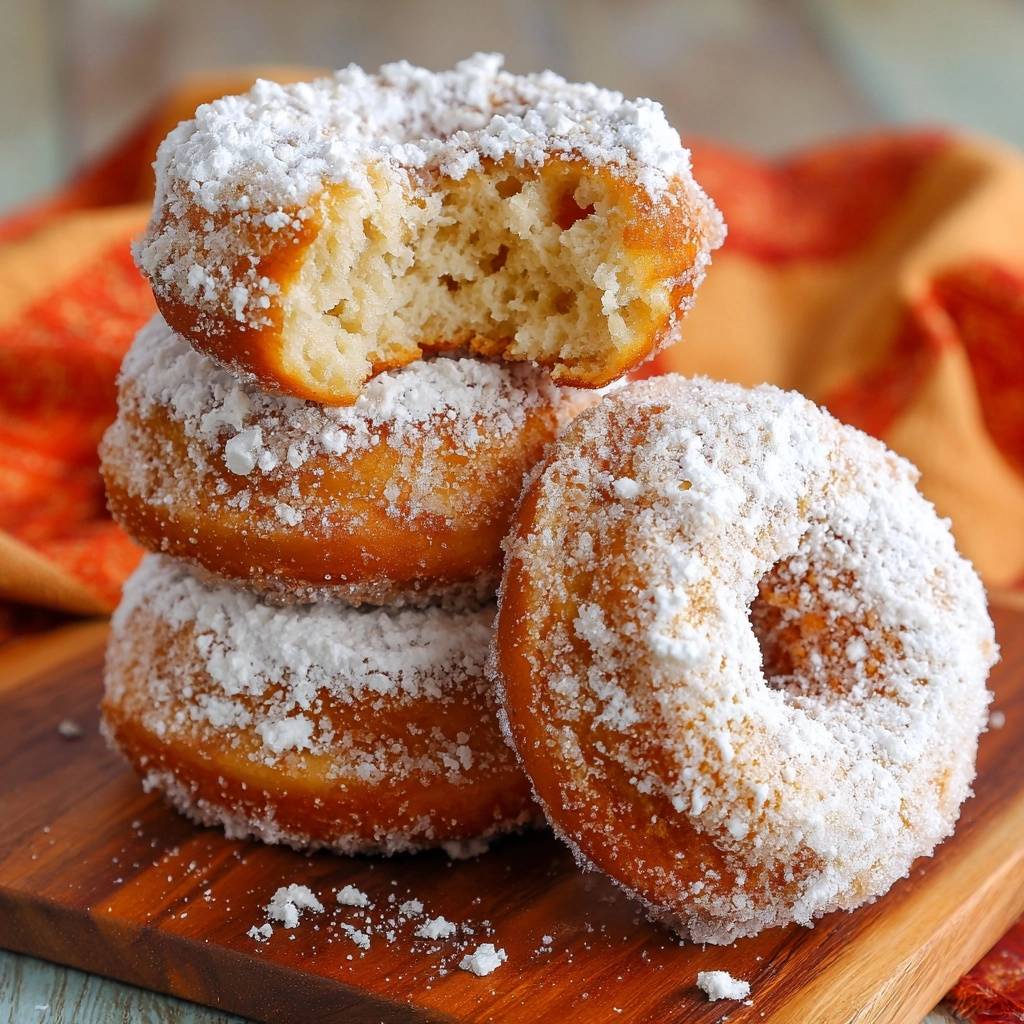
Therefore, you get pillow-soft centers that melt on your tongue, wrapped in a crisp golden shell and snowy powdered sugar. Imagine biting in, the airiness surprising you with pure joy.
The secret? Activate yeast perfectly first. That foamy bloom guarantees powerful rising, so your beignets puff up instead of staying flat.
Essential Ingredients for Fluffy Powdered Beignets
Start with 3 cups all-purpose flour. It gives just the right gluten structure for elasticity without chewiness. Bread flour makes them too tough, so stick to all-purpose for that tender bite.
In addition, 1/4 cup granulated sugar feeds the yeast and adds subtle sweetness. The 1 packet active dry yeast is non-negotiable; fresh packets ensure a strong lift. Pair it with 1 cup warm milk at 110F to wake it without killing it.
However, don’t overlook the large egg and 3 tbsp softened unsalted butter. They create steam pockets for fluff. The 1/2 tsp salt balances flavors, and 2 cups powdered sugar coats hot for perfect stickiness. No buttermilk here; milk keeps it simple and light.
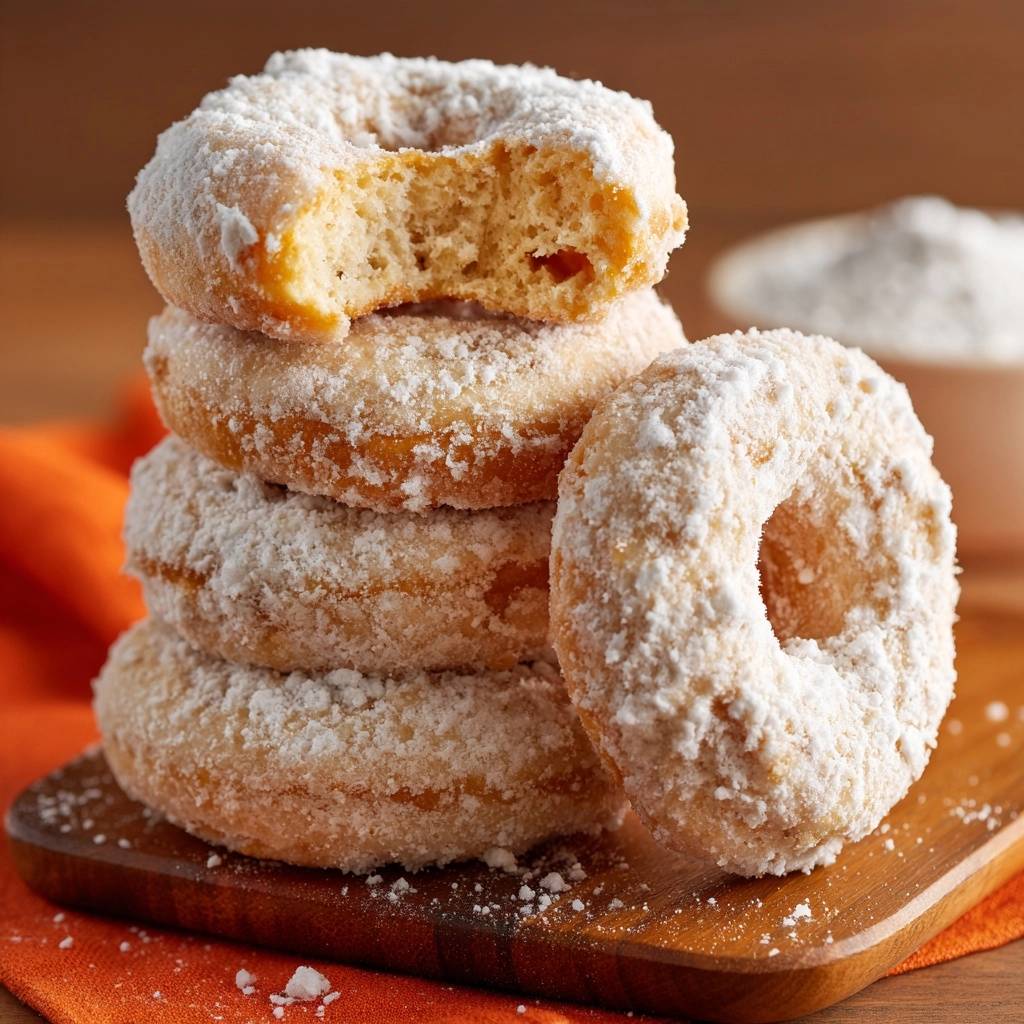
Yeast and Warm Milk Activation Duo
Mix the warm milk, yeast, and 1 tsp sugar. Wait 5-10 minutes for foam. This proves the yeast lives; no foam means dead yeast and flat beignets, so toss and restart. Too hot milk kills it, too cold slows everything.
Flour, Butter, and Sugar Balance
Light kneading relaxes gluten for airiness. Softened butter emulsifies in, trapping bubbles. Sugar aids browning during frying. Measure flour precisely; too much densifies the dough.
The Science Behind Fluffy Powdered Beignets Texture
Yeast ferments, producing CO2 bubbles that expand the dough. Double-proofing traps those gases in elastic gluten walls. Therefore, you avoid chewiness and get pillow centers.
In addition, frying at 375F turns moisture to steam fast, puffing the interior. The Maillard reaction crisps the outside golden. Lower temps soak oil in, making them greasy and heavy.
However, precise control seals steam inside. Think of it like a balloon: proofs inflate it, heat expands it perfectly without bursting.
Double-Proofing Traps Air Bubbles
First proof builds structure over 1-1.5 hours. Second proof, 30-45 minutes, expands bubbles for ultra-puffy centers. Single proof leaves them dense; this duo guarantees lightness.
Precise Frying Temperature Science
375F creates instant steam expansion. Below that, they absorb oil and stay soggy. Above, exteriors burn before insides cook. A thermometer prevents disasters.
Equipment for Perfect Fluffy Powdered Beignets
You need a candy thermometer for exact oil temp. A heavy pot holds 2-3 inches vegetable oil steadily. Dough cutters make uniform 3-inch rounds with 1-inch holes for even cooking.
In addition, a slotted spoon flips without breaking them. A digital scale weighs flour accurately; cups pack too much. Stand mixer helps knead gently, but hands work fine with a bench scraper.
Pro tip: Clip-on thermometers stay put; instant-read ones check fast. Skip shallow pans; they splatter and cool oil quick.
Thermometer and Fryer Pot Essentials
Clip-on thermometers monitor continuously. Deep pots prevent overflow with 2-3 inches oil. Instant-read works but requires constant dipping.
Step-by-Step: Activating Yeast for Fluffy Powdered Beignets
In a bowl, combine 1 cup milk at 110F, yeast, and 1 tsp sugar. Let sit 5-10 minutes. You’ll see creamy foam rise; that’s alive yeast ready to lift your dough sky-high.
If no foam after 10 minutes, your yeast died, likely from hot milk. Dump it and use fresh. Tap water varies in temp, so measure milk precisely for foolproof activation.
Building and First Proof of Beignet Dough
Add the egg, softened butter, salt, remaining sugar, and 2 cups flour to the yeast mix. Stir until shaggy. Knead in the last cup of flour lightly for 2-3 minutes on a floured surface.
Therefore, the dough stays soft and extensible. Place in a greased bowl, cover, and let rise 1-1.5 hours in a warm spot until doubled. Punch down gently; oven light provides perfect warmth without drying.
Overkneading toughens gluten, killing fluff. Keep it brief for tenderness.
Light Kneading Technique Explained
Knead just until smooth; a light windowpane test shows elasticity without tears. This relaxes gluten for big air pockets. Hands feel the dough turn silky fast.
Shaping and Second Proof for Maximum Fluff
Roll dough to 1/2-inch thick on a floured surface. Cut 3-inch rounds with 1-inch center holes. The hole ensures even frying, no raw centers.
Place on a floured sheet, cover loosely, and proof 30-45 minutes until puffy. Space them apart; they expand. This step traps air for that irresistible light interior.
Frying Fluffy Powdered Beignets to Golden Perfection
Heat 2-3 inches vegetable oil to 375F in a heavy pot. Fry 1-2 at a time, 1 minute per side until deep golden. Crowding drops the temp, so they soak oil and stay dense.
Drain on paper towels right away. Safety first: keep a lid nearby for flare-ups. Neutral oil like vegetable avoids flavors.
Coating and Serving Your Fluffy Powdered Beignets
Roll hot beignets in 2 cups powdered sugar immediately. The heat melts it on for thick, snowy coating. Serve warm for peak fluff; yields 12-15.
They stay airy for hours thanks to the proof-fry magic. Dust extras as needed.
Avoiding Common Mistakes with Fluffy Powdered Beignets
Overproofing makes them collapse in oil; watch the clock. Wrong temp leads to greasy or burnt results. Heavy kneading creates chewiness, not airiness.
In addition, skipping proofs guarantees density. Always foam-test yeast. Pro tip: Fry in small batches to hold temp steady.
Dense Texture Rescue Strategies
No foam? New yeast. Underproofed? Extend second rise. Desperate fix: Mix in 1/2 tsp baking powder before shaping, but proofs work best. Diagnose by dough bounce-back.
Flavor Variations on Fluffy Powdered Beignets
Stick to classic powdered for purity, but add 1 tsp vanilla to dough for warmth. Zest a lemon into sugar for citrus pop. Post-fry, dip half in melted chocolate.
Fill with jam: Pipe after frying to keep fluff. Cinnamon sugar swap adds cozy spice. All preserve the light texture.
Pairing Sides with Fluffy Powdered Beignets
Strong coffee cuts the sweetness perfectly. Cafe au lait brings cafe vibes. Fresh berries add tart balance.
Chocolate sauce drizzles heavenly. Stack with fruit compote for breakfast bliss.
Make-Ahead Guide for Fluffy Powdered Beignets
After first proof, fridge dough overnight; let warm before shaping. Shape and second-proof, then freeze on a sheet. Fry from frozen, adding 30 seconds per side.
Reheat in 350F oven 2-3 minutes to revive fluff; microwave toughens them. Double recipe easily; freeze extras for fresh-feeling batches anytime.
Frequently Asked Questions About Fluffy Powdered Beignets
How do I store Fluffy Powdered Beignets and can they freeze?
Store leftovers airtight at room temp up to 2 days; sugar absorbs moisture, so they soften. Reheat in a 350F oven 2-3 minutes to crisp up. Freeze shaped, pre-fried beignets up to 1 month; fry straight from freezer, adding 30-45 seconds per side. Don’t freeze fried ones; they lose fluff from ice crystals.
Why are my Fluffy Powdered Beignets dense and how do I fix it?
Density comes from dead yeast, overkneading, skipped proofs, or wrong oil temp. Check yeast foam first; knead lightly 2-3 minutes max. Do both proofs fully until doubled and puffy. Fry at exact 375F; lower temps make them oil-logged and heavy. Next batch, use a thermometer and watch rises closely for airy results.
Can I substitute ingredients in Fluffy Powdered Beignets?
Swap milk for plant-based like almond, but warm to 110F. No egg? Use flax egg (1 tbsp flax + 3 tbsp water). All-purpose flour is best; gluten-free blends need xanthan gum and extra liquid, but fluff suffers, so test small batches. Butter for oil works but reduces tenderness. Keep yeast fresh always.
Why cut holes in the center of Fluffy Powdered Beignets?
Holes ensure even cooking; centers fry through without raw dough. They mimic cafe style and let steam escape evenly for maximum puff. Skip them for solid rounds, but add 30 seconds fry time and risk density. Uniform 1-inch holes give pro results.
What’s the best oil for frying Fluffy Powdered Beignets?
Vegetable, canola, or peanut oil; neutral flavors let dough shine. High smoke point handles 375F without burning. Reuse strained oil 2-3 times; store cool and dark. Avocado oil works too, but avoid olive for off tastes.
Can I bake Fluffy Powdered Beignets instead of frying?
No, baking won’t replicate the steam-expansion fluff; you’ll get bread-like density. Fry for the golden crisp and airy interior. If oil-free, air-fry at 375F brushed with oil, but expect 70% less puff and drier texture. Frying is key to mastery.
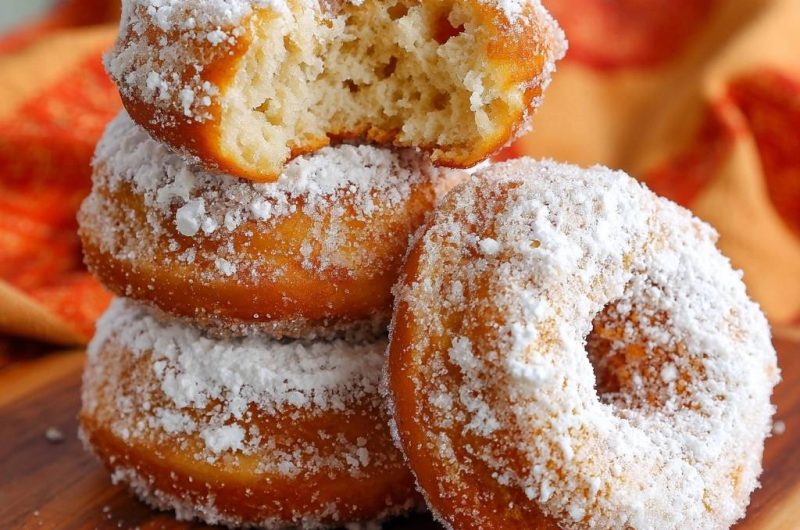
Fluffy Powdered Beignets
Course: DessertCuisine: AmericanDifficulty: easy4
12 beignets30
minutes20
minutes120
MinutesAmerican
Ingredients
3 cups all-purpose flour
1/4 cup granulated sugar
1 packet (2 1/4 tsp) active dry yeast
1 cup warm milk (110F)
1 large egg
3 tbsp unsalted butter, softened
1/2 tsp salt
Vegetable oil for frying
2 cups powdered sugar for coating
Directions
- Activate yeast: In a bowl, mix warm milk, yeast, and 1 tsp sugar. Let sit 5-10 minutes until foamy. This ensures strong rise, preventing density from dead yeast.
- Make dough: Add egg, butter, salt, remaining sugar, and 2 cups flour to yeast mix. Stir until combined. Knead in remaining flour lightly (2-3 minutes) on floured surface. Do not overknead; this keeps gluten relaxed for airy texture.
- First proof (key fluff step): Place dough in greased bowl, cover, rise in warm spot 1-1.5 hours until doubled. Punch down gently.
- Shape: Roll dough 1/2-inch thick. Cut into 3-inch rounds with 1-inch center hole using cutters.
- Second proof (density killer): Place on floured sheet, cover, rise 30-45 minutes until puffy. This double-proof traps air bubbles for guaranteed light interior.
- Fry perfectly: Heat 2-3 inches oil to exactly 375F (use thermometer). Fry 1-2 donuts at a time, 1 minute per side until golden. Exact temp + no crowding prevents oil absorption and density. Drain on paper towels.
- Coat: Roll hot donuts in powdered sugar. Serve warm. Store extras airtight.
- These stay fluffy for hours thanks to the proof-fry combo. No more dense disasters!
Notes
- These stay fluffy for hours thanks to the proof-fry combo. No more dense disasters! Use a thermometer for exact oil temperature of 375F to prevent oil absorption and ensure light texture.