Ever had your onions scorch right when you’re aiming for that perfect caramelized sweetness in French onion soup? It happens to everyone. One batch I made turned bitter fast because I cranked the heat too high. But this low-slow stir method with timed checks and quick broth deglazes fixes it every time. You’ll get deep golden onions without a hint of burn.
So why does this matter for French onion soup? Those caramelized onions build the soul of the dish. They deliver nutty, sweet depth that broth alone can’t match. Rush it, and you ruin the whole pot.
Here’s the pro tip that seals it: stir every 3 to 4 minutes on medium-low heat. If they stick, splash in a tablespoon of broth to loosen. That recycles the flavor and keeps everything golden, not black.
Why Caramelization Defines French Onion Soup
The Magic of Slow-Cooked Onions
Caramelization in French onion soup comes from sugars breaking down slowly over low heat. This triggers the Maillard reaction for that nutty richness without bitterness. High heat chars them fast, but medium-low around 300 to 320 degrees Fahrenheit lets moisture evaporate evenly.
Watch the transformation. Onions start pale and crisp, then go translucent after 15 minutes. By 30 minutes, golden edges appear, and at 45, they’re deep brown with a sweet aroma filling your kitchen. Patience pays off big here.
In addition, cooking uncovered releases steam, concentrating flavors. You’ll avoid the soggy mess that high-heat failures create. This method guarantees classic French onion soup perfection.
Historical Roots of French Onion Soup
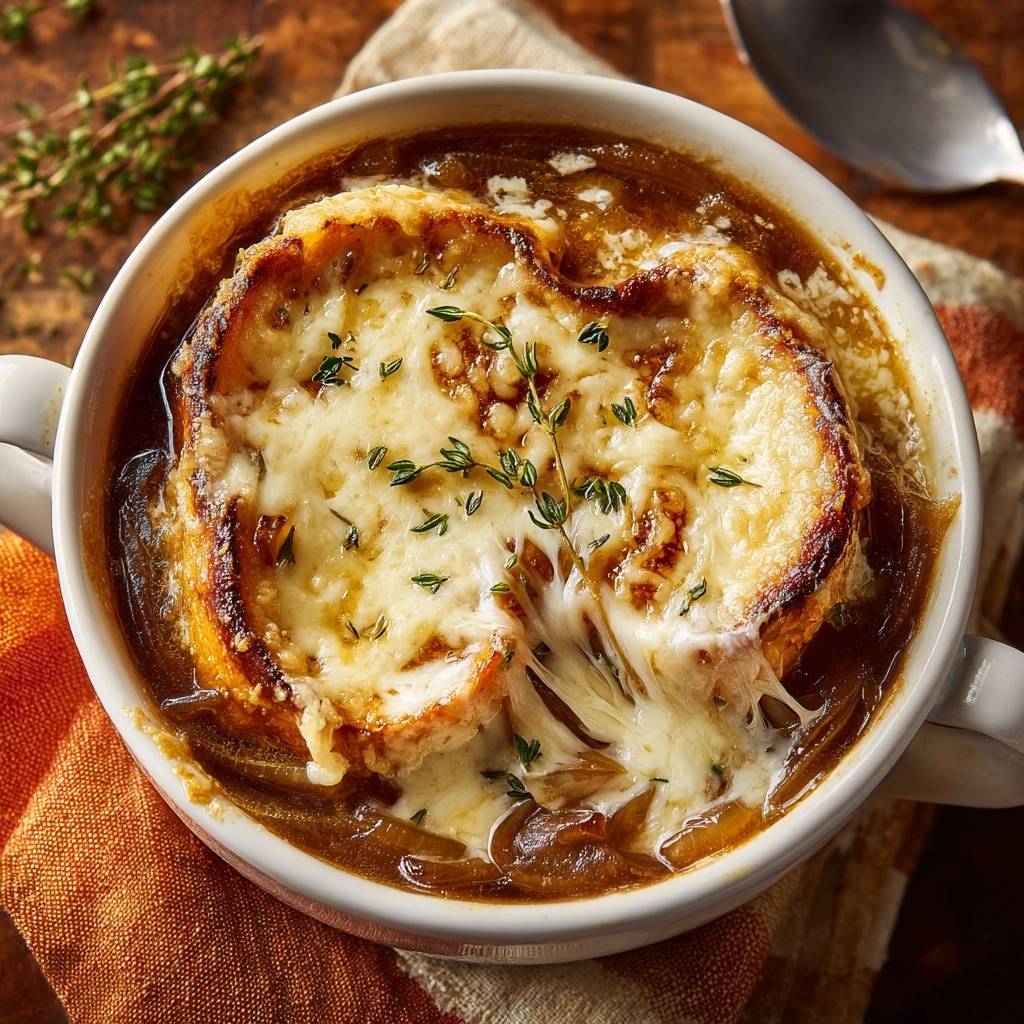
Classic French onion soup started in 18th-century France as a peasant dish. Folks used simple onions and broth, caramelizing slowly over open fires for depth. It got fancy in 19th-century Paris bistros with Gruyere cheese and baguette toppers.
Therefore, perfect onions stayed key through the years. They elevate humble ingredients into something cozy and craveable. Today, that same technique makes your French onion soup taste like a bistro hit.
However, modern kitchens tempt us to rush. Stick to the low-slow way, and you honor those roots while nailing the sweet-savory balance every time.
Key Ingredients for Balanced French Onion Soup
Choosing Yellow Onions for Sweetness
Grab 4 large yellow onions for French onion soup. They hold tons of moisture and natural sugars that caramelize beautifully. Reds can turn too sharp, and whites lack that sweetness.
Slice them thin and even, about 1/8-inch thick. This ensures uniform cooking, no raw bits left behind. Fresh slicing beats pre-sliced bags, which dry out and scorch easier.
Pro tip: use a sharp knife or mandoline for clean cuts. It’ll make your onions melt into sweet gold faster.
Unsalted Butter and Sugar’s Role
Melt 2 tablespoons unsalted butter to start. It gives pure, clean fat flavor without extra salt messing up your seasoning later. Salted butter risks over-salting during the long cook.
Add 1 teaspoon sugar right away. It kickstarts caramelization safely, drawing out moisture for even browning. Then toss in 2 sprigs fresh thyme for earthy undertones that bloom slowly.
Therefore, these build layers. You’ll smell the sweetness building, not bitterness.
Beef Broth and Gruyere Essentials
Pour in 6 cups quality beef broth for umami punch. Homemade shines with gelatin for body, but low-sodium store-bought works if you taste as you go. It melds with onions for that signature French onion soup depth.
Shred 2 cups Gruyere fresh. Pre-shredded has starch that clumps instead of melting stretchy. Top with 8 baguette slices for crisp contrast.
Season with salt and pepper at the end. This lets you adjust perfectly after flavors concentrate.
Science of Burn-Free Onion Caramelization
Medium-Low Heat Fundamentals
Medium-low heat keeps French onion soup onions at 300 to 320 degrees Fahrenheit. This breaks down sugars steadily without scorching. Higher temps vaporize moisture too fast, leading to bitter char.
A pinch of initial salt draws out water, creating steam in the uncovered pot. Therefore, onions soften before browning. Heavy-bottomed pots distribute heat evenly, preventing hot spots.
You’ll see steady progress, not sudden burns. It’s science making your soup foolproof.
Timed Stirring and Deglazing Trick
Stir every 3 to 4 minutes for 40 to 45 minutes total. This redistributes onions so none stick and burn. If they do cling to the pot, splash 1 tablespoon broth to deglaze.
That dissolved fond recycles rich flavor back in. Smell for sweet caramel, not acrid bitterness. Add thyme midway; remove woody stems before broth.
However, skip stirs, and you’ll scorch. This rhythm nails it every time.
Step-by-Step: Building French Onion Soup Base
Melting Butter and Prepping Onions
Choose a large, heavy-bottomed pot. Melt 2 tablespoons butter over medium-low heat until foamy. Add thinly sliced onions, 1 teaspoon sugar, and a pinch of salt.
Stir well to coat everything. In the first 10 minutes, they’ll soften and release moisture. Keep heat steady; no rushing.
This sets up even caramelization from the start.
40-Minute Caramelization Process
From 0 to 15 minutes, onions turn translucent with a light sheen. Stir every 3 to 4 minutes. At 15 to 30, golden edges form, and the kitchen smells sweet.
Push to 30 to 45 minutes for deep mahogany brown. Deglaze with broth if sticking. Toss in thyme sprigs around minute 20 for infusion.
Therefore, patience transforms raw onions into sweet magic. Remove thyme before next step.
Simmering Broth in French Onion Soup
Adding Broth and Flavor Meld
Pour 6 cups beef broth over caramelized onions. Add remaining thyme sprigs. Bring to a simmer, then drop to low for 10 minutes.
This melds flavors without diluting the onion depth. Taste evolves from sharp to rounded umami. Discard thyme now.
Season with salt and pepper to taste. Skim excess fat if needed for clean broth.
Broiling Cheesy Baguette Toppers
Assembling Oven-Safe Bowls
Preheat your broiler. Ladle hot French onion soup into 4 oven-safe bowls, like ceramic or Pyrex. They handle heat without cracking.
Float 2 baguette slices per bowl. Pile on shredded Gruyere generously. Place bowls on a foil-lined baking sheet for easy cleanup and stability.
Pro tip: fill bowls not to the brim to avoid spills under broiler.
Perfect Golden Bubble Technique
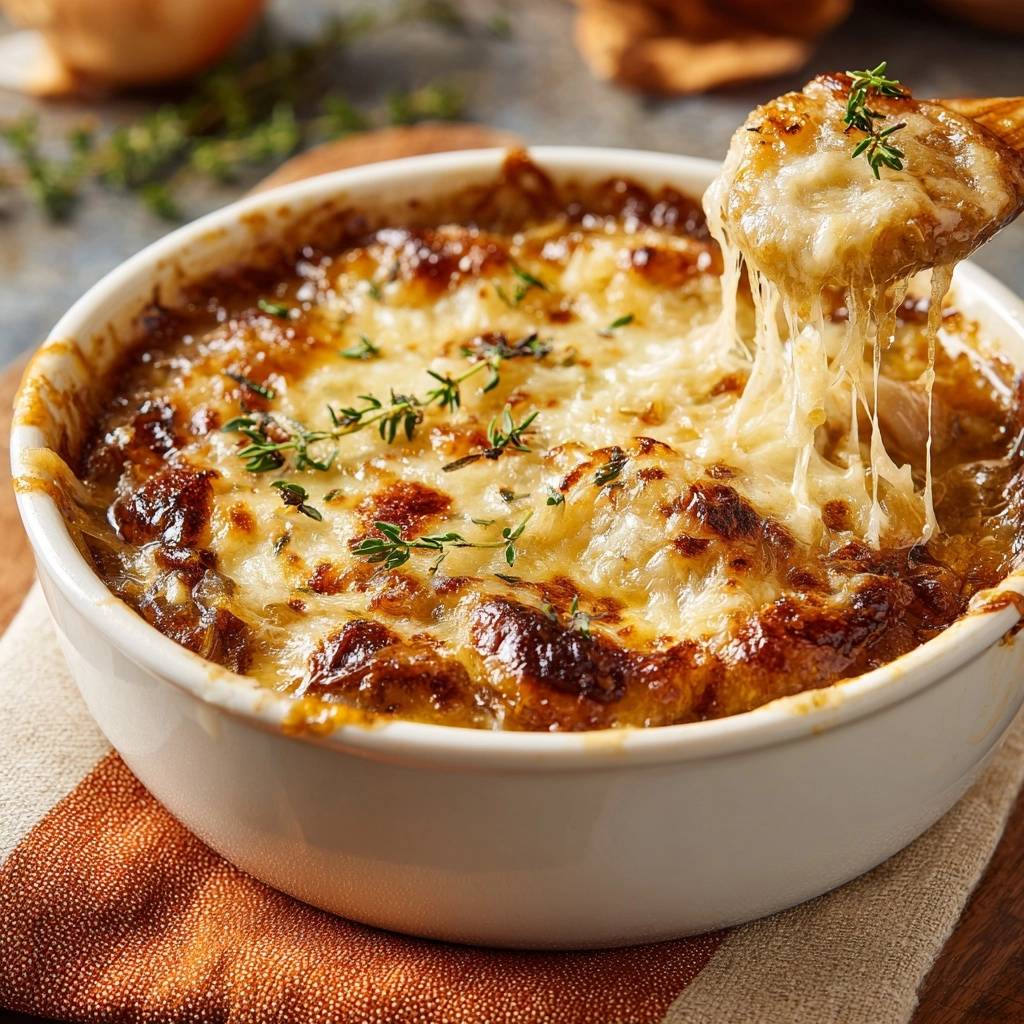
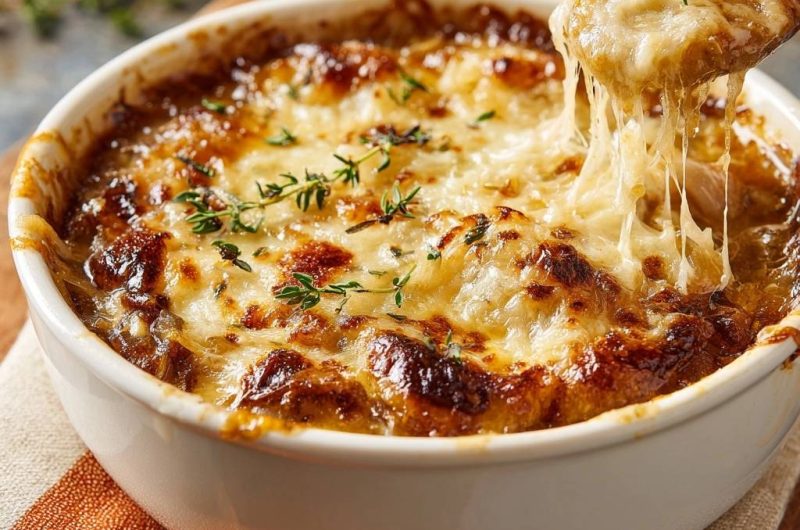
Broil on the middle rack 2 to 3 minutes. Cheese bubbles, turns golden, and stretches as proteins melt with moisture. Watch closely; rotate sheet for even browning.
Garnish with fresh thyme sprigs. Serve immediately, warning folks bowls stay hot. That gooey pull is worth it.
However, don’t walk away, or edges burn fast.
Avoiding Common French Onion Soup Pitfalls
Preventing Scorched or Bitter Onions
Top mistake in French onion soup: cranking heat high to rush caramelization. Onions blacken, tasting acrid and ruined. Infrequent stirs worsen it.
This recipe’s fix: medium-low with every 3 to 4 minute checks and deglazes. Success smells sweet, tastes nutty. Bitter means start over.
Therefore, follow the timeline religiously.
Fixing Watery Broth or Soggy Bread
Watery broth comes from over-simmering or low-quality stock. Skim fat and simmer just 10 minutes. Soggy bread? Toast baguette slices lightly first.
If cheese won’t melt, move rack closer but watch. These tweaks keep textures perfect.
Flavor Variations for French Onion Soup
Vegetarian Broth Swaps
Swap beef broth for mushroom stock to keep umami in vegetarian French onion soup. It mimics beef’s savoriness perfectly. Splash white wine for deglazing adds bright acidity.
Try Swiss or Emmental instead of Gruyere; they melt similarly nutty. These changes stay true to the classic while opening options.
In addition, Vidalia onions boost sweetness naturally.
Spice and Herb Twists
Swap thyme for a bay leaf for subtle warmth. A dash of Worcestershire amps savory without overpowering. Mix in sweet Vidalia onions for extra caramel pop.
Or drizzle balsamic at the end for tangy lift. These tweaks personalize your French onion soup easily.
Pairing Sides with French Onion Soup
Crisp Salads and Breads
Pair French onion soup with a simple green salad tossed in vinaigrette. The acidity cuts through rich cheese and broth beautifully. Extra baguette slices or garlic bread sop up every drop.
This keeps the meal light yet satisfying.
Heartier Complements
Add roasted chicken or steak for protein alongside French onion soup. Skip heavy starches to balance richness. Sparkling cranberry juice refreshes the palate nicely.
These sides make it a full, cozy meal.
Make-Ahead Guide for French Onion Soup
Storage and Reheating Tips
Cool the soup base quickly, then store in airtight containers. It lasts 4 days in the fridge. Freeze onions and broth up to 3 months; thaw overnight.
Don’t freeze assembled bowls with cheese and bread; they get soggy. Reheat base on stovetop low to preserve flavors, then broil fresh toppers.
Pro tip: portion before freezing for easy weeknight wins.
French Onion Soup Troubleshooting
Onions Not Caramelizing?
Heat too low slows it; bump slightly but stay under medium. If pale after 45 minutes, cook 10 more with stirs. Fresh onions caramelize best; old ones lack sugars.
Cheese Burning Fast?
Lower rack or shorten to 90 seconds. Foil edges if browning unevenly. Freshly shredded melts before burning.
Soup Too Salty?
Dilute with a splash of unsalted broth or water, then simmer 5 minutes. Add a potato chunk to absorb excess; discard after.
Bread Sinking?
Toast baguette first for structure. Use wider bowls so slices float better. Press lightly into soup before cheese.
FAQ
How do I store leftovers of French onion soup?
Let the soup base cool to room temperature within 2 hours to avoid bacteria. Store in airtight containers in the fridge for up to 4 days. For freezing, portion the base without cheese or bread into freezer bags; it holds well for 3 months without separating. Thaw overnight in the fridge, then reheat gently on the stovetop over low heat, stirring occasionally to revive flavors. Assemble fresh baguette and cheese toppings right before broiling for best texture. Avoid freezing the full assembled bowls, as bread turns mushy and cheese oils out.
Why did my onions scorch and make the French onion soup bitter?
Scorching happens from high heat or skipping stirs, causing sugars to burn instead of caramelize. Bitter taste means charred bits released harsh compounds. Fix it next time with strict medium-low heat, stirring every 3-4 minutes, and deglazing stuck spots with 1 tablespoon broth. If it happens, pick out dark pieces and dilute with extra broth, but starting over yields better results. The sweet aroma is your success cue; acrid smell means trouble early.
Can I substitute ingredients in French onion soup?
Yes, swap beef broth for mushroom or vegetable stock to keep umami in vegetarian versions; use low-sodium to control salt. No Gruyere? Emmental or Swiss shreds melt similarly nutty and stretchy, but grate fresh for smoothness. Yellow onions are best, but a mix with sweet Vidalia works; avoid reds for less sharpness. For dairy-free, skip cheese and float toasted baguette with nutritional yeast sprinkle. Unsalted butter can become oil, but it alters richness slightly.
How long does caramelization really take for perfect French onion soup?
Plan 40-45 minutes total on medium-low heat for 4 large onions. Break it down: 0-15 minutes translucent and soft, 15-30 golden edges with sweet smell, 30-45 deep brown and jam-like. Stir every 3-4 minutes religiously. Factors like onion freshness or pot size tweak it by 5 minutes; wetter onions take longer. Don’t rush; this builds the deep flavor that defines French onion soup.
Why is my cheese not melting properly in French onion soup?
Pre-shredded cheese has anti-caking starch that resists melting into stretchy bliss. Always grate fresh Gruyere for smooth, bubbly results. If still clumpy, ensure broiler is fully preheated and bowls are hot from soup. Broil closer to heat but watch every 30 seconds. For even melt, rotate the sheet midway. Moisture from hot soup helps proteins flow perfectly.
Can I make French onion soup ahead for a dinner party?
Absolutely, caramelize onions and simmer with broth up to 2 days ahead; flavors deepen in the fridge. Store base covered, then reheat low on stovetop before serving. Assemble and broil toppings just before guests arrive for crisp bread and gooey cheese. Freeze portions up to 3 months for bigger batches. This method saves time while delivering bistro-quality French onion soup hot and fresh.
French Onion Soup
Course: SoupCuisine: FrenchDifficulty: easy4
servings20
minutes55
minutes60
Minutes450
kcalFrench
Ingredients
4 large yellow onions, thinly sliced
2 tablespoons unsalted butter
1 teaspoon sugar
2 sprigs fresh thyme, plus extra for garnish
6 cups beef broth
Salt and black pepper to taste
8 slices baguette
2 cups shredded Gruyere cheese
Directions
- In a large pot over medium-low heat, melt butter. Add sliced onions, sugar, and a pinch of salt. Stir to coat.
- Cook onions uncovered for 40 to 45 minutes, stirring every 3 to 4 minutes to prevent scorching. Here’s the key anti-scorch trick: Keep heat at medium-low (never higher), and if onions stick to the pot bottom, add 1 tablespoon broth to deglaze and loosen them. They will turn from pale to deep golden brown and smell sweet, not bitter. Remove thyme sprigs if woody.
- Pour in beef broth and remaining thyme sprigs. Bring to a simmer, then reduce heat to low. Cook 10 minutes for flavor to meld. Season with salt and pepper. Discard thyme sprigs.
- Preheat broiler. Ladle soup into 4 oven-safe bowls. Top each with 2 baguette slices, then pile on cheese.
- Place bowls on a baking sheet. Broil 2 to 3 minutes until cheese is bubbly, golden, and stretchy. Watch closely to avoid burning. Garnish with thyme. Serve hot.
Notes
- Keep heat at medium-low and stir every 3-4 minutes. Deglaze with broth if onions stick. Watch closely under broiler to avoid burning cheese.