Why Garlic Shrimp Asparagus Pasta Wins Weeknights
Ever bitten into rubbery shrimp in your garlic shrimp asparagus pasta and wished you could toss the whole plate? You’re not alone. Most home cooks end up with chewy disappointment because they skip the dry pat and high-heat sear. But this recipe changes everything in just 20 minutes.
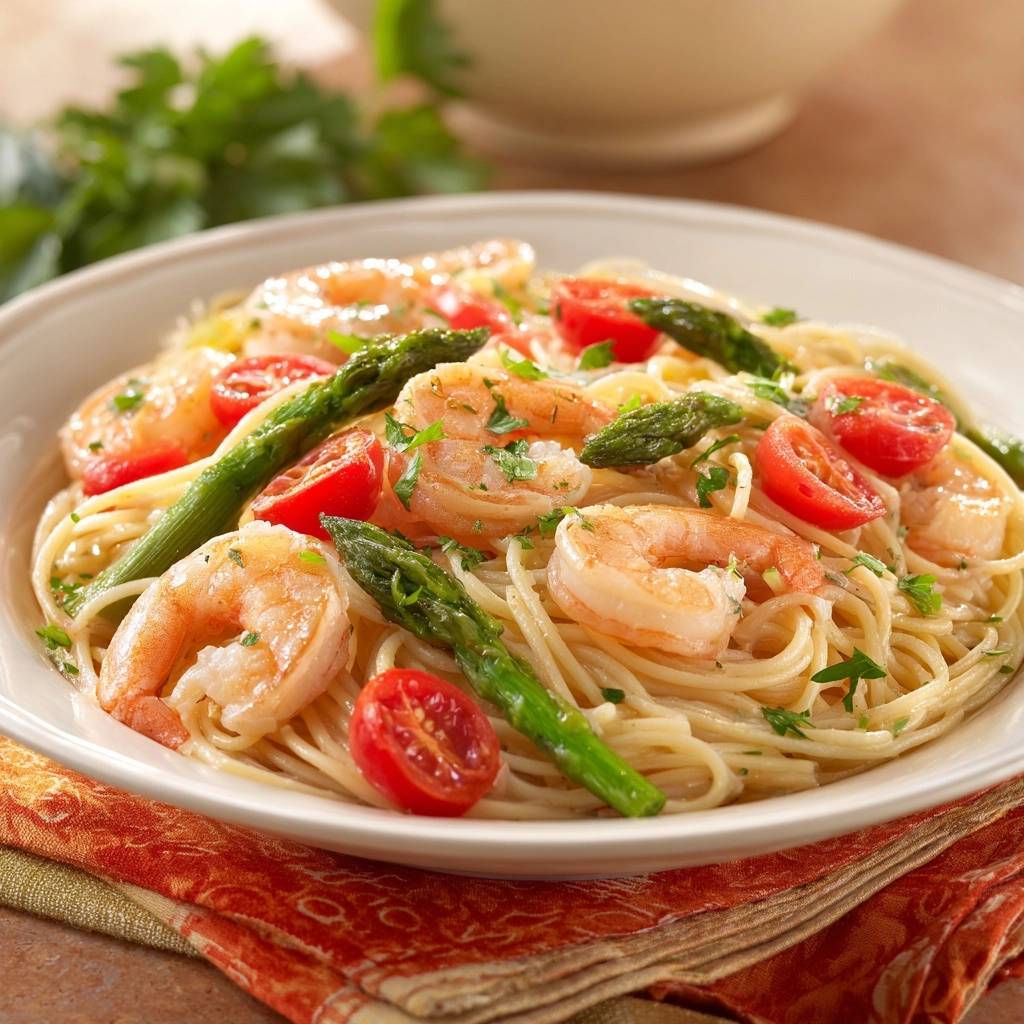
Therefore, you get juicy shrimp that pop with flavor, alongside crisp asparagus that snaps and cherry tomatoes that burst into a silky sauce. It’s the weeknight garlic shrimp asparagus pasta that beats takeout every time. Plus, the fresh parsley brightens it all without extra effort.
The secret lies in patting those shrimp bone-dry first. That simple step triggers a quick crust on high heat, sealing in all the tenderness. No more overcooked sadness, just perfection you can taste.
Key Ingredients for Garlic Shrimp Asparagus Pasta
Start with 8 ounces of spaghetti as your base. It holds the sauce perfectly when cooked al dente. In addition, reserve that half-cup of starchy pasta water, which emulsifies everything into silkiness later.
One pound of large shrimp takes center stage. Choose 16-20 count for the best size; they sear fast without drying out. Fresh parsley, chopped fine, adds a clean finish that lifts the garlic shrimp asparagus pasta.
Large Shrimp: Sourcing and Prep Essentials
Grab deveined shrimp to save time and avoid grit. Pat them completely dry with paper towels right before cooking. This dryness sparks the Maillard reaction on high heat, creating that golden crust while locking in juices. Wet shrimp just steam and turn tough.
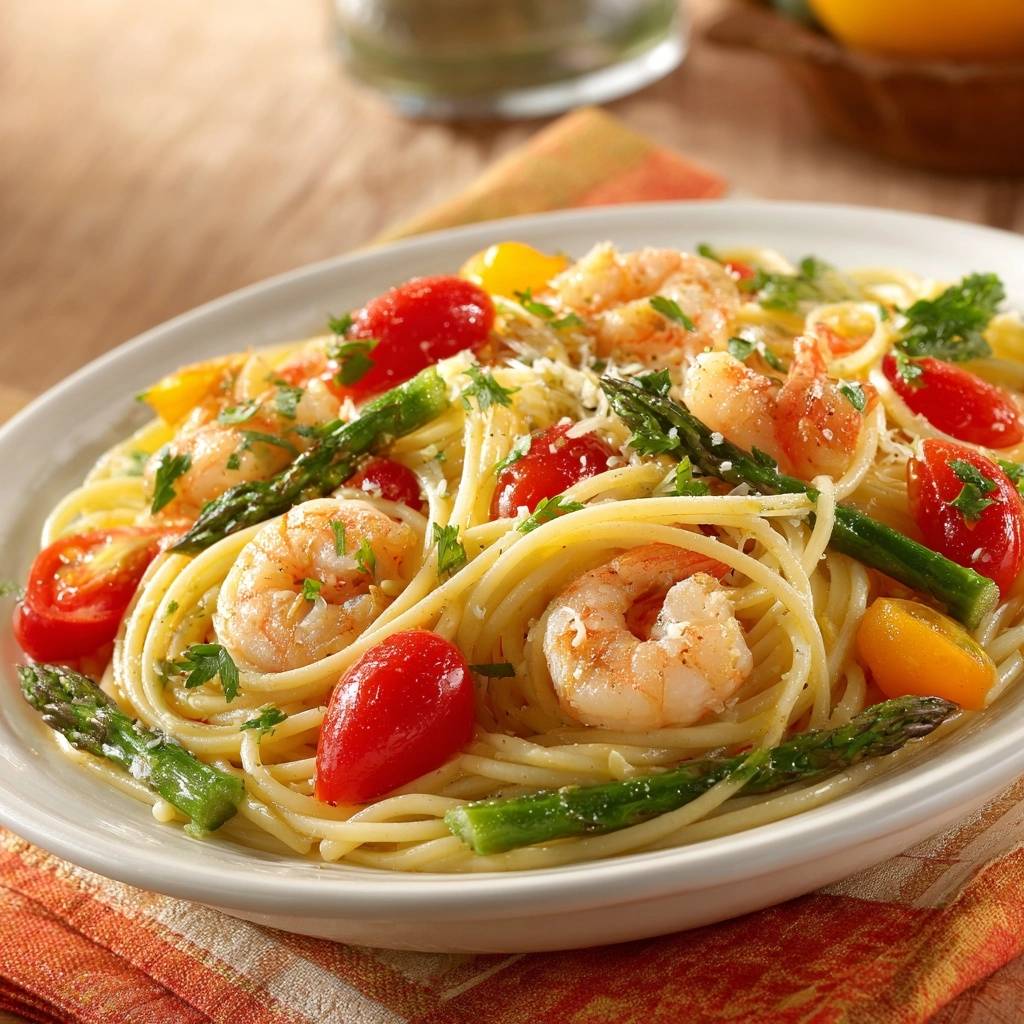
Asparagus and Tomatoes: Freshness Impact
Fresh asparagus beats frozen for its crisp snap; trim the woody ends and cut into 2-inch pieces for even cooking. Halved cherry tomatoes release sweet juices and pectin, forming the sauce’s body. Grape tomatoes work too, but cherries burst more reliably for umami depth in your garlic shrimp asparagus pasta.
Garlic, Oils, and Pasta Foundations
Mince four garlic cloves fresh for maximum pungency; it blooms in butter without burning. Olive oil’s high smoke point handles the sear, while butter adds richness later. Therefore, boil spaghetti in well-salted water to season it from the start and ensure sauce clings beautifully.
Mastering the Quick-Sear for Juicy Shrimp
The high-heat sear transforms shrimp from bland to succulent. Dry them first, then hit shimmering oil. This crust seals moisture inside, preventing the rubbery fate of low-heat steaming.
Boiling Pasta to Al Dente Perfection
Bring a big pot of salted water to a rolling boil. Cook spaghetti until al dente, about 8-10 minutes, tasting for that slight bite. Drain but save 1/2 cup pasta water; its starch glues the garlic shrimp asparagus pasta together smoothly.
High-Heat Shrimp Sear Technique
Heat 2 tablespoons olive oil until it shimmers, about 1 minute on high. Add shrimp in a single layer; sear 1-2 minutes per side until pink and just opaque. They curl slightly, so pull them off fast to a plate. Overcooking here ruins your garlic shrimp asparagus pasta.
Building the Asparagus Tomato Sauce Base
Drop heat to medium, add 1 tablespoon olive oil, butter, and garlic. Sauté 30 seconds until fragrant and golden. Toss in asparagus and tomatoes; cook 4-5 minutes until asparagus is crisp-tender and tomatoes burst. Splash in pasta water if it looks dry for that glossy sheen.
Final Toss and Warming Shrimp
Slide shrimp back in with the spaghetti and half the parsley. Toss gently for 1 minute over low heat. This warms everything without recooking the shrimp. Plate right away for peak tenderness in your garlic shrimp asparagus pasta.
Science of Tender Garlic Shrimp Asparagus Pasta
Shrimp proteins denature fast on high heat, coagulating to trap moisture. That’s why the quick sear works; low heat squeezes out juices instead. Meanwhile, asparagus keeps its chlorophyll for that vibrant green under brief cooking.
Tomatoes release pectin when bursting, thickening the sauce naturally. In addition, the Maillard reaction on dry shrimp shells browns for nutty depth. Pasta water’s starch binds it all into a cohesive dish you crave.
Avoiding Pitfalls in Garlic Shrimp Asparagus Pasta
Wet shrimp steam instead of sear, turning rubbery. Pat dry every time. Overcooking post-sear dries them out too, so time it precisely.
Limp asparagus comes from low heat or overcrowding; use medium and give space. Insufficient pasta water leaves the dish dry, so always reserve some for gloss.
Shrimp Overcooking Fixes
Pull shrimp at the first pink blush; carryover heat finishes them. If overdone, you can’t fully fix it, but chop fine into the sauce to hide chewiness next time.
Vegetable Texture Troubleshooting
Test asparagus with a snap; it should bend but not mush. Time tomatoes to burst without splitting fully, or they waterlog the garlic shrimp asparagus pasta.
Flavor Twists on Garlic Shrimp Asparagus Pasta
Add lemon zest for brightness that cuts richness. Red pepper flakes bring gentle heat without overpowering. These keep the garlic shrimp asparagus pasta core intact.
Swap spinach for asparagus if you want softer greens. For vegan, use tofu cubes seared the same way. Each twist maintains tenderness and speed.
Citrus and Spice Enhancements
Squeeze lemon juice after searing to deglaze; it brightens garlic. Sprinkle chili flakes with parsley for warmth that pairs perfectly.
Vegetable and Protein Swaps
Broccoli rabe matches asparagus bite; chicken strips sear like shrimp but boost protein. Nutrition stays balanced with these easy changes.
Pairing Sides with Garlic Shrimp Asparagus Pasta
A crisp green salad with vinaigrette refreshes the richness. Garlic bread soaks up sauce beautifully. Roasted zucchini adds earthiness without competing.
Sauvignon Blanc’s acidity slices through the buttery shrimp. Sparkling cranberry juice works great too, echoing tomato sweetness.
Storing Garlic Shrimp Asparagus Pasta
Store leftovers in an airtight container in the fridge for up to 3 days. Reheat gently on low with a splash of water to revive sauce. Freeze portions up to 1 month; shrimp holds texture well if thawed overnight in the fridge.
Garlic Shrimp Asparagus Pasta FAQ
Can I Use Frozen Shrimp?
Yes, thaw fully in cold water first, then pat extra dry. Frozen skips the fresh snap but sears fine if prepped right. Avoid cooking from frozen to prevent uneven tenderness.
How to Fix Overcooked Shrimp?
You can’t reverse it fully, but slice thin and mix into sauce for moisture. Prevention wins: sear briefly and warm only at the end. Practice the pink-blush pull-off rule.
Gluten-Free Garlic Shrimp Asparagus Pasta?
Swap for gluten-free spaghetti; it works seamlessly with the starchy water. Sauce clings just as well, keeping the dish intact and tender.
Scaling for Crowds?
Double ingredients but sear shrimp in batches to avoid steaming. Use a larger skillet or wok. Pasta water scales up too for silky results.
Best Sub for Asparagus?
Green beans or zucchini match the crisp-tender cook time perfectly. Cut to 2-inch pieces; they soak up garlic flavors without wilting the garlic shrimp asparagus pasta.
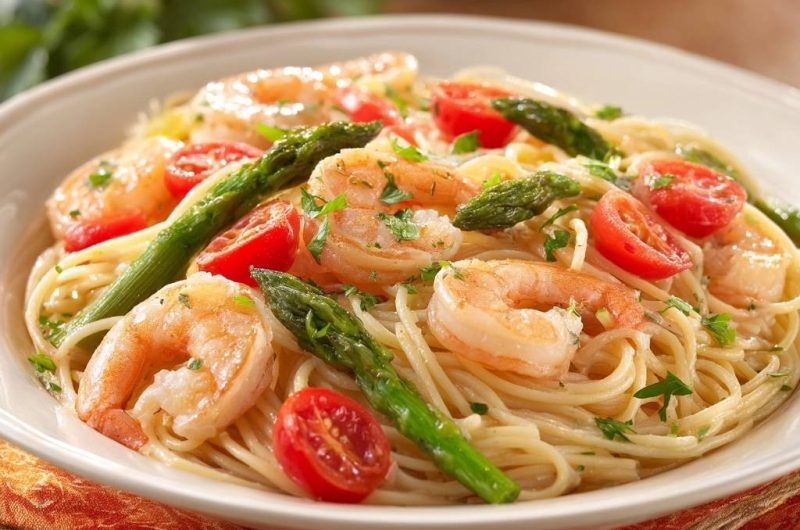
Garlic Shrimp Asparagus Pasta
Course: Main CourseCuisine: AmericanDifficulty: easy4
servings15
minutes20
minutes35
Minutes550
kcalAmerican
Ingredients
8 ounces spaghetti
1 pound large shrimp, peeled and deveined
1 bunch asparagus, trimmed and cut into 2-inch pieces
1 pint cherry tomatoes, halved
1/4 cup fresh parsley, chopped
3 tablespoons olive oil
3 tablespoons butter
4 garlic cloves, minced
Salt and black pepper to taste
Directions
- Cook spaghetti in salted boiling water according to package until al dente. Drain, reserving 1/2 cup pasta water, and set aside.
- Pat shrimp completely dry with paper towels. This is key: dry shrimp sear fast without steaming, preventing rubberiness. Season with salt and pepper.
- Heat 2 tablespoons olive oil in a large skillet over high heat until shimmering (about 1 minute). Add shrimp in a single layer. Sear 1-2 minutes per side until just pink and opaque. Do not overcook, remove immediately to a plate. This high-heat blast creates a quick crust that seals juices inside.
- In same skillet, reduce heat to medium. Add remaining 1 tablespoon olive oil, butter, and garlic. Saute 30 seconds until fragrant.
- Add asparagus and tomatoes. Cook 4-5 minutes, stirring, until asparagus is crisp-tender and tomatoes soften and burst, creating sauce. Add reserved pasta water if needed for silkiness.
- Return shrimp to skillet. Toss in spaghetti and half the parsley. Heat 1 minute to warm shrimp through without recooking.
- Serve garnished with remaining parsley. Enjoy tender shrimp perfection!
Notes
- Pat shrimp completely dry with paper towels before searing—this is key to preventing rubberiness. Do not overcook shrimp; remove immediately when just pink and opaque.