Forget the harsh, dry heat of a metal sheet pan that often leaves your dinner charred on the outside and raw in the middle. While roasting on a flat tray is popular, it frequently results in shriveled carrots and dried-out meat. This recipe shifts the focus to a deep glass baking dish to create a succulent, tender medley that feels like a warm hug in a bowl.
The secret lies in the “Gentle Steam Method,” which utilizes the high sides of a glass vessel to trap natural moisture. Instead of losing all those delicious juices to evaporation, the vegetables braise slightly in the rendered fats from the sausage. You’ll get a buttery, fork-tender texture that a metal pan simply can’t replicate.
I’ve found that the key to this dish is the thermal consistency of the glass. Because glass heats more evenly than thin metal, you won’t deal with those annoying “hot spots” that burn your onions before the potatoes are soft. It’s a foolproof way to ensure every bite is perfectly cooked and incredibly moist.
The Thermal Advantage of Glass Bakeware
Understanding your equipment is the first step to becoming a better cook. Glass is an insulator rather than a conductor, which means it takes a little longer to get hot but holds onto that heat with incredible persistence. This steady temperature is exactly what dense root vegetables like carrots and squash need to break down their tough fibers.
When you use a metal pan, the surface temperature can fluctuate wildly every time you open the oven door. Glass acts as a heat reservoir, protecting your ingredients from these shifts. This prevents the edges of your onions from scorching and ensures the internal temperature of the medley remains uniform throughout the forty-five-minute bake.
Essential Components for the Vegetable Medley
Quality ingredients make or break a simple bake like this. I always reach for Yukon Gold potatoes because they have a naturally waxy texture and a built-in buttery flavor. Unlike starchy Russets, which can turn grainy or fall apart, Yukon Golds hold their shape while becoming incredibly creamy inside the glass dish.
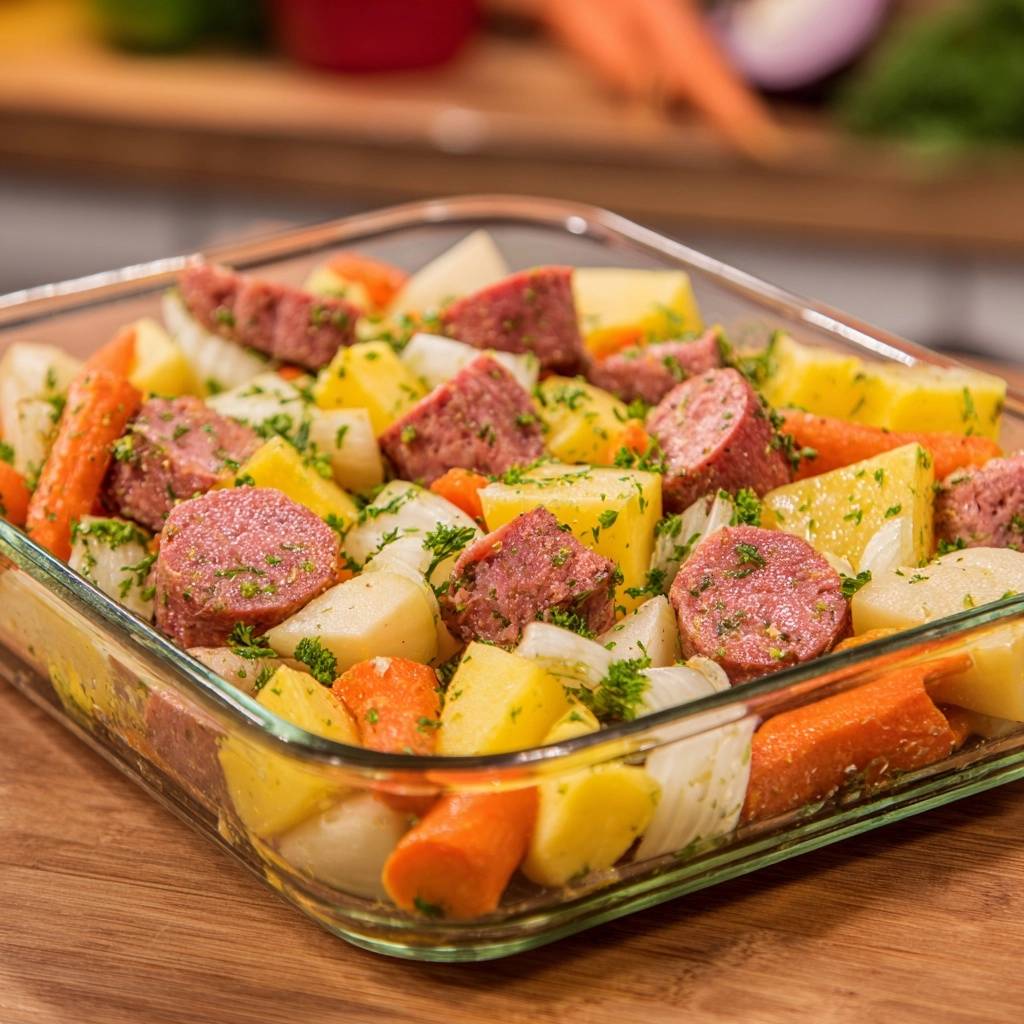
Uniformity is your best friend when prepping the butternut squash and carrots. If you chop the squash into tiny pieces but leave the carrots in thick chunks, you’ll end up with squash puree and crunchy carrots. Aim for thick batons for the carrots and one-inch cubes for the squash to ensure everything reaches that perfect fork-tender stage at the same time.
Selecting High-Quality Sausage Links
The sausage is the engine of this dish, providing both protein and the “sauce” that flavors the vegetables. Look for fresh beef, lamb, or chicken Italian sausages with natural casings. Avoid the pre-cooked or frozen varieties found in the deli aisle, as they won’t release enough juice to properly baste the vegetables.
As the raw sausage cooks, the fat renders out and mingles with the olive oil and herb seasoning. This liquid gold pools at the bottom of the glass dish, essentially slow-cooking the bottom layer of potatoes. Using fresh links ensures you get the maximum amount of moisture and flavor into the entire medley.
The Role of Aromatic Herbs and Fats
I prefer using dried thyme and garlic powder for this long roasting process. While fresh herbs are lovely, they often burn and turn bitter when exposed to forty-five minutes of oven heat. Dried herbs are more resilient and slowly rehydrate in the vegetable juices, deeply infusing the dish with earthy notes.
Olive oil serves as the essential heat transfer medium here. It coats the vegetables, helping the heat penetrate the dense centers while preventing them from sticking to the glass. Don’t be stingy with the oil; it combines with the sausage drippings to create a rich, savory coating for every ingredient.
Preparing the Glass Dish Sausage and Root Vegetable Medley
Preparation starts in a large mixing bowl rather than the baking dish itself. You want to toss the cubed potatoes, carrots, squash, and onions thoroughly with the oil and spices. This ensures every single surface is coated in lipids and seasoning, which is vital for flavor distribution.
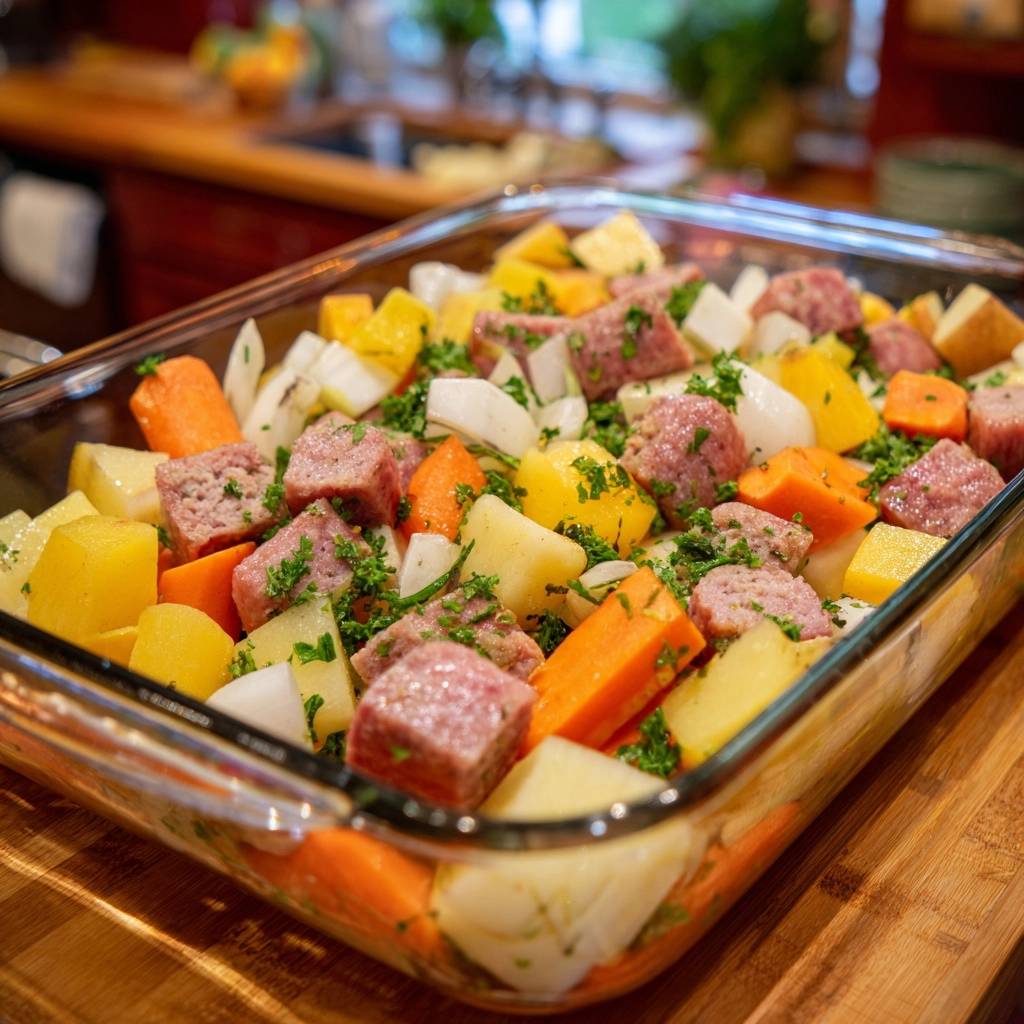
Once everything is well-coated, transfer the mixture to your 9×13 inch glass dish. Don’t worry if the vegetables are piled on top of each other. In a sheet pan recipe, crowding is a sin, but here, it’s a requirement. That layering is exactly what creates the micro-pockets of steam needed for the “Gentle Steam Method.”
Layering for the Gentle Steam Effect
The physics of a deep glass dish are fascinating. Because the ingredients are nestled together, the moisture released by the onions and squash can’t immediately escape. It stays trapped between the layers, softening the fibers of the carrots and potatoes from the inside out.
This environment mimics a very light braise. You aren’t boiling the vegetables, but you aren’t dehydrating them either. The result is a texture that is remarkably soft and succulent, far superior to the often-leathery results of high-heat roasting on a flat tray.
Strategic Sausage Placement
Don’t just throw the sausage on top of the vegetables. You need to “nestle” the chunks down into the medley. Use your hands or a spoon to tuck the sausage pieces into the gaps so they are surrounded by the potatoes and squash.
This placement is strategic. As the heat hits the sausage, the rendered fats and savory juices flow directly onto the vegetables below. It acts as a natural flavor enhancer, seasoning the potatoes with the spices from the meat as they cook together in the dish.
Oven Management and Thermal Timing
Set your oven to 375 degrees F and let it fully preheat. This moderate temperature is the “sweet spot” for glass bakeware. It’s hot enough to cook the meat safely but gentle enough to prevent the bottom of the dish from scorching before the vegetables are done.
The most important rule is the “no-stir” rule for the first thirty minutes. You need to let the heat build steadily within the glass walls to establish that steaming effect. If you stir too early, you release the trapped moisture and slow down the cooking process for the dense root vegetables.
Avoiding Common Roasting Mistakes
One common pitfall is cutting the vegetables too small, which can lead to a mushy consistency. Keep your cubes around one inch thick. Also, never place a cold glass dish directly into a screaming hot oven or onto a wet surface, as thermal shock can cause the glass to shatter.
If your vegetables seem tough after forty minutes, it’s usually because the oven wasn’t fully preheated. Always give your oven at least fifteen minutes to reach the target temperature. This ensures the glass starts absorbing heat the moment it enters the rack.
Optimal Pairings for a Hearty Medley
Since this dish is rich and savory, it pairs beautifully with something high in acid. A crisp arugula salad tossed in a sharp lemon vinaigrette provides a refreshing contrast to the buttery potatoes. The peppery bite of the greens cuts through the richness of the sausage perfectly.
You’ll also want a side of crusty sourdough bread. The bottom of the glass dish will be filled with a delicious mixture of olive oil, herb-infused juices, and sausage fat. Use the bread to mop up every last drop of that liquid gold so nothing goes to waste.
Storage and Reheating for Best Texture
Glass is the ultimate storage vessel because you can pop the lid on and put it straight in the fridge. This medley keeps beautifully for up to three days. The flavors actually deepen overnight as the vegetables continue to soak up the seasoning.
When reheating, avoid the microwave if possible, as it can make the sausage rubbery. Instead, place the portion back in the oven at 350 degrees F for about fifteen minutes. This maintains the integrity of the root vegetables and keeps the sausage juicy and tender.
Troubleshooting Your Root Vegetable Bake
Can I use glass for higher temperatures than 375 degrees?
Most modern tempered glass dishes are safe up to 425 degrees F, but I don’t recommend it for this specific recipe. Higher heat defeats the purpose of the “Gentle Steam Method” and increases the risk of the natural sugars in the squash burning against the glass.
Why are my carrots still hard while the squash is soft?
Carrots are much denser than butternut squash. If this happens, it means the carrots were likely cut too thick. Next time, slice the carrots into thinner batons or slightly smaller pieces than the squash to ensure they finish cooking at the same time.
Can I add leafy greens like kale or spinach to this dish?
Yes, but timing is everything. If you add them at the start, they will turn to ash. Toss leafy greens into the dish during the last five minutes of cooking. The residual steam will wilt them perfectly without destroying their color or flavor.
What if I don’t have a 9×13 inch dish?
You can use a smaller, deeper casserole dish, but you may need to increase the cook time by five to ten minutes. The deeper the layer of vegetables, the longer it takes for the heat to reach the center. Just use the fork-tender test to be sure.
Why did my sausage casing get tough?
This usually happens if the sausage is sitting entirely on top of the vegetables and dries out. Make sure to nestle the pieces deeply into the medley so they stay moist. If they still seem dry, a light brush of olive oil on the casing before baking helps.
Enhancing the Dish with Fresh Garnishes
The final touch is a generous handful of fresh chopped parsley. Don’t wait for the dish to cool down; sprinkle it on the second it comes out of the oven. The residual heat from the glass dish is just enough to wilt the parsley slightly without cooking away its bright flavor.
This “residual heat wilt” activates the volatile oils in the herbs, releasing a fresh aroma that perfectly balances the heavy, roasted scents of the medley. It adds a necessary pop of color and a clean finish that makes the whole meal feel vibrant and professionally prepared.
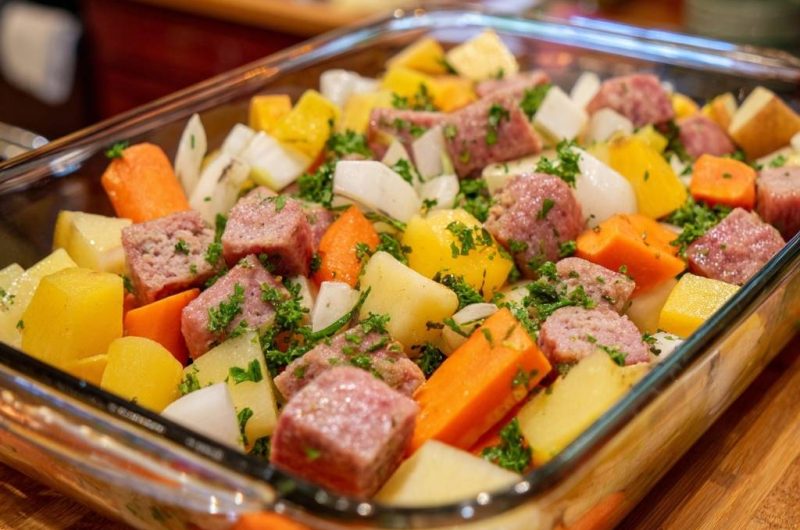
Glass Dish Sausage and Root Vegetable Medley
Course: Main CourseCuisine: AmericanDifficulty: easy4
servings15
minutes45
minutes60
Minutes410
kcalAmerican
Ingredients
1 pound fresh Italian sausage or bratwurst, cut into 1.5-inch thick chunks
3 large Yukon Gold potatoes, peeled and cut into large cubes
2 large carrots, peeled and sliced into thick batons
1 large yellow onion, cut into large chunks
1 small butternut squash, peeled and cubed
2 tablespoons olive oil
1 teaspoon dried thyme
1 teaspoon garlic powder
Salt and black pepper to taste
1/2 cup fresh parsley, finely chopped
Directions
- Preheat your oven to 375 degrees F. Unlike metal pans, glass retains heat differently; a moderate temperature prevents the bottom from scorching while the deep sides of the dish trap just enough steam to soften the dense root vegetables.
- In a large mixing bowl, toss the cubed potatoes, carrots, squash, and onions with the olive oil, thyme, garlic powder, salt, and pepper.
- Transfer the seasoned vegetables into a 9×13 inch glass baking dish. Spread them out, but do not worry if they are slightly layered; this helps the vegetables steam-cook to a tender consistency.
- Nestle the raw sausage chunks throughout the dish, ensuring they are distributed among the vegetables. As the sausage cooks, the juices will baste the vegetables below.
- Bake for 40 to 45 minutes. Do not flip or toss the ingredients during the first 30 minutes; this allows the heat to build steadily within the glass.
- At the 30-minute mark, gently stir the mixture once to ensure the sausage is cooking evenly and the vegetables are coated in the pan juices.
- Remove from the oven once the potatoes are easily pierced with a fork and the sausage is fully cooked through.
- Garnish very generously with the fresh chopped parsley while the dish is still hot. The residual heat will wilt the parsley slightly, releasing its aroma into the medley. Serve directly from the glass dish.
Notes
- Using a glass vessel and a slightly lower temperature allows the ingredients to steam-cook in their own juices. Do not flip the ingredients for the first 30 minutes to allow heat to build steadily.