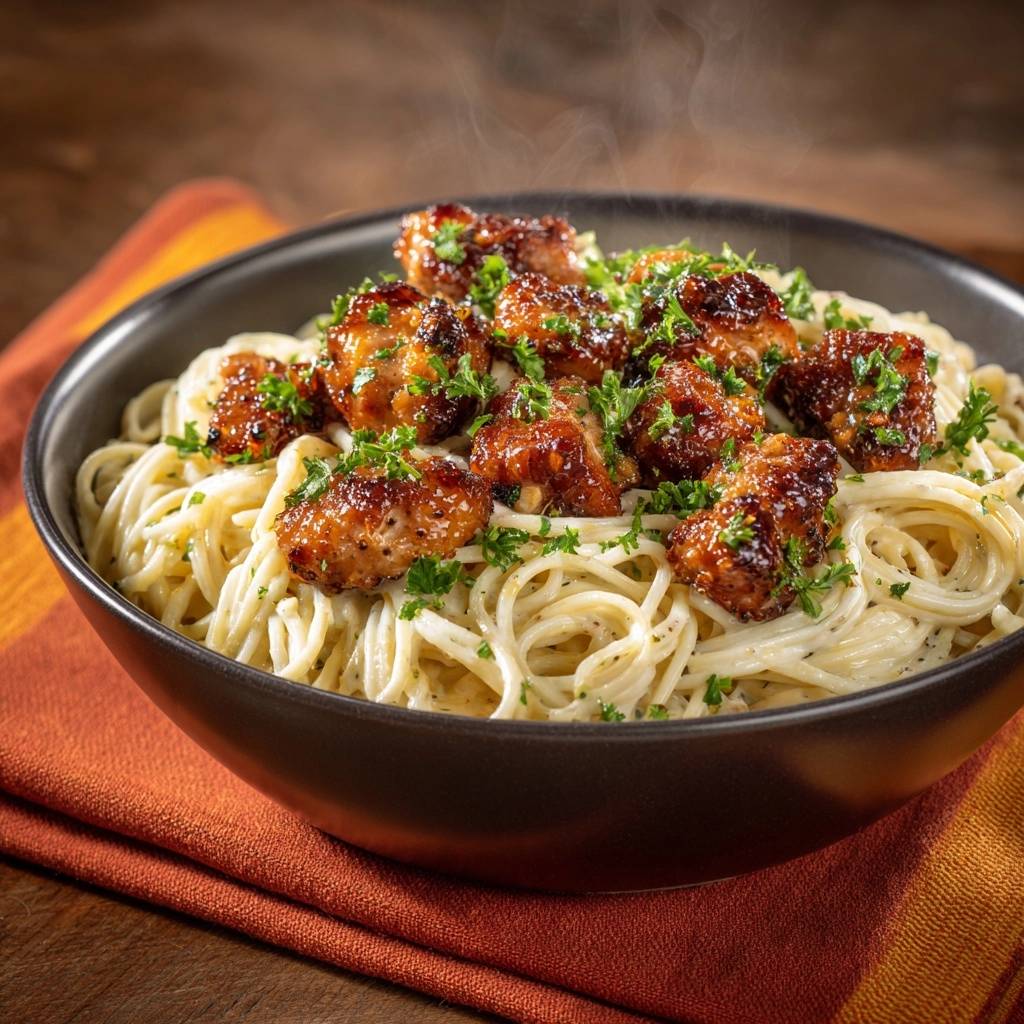
Ever bitten into a noodle bowl only to hit dry, tough chicken? You don’t have to anymore. This glazed chicken noodles recipe uses a quick 10-minute velveting trick that locks in juices for succulent, glossy pieces every time. Dinner’s ready fast, with that perfect sticky glaze clinging just right.
Here’s why it works so well. Most home cooks skip velveting, so their chicken steams instead of sears, turning chewy. However, this method creates a cornstarch shield that traps moisture during high heat. In addition, the honey-soy glaze thickens beautifully without overcooking anything.
The real secret? Toss the chicken with cornstarch, a splash of soy, and oil at room temperature for 10 minutes. It forms a barrier that gelatinizes on sear, keeping bites juicy. You’ll taste the difference in every forkful of these glazed chicken noodles.
Why Velveting Transforms Glazed Chicken Noodles
Velveting changes everything in glazed chicken noodles. The cornstarch coating seals juices tight during the hot sear. Therefore, you avoid the dry chicken pitfall that plagues standard stir-fries.
Picture this: without it, chicken releases water and toughens. But with velveting, it stays plump and glossy. In addition, the glaze sticks better to that protected surface, creating irresistible shine.
Science of Cornstarch Coating
Cornstarch gelatinizes above 144°F, forming a thin protective layer around each chicken cube. This barrier prevents direct heat from squeezing out moisture until it hits safe 165°F inside. Thighs bring richer flavor and forgive slight overcooking, while breasts stay leaner. However, always cut uniform 1-inch pieces for even results in your glazed chicken noodles.
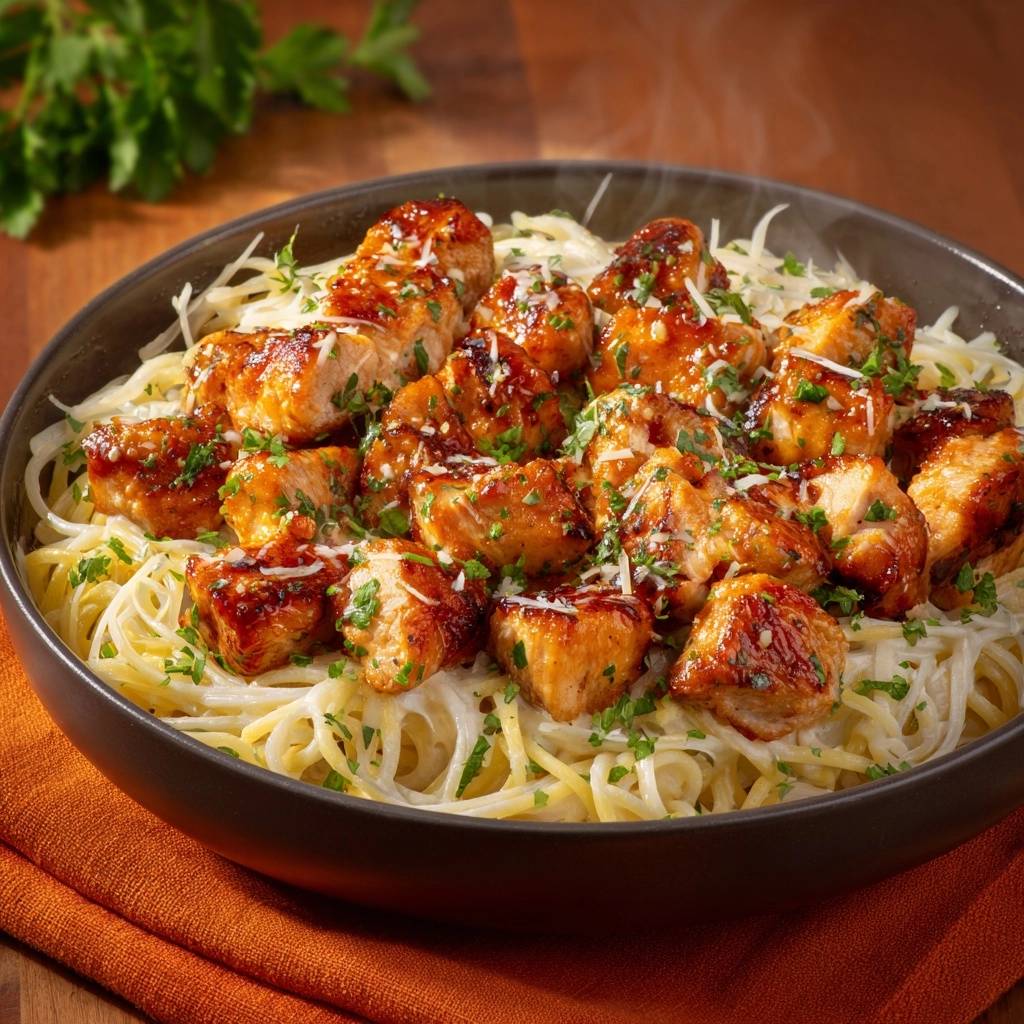
10-Minute Prep Benefits
Room-temp rest lets the coating adhere evenly without fridge chill slowing things down. It beats overnight marinating since you get juicy results quicker. Plus, that velvety base grabs the sticky glaze perfectly in glazed chicken noodles.
Key Ingredients for Juicy Glazed Chicken Noodles
Low-sodium soy sauce balances the honey’s sweetness without overpowering saltiness. Fresh minced garlic releases aroma that infuses the glaze deeply. In addition, parsley adds a bright, herby pop at the end. These make 4 servings packed with lean protein.
Honey creates that clingy texture when simmered down. Cornstarch in the velvet and sauce thickens everything just right. Therefore, grab 8 ounces spaghetti for hearty chew that holds the glaze well.
Protein: Chicken Breast or Thigh Cubes
Use 1 pound boneless chicken, cut into 1-inch cubes for quick, even cooking. Thighs offer juicier, bolder taste; breasts keep it light. Uniform size ensures every piece glazes perfectly without dry edges.
Sauce Base: Soy, Honey, Garlic Blend
Mix 1/4 cup low-sodium soy and honey each, plus 1/4 cup water for simmering. Add garlic last-minute to avoid bitterness. Cornstarch slurry activates at simmer, turning it thick and sticky for glazed chicken noodles.
Noodles and Finishers: Spaghetti with Parsley
8 ounces spaghetti gives satisfying bite over thinner noodles. Rinse cold and oil-toss to stop sticking. Chopped parsley brightens the rich glaze without stealing the show.
Essential Tools for Perfect Glazed Chicken Noodles
A large skillet or wok handles high-heat searing best. It lets you spread chicken in a single layer for crisp edges, not steam. In addition, use a pot for boiling noodles al dente and a thermometer for 165°F doneness. Budget carbon steel works great without fancy prices.
High-Heat Skillet or Wok Choice
Carbon steel heats to shimmer fast and releases food easily. Pick 12-inch size for 1-pound batches without crowding. Skip nonstick; it can’t take the high temps needed for golden sear in glazed chicken noodles.
Velveting Phase: Locking Juices in Chicken
Start with 1 pound chicken cubes in a bowl. Toss with 1 tablespoon each soy sauce, oil, and cornstarch. Let sit 10 minutes at room temp; you’ll see a light, even coat form. This step guarantees no dry chicken in your glazed chicken noodles.
Mix gently by hand for full coverage. Don’t overwork it, or the coating breaks. However, that brief rest transforms tough meat into tender bites.
Coating Technique Breakdown
Massage cubes lightly with your fingers for even distribution. Room temp speeds absorption over cold fridge time. Therefore, the coat sets firm yet thin, ready for searing without clumping.
Boiling and Prepping Noodles Right
Boil 8 ounces spaghetti in salted water 8 minutes till al dente, firm to the bite. Drain, rinse cold to stop cooking, and toss with a drizzle of oil. This keeps them separate and ready to mingle with glaze.
Spaghetti’s thickness clings to sauce better than rice noodles. Fully drain to avoid watery glazed chicken noodles later. Pro tip: taste one for perfect chew.
Al Dente Timing Precision
Fork-test at 7 minutes; it should offer resistance. Overcooking turns them mushy, diluting your glaze. Therefore, pull early for ideal texture in glazed chicken noodles.
Searing Chicken for Golden Exterior
Heat 1 tablespoon oil in skillet till shimmering hot. Add velveted chicken in a single layer; sear 2-3 minutes per side till golden. Check 165°F inside, then plate to rest. Juices stay locked for the glaze stage.
Listen for sizzle; it means right heat. Batches prevent steaming. In addition, that golden crust smells amazing and tastes even better.
Avoiding Crowding in the Pan
Crowding drops temp, steaming chicken pale and dry. For 1 pound, do two batches in a 12-inch pan. Therefore, you get crisp sear every piece for superior glazed chicken noodles.
Building the Sticky Glaze Sauce
Drop heat to medium, add garlic, stir 30 seconds till fragrant. Mix 1/4 cup honey, remaining soy, and water; pour in and simmer. It bubbles and thickens as cornstarch activates, filling your kitchen with sweet-savory scent.
Stir constantly to prevent burn. The glaze turns syrupy fast. However, don’t boil hard or it separates.
Garlic and Simmer Balance
30 seconds max keeps garlic punchy, not bitter. Simmer 1-2 minutes reduces for clingy glaze. Perfect for coating chicken without sogginess.
Coating and Combining Glazed Chicken Noodles
Return chicken to skillet, toss 1-2 minutes in glaze till sticky and shining. Add prepped spaghetti; gently mix to coat lightly. Off heat, sprinkle parsley. Serve hot in bowls for peak juiciness.
Gentle toss preserves noodle shape. That glaze aroma hits hard now. Pro tip: eat immediately to savor the fresh gloss.
Final Toss for Even Glaze
Use tongs to weave noodles through chicken without snapping. Aim for light coat, not drenched. Sticky holds better than saucy in glazed chicken noodles.
Avoiding Dry Chicken in Glazed Noodles
Oversear past 165°F dries it out; rest on plate saves juices. Crowding steams instead of browning, so batch always. If glaze thins, whisk in extra cornstarch slurry. Velveting skips most issues in glazed chicken noodles. Tweak salt and pepper fresh for zing.
Overcook Recovery Tactics
Don’t chase higher temps; 165°F is safe and juicy. Resting redistributes moisture inside. Therefore, chicken stays tender even if slightly past.
Flavor Twists on Glazed Chicken Noodles
Add 1 teaspoon grated ginger to velvet for zing. Or stir in 1 tablespoon sriracha to honey mix for heat that balances sweet. Toss broccoli florets in pre-chicken sear for crunch. Tofu cubes velvet the same for veggie swap. Each keeps the juicy core of glazed chicken noodles.
Peppers bring color and pop when added with garlic. Double honey for extra stick. However, taste as you go to nail balance.
Spicy Sriracha Glaze Upgrade
Whisk 1 tablespoon sriracha into honey-soy. It adds kick without overwhelming sweet. Simmer same time for mellow heat.
Veggie-Packed Noodle Bowl
Stir-fry broccoli or peppers 2 minutes before chicken. They soften just right, soaking up glaze. Keeps protein front and center.
Pairing Sides with Glazed Chicken Noodles
Crisp cucumber salad cuts the sticky richness perfectly. Steamed bok choy adds gentle green. Sesame rice soaks extra glaze. Green tea refreshes the palate clean.
Fresh contrasts make the bowl shine. Iced jasmine tea pairs cool and floral. Therefore, every bite feels balanced.
Quick Cucumber Refresh
Slice cucumber thin, toss with rice vinegar, pinch sugar, salt. Chill 5 minutes. It crunches against warm glazed chicken noodles.
Storage and Reheating Glazed Chicken Noodles
Store leftovers in airtight container up to 3 days in fridge. Freezes well for 2 months if noodles separate from chicken-glaze. Reheat in skillet over low with splash of water; stir till glossy again. Skip microwave to avoid mush.
Portion before freezing for easy meals. That velvet keeps texture even thawed.
Freezer Prep Steps
Flash-freeze chicken-glaze on tray, then bag. Thaw overnight in fridge. Skillet revive restores glaze shine and noodle bite.
Troubleshooting Glazed Chicken Noodles
Pale chicken? Crank heat higher next time. Watery glaze needs more simmer or fresh slurry. Sticky noodles? Rinse colder and oil more. Bland? Up soy gradually. Tough meat means weak velvet; double-check coating time. Fixes keep your glazed chicken noodles flawless.
Glaze Not Thickening
Simmer longer or remix cornstarch slurry before adding. Heat activates it fully. Stir steady for smooth cling.
Tough Chicken Fixes
Velvet 10 full minutes minimum. Cut smaller uniform cubes. Therefore, juices lock in tight during sear.
FAQ
How do I store leftovers of glazed chicken noodles?
Keep in an airtight container in the fridge for up to 3 days. For freezing, portion chicken and glaze separate from noodles in freezer bags; it holds up 2 months without mush. Thaw overnight, then reheat in a skillet with a tablespoon water over low heat, stirring till the glaze revives and noodles loosen perfectly.
Why is my chicken tough in glazed chicken noodles?
Toughness comes from skipping or rushing the velveting step, letting juices escape during sear. Always coat evenly with cornstarch, soy, and oil, then rest 10 minutes at room temp. In addition, cut 1-inch uniform cubes and sear high-heat in batches to avoid steaming; hit exactly 165°F internal for tender results every time.
Can I substitute ingredients in glazed chicken noodles?
Swap chicken thighs for breasts or firm tofu cubes; velvet them the same for juiciness. No honey? Maple syrup works 1:1 for stickiness. Gluten-free? Use tamari instead of soy and rice noodles, but boil to al dente since they cook faster. Low-sodium soy is key to prevent oversalt with the glaze.
Why isn’t my glaze sticky enough?
It needs full simmer to reduce and activate cornstarch; don’t rush off heat. If thin, mix 1 teaspoon cornstarch with cold water into a slurry, stir in gradually. Also, high initial heat on chicken builds fond that thickens sauce naturally. Taste and adjust honey for perfect cling without cloying sweet.
How do I know when the chicken is done searing?
Sear till golden 2-3 minutes per side, then check internal temp hits 165°F with a thermometer for safety and juiciness. Visual cues include firm texture and no pink inside. Rest on plate post-sear; juices redistribute, preventing dryness when tossed in glaze.
Can I make glazed chicken noodles ahead of time?
Velvet and sear chicken up to 1 day ahead, store chilled. Boil noodles fresh or parboil and oil-toss for quick finish. Rebuild glaze in skillet; it reheats glossy in 2 minutes. However, serve immediately after tossing for best noodle texture and chicken tenderness.
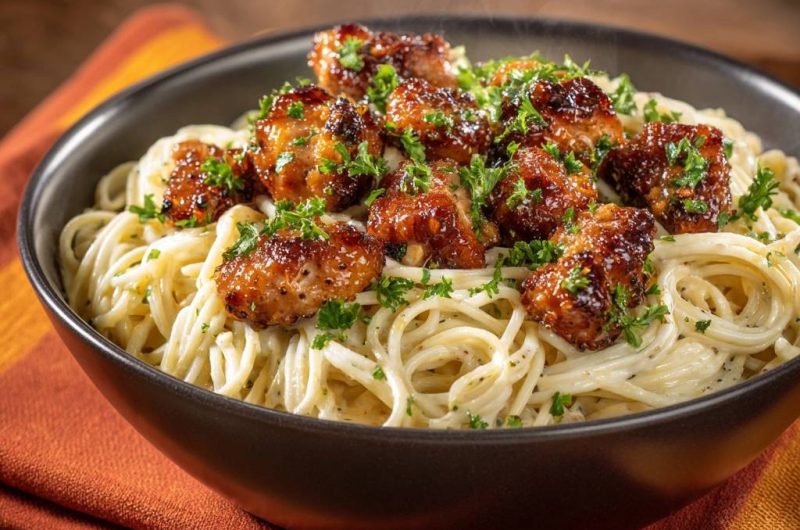
Glazed Chicken Noodles
Course: Main CourseCuisine: AmericanDifficulty: easy4
servings15
minutes15
minutes30
Minutes450
kcalAmerican
Ingredients
1 pound boneless chicken breast or thigh, cut into 1-inch cubes
8 ounces spaghetti
1/4 cup low-sodium soy sauce
1/4 cup honey
4 garlic cloves, minced
2 tablespoons vegetable oil, divided
1 tablespoon cornstarch
1/4 cup water
1/4 cup chopped fresh parsley
Salt and pepper to taste
Directions
- Velveting step to prevent dry chicken: In a bowl, toss chicken cubes with cornstarch, 1 tablespoon soy sauce, and 1 tablespoon oil. Mix well to coat evenly. Let sit 10 minutes at room temperature. This seals in moisture for juicy results no matter how you cook.
- Cook spaghetti in salted boiling water until al dente, about 8 minutes. Drain, rinse under cold water, toss with a drizzle of oil to prevent sticking, and set aside.
- Heat remaining 1 tablespoon oil in a large skillet or wok over high heat until shimmering. Add chicken in a single layer (work in batches if needed to avoid crowding). Sear 2 to 3 minutes per side until golden and cooked through, about 165 degrees F inside. Remove to a plate.
- Lower heat to medium. In same skillet, add garlic and stir 30 seconds until fragrant. Mix honey, remaining soy sauce, and water; pour in and bring to simmer.
- Return chicken to skillet. Toss to coat in glaze 1 to 2 minutes until thickened and sticky. Remove from heat immediately to keep chicken juicy.
- Add cooked spaghetti to skillet. Toss gently to combine, coating noodles lightly with glaze.
- Divide into bowls, sprinkle with parsley, and serve hot.
- The velveting coat creates a barrier that traps juices during high-heat searing, delivering tender chicken with perfect glossy glaze every single time.
Notes
- The velveting coat creates a barrier that traps juices during high-heat searing, delivering tender chicken with perfect glossy glaze every single time.