Why Glazed Orange Muffins Transform Baking
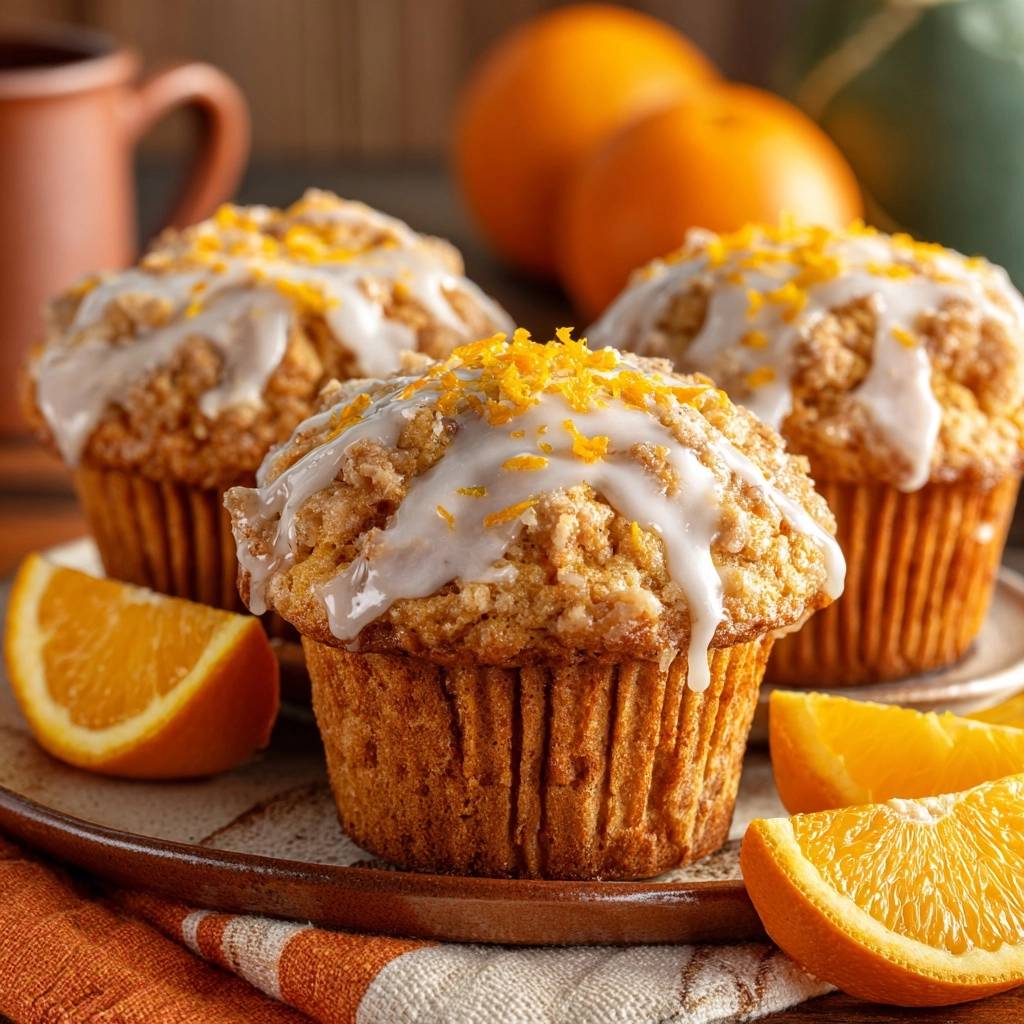
Picture biting into a muffin where the crumb stays juicy and tender days later, bursting with fresh orange zing. Most orange muffins turn dry and crumbly because butter hardens as it cools. However, this recipe swaps it for oil and gentle folding, locking in moisture that beats takeout bakery versions every time.
Therefore, you get that perfect citrus explosion in every bite, with a glaze that sets glossy without sogginess. In addition, the tender texture holds up, making these ideal for breakfast rushes or snack stashes. You’ll crave the sweet-tart balance that lingers on your tongue.
The real game-changer? Oil emulsifies smoothly with the wet ingredients, coating flour proteins for unbeatable hydration. Plus, folding just 10-12 strokes stops tough gluten from forming. That one tip delivers bakery-level results right in your kitchen.
Key Ingredients for Perfect Glazed Orange Muffins
Start with 2 cups all-purpose flour for structure without heaviness. However, the 3/4 cup granulated sugar doesn’t just sweeten; it tenderizes the crumb by interfering with gluten strands. In addition, 2 teaspoons baking powder and 1/2 teaspoon baking soda team up for optimal lift, creating those pretty domes.
Then there’s 1/2 cup vegetable oil, 2 large eggs, 3/4 cup fresh orange juice, zest from 2 large oranges, and 1 teaspoon vanilla. For the glaze, whisk 1 cup powdered sugar with 2-3 tablespoons fresh orange juice and 1 teaspoon zest. Each plays a starring role in moisture and flavor punch.
Oil’s Role in Moist Glazed Orange Muffins
Vegetable oil stays liquid, emulsifying with eggs and juice to hydrate every bite deeply. Unlike butter, which solidifies and dries out muffins, oil prevents that stale feel even on day three. Therefore, you avoid greasy results by folding gently; it creates an even, fluffy crumb instead.
Applesauce works as a sub, but it adds steam that can make tops gummy. Stick to oil for that pro-level tenderness. Freshly squeezed juice amps the oils for brighter taste too.
Fresh Citrus Zest and Juice Precision
Zest from 2 large oranges gives about 2 tablespoons of intense, volatile oils that bottled stuff lacks. Meanwhile, 3/4 cup fresh juice adds tang without watering down the batter. Vanilla ties it together subtly, rounding out the citrus pop.
Therefore, grate only the orange part; the white pith bitters things up. This precision keeps flavors bold and balanced.
Science of Tender Glazed Orange Muffins
Gentle folding limits gluten development, so glutenin and gliadin proteins don’t toughen the crumb. Leavening agents release gases at 375°F, pushing up tall domes while Maillard reaction browns the tops golden. Oil’s emulsion holds moisture stable through baking and cooling.
However, overmixing activates too much gluten early. In addition, that exact oven temp ensures even rise without cracking. You’ll see the batter transform from streaky to smooth ribbons in seconds.
Gentle Folding Prevents Gluten Overdevelopment
Fold just 10-12 strokes with a spatula until no flour streaks show. The batter looks lumpy at first, but that’s good; it means minimal gluten activation. Overmixing creates tunnels and toughness, so stop when it’s barely combined.
Oil Emulsion Locks in Moisture Long-Term
Hydrophobic oil coats flour proteins, trapping hydration that lasts days. Unlike shortening, it emulsifies better with citrus acids for stability. Test it: these stay moist while butter muffins crumble by day two.
Equipment Choices for Flawless Glazed Orange Muffins
Grab a standard 12-cup muffin tin for even baking; fill to 2/3 for perfect domes. A wire rack cools them fast, letting steam escape. Whisk wet ingredients vigorously, then switch to a spatula for folding.
In addition, use an oven thermometer; home ovens run hot or cold. Paper liners hold glaze well, but foil ones prevent sticking better. These picks make success foolproof.
Wire Rack Cooling Essentials
After 5 minutes in the tin, move to a wire rack. This stops condensation from soggy bottoms. At high altitude, cool longer to set structure.
Step-by-Step Glazed Orange Muffins Assembly
Preheat to 375°F and line your tin. Whisk dry ingredients evenly first. Blend wet until smooth, then fold gently. Bake, cool, and glaze for moist bliss.
Preheat and Tin Prep Phase
Hit 375°F for steady rise; lower temps flatten tops. Line with paper or foil cups; they grip batter and glaze nicely. Takes just minutes to set up.
Dry Ingredients Uniform Whisk
Whisk flour, sugar, baking powder, soda, and salt thoroughly. Even distribution avoids leavener pockets or tunnels. Salt sharpens the orange sweetness too.
Wet Blend for Smooth Emulsion
Use room-temp eggs and juice; whisk oil first, then add others to avoid curdling. It turns silky yellow fast. Smells like fresh citrus heaven already.
Gentle Fold and Batter Division
Pour wet into dry; fold 10-12 strokes max. Scoop evenly into cups, about 2/3 full, using an ice cream scoop for precision. Batter should look thick but streaky.
Bake and Toothpick Test
Bake 18-22 minutes; rotate halfway if your oven heats unevenly. Toothpick comes clean, tops spring back, and edges pull from liners. Overbake dries them out quick.
Avoiding Dry Glazed Orange Muffins Pitfalls
Overmixing builds gluten for tough bites; hot muffin tins from last bake steam the bottoms soggy. Bottled juice lacks fresh oils, muting flavor. Fluff flour before measuring to avoid dense results.
Therefore, check oven temp and fold gently every time. High altitude? Reduce baking powder slightly. These fixes keep every batch juicy.
Overmixing Leads to Tough Crumb
Batter goes from streaky to smooth-glossy when overdone; gluten tightens fast. Stick to 10-12 folds. Tough crumb means you mixed past that point.
Ingredient Temperature Mismatches
Cold eggs make oil seize into lumps; warm juice emulsifies best. Set them out 30 minutes early. This ensures smooth batter every time.
Flavor Twists on Glazed Orange Muffins
Fold in 1/4 cup poppy seeds for crunch or dried cranberries for chew. Swap vanilla for almond extract to deepen nuttiness. For glaze, thin with lemon juice or honey for twist.
However, add cardamom pinch to dry mix for warm spice. Keep ratios low so moisture stays locked. These keep the core tender and bright.
Citrus Swaps and Add-Ins
Try blood orange or grapefruit zest for deeper tang; same juice amount. Add chopped nuts or fruit up to 1/2 cup, tossed in flour to prevent sinking. Balances bold without sogginess.
Storage and Make-Ahead for Glazed Orange Muffins
Store unglazed muffins airtight at room temp up to 3 days; glaze keeps them soft. Freeze baked, unglazed ones in bags for 2 months. Thaw overnight, then glaze fresh.
Glaze alone lasts a week in fridge. Reheat gently in microwave 10 seconds for that just-baked warmth. Perfect for meal prep wins.
Pairing Ideas for Glazed Orange Muffins
Stack with yogurt and berries for breakfast parfaits. Pair with Earl Grey or herbal tea at tea time; the citrus cuts richness. For brunch, serve alongside fruit salad or cheese plate.
Therefore, they shine solo too, but these combos elevate the juicy crumb and glossy top.
Troubleshooting Glazed Orange Muffins Issues
Flat Tops or Tunnels Fixed
Old leaveners lose power; test by fizzing in vinegar. Rotate pans mid-bake for hot spots. Overmixing causes tunnels too.
Glaze Too Runny or Thick
Sift powdered sugar first; add juice 1 teaspoon at a time. Thick? More juice drop by drop. Sets perfect in 10 minutes.
Muffins Sticking to Liners
Spray liners lightly with oil. Use foil ones for glaze. Cool fully before storing.
Cracks or Uneven Browning
Fill evenly to 2/3; uneven batter causes cracks. Rotate halfway, and tent foil if tops brown too fast.
FAQ
How do I store Glazed Orange Muffins and can they be frozen?
Keep unglazed muffins in an airtight container at room temperature for up to 3 days; they stay moist thanks to the oil. Freeze them in a single layer on a sheet, then bag for up to 2 months. Thaw at room temp and glaze fresh; avoid freezing glazed ones as the glaze gets weepy. Reheat in a 300°F oven for 5 minutes to revive texture.
Why are my Glazed Orange Muffins dry or tough?
Overmixing develops gluten, making them tough; fold only 10-12 strokes until streaks vanish. Also, measure flour by fluffing and spooning, not packing, to avoid density. Baking too long dries them out, so rely on the toothpick and spring-back test at 18-22 minutes.
Can I substitute ingredients in Glazed Orange Muffins?
Swap vegetable oil for neutral canola or melted coconut oil; avoid butter as it hardens. No fresh oranges? Use 3/4 cup bottled juice plus 1 tablespoon extract, but fresh zest is best for oils. Gluten-free flour works 1:1 with xanthan gum added; reduce liquid by 2 tablespoons.
Why don’t my Glazed Orange Muffins have domed tops?
Check leavener freshness; baking powder should bubble in hot water. Oven too low? Use a thermometer for true 375°F. Overfill cups past 2/3 or open door early, and they deflate. Gentle folding helps too.
How do I fix runny or thick glaze on Glazed Orange Muffins?
For runny, sift in more powdered sugar 1 tablespoon at a time; it thickens fast. Too thick? Add juice 1/2 teaspoon drops while whisking. Let it sit 10 minutes on cooled muffins; room temp juice prevents lumps. Zest adds texture hold.
Can I make Glazed Orange Muffins ahead for a crowd?
Bake and cool completely, then freeze unglazed up to 2 months. Thaw overnight, glaze, and serve; doubles or triples easily. Batter doesn’t sit well over 30 minutes, so bake in batches if needed. Yields 12 standard muffins.

Glazed Orange Muffins
Course: DessertCuisine: AmericanDifficulty: easy12
muffins15
minutes20
minutes35
Minutes250
kcalAmerican
Ingredients
2 cups all-purpose flour
3/4 cup granulated sugar
2 teaspoons baking powder
1/2 teaspoon baking soda
1/2 teaspoon salt
1/2 cup vegetable oil
2 large eggs
3/4 cup fresh orange juice
Zest of 2 large oranges (about 2 tablespoons)
1 teaspoon vanilla extract
For the glaze:
1 cup powdered sugar
2 to 3 tablespoons fresh orange juice
1 teaspoon orange zest
Directions
- Preheat oven to 375 degrees F. Line a 12-cup muffin tin with paper liners.
- In a large bowl, whisk together flour, sugar, baking powder, baking soda, and salt.
- In a separate bowl, whisk oil, eggs, orange juice, orange zest, and vanilla until smooth.
- Pour wet ingredients into dry. The no-dry-muffin secret: Oil stays liquid for unbeatable moisture (unlike butter that hardens), and fold gently with a spatula just 10-12 strokes until no flour streaks remain. Overmixing builds tough gluten; this keeps them fluffy and hydrated.
- Divide batter evenly into muffin liners, filling each 2/3 full.
- Bake 18 to 22 minutes, until a toothpick inserted in center comes out clean and tops spring back. Cool in tin 5 minutes, then transfer to wire rack.
- For glaze, whisk powdered sugar with 2 tablespoons orange juice until smooth and drizzle-thick (add more juice 1 teaspoon at a time if needed). Stir in zest.
- Drizzle glaze over cooled muffins. Let set 10 minutes. Enjoy moist perfection!
Notes
- Oil stays liquid for unbeatable moisture (unlike butter that hardens). Fold gently just 10-12 strokes to avoid tough gluten and keep them fluffy and hydrated.