Why Gochujang Chicken Thighs Transform Weeknight Dinners
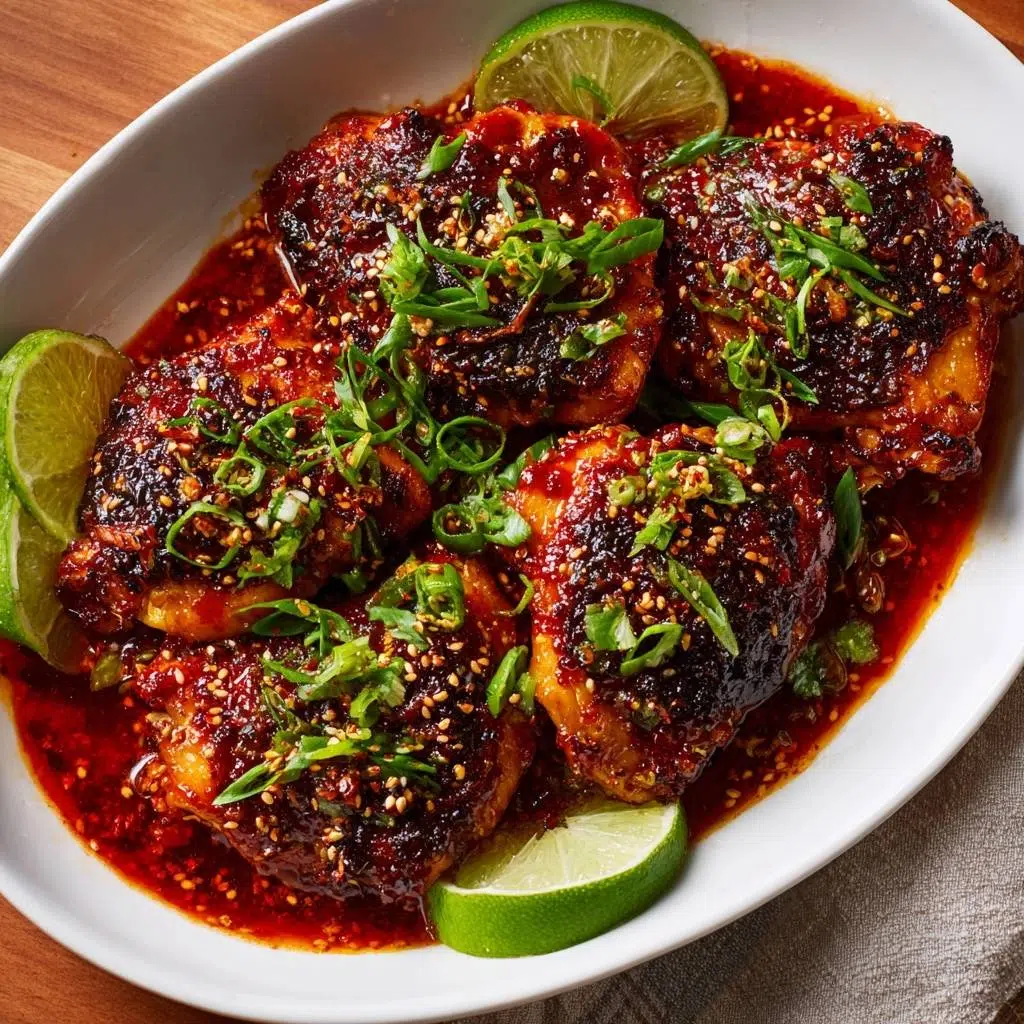
Picture this: chicken thighs so juicy they drip with every bite, skin crackling under a sticky gochujang glaze that hits sweet, spicy, and savory all at once. You’ve battled dry, tough chicken before, right? This Gochujang Chicken Thighs recipe fixes that with a sear-first method that renders fat to self-baste the meat.
Therefore, weeknights turn into flavor-packed feasts without the hassle. Bone-in, skin-on thighs beat breasts every time because the bone keeps moisture locked in while the skin crisps up perfectly. That Korean-inspired glaze? It balances fiery heat with honeyed caramel edges and deep umami.
Here’s the expertise pro tip: pat those thighs bone-dry before seasoning. Moisture steals the crisp from your skin, but this step guarantees golden perfection. Oh man, the caramelized char and tender bite will have you craving Gochujang Chicken Thighs on repeat.
Key Ingredients for Gochujang Chicken Thighs Glaze
Gochujang brings fermented chili depth that builds complex heat in your Gochujang Chicken Thighs. It’s the backbone, emulsifying with fat for that glossy stickiness. Grab authentic Korean brands from Asian markets; they’re thicker and punchier than watery supermarket versions.
Honey triggers caramelization, mellowing the spice while glazing everything shiny. Soy sauce layers umami base, so don’t skip it. Sesame oil adds nuttiness that lingers on the tongue.
Garlic and fresh ginger deliver sharp punch; grate ginger yourself for brighter zing over jarred stuff. Lime juice cuts through with brightness, and bone-in thighs stay non-negotiable for juiciness. Season with salt and pepper right before cooking to avoid drawing out moisture.
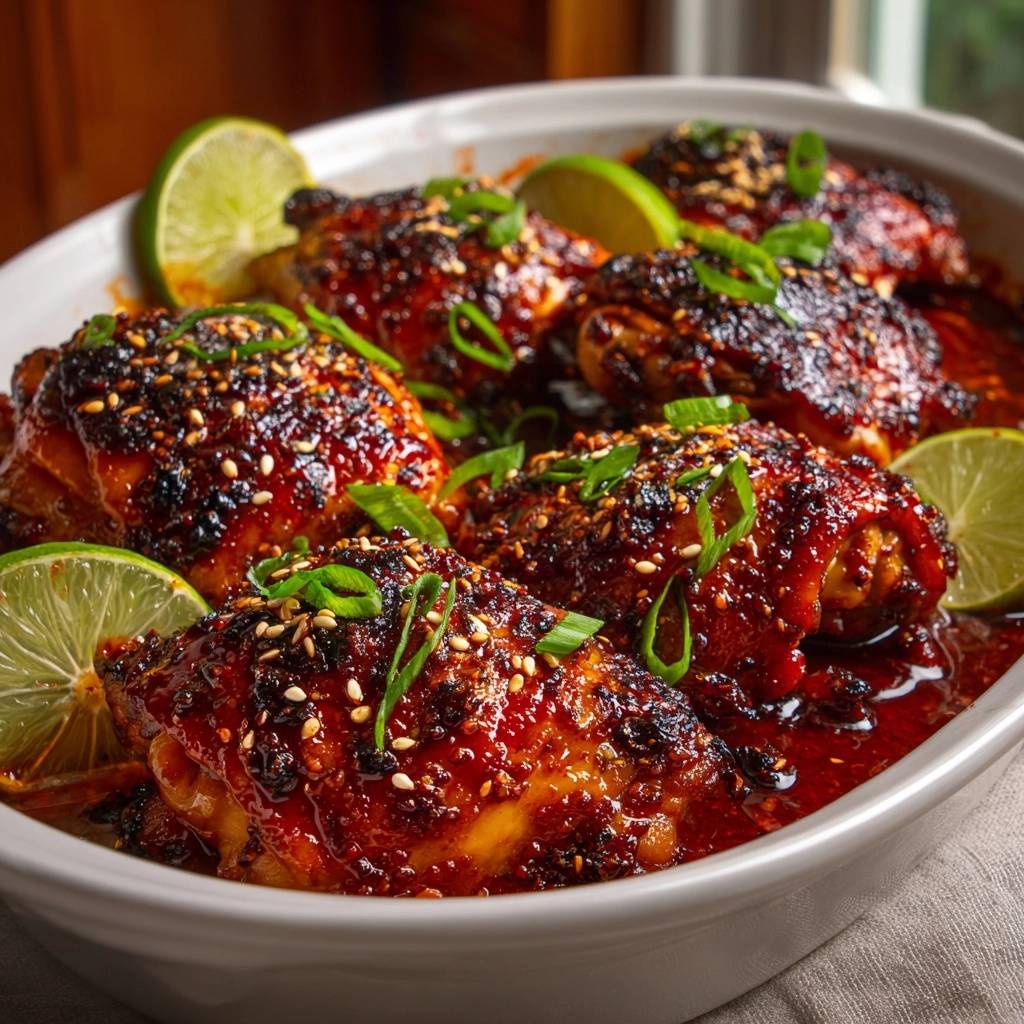
| Ingredient | Quantity | Sub Notes |
|---|---|---|
| Bone-in, skin-on chicken thighs | 8 | No subs; bones keep it juicy |
| Gochujang | 1/4 cup | Mild for less heat |
| Honey | 3 tbsp | Maple syrup works |
| Soy sauce | 3 tbsp | Low-sodium or tamari |
| Sesame oil | 2 tbsp | Toasted for extra nutty |
| Garlic, minced | 4 cloves | 1 tsp powder if rushed |
| Fresh ginger, grated | 1 tbsp | Fresh beats jarred |
| Lime juice | 1 lime | Rice vinegar alt |
| Scallions, sesame seeds | 1/4 cup, 2 tbsp | Green onions ok |
| Neutral oil | 2 tbsp | Vegetable or canola |
Bone-In Thighs vs. Boneless: Juiciness Science
Bones conduct heat evenly, so your Gochujang Chicken Thighs cook uniformly without drying out. They release gelatin during cooking, creating silky texture. Boneless versions? They overcook fast and turn stringy.
In addition, skin-on protects the meat, rendering fat that bastes from within. Skip boneless here; the bone’s your juiciness insurance.
Gochujang Paste: Fermentation and Heat Levels
Fermentation in gochujang gives umami depth beyond plain chili. Pick mild for family-friendly Gochujang Chicken Thighs or hot for fire-lovers. It stores in the fridge for months.
Most brands are vegan, and it emulsifies perfectly with chicken fat for clingy glaze. Therefore, no watery sauce issues.
Science of Crispy Skin in Gochujang Chicken Thighs
The Maillard reaction kicks in during undisturbed searing, browning proteins for crispy skin on your Gochujang Chicken Thighs. Fat renders at 140°F, pooling to self-baste and lock in juices. Pat dry first; wet skin steams instead of crisps.
Skin contracts tight as it renders, shrinking away from fat. This science promises no more dry thighs. Use medium-high heat for that deep golden edge.
| Stage | Temp | What Happens |
|---|---|---|
| Sear | Medium-high | Maillard + fat render |
| Simmer | Medium | Baste & tenderize |
| Char | Medium-high | Thicken glaze |
Rendered Fat: The Self-Basting Secret
Thigh fat melts low and slow, pooling in the pan to baste meat naturally. This prevents 90% of dryness in Gochujang Chicken Thighs. Oven methods can’t match the skillet’s control.
Therefore, flip only when fat pools; it’s your juicy signal.
Equipment Essentials for Gochujang Chicken Thighs
Cast-iron skillet shines for heat retention and fond buildup in Gochujang Chicken Thighs. Non-stick fails; it can’t handle high sear temps. Tongs flip without piercing skin.
Microplane grates ginger finely for even punch. Instant-read thermometer checks 165°F doneness. Budget Lodge cast-iron rocks; pro Le Creuset lasts forever.
| Tool | Why | Budget/Pro |
|---|---|---|
| Cast-iron skillet | Even heat, fond | Lodge / Le Creuset |
| Tongs | Safe flip | OXO / All-Clad |
| Microplane | Ginger zest | Basic / Kuhn Rikon |
| Thermometer | 165°F check | ThermoPro / Thermapen |
Step-by-Step: Searing Gochujang Chicken Thighs
Pat 8 bone-in, skin-on thighs dry, then season with salt and pepper. Heat 2 tbsp neutral oil in cast-iron over medium-high till shimmering. Add skin-side down in a single layer; don’t crowd.
Sear undisturbed 8-10 minutes. Look for deep golden skin and pooling fat; that’s your flip cue. Hot oil splatters, so use a splatter screen.
Glaze Prep During Sear
Whisk gochujang, honey, soy, sesame oil, garlic, ginger, and lime juice. Scrape the bowl clean for full flavor. Medium heat next prevents burning sugars.
Simmer and Char: Finishing Gochujang Chicken Thighs
Flip thighs, reduce to medium, pour glaze over, and scrape browned bits. Partially cover, simmer 15-20 minutes, flipping halfway. Spoon sauce often for even coat.
Uncover, crank to medium-high, cook 3-5 minutes till thickened and charred. Hit 165°F internally. Pro tip: rest 5 minutes post-cook for juice redistribution.
Emulsification Magic with Rendered Fat
Chicken fat binds the glaze into sticky sauce. Lime’s pH stabilizes it, preventing separation. Result? Clinging, glossy perfection on every Gochujang Chicken Thigh.
Avoiding Dry Gochujang Chicken Thighs: Pitfalls
Overcrowding steams instead of sears; use a big skillet. Flip too early, and skin stays pale. Low heat won’t render fat properly.
Skip the dry pat, and you’ll get soggy results. Overcook past 165°F, and meat toughens. Fix with longer low simmer if needed.
Troubleshooting Uneven Glaze or Pale Skin
Pale skin? Crank heat higher next time. Uneven glaze means more spooning; bland? Add gochujang. Tough meat needs extended simmer.
Flavor Twists on Gochujang Chicken Thighs
Swap honey for maple for earthier sweet. Rice vinegar replaces lime for tang. Boost heat with gochugaru flakes.
Veggie twist: tofu slabs sear same way. Low-sodium soy keeps it balanced. Double recipe for crowds; it scales easy.
Perfect Pairings for Gochujang Chicken Thighs
Sesame cucumber salad cools the heat. Kimchi fried rice soaks up sauce. Steamed bok choy adds crisp green.
Rice absorbs every sticky drop. Iced green tea refreshes; sparkling water with lime matches brightness. Build meal prep bowls for days.
Make-Ahead Gochujang Chicken Thighs Strategy
Marinate thighs in glaze up to 24 hours ahead. Cooked leftovers last 4 days in fridge. Freeze uncooked 3 months; glaze separate to avoid sogginess.
Reheat in 350°F oven to crisp skin; microwave toughens it. Pro tip: add fresh lime when reheating.
Gochujang Chicken Thighs: Common Queries
How do I store Gochujang Chicken Thighs leftovers?
Store in an airtight container in the fridge for up to 4 days. They reheat beautifully and stay juicy. Freeze cooked thighs up to 3 months; thaw overnight in fridge before oven-reheating at 350°F for 10-15 minutes to crisp skin. Avoid microwaving to prevent toughness.
Why are my Gochujang Chicken Thighs dry?
Dryness hits from skipping the long undisturbed sear or overcrowding the pan, which steams instead of rendering fat. Always pat dry first and sear skin-down 8-10 minutes till fat pools. Bone-in thighs help too; check 165°F internal temp and don’t over-simmer.
Can I substitute ingredients in Gochujang Chicken Thighs?
Use tamari for gluten-free soy sauce. Maple syrup swaps honey fine. No gochujang? Mix sriracha with miso, but it won’t match fermentation depth. Fresh ginger over jarred; rice vinegar for lime if needed. Bone-in thighs are best; boneless cuts 5 minutes off cooking.
Can I bake Gochujang Chicken Thighs instead?
Yes, preheat oven to 425°F. Sear skin-down on stovetop first for crisp, then bake skin-up 20-25 minutes, basting with glaze. Broil last 2 minutes for char. Skillet method edges it for fond, but oven works for hands-off.
How do I adjust spice in Gochujang Chicken Thighs?
Choose mild gochujang or up honey ratio for tame heat. Add gochugaru for more fire. Taste glaze before pouring; a squeeze of lime balances spice. Kids love extra honey version.
Can I make Gochujang Chicken Thighs in an air fryer?
Absolutely, at 400°F for 20 minutes skin-up, flipping halfway. Brush with oil and glaze midway. It crisps fast but watch for drying; basting keeps it juicy. Single layer only.
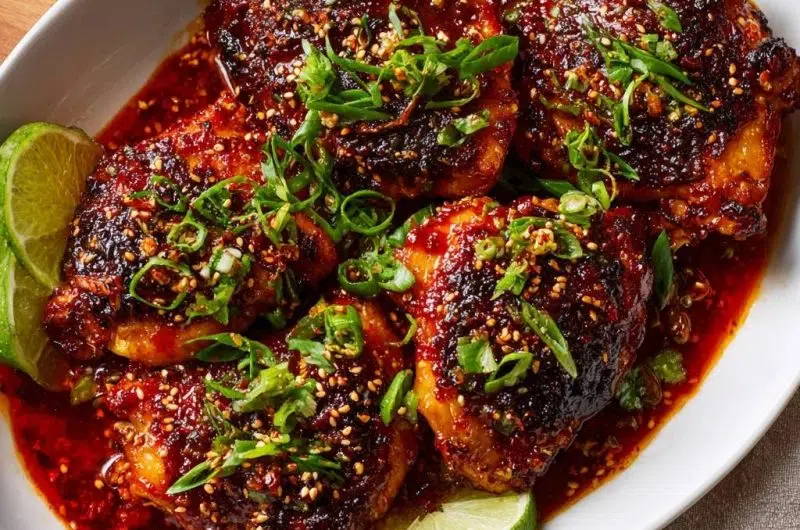
Gochujang Chicken Thighs
Course: Main CourseCuisine: KoreanDifficulty: easy4
servings15
minutes35
minutes50
MinutesKorean
Ingredients
8 bone-in, skin-on chicken thighs
1/4 cup gochujang
3 tablespoons honey
3 tablespoons soy sauce
2 tablespoons sesame oil
4 garlic cloves, minced
1 tablespoon grated fresh ginger
2 limes (juice of 1, plus wedges for serving)
1/4 cup chopped scallions
2 tablespoons sesame seeds
2 tablespoons neutral oil (like vegetable oil)
Salt and pepper to taste
Directions
- Pat chicken thighs dry with paper towels and season both sides with salt and pepper. This ensures crispy skin.
- Heat 2 tablespoons neutral oil in a large skillet over medium-high heat until shimmering. Place chicken skin-side down in a single layer. Here is the key to no more dry thighs: Sear undisturbed for 8-10 minutes. The skin renders its own fat, which bastes the meat underneath, keeping it juicy without drying out. Flip only when skin is deep golden and fat has rendered (you will see it pooling).
- While searing, whisk together gochujang, honey, soy sauce, sesame oil, garlic, ginger, and juice of 1 lime in a bowl to make the glaze.
- Reduce heat to medium. Pour glaze over chicken, scraping up any browned bits. Spoon sauce over thighs, cover partially, and simmer 15-20 minutes, flipping once halfway. The rendered fat from step 2 emulsifies into the sauce for perfect stickiness and moisture lock-in.
- Uncover, increase heat to medium-high, and cook 3-5 more minutes, spooning glaze over top until thickened and charred in spots.
- Remove from heat. Garnish with chopped scallions, sesame seeds, and lime wedges. Serve hot with extra lime for brightness. The thighs stay juicy for days in the fridge!
Notes
- The key to juicy thighs: Sear skin-side down undisturbed for 8-10 minutes to render fat and self-baste. Leftovers stay juicy for days in the fridge!