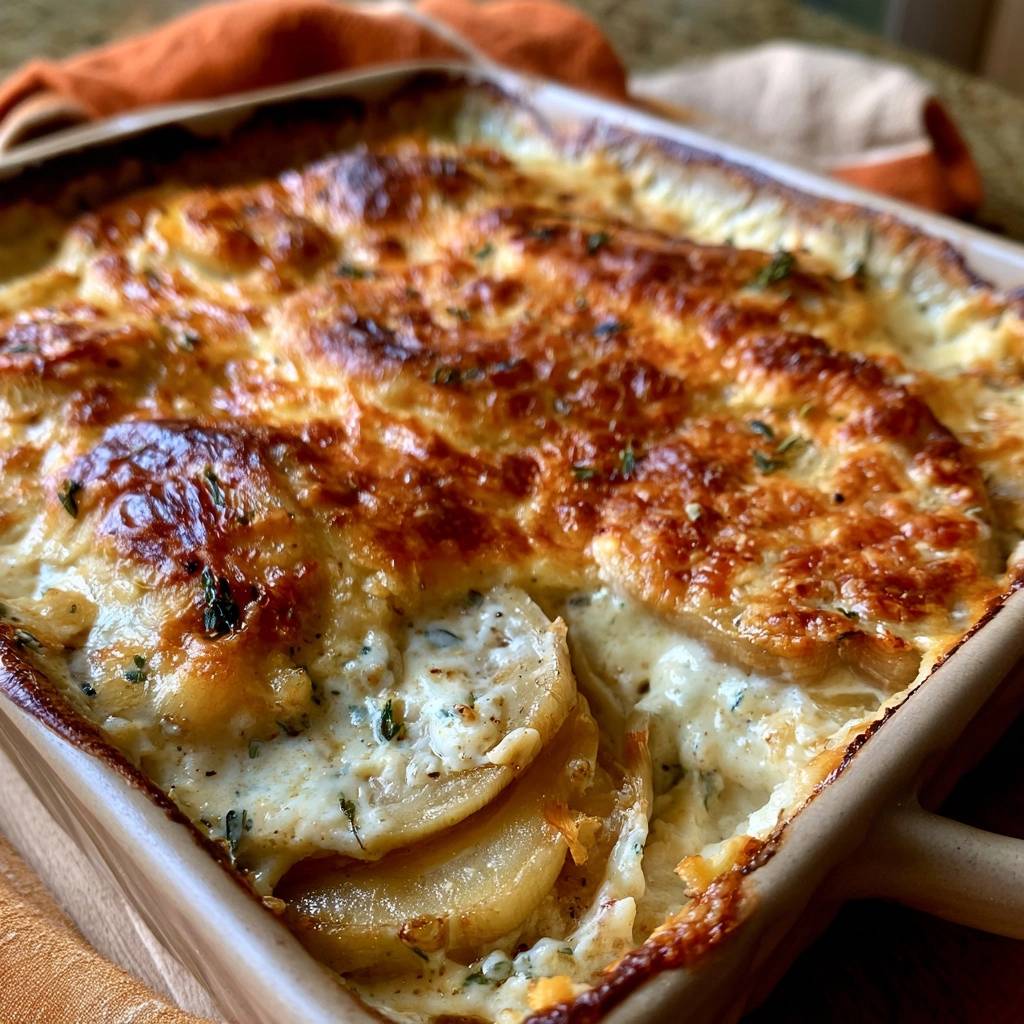
Jerusalem artichokes, also called sunchokes, have a nutty, slightly sweet flavor that stands up well to sharp cheese and fresh herbs. This gratin turns them into something special. Thin slices nestle in a silky, herb-scented sauce, then bake until the top turns deep golden and the edges bubble. It works as a vegetarian main on a relaxed weeknight or as a hearty side at a holiday table.
If you have never cooked with sunchokes, don’t worry. They are knobby tubers with thin skins, and their texture is closer to a firm potato than to a woody root, which makes them ideal for layering. Read through the sections below to understand the choices behind the dish, then turn to the recipe card for exact amounts, oven settings, and timing.
Choosing and Prepping Your Jerusalem Artichokes
Look for sunchokes that feel firm, with smooth skin and few deep wrinkles. Their knobby shapes trap soil in every crevice, so scrub them well under cool running water with a stiff brush. You don’t need to peel them for this gratin. The skin softens during baking and adds a rustic, earthy note that pairs nicely with the thyme and cheese.
Size matters more than you might expect. Very large tubers are awkward to slice evenly, so halve them lengthwise first. You’ll get flatter pieces that lie neatly in the dish. Work steadily once slicing begins, since the cut surfaces can darken quickly, and get the slices into the sauce before they sit out too long.
Building a Silky, Tangy Sauce
The sauce is what keeps this gratin rich without feeling heavy. Cottage cheese adds a bright, lightly tangy edge that balances the cream. Blend it until completely smooth, because small curds left whole can look grainy once baked. Heavy cream carries the garlic and thyme through every layer, so the flavors blend into one cohesive sauce rather than separate tastes.
Taste the sauce before you pour it over the slices. Fresh thyme leaves and peeled garlic give it a savory, herbal backbone. Nutmeg should be a gentle note, not the star, so add it with a light hand. Black pepper and kosher salt round out the flavor, and the Parmesan and Gruyère on top bring their own saltiness, so season with care.
Layering and Baking for a Golden Crust
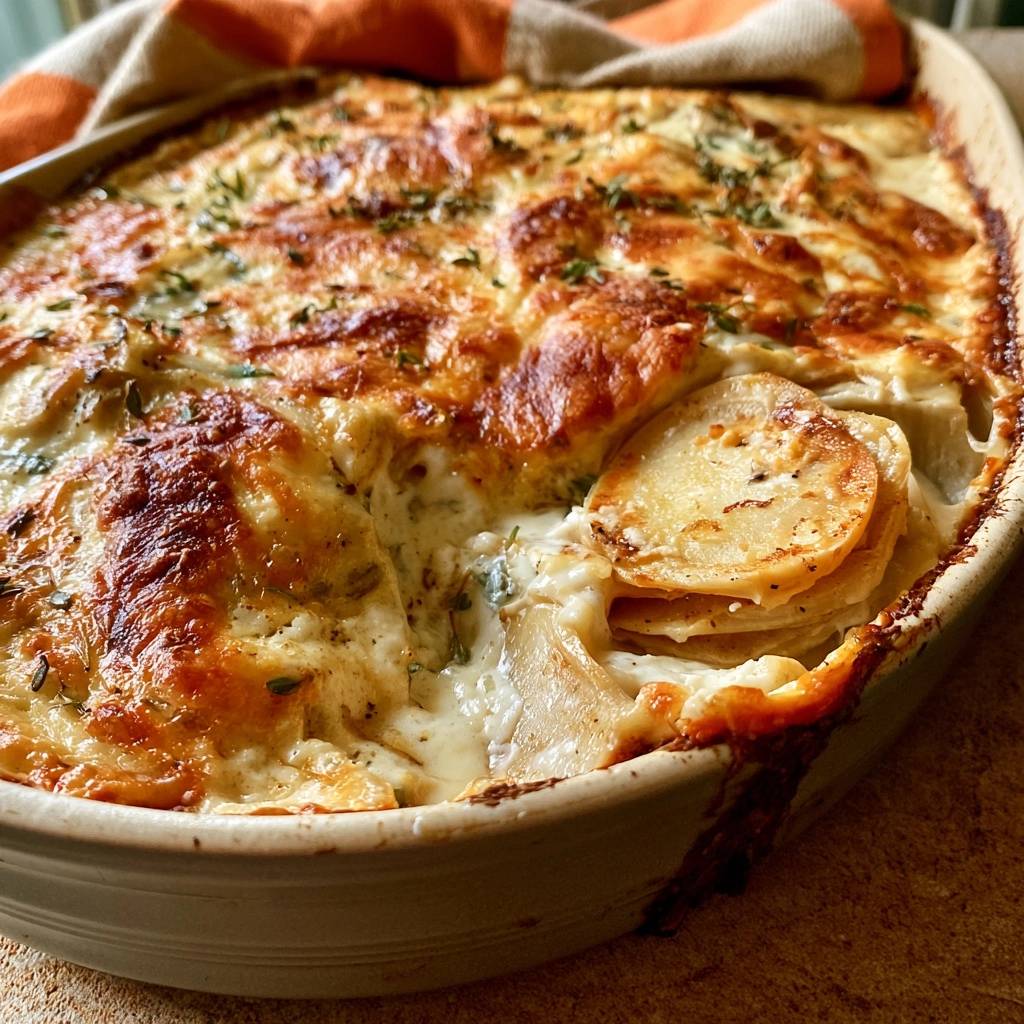
Overlap the slices slightly so they form a tight, even layer with no large gaps. Pour the sauce slowly so it reaches every corner, then press the slices down gently so they settle into the liquid. This helps them absorb flavor instead of floating on top.
Covering the dish with foil for the first stage of baking is the key to tender slices. The foil traps steam, which softens the sunchokes before the cheese begins to brown. Once the foil comes off, watch the top closely. Gruyère melts into a glossy layer, and Parmesan adds a crisp, nutty crust. The gratin is ready when the cheese is deeply golden and the slices are tender when pierced with a knife.
Resting, Serving, and Avoiding Common Mistakes
Resist the urge to cut into the gratin straight from the oven. Resting gives the sauce time to thicken and settle, so each portion holds its shape instead of sliding across the plate. Common mistakes include slicing unevenly, which leaves some pieces undercooked, and choosing a dish that is too wide, which spreads the sauce too thin and dries out the top. Pick a dish that holds the slices in a snug layer.
Serve the gratin as a vegetarian main, or cut smaller portions for a side. A spoonful of the golden top with each serving makes the most of the cheese crust.
Frequently Asked Questions
Do I need to peel Jerusalem artichokes for this gratin?
No. Scrub them well under running water to remove soil from the knobby surface, then slice them. The thin skin softens during baking and adds an earthy note that suits the thyme and cheese. If any spots look damaged or very tough, trim those areas before slicing.
Why does the gratin need to be covered with foil at first?
Foil traps steam, which cooks the sunchoke slices through and keeps the cream sauce from drying out before the cheese is ready. Removing the foil for the final stretch lets the top brown, so the Gruyère and Parmesan turn deep golden. Check doneness with a knife to confirm the slices are tender.
How can I tell when the gratin is ready to serve?
Look for a deeply golden top with bubbling along the edges, then pierce a slice with a knife. It should slide in with little resistance. Let the gratin rest so the sauce can settle. Cutting too soon can make the slices slip apart and the sauce run across the plate.
Golden Jerusalem Artichoke Gratin with Thyme
Course: Main CourseCuisine: AmericanDifficulty: Easy4
servings20
minutes1
hour525
kcal1
hour30
minutesThinly sliced Jerusalem artichokes bake in a thyme and cottage cheese sauce beneath a golden Gruyère and Parmesan crust. Serve this creamy gratin as a vegetarian main or a hearty side.
Ingredients
- Gratin
1 tablespoon butter, for greasing the dish
2 pounds Jerusalem artichokes (sunchokes), scrubbed and thinly sliced
1 cup shredded Gruyère cheese
1/3 cup finely grated Parmesan cheese
- Thyme cottage cheese sauce
1 1/2 cups 4% cottage cheese
1/2 cup heavy cream
2 garlic cloves, peeled
1 tablespoon fresh thyme leaves
3/4 teaspoon kosher salt
1/4 teaspoon black pepper
1/8 teaspoon ground nutmeg
Directions
- Heat the oven to 375°F. Grease a 9×13-inch baking dish with the butter.
- Blend the cottage cheese, heavy cream, garlic, thyme, salt, pepper, and nutmeg until smooth.
- Arrange the Jerusalem artichoke slices in the baking dish, overlapping them slightly. Pour the sauce evenly over the slices and press them down gently. Sprinkle the Gruyère and Parmesan over the top.
- Cover the dish tightly with foil and bake for 35 minutes. Remove the foil and bake for 25 minutes more, until the slices are tender when pierced with a knife and the cheese is deeply golden.
- Let the gratin rest for 10 minutes before serving so the sauce can settle.
Notes
- If the sunchokes are large, halve them lengthwise before slicing so the pieces fit neatly in the dish.