
I’ve thrown countless burgers on the grill only to watch them puff up into sad, dry meatballs. It ruins the perfect cookout experience!
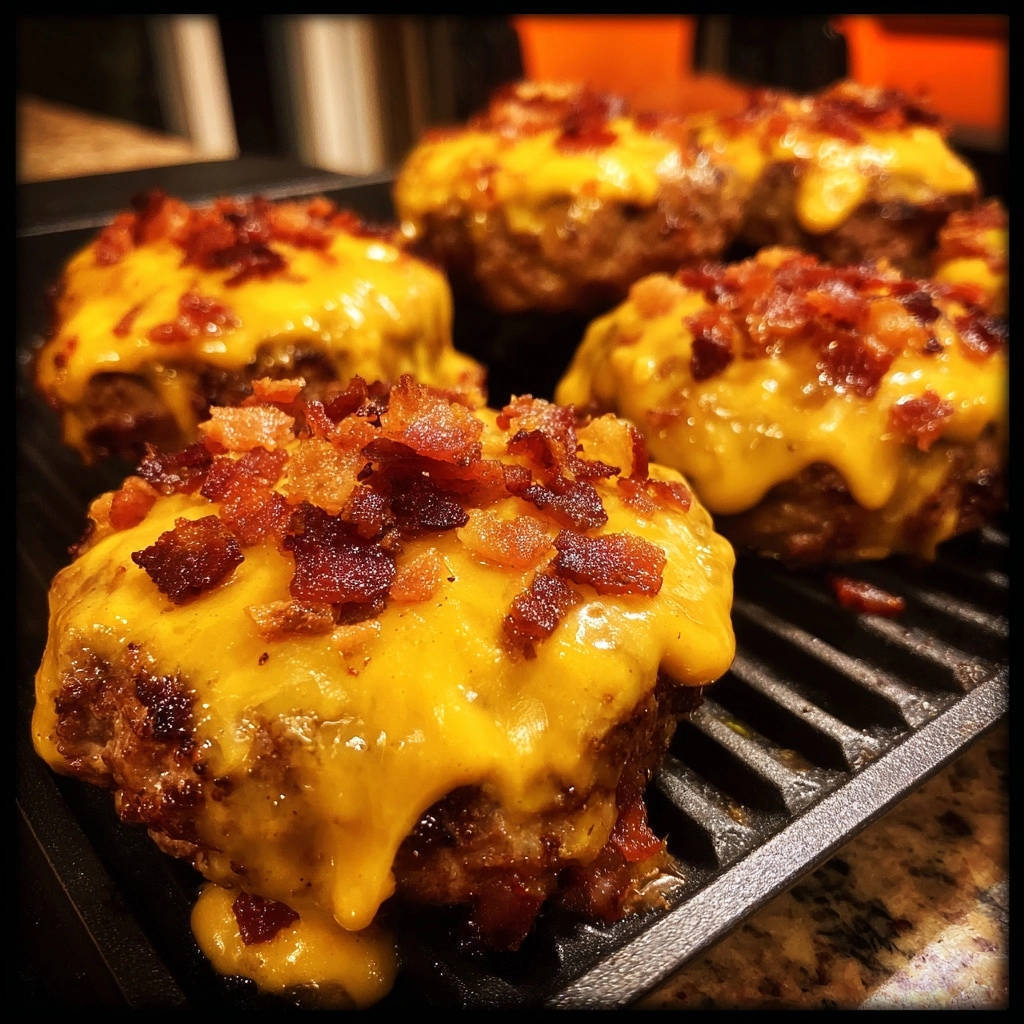
After years of frustration, I perfected the anti-shrink technique that guarantees perfectly flat, immensely juicy Grilled Bacon-Cheddar Patties every single time. This secret, combined with the smoky richness of cheddar and crispy bacon, elevates a classic burger into a truly unforgettable meal.
The Secret Weapon: Why Our Grilled Patties Never Shrink
There is nothing more frustrating than seeing a beautifully formed, thick patty shrink and bulge into a sphere as soon as it hits the hot grate.
This common problem causes uneven cooking and creates a dry, disappointing bite right in the middle.
Fortunately, the solution is simple, counter-intuitive, and works every time: the deep central dimple. This small indentation is your definitive answer to achieving perfectly flat, wide patties.
The Physics of a Flat Patty: Counteracting Contraction
As ground beef cooks, the muscle fibers on the outer edges constrict tightly due to the high, direct heat.
This contraction pushes the uncooked material inward and upward, causing the center to swell drastically-what we often refer to as burger shrinkage.
By pressing a deep divot into the raw meat, you pre-compensate for that upward force. The contracting fibers simply expand into the empty space, ensuring the patty remains uniform in thickness as it cooks.
Beyond the Beef: The Power of Bacon and Cheddar Integration
The combination of savory, salty crispy bacon crumbles and sharp, creamy cheddar is a guaranteed crowd-pleaser.
We apply the bacon after cooking to ensure maximum crunch and flavor without risking internal moisture issues or flare-ups on the grill.
Timing is critical for the toppings; the cheddar slice is applied in the final minute, followed by a quick lid close. This ensures maximum melt effect and a perfect drape over the patty edges.
Building the Best Burger: Essential Ingredients and Substitutions
Choosing the Right Grind: Why 80/20 Ground Beef is Key
For grilling, a ratio of 80% lean to 20% fat (80/20) is non-negotiable for superior juiciness and flavor.
Leaner meat, like 90/10, will inevitably result in a dry, tough patty when subjected to high grill temperatures because there isn’t enough fat to keep it moist.
Look for high-quality, freshly ground beef from a trusted butcher. Freshness affects flavor and texture, ensuring your fat renders beautifully without burning.
The Umami Boost: Worcestershire Sauce and Seasoning
Worcestershire sauce provides a fantastic layer of savory depth, or umami, that elevates the beef flavor far beyond simple salt and pepper.
A small amount goes a long way to enrich the patty mixture without adding excessive liquid.
Kosher salt and freshly ground black pepper should be added gently into the mixture before forming. Seasoning internally ensures the flavor penetrates the entire patty.
Cheese Selection: Cheddar vs. American Melt Power
Sharp cheddar cheese offers a robust, complex flavor that holds up well against the smoky beef and salty bacon.
It is the gold standard for flavor in a classic bacon burger, but it can take slightly longer to fully melt.
If melt factor is your absolute top priority, classic American or high-quality processed cheese slices are unbeatable. They spread evenly and drape beautifully without any risk of breaking or oiling out.
Pre-Grill Precision: Forming Perfect Grilled Bacon-Cheddar Patties
Gentle Handling: Achieving a Tender Texture
The single biggest mistake home cooks make is overmixing the ground beef. Excessive handling develops the protein structure, leading to a dense, tough texture once cooked.
Combine the beef and seasonings with quick, light motions, using your hands or a fork. Stop mixing as soon as the ingredients are uniformly distributed throughout the meat.
The Divot Demystified: Creating the Anti-Shrink Dimple
Form the patties to about 1 inch thick and ensure they are slightly wider than your final bun size to account for necessary edge shrinkage.
You must press the dimple deep enough to be effective. Use your thumb to press a distinct, deep indentation, roughly 1/2 inch deep, directly into the absolute center of each patty.
When viewed from the side, the raw patties should resemble a round, thick donut or a shallow bowl before they ever hit the grill grate.
Essential Tools for Grilling Success
- Digital Meat Thermometer:
Crucial for accuracy, ensuring perfect doneness without cutting into the patty. This prevents the loss of valuable internal juices.
- Grill Brush and Oil:
Essential prep to prevent sticking, which can tear the delicate patty surface. Use high-heat oil like canola or avocado on the grates.
- Sturdy Spatula:
A wide, flat spatula is necessary for turning without disturbing the patties. Never use tongs or a thin spatula that could tear the meat.
Mastering the Heat: Step-by-Step Grilling Guide
- Prepare and Form:
Follow the mixing and dimple formation steps (1-3) precisely. Ensure the patties are slightly wider than the bun to account for minimal, acceptable shrinkage.
- Preheat the Grill:
Achieve medium-high heat (around 400°F). Maintaining this heat ensures a beautiful sear on the exterior while keeping the internal structure juicy.
- Initial Placement and Sear:
Place the patties dimple-side UP directly over the heat. This allows the contracting meat to naturally fill the divot as it cooks, guaranteeing a flat surface.
- Grilling Time Management:
Grill for 4 to 6 minutes per side. Resist the urge to press them-pressing removes valuable fat and moisture, guaranteeing a dry patty!
- Optimal Grill Temperature and Timing:
Use a digital thermometer to confirm doneness. For medium-well, pull the patties around 155°F; the USDA safe recommended minimum is 160°F.
- Melting the Toppings:
Place the cheddar cheese in the final minute of cooking, then cover the grill quickly to trap heat.
This method prevents the cheese from hardening or running off the sides while ensuring a superior, even melt across the surface.
- Rest and Finish:
Transfer the Grilled Bacon-Cheddar Patties off the grill and allow them to rest for five minutes.
This crucial resting step redistributes the internal juices, ensuring maximum flavor and moisture retention inside the patty before serving.
Chef’s Secrets: Elevating Your Grilled Bacon-Cheddar Patties Game
The Salt Application Rule: Only mix salt into the meat mixture gently before forming the patties.
Salting the surface right before grilling can draw out moisture prematurely, leading to a tougher crust.
Temperature Control is King: For even cooking, ensure your ground beef starts cold, but your grill is screaming hot.
This maximizes the Maillard reaction (searing) while keeping the interior cool and juicy for longer.
Flavor Upgrades: Homemade Bacon Crumbles: Don’t buy pre-crumbled bacon! Freshly cooked, high-quality bacon provides a superior, crisp texture and a far deeper smoky flavor.
Cook your bacon ahead of time and crumble it right before topping the finished burgers.
Troubleshooting Flare-Ups: Fat dripping from the 80/20 beef is common. If a flare-up occurs, immediately move the patties temporarily to a cooler, indirect heat zone.
Close the grill lid only briefly to extinguish the small flames, then return the patties to the direct heat zone to finish cooking.
Common Troubleshooting: Why Are My Patties Still Dry or Bulging?
Problem: My Patties Still Looked Like Meatballs
Solution: The divot likely wasn’t deep enough. Ensure the indentation is truly 1/2 inch deep and wide enough to counteract the strong contraction forces of the meat during cooking.
Also, check that you did not press the patties with your spatula during grilling. Pressing forces moisture out and causes the remaining meat to contract faster, contributing to the bulge.
Problem: The Grilled Bacon-Cheddar Patties Tasted Dry
Solution: This is usually caused by overmixing the meat during preparation, which develops toughness and a dry texture.
Remember to handle the beef gently, combining just until the ingredients are distributed-no longer.
Alternatively, verify you are using 80/20 ground beef. Leaner beef inherently requires a shorter cooking time to prevent moisture loss and dryness, so adjust your grill time accordingly.
What to Serve With Grilled Bacon-Cheddar Patties (And How to Store Them)
Side Dish Pairing Recommendations
Complement the rich, smoky profile of the patties with something bright and acidic, like a classic creamy or vinegar-based coleslaw or tangy potato salad.
For a lighter, charred vegetable side, try grilled corn on the cob seasoned with chili lime salt, or quickly blistered Shishito peppers tossed with coarse sea salt.
Nothing beats the classics: serve your masterpieces alongside crispy, hand-cut french fries or perfectly golden, crunchy onion rings for the ultimate cookout feel.
Make-Ahead, Storage, and Reheating Instructions
Make-Ahead: The patties can be formed (and dimpled!) up to 24 hours in advance. Store them separated by small squares of parchment paper in an airtight container in the refrigerator to prevent sticking.
Storage: Leftover patties should be stored within two hours of cooking. For best quality and food safety, plan to consume the leftovers within three days.
Reheating: For best results, reheat leftover patties in an oven or air fryer set around 350°F. This method maintains exterior crispness and prevents the patty from drying out, which often happens in a microwave.
Common Questions About Grilling Patties
Can I use pre-cooked bacon in the mix instead of topping?
It is strongly recommended to keep the bacon as a topping.
Incorporating bacon directly into the raw mixture can increase the risk of flare-ups on the grill due to rendered fat, and it makes the patties more difficult to bind and form properly without overmixing the beef.
What is the ideal internal temperature for safety and flavor?
For ground beef, the USDA recommends an internal temperature of 160°F (well-done) for safety.
However, many chefs pull patties closer to 150°F if they are cooking for themselves, allowing the temperature to rise during the essential five-minute resting period, resulting in a juicier final product.
Should I season the Grilled Bacon-Cheddar Patties right before cooking or earlier?
You should incorporate the core seasonings (salt, pepper, Worcestershire) when gently mixing the raw meat, ensuring internal flavor distribution.
Avoid adding extra salt to the exterior surface right before grilling, as this can wick moisture out of the meat and create a tougher exterior texture.
Ready to Impress? Share Your Grilled Bacon-Cheddar Patties Masterpiece!
Mastering the grill is simple when you understand the physics of the meat. Once you implement the crucial dimple technique, the days of sad, bulging burgers are over forever.
Try these rich, perfectly flat Grilled Bacon-Cheddar Patties this weekend and watch your family be amazed by your expert-level burger creation.
Happy grilling, and check back soon for more E-E-A-T approved expert cooking tips!
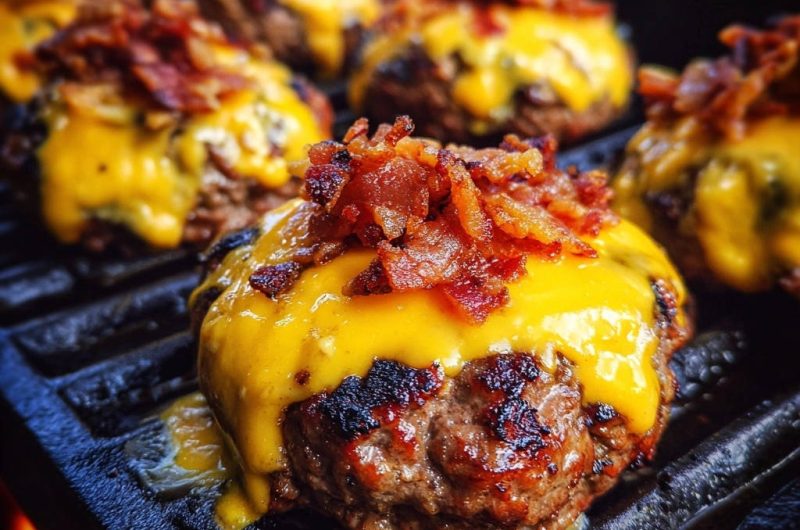
Grilled Bacon-Cheddar Patties
Course: Main CourseCuisine: American CuisineDifficulty: easy6
servings10
minutes15
minutes25
minutesAmerican Cuisine
Ingredients
2 pounds 80/20 Ground Beef
1 tablespoon Worcestershire sauce
1 teaspoon Kosher salt
1/2 teaspoon Black pepper
6 slices Cheddar cheese (or American cheese)
1 cup cooked and crumbled bacon
Directions
- Prepare the Meat: Gently combine the ground beef, Worcestershire sauce, salt, and pepper in a large bowl. Handle the meat as little as possible to keep the texture tender.
- Form the Patties: Divide the mixture into six equal portions and form into thick, round patties about 1 inch thick. Ensure the patties are slightly wider than your desired final size.
- The Anti-Shrink Technique: This step is crucial for guaranteed flat patties. Using your thumb, press a distinct, deep divot or “dimple” into the center of each patty. The dimple should be about 1/2 inch deep. This indentation counteracts the natural contraction of the meat fibers during grilling, preventing the patties from bulging into a sphere and ensuring they cook flat.
- Preheat the Grill: Preheat your grill (gas or charcoal) to medium-high heat (about 400 degrees F). If using a grill grate, lightly oil the grates to prevent sticking.
- Grill the Patties: Place the dimpled patties directly over the heat, dimple-side up. Grill for 4 to 6 minutes per side, depending on your desired internal temperature (160 degrees F for well-done). Do not press the patties with a spatula.
- Melt the Cheese and Bacon: In the final minute of cooking, place one slice of cheese on top of each patty. Close the grill lid (or tent with foil) for about 30 seconds to help the cheese melt quickly and evenly.
- Finish and Serve: Once the cheese is fully melted and draped over the sides, transfer the patties off the grill. Top immediately with a generous sprinkle of crispy bacon crumbles. Allow them to rest for 5 minutes before serving for maximum juiciness.
Notes
- The dimple is crucial! Pressing a 1/2 inch deep divot prevents the patty from bulging and shrinking during high heat cooking.