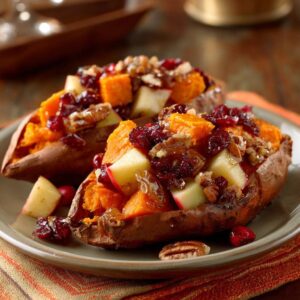
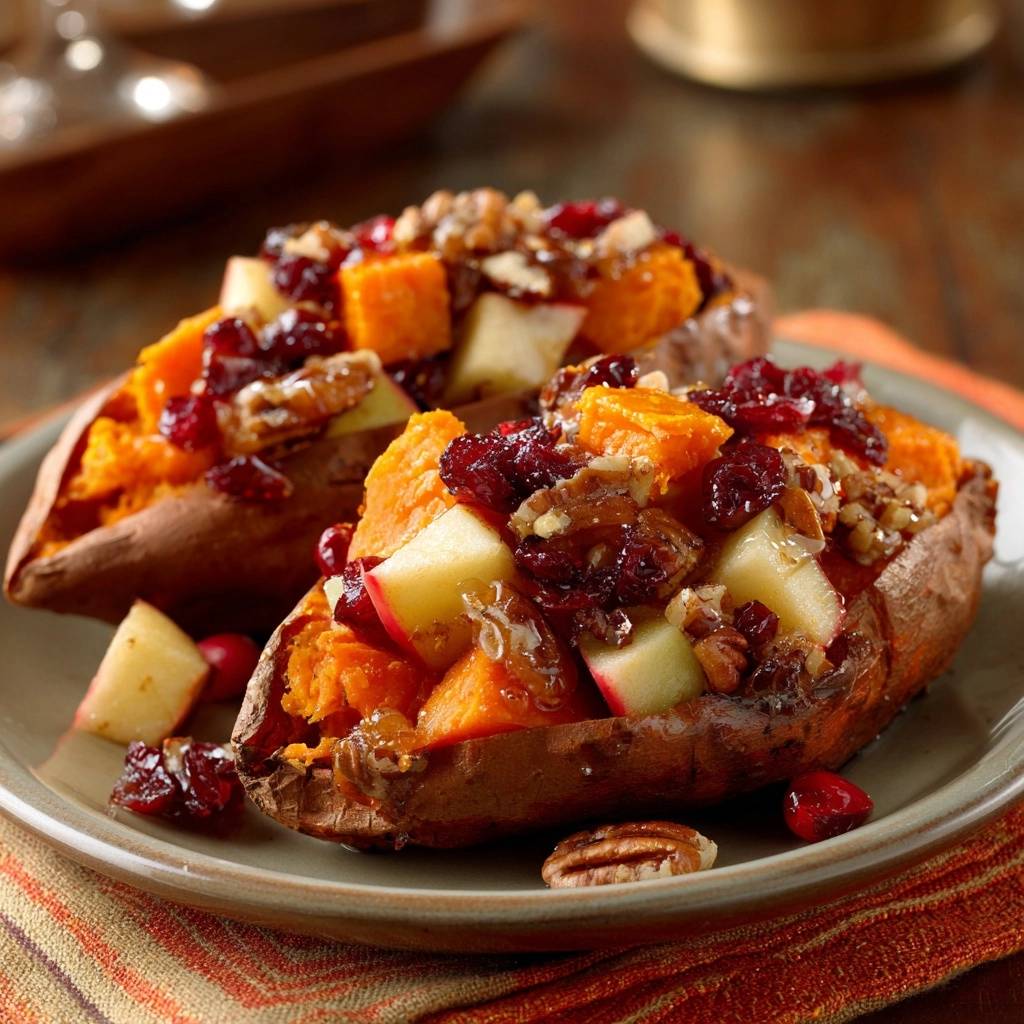
Forget everything you know about those mushy, foil-wrapped sweet potatoes that come out of the oven looking like a sad, steamed mess. When you bite into a potato, you want a contrast between a crisp, salty skin and a center that’s as smooth as velvet. This recipe delivers exactly that by ditching the traditional “steaming” methods for a high-heat dry roast.
The “Harvest” profile isn’t just a name; it’s a calculated balance of flavors that hits every part of your palate. You get the earthy sweetness of the potato, the sharp tartness of fresh apples, and the chewy pop of dried cranberries. It’s a cozy, satisfying meal that feels like a celebration of autumn flavors in every single bite.
The secret to this dish’s success lies in the moisture control. By roasting the potatoes “naked” on the oven rack, we allow the skin to dehydrate and caramelize rather than sit in its own juices. I’ve found that this specific technique creates a structural “shell” that can actually hold a mountain of toppings without collapsing into a pile of orange mush.
The Science of the Anti-Soggy Skin Secret
Most home cooks instinctively reach for the aluminum foil when roasting tubers, but that’s actually the biggest mistake you can make. Foil acts as a vapor barrier, trapping the potato’s natural moisture inside and essentially boiling the skin. To get that papery, crackly exterior, you need the oven’s dry air to circulate 360 degrees around the vegetable.
When you roast at 425°F without a wrapper, you trigger the Maillard reaction on the skin. This chemical reaction between amino acids and reducing sugars creates that deep, savory flavor and a browned, sturdy texture. The high heat also forces the water inside the potato to evaporate quickly, which intensifies the natural sugars in the flesh.
This dry-roasting method creates a structural integrity that is vital for a “loaded” style dish. Because the skin becomes firm and slightly leathery, it acts as a natural bowl. You can pile in the heavy apples, pecans, and syrup without the potato splitting open or becoming a soggy disaster on your plate.
Essential Components for Harvest Loaded Sweet Potatoes
Quality ingredients are the backbone of this dish, especially since the flavor profile is so clean. For the apples, I highly recommend using a Honeycrisp or a Granny Smith. These varieties have a high acid content and a firm cellular structure, meaning they won’t turn into applesauce when they hit the warm potato.
The pecans provide the essential fat and crunch that balances the soft textures. I prefer using raw pecans and letting them toast slightly in the filling mixture, but pre-toasted ones work in a pinch. Just make sure they are chopped into small enough pieces so you get a bit of crunch in every forkful.
When it comes to the sweetener, real maple syrup is non-negotiable. Artificial pancake syrups are mostly corn syrup and lack the complex, woody notes that pair so perfectly with sweet potatoes. Real syrup also has a thinner consistency that coats the cranberries and apples evenly without making them unpleasantly sticky.
Selecting the Ideal Sweet Potato
Not all sweet potatoes are created equal for roasting. I usually look for Beauregard or Jewel varieties, which have that classic copper skin and bright orange flesh. They have a high sugar content that caramelizes beautifully under high heat compared to the starchier, paler varieties.
Try to pick potatoes that are uniform in thickness from end to end. If one end is very thin and the middle is thick, the ends will burn before the center is soft. Since we are eating the skin for that specific texture, I always opt for organic potatoes to ensure the exterior is as clean and natural as possible.
Preparation: Achieving the Perfect Roast
The preparation starts at the sink. You need to scrub the potatoes vigorously to remove any dirt, but the most important step is the drying. I use a clean kitchen towel to buff them until they are bone-dry. If there is even a hint of moisture on the skin when they go into the oven, they will start by steaming, which ruins the crisping process.
Once dry, rub the skin with a light coating of olive oil. You don’t want them dripping; just a thin sheen will do. The oil acts as a heat conductor, helping the oven’s energy penetrate the skin quickly. A generous pinch of sea salt rubbed into the oil not only seasons the potato but also helps draw out any remaining surface moisture.
Don’t forget to prick the potatoes with a fork about five or six times. This isn’t just an old wives’ tale; it creates vents for steam to escape. Without these vents, the internal pressure can build up, leading to a “potato explosion” or, more commonly, a gummy interior where the steam was trapped for too long.
Step-by-Step: Roasting and Stuffing Techniques
Preheat your oven to a true 425°F. Place the potatoes directly on the center oven rack. By letting them sit on the wire rungs, you ensure maximum airflow to the bottom of the potato. Always slide a baking sheet on the rack below them to catch any sugary drips that might leak out as the potatoes caramelize.
You’ll know they are done when the skin looks slightly puffed and feels papery to the touch. When you squeeze the sides (use a mitt!), there should be a distinct “give,” and a knife should slide into the center with zero resistance. This usually takes about 50 minutes, but larger potatoes might need an extra ten.
While the potatoes are finishing, you’ll notice a sweet, almost toasted marshmallow aroma filling your kitchen. This is the signal that the sugars are browning. Don’t be tempted to pull them out early; that last ten minutes is when the skin truly transforms from soft to sturdy.
Crafting the Harvest Filling
The filling is a simple toss-and-go situation, but timing is everything. I like to dice the apples into half-inch cubes so they are large enough to maintain their “snap.” Mix them with the dried cranberries, pecans, cinnamon, and maple syrup in a small bowl just a few minutes before the potatoes are done.
Adding the melted butter to this mixture is the “pro move.” The butter emulsifies with the maple syrup and cinnamon, creating a warm glaze that coats every piece of fruit. This prevents the cinnamon from clumping and ensures the spices are distributed evenly throughout the stuffing.
The “Scoop and Toss” Assembly Method
If you want that restaurant-quality look, don’t just dump the filling on top of a sliced potato. After letting the potatoes rest for five minutes, slice them open and use a spoon to gently scoop out about half of the orange flesh. Be careful not to tear the skin!
Roughly chop that scooped-out potato into chunks and toss it right into the bowl with your apple and cranberry mixture. Then, pile that combined mixture back into the potato shells. This technique ensures that the maple syrup and butter pool into the nooks and crannies of the potato chunks, seasoning the entire dish from the inside out.
Avoiding Common Sweet Potato Roasting Mistakes
The biggest pitfall is impatience. If you try to speed up the process by using a microwave, you’ll end up with a tough, leathery skin and a watery interior. The microwave vibrates water molecules, which is the exact opposite of the dry-heat evaporation we want for a crisp result.
If you notice your potatoes are “leaking” a dark, sticky liquid, don’t panic. That’s just the natural sugars caramelizing and escaping through the fork pricks. This is why the drip tray on the lower rack is so important—it prevents those sugars from burning on the bottom of your oven and creating smoke.
Lastly, avoid over-oiling. If the potato is swimming in oil, the skin will fry rather than roast, which can lead to a greasy taste. You only need enough to make the skin glisten. If you can see oil pooling on the surface, you’ve used too much; just wipe the excess off with a paper towel before roasting.
Flavor Variations and Ingredient Swaps
This recipe is incredibly flexible. If you aren’t a fan of pecans, walnuts or slivered almonds provide a fantastic earthy crunch. For a nut-free version, toasted pumpkin seeds (pepitas) add a lovely green color and a salty snap that plays well with the maple syrup.
If you find the dish a bit too sweet, you can easily add a savory element. A dollop of plain Greek yogurt or a sprinkle of sharp white cheddar cheese creates a beautiful tang that cuts through the sugar. You could even add a pinch of red pepper flakes to the filling if you like a “sweet and heat” combination.
For a deeper spice profile, try swapping the cinnamon for a “warm” spice blend. Nutmeg, cardamom, or even a tiny pinch of ground cloves can elevate the harvest theme. Just go easy on the cloves, as they can quickly overpower the delicate flavor of the sweet potato.
Optimal Pairings for a Complete Meal
These loaded potatoes are quite filling on their own, but they pair beautifully with high-protein sides. A simple kale salad massaged with lemon juice and olive oil provides a fresh, bitter contrast to the rich potato. The acidity in the lemon helps cleanse the palate between bites of the sweet filling.
If you want something heartier, roasted chickpeas seasoned with garlic and cumin add a great plant-based protein boost. You could also serve these alongside a wild rice pilaf. The nutty, chewy texture of wild rice complements the soft potato and crunchy pecans perfectly, making for a very “autumnal” dinner spread.
Make-Ahead Strategies and Reheating Instructions
You can definitely prep parts of this meal in advance. The apple and cranberry filling can be mixed up to four hours ahead of time. To keep the apples from browning, add a teaspoon of lemon juice to the mixture; the acid will stall the oxidation process while the maple syrup provides a protective coating.
If you have leftovers, avoid the microwave at all costs for reheating. The microwave will turn that beautiful crisp skin into a soggy mess. Instead, place the loaded potato in an air fryer at 350°F for about 5-7 minutes, or in a standard oven at 375°F for 10-12 minutes. This will re-crisp the skin and warm the filling through.
Expert Tips for Scaling the Recipe
Hosting a dinner party? A “Sweet Potato Bar” is a fantastic way to serve a crowd. You can roast 6 to 8 potatoes at once on the oven racks. Just ensure there is at least an inch of space between each potato so the air can circulate properly; if they are crowded, they will steam each other.
Keep the filling in a separate bowl and let guests stuff their own potatoes. This keeps the apples crunchy and the pecans from getting soft. If you’re worried about the filling getting cold, you can keep it in a small slow cooker on the “warm” setting or a covered dish near the stove.
Frequently Asked Questions
Why is my sweet potato skin still soft?
Soft skin is usually caused by one of three things: wrapping the potato in foil, not drying the skin thoroughly after washing, or using too much oil. Ensure the potato is bone-dry and roasted “naked” on the rack. Also, check your oven temperature with a thermometer; if your oven runs cool, it won’t evaporate the moisture fast enough to crisp the skin.
Can I use yams instead of sweet potatoes?
In US grocery stores, “yams” are usually just orange-fleshed sweet potatoes, which work perfectly. However, true yams (which have bark-like skin and white flesh) are much starchier and less sweet. If you find actual tropical yams, they will require more fat and a longer roasting time, and they won’t have the same caramelized flavor profile as a sweet potato.
How do I prevent the apples from turning brown?
Apples brown when exposed to oxygen. In this recipe, the maple syrup and melted butter act as a sealant, coating the apple pieces and protecting them from the air. If you are dicing the apples way in advance, toss them in a little lemon juice or keep them submerged in cold water until you are ready to mix the filling.
Is this recipe suitable for meal prep?
Yes, but with a caveat. The flavor of the filling actually improves the next day as the cranberries plump up. However, the skin will lose its crunch in the fridge. For the best meal prep experience, store the roasted potato and the filling separately. Reheat the potato in the oven or air fryer to get the skin crisp again, then add the filling.
What is the best way to store leftovers?
Store any leftover loaded potatoes in an airtight container in the refrigerator for up to 3 to 4 days. I don’t recommend freezing them, as the cellular structure of both the potato and the apple breaks down when frozen, resulting in a very watery and mushy texture once thawed.
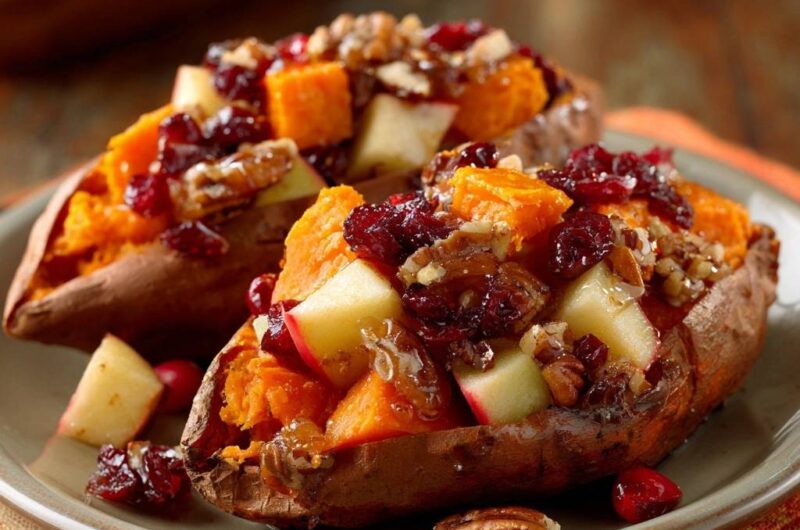
Harvest Loaded Sweet Potatoes
Course: Main CourseCuisine: AmericanDifficulty: easy2
servings15
minutes50
minutes65
Minutes410
kcalAmerican
Ingredients
2 large sweet potatoes
1 red apple, diced into 1/2-inch cubes
1/4 cup dried cranberries
1/4 cup chopped pecans
2 tablespoons maple syrup
1/2 teaspoon ground cinnamon
1 tablespoon butter, melted
1 tablespoon olive oil (for the skin)
Pinch of sea salt
Directions
- Preheat your oven to 425°F (220°C). This high temperature is the key to preventing a gummy texture and ensuring the skin crisps.
- Scrub the sweet potatoes clean and pat them completely dry. Any leftover water on the skin will cause them to steam rather than roast.
- Rub the outside of each potato with a light coating of olive oil and a pinch of salt. Use a fork to prick the potatoes 5 to 6 times.
- Place the potatoes directly on the oven rack with a baking sheet on the rack below to catch any drips. Do not use foil. Roasting them “naked” allows the skin to dehydrate and crisp up while the inside becomes intensely sweet.
- Roast for 40 to 50 minutes until the center is soft when pierced with a knife and the skin feels papery and firm.
- While the potatoes roast, prepare the harvest filling: In a small bowl, toss the diced apple, dried cranberries, chopped pecans, maple syrup, cinnamon, and melted butter.
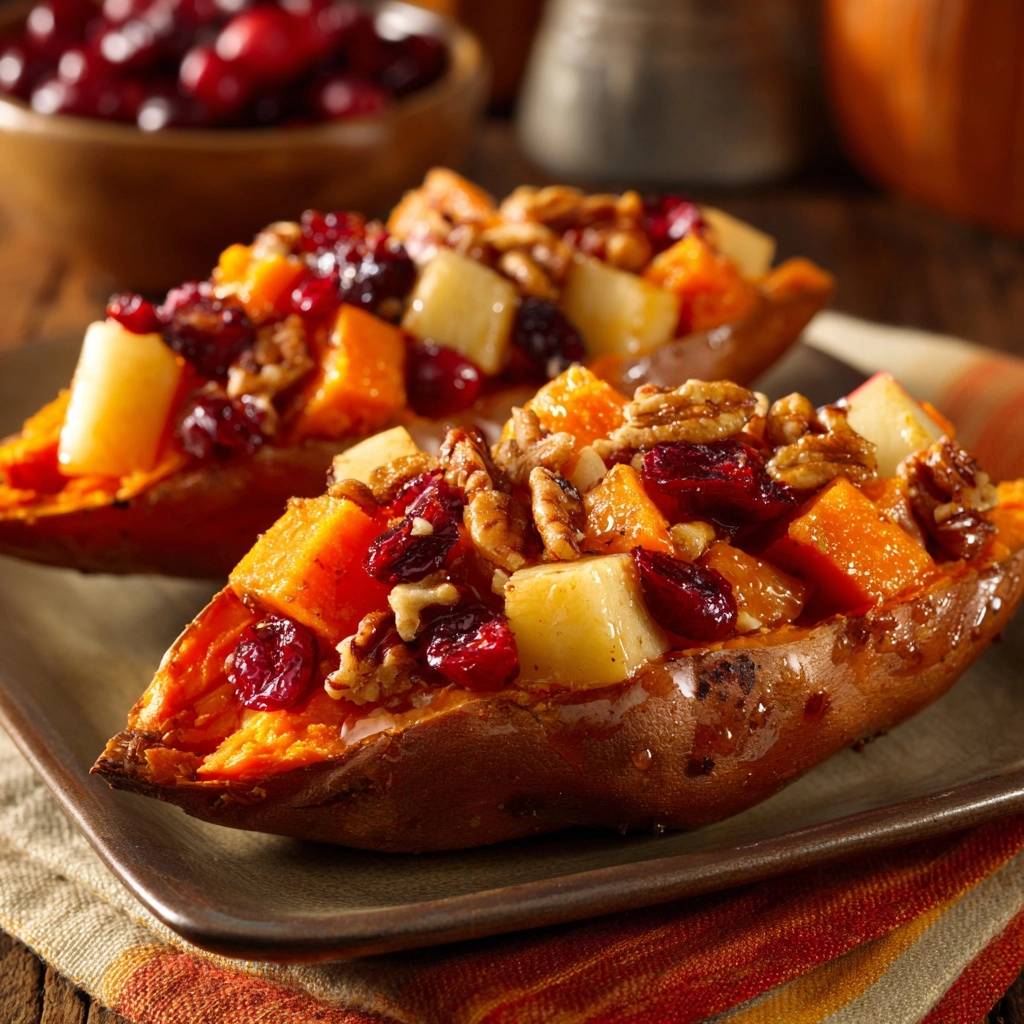
- Remove the potatoes from the oven and let them rest for 5 minutes. Slice them down the center. To achieve the look in the image, use a spoon to gently scoop out some of the flesh, cut it into large chunks, and toss it back into the potato shell along with the apple mixture.
- Stuff the potatoes generously, ensuring the bright orange potato chunks are visible amongst the apples and cranberries. The residual heat from the potato will slightly soften the apples and plump the cranberries while maintaining a fresh crunch. Serve immediately.
Notes
- Avoid using foil to ensure the skin stays crispy. Roasting the potatoes directly on the oven rack allows for maximum air circulation and caramelization.