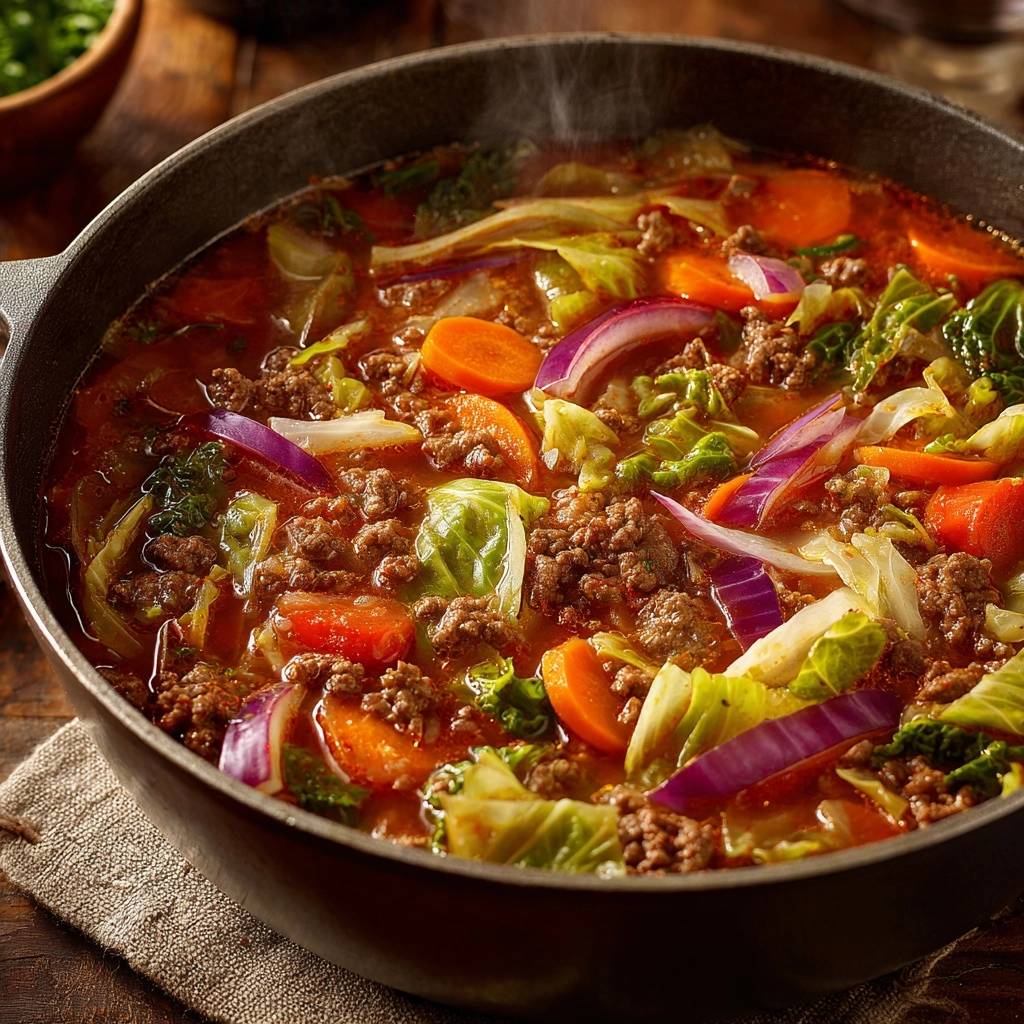
Ever scoop up a spoonful of beef stew only to find the cabbage has turned into flavorless mush? You don’t have to anymore. This hearty beef cabbage stew nails tender-crisp cabbage every time with one timing trick: add it last. In just 45 minutes, you get a steaming bowl of savory beef broth, sweet carrots, and vibrant greens that holds up perfectly. It serves 6, turning weeknight dinners into craveable comfort.
So why does this recipe deliver where others fail? Traditional stews overcook the cabbage, breaking down its structure into sogginess. Here, however, we build bold flavors from browned beef and thyme first. Then, the cabbage joins for a quick finish, soaking up that richness without losing bite.
The secret lies in the short 10 to 12 minute uncovered simmer at the end. This preserves the cabbage’s snap while letting it absorb the beefy tomato goodness. Follow these science-backed steps, and you’ll wonder why you ever settled for mushy versions.
Core Ingredients for Hearty Beef Cabbage Stew
Ground Beef: Building Rich Broth Base
Grab 1 pound of ground beef, ideally 80/20 lean to fat ratio. It browns beautifully, releasing juices that form the stew’s savory base without greasiness. Always drain excess fat after browning; it keeps the broth light and lets tomato flavors shine.
Cubed chuck works too, but ground beef crumbles evenly for quicker cooking. If you can source grass-fed, do it. That deeper umami elevates the whole pot. In addition, it mimics slow-cooked tenderness in half the time.
Cabbage and Kale: Crisp Vegetable Stars
Coarsely chop 1 medium head cabbage into bite-sized pieces. Uniform chunks ensure even cooking and that satisfying crunch. Kale’s 2 cups of chopped leaves add earthiness and hold their texture beautifully.
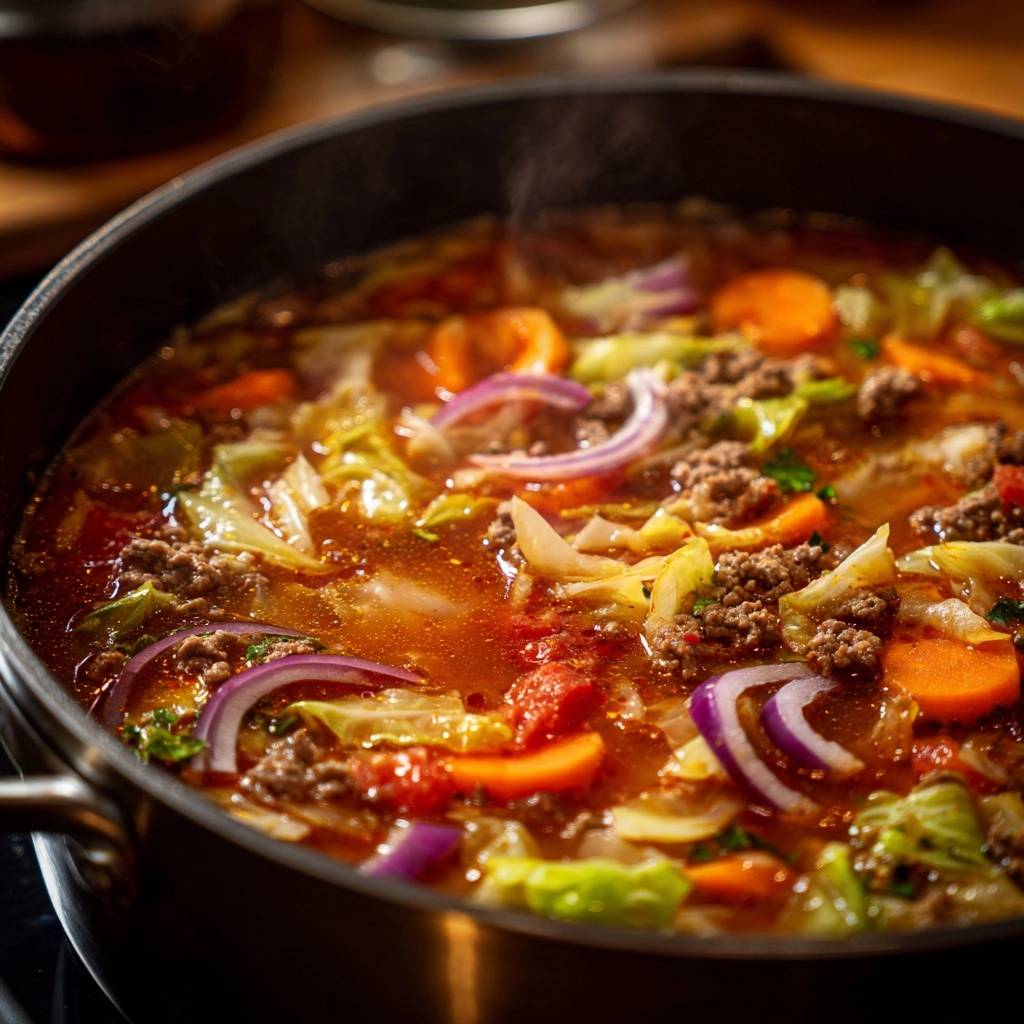
Here’s the key: add them last. Prolonged heat breaks down cabbage’s cell walls into mush. However, a short simmer tenderizes just enough. You’ll get vibrant, al dente bites that contrast the rich broth perfectly.
Aromatics and Tomatoes: Flavor Foundation
Slice 4 medium carrots and 2 large red onions thinly. They release natural sweetness during sautéing, balancing the beef’s savoriness. A 28-ounce can of crushed tomatoes provides smooth body; diced ones leave chunks.
Use 4 cups water instead of stock to keep it light yet hearty. Therefore, the flavors stay pure without heaviness. These build a robust base that cabbage and kale soak up later.
Seasonings: Thyme, Salt, Pepper Balance
One teaspoon dried thyme brings earthy warmth that pairs with beef. Match it with 1 teaspoon salt and 1/2 teaspoon black pepper for balance. Start with 2 tablespoons olive oil; it prevents sticking during browning.
For low-sodium, cut salt by half and taste as you go. Therefore, you control the seasoning precisely. Fresh thyme works if you have it, but dried holds up in simmering.
Science of Crisp Cabbage in Beef Stew
Why Cabbage Turns Mushy in Stews
Cabbage softens when heat breaks down pectin in its cell walls. Tomatoes’ acidity speeds this up, turning firm leaves limp after 30 minutes. Most recipes add it too early, so you end up with mush.
This method fixes it with a 10 to 12 minute finish. Enzymes stay intact for al dente texture. In addition, the beef broth infuses flavor without overcooking. Science makes it foolproof.
Pro tip: Coarsely chop to maximize surface area for flavor absorption. Smaller pieces soften faster, so keep them bite-sized.
Beef Browning: Maillard Reaction Magic
Brown the ground beef over medium-high heat for 8 minutes. The Maillard reaction creates flavorful compounds in the fond, deepening your broth. Break it up with a spoon for even sear.
Medium-high heat triggers this best; low temps just steam it. Drain fat afterward for balance. Therefore, your stew tastes rich, not oily.
Layered Simmer Builds Hearty Flavors
After adding tomatoes and water, boil then simmer covered for 15 minutes. Onions and carrots meld, concentrating sweetness. Uncovered at the end reduces broth slightly for intensity.
A large pot distributes heat evenly, preventing hot spots. This layering extracts maximum flavor before greens join.
Equipment Choices for Perfect Hearty Stew
Large Pot: Even Heat Distribution Key
Choose a 6 to 8 quart Dutch oven or heavy-bottomed pot. Its thick base prevents scorching during browning. Non-reactive material handles tomato acidity without metallic tastes.
Instant Pot works for pressure cooking, but stovetop gives better texture control. Therefore, invest in a good pot for stews like this.
Tools for Precise Chopping and Stirring
A sharp chef’s knife slices cabbage and carrots uniformly for even cooking. Use a wooden spoon to crumble beef without scratching. A tight lid traps steam during simmer.
These basics ensure success. Chopping evenly prevents some pieces from mush while others stay raw.
Step-by-Step: Building Hearty Beef Cabbage Stew
Browning Beef in Olive Oil
Heat 2 tablespoons olive oil in your pot over medium-high. Add 1 pound ground beef and break it up. Cook 8 minutes until browned and crumbly; the kitchen fills with savory aroma.
Drain excess fat with a spoon. Watch for splatter; tilt the pot away from you. This step builds the flavor foundation.
Sautéing Onions and Carrots
Stir in 2 sliced red onions and 4 sliced carrots. Sauté 5 minutes until onions soften and turn translucent. Thin slices caramelize edges for sweetness; stir often to avoid sticking.
You’ll smell the onions’ gentle perfume. This softens them without browning harshly.
Simmering Tomato Broth Base
Add 28 ounces crushed tomatoes, 4 cups water, salt, pepper, and thyme. Bring to a boil, then reduce to low. Cover and simmer 15 minutes; flavors deepen as broth thickens slightly.
Skim any foam for clarity. Taste midway; adjust if needed. Patience here pays off big.
Final Cabbage and Kale Addition
Stir in chopped cabbage and 2 cups kale. Simmer uncovered 10 to 12 minutes. Cabbage turns tender-crisp, absorbing broth; stir gently for even cooking.
Taste and season. Serve hot in bowls; steam rises with beefy, tomato-rich scent. Pro tip: Don’t exceed 12 minutes or crunch fades.
Avoiding Pitfalls in Beef Cabbage Stew
Preventing Soggy Vegetables
The top mistake? Adding cabbage early. It overcooks into mush. Stick to the timer; if still soft, next time chop larger.
Rescue overcooked batch by serving as soup base. However, prevention beats fixes every time.
Fixing Bland Broth Flavors
Under-browned beef or short simmer causes blandness. Brown fully and give it 15 minutes. Boost with extra thyme or a lemon squeeze for brightness.
Salt early in broth stage; it draws out vegetable flavors. Taste throughout for perfection.
Oil and Fat Balance Issues
Skip draining, and it’s greasy. Leaner beef needs less oil. During simmer, skim surface fat if needed.
Visual check: Broth should glisten lightly, not pool oil. Balance keeps it hearty, not heavy.
Flavor Twists for Hearty Beef Cabbage Stew
Vegetarian Swaps and Boosts
Swap beef for lentils or mushrooms; brown them same way. Add minced garlic or smoked paprika for depth. Bell peppers bring color and sweetness.
Keep cabbage timing identical. Therefore, texture stays crisp in veggie version.
Spice and Herb Variations
Trade thyme for oregano or bay leaves. Chili flakes add heat. Finish with fresh parsley for brightness.
Polish style? Caraway seeds. Irish twist with potatoes. Experiment, but taste as you go.
Make-Ahead and Storage for Beef Stew
Prep and Freezing Strategies
Chop veggies a day ahead; store in fridge. Cook full stew and freeze portions up to 3 months. Thaw overnight, reheat gently.
Label bags with dates. This makes weeknights easy without texture loss.
Reheating Without Mush
Stovetop low simmer max 10 minutes revives flavors. Avoid microwave; it unevenly heats. Fridge keeps it fresh 4 days.
Batch cook Sundays for the week. Stir in water if thickened too much.
Pairing Sides with Hearty Beef Cabbage Stew
Bread and Grain Complements
Crusty sourdough sopps up broth perfectly. Cooked rice or quinoa adds heartiness. Rye bread’s tang enhances cabbage earthiness.
One slice per serving balances the bowl.
Salad and Fresh Contrasts
Tangy apple slaw cuts richness. Cucumber yogurt salad adds cool creaminess. Keep portions small for harmony.
Freshness offsets the stew’s warmth beautifully.
Troubleshooting Hearty Beef Cabbage Stew
Stew Too Thin? Quick Fixes
Simmer uncovered longer to reduce. Stir in cornstarch slurry for instant thickness. Mashed potato hack absorbs liquid fast.
Vegetables Unevenly Cooked
Chop uniformly next time. Add firmer carrots earlier if needed. Stir well during simmers.
Over-Salted Broth Recovery
Dilute with water or unsalted potatoes. Add lemon juice for acid balance. Simmer to meld.
Short on Time Adjustments
Pressure cook base 10 minutes, then add greens 5 more. Buy pre-chopped veggies. Total drops to 25 minutes.
FAQ
How do I store leftovers of Hearty Beef Cabbage Stew?
Cool completely, then store in an airtight container in the fridge up to 4 days. It freezes well for 3 months in freezer bags; portion into singles for easy thawing. Reheat on stovetop low with a splash of water to loosen; avoid overcooking to keep cabbage crisp. Microwave works in a pinch but stir halfway for even heat.
Why did my cabbage turn mushy in the stew?
The most common issue is adding cabbage too early or simmering over 12 minutes. Cabbage’s pectin breaks down fast in acidic tomatoes and heat. Fix it by strictly timing the final step uncovered; if mushy, next batch chop coarser and taste at 10 minutes. Pro move: Test a piece for your preferred tenderness before full add-in.
Can I substitute ingredients in Hearty Beef Cabbage Stew?
No ground beef? Use ground turkey or lentils for vegetarian; brown same way. Swap kale for spinach but add last minute as it wilts quicker. Crushed tomatoes out? Blend diced ones smooth. Water for low-sodium broth works, but skip stock to avoid muddiness. Thyme swap to oregano keeps earthy vibe; ratios stay 1 teaspoon.
Is this stew gluten-free and how do I make it dairy-free?
Yes, it’s naturally gluten-free with no wheat additives. Dairy-free by default since no dairy’s used. Double-check canned tomatoes for additives if sensitive. Pair with gluten-free bread for full meal.
How do I thicken the stew if it’s too brothy?
Uncover and simmer 5-10 more minutes to reduce naturally. For quick fix, mix 1 tablespoon cornstarch with water into slurry, stir in, and boil 1 minute. Mash some carrots or add diced potatoes earlier next time; they absorb excess liquid without altering flavor much.
Can I make this in a slow cooker or Instant Pot?
Slow cooker: Brown beef first on stovetop, then 4 hours low with veggies except cabbage/kale; add those last 20 minutes. Instant Pot: Sauté beef, add all but greens, pressure 10 minutes, quick release, then stir in cabbage/kale for 5 minutes sauté. Both save time but stovetop gives best crisp texture control.
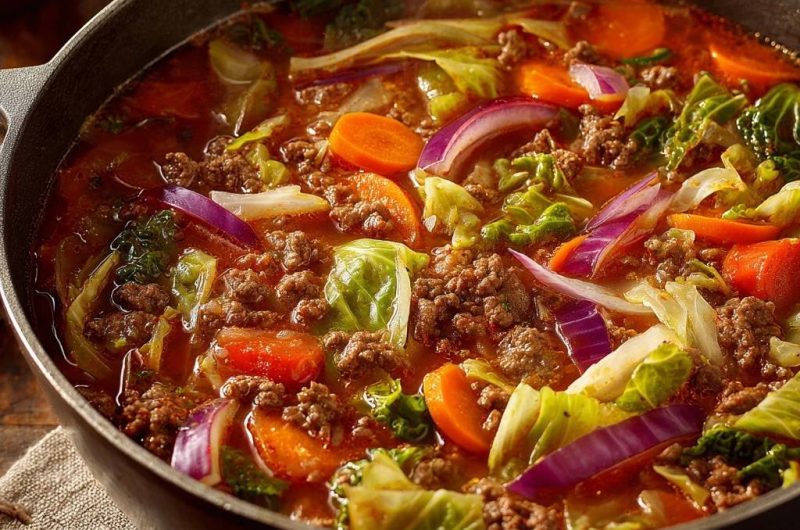
Hearty Beef Cabbage Stew
Course: Main CourseCuisine: AmericanDifficulty: easy6
servings15
minutes40
minutes55
Minutes350
kcalAmerican
Ingredients
1 pound ground beef
1 medium head cabbage, coarsely chopped into bite-sized pieces
4 medium carrots, sliced
2 large red onions, thinly sliced
2 cups chopped kale leaves
1 (28-ounce) can crushed tomatoes
4 cups water
2 tablespoons olive oil
1 teaspoon salt
1/2 teaspoon black pepper
1 teaspoon dried thyme
Directions
- Heat olive oil in a large pot over medium-high heat. Add ground beef and cook, breaking it up with a spoon, until browned and crumbly, about 8 minutes. Drain any excess fat to keep the stew light.
- Stir in sliced red onions and carrots. Saute for 5 minutes until onions soften and release sweetness.
- Pour in crushed tomatoes, water, salt, pepper, and thyme. Bring to a boil, then reduce heat and simmer covered for 15 minutes to build deep flavor.
- Add chopped cabbage and kale. Stir well, then simmer uncovered for 10 to 12 minutes only. This short final cook is the key: it tenderizes cabbage without mush while absorbing all the beefy tomato goodness. Taste and adjust seasoning. Serve hot.
Notes
- Drain excess fat after browning beef to keep the stew light. The key trick is adding cabbage last and simmering uncovered for only 10-12 minutes for perfect tender-crisp texture.