High-Protein Turkish Sesame Simit
Bake Turkish simit with a deeply browned, crisp sesame crust and tender, chewy center. Grape molasses adds traditional flavor and helps the seeds cling.
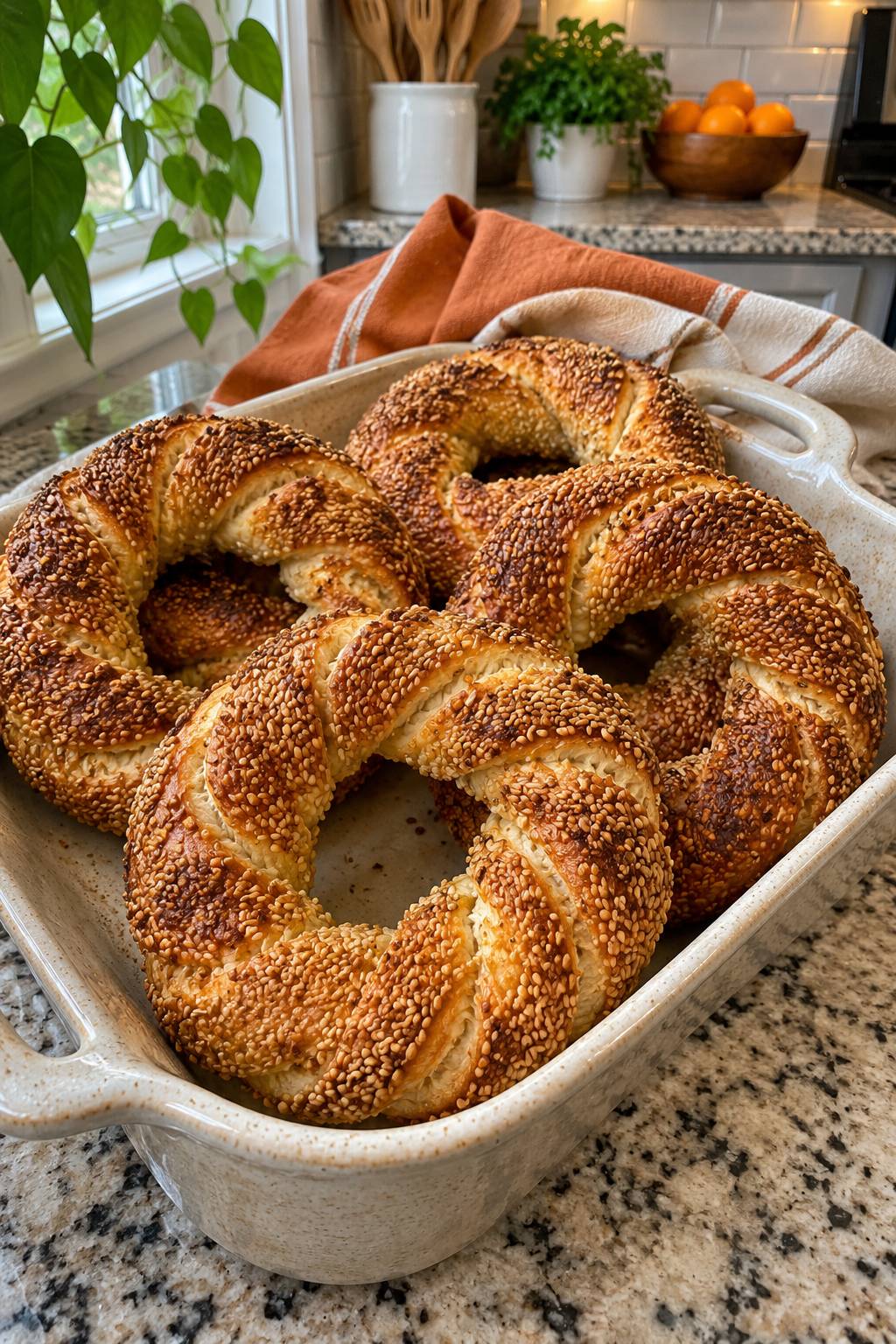
These Turkish sesame rings bring a crisp, deeply browned crust together with a tender, chewy center. Grape molasses gives the sesame coating its characteristic flavor and helps the seeds cling while the simit bake.
Vital wheat gluten joins bread flour to give the dough its structure and chewy bite. The process is approachable, and a few details—especially how you handle the dough and coat the rings—make a noticeable difference in the finished crust.
Why the dough uses bread flour and vital wheat gluten
Bread flour provides a sturdy base for a dough that needs to stretch into ropes and hold its shape as a ring. Vital wheat gluten supports that structure and contributes to the chewy texture associated with simit. Instant yeast helps the dough rise, while a little sugar and kosher salt round out its flavor.
Warm water and olive oil bring the dough together. Stir only until you have a shaggy mixture, then knead until it feels smooth and elastic. If it sticks, add flour sparingly: too much extra flour can make the dough harder to shape and less tender. A lightly oiled bowl keeps the dough from sticking as it rises. Look for it to become nearly doubled rather than relying on a precise visual measurement.
Shape evenly for a balanced chew
Divide the dough into equal portions, then split each portion to make a pair of ropes. Roll the ropes to an even thickness before twisting them together; consistent ropes help the ring bake evenly. Join the ends securely so the twist stays intact and the center remains open.
After shaping, arrange the rings on parchment-lined baking sheets and let them rest loosely covered. This rest gives the dough a chance to relax before the molasses dip and oven. Handle the rings gently when moving them so they keep their shape. If a rope resists rolling, allow the dough to relax instead of forcing it thinner.
Get an even, flavorful sesame coating
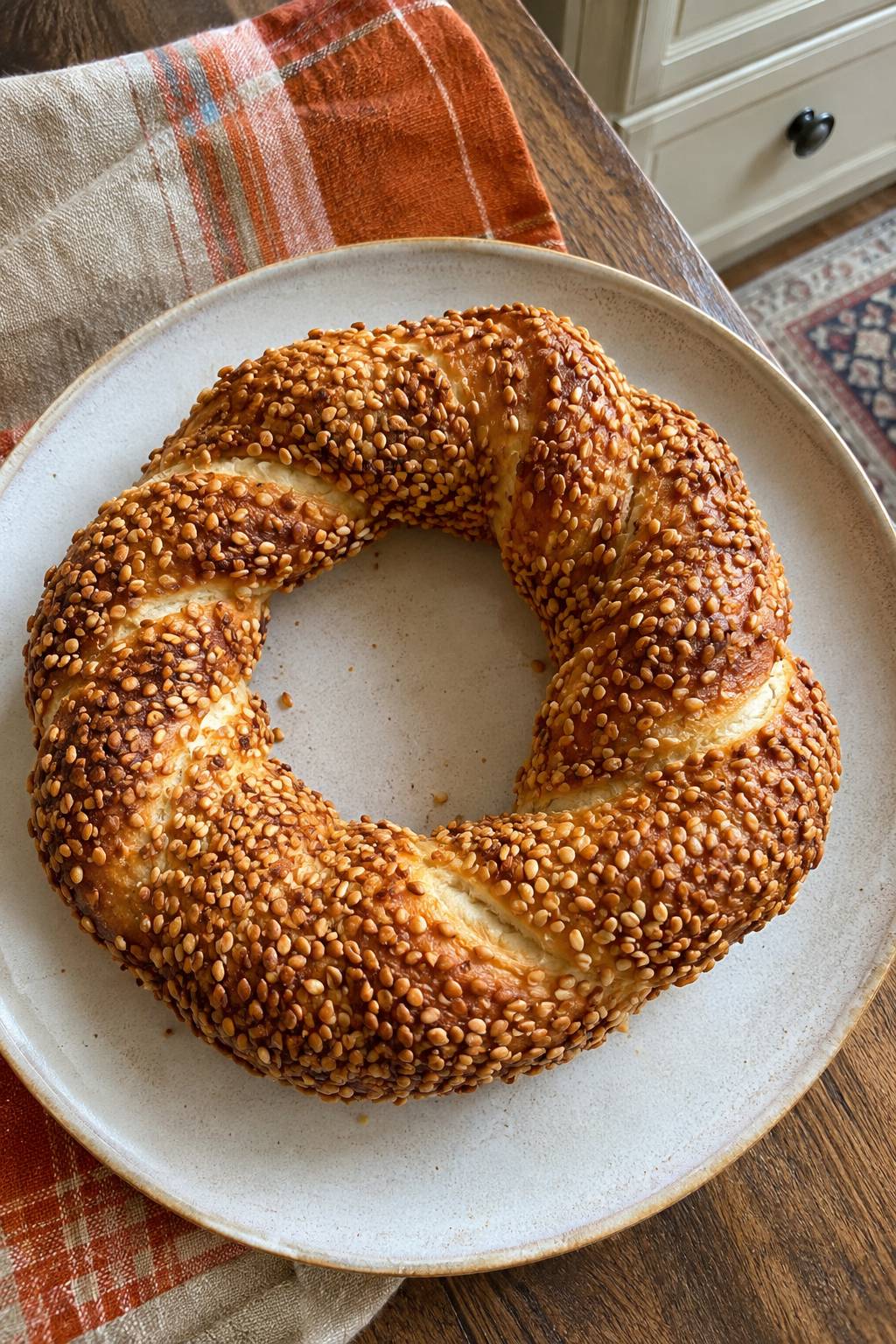
Whisk grape molasses, also called pekmez, with water in a wide, shallow bowl. The diluted molasses is easier to coat with than the syrup alone, while still lending the crust its traditional flavor. Dip each ring just before baking, let excess mixture drip off, then coat it in sesame seeds.
A shallow bowl makes it easier to coat the whole ring without pressing or stretching it. Work with one ring at a time so the surface stays evenly coated. If excess molasses mixture remains on a ring, let it drip away before adding sesame seeds; a balanced coating helps the seeds adhere without pooling on the baking sheet.
Bake for a deeply golden crust
Simit are ready when the crust is deeply golden and crisp. Rotating and swapping the baking sheets halfway through helps them brown more evenly in the oven. Because the sesame coating darkens along with the dough, use the crust’s color and crispness as your cues rather than expecting a pale finish.
Let the rings cool briefly before serving. The crust will be crisp, while the inside stays tender and chewy. That contrast is the hallmark of this Turkish breakfast bread, and the molasses-coated sesame seeds bring a nutty, sweet-savory note to every bite.
Frequently Asked Questions
What does grape molasses do in simit?
Grape molasses, or pekmez, gives the sesame coating its characteristic traditional flavor and helps the seeds cling to the dough. Whisking it with water makes a dip that coats the rings more evenly.
How do I keep the simit rings evenly shaped?
Roll the rope halves to a consistent thickness, twist them together evenly, and join their ends securely. If the dough resists rolling, give it a moment to relax rather than forcing it, which can make shaping harder.
How can I tell when simit are baked?
Look for a deeply golden crust that feels crisp. Rotate and swap the baking sheets halfway through baking to encourage more even browning, then cool the rings briefly before serving.
Recipe
High-Protein Turkish Sesame Simit
These Turkish sesame rings have a crisp, deeply browned crust and a tender, chewy center. Grape molasses helps the sesame seeds cling and gives the crust its traditional flavor.
- Course
- Breakfast
- Cuisine
- Turkish
- Difficulty
- Easy
- Servings
- 6 simit
- Prep time
- 25 mins
- Cook time
- 20 mins
- Total time
- 2 hr
- Calories
- 500 kcal
Ingredients
Dough
Molasses dip and coating
Instructions
In a large bowl, whisk together the bread flour, vital wheat gluten, instant yeast, sugar, and salt. Add the warm water and olive oil; stir until a shaggy dough forms.
Knead the dough on a lightly floured surface for 8 to 10 minutes, until smooth and elastic. Add flour sparingly if it is too sticky to handle. Place the dough in a lightly oiled bowl, cover, and let rise for 60 minutes, until nearly doubled.
Line two baking sheets with parchment. Divide the dough into 6 equal portions. Divide each portion in half, roll each half into an 18-inch rope, twist the ropes together, and join the ends to form a 5- to 6-inch ring.
Arrange the rings on the prepared sheets, cover loosely, and let rest for 15 minutes. Meanwhile, heat the oven to 425°F.
Whisk the grape molasses with the water in a wide, shallow bowl. Put the sesame seeds in a second bowl. Dip each ring in the molasses mixture, let the excess drip off, then coat it in sesame seeds. Return the rings to the baking sheets.
Bake both sheets for 20 minutes, rotating and swapping their positions halfway through, until the simit are deeply golden and crisp. Cool briefly before serving.
Notes
- Grape molasses gives simit its characteristic flavor and helps the sesame seeds adhere. Dip each ring just before baking for an even coating.
Recipe: https://mealsnrecipes.com/high-protein-turkish-sesame-simit/