Why Low-Heat Baking Transforms Salmon Bowls
Nothing ruins a salmon rice bowl faster than dry, flaky fish that tastes like cardboard. You’ve been there, right? High-heat cooking squeezes out all the juices, leaving you disappointed. But these Honey Soy Glazed Salmon Rice Bowls fix that with a gentle 275-degree bake and a mid-cook glaze baste that locks in moisture for flaky perfection.
Therefore, you get restaurant-quality results at home without the fuss. This method breaks down collagen slowly, keeping the salmon juicy while the honey soy glaze caramelizes just right. In addition, it pairs fluffy rice and crisp broccoli for balanced macros, omega-3s, and satisfaction in every bite.
The secret? Hit exactly 120 degrees F internally before the final baste. That precise temp delivers medium-rare tenderness every time. Prep takes just 25 minutes for 2 servings at about 550 calories each, making Honey Soy Glazed Salmon Rice Bowls your new weeknight hero.
Key Ingredients for Honey Soy Glazed Salmon Rice Bowls
Start with 2 skinless salmon fillets, 6 oz each. Skinless prevents curling and ensures even glazing, so the honey soy mixture coats perfectly. Pat them very dry first; moisture blocks that crisp exterior and glaze adhesion.
Low-sodium soy sauce, 1/4 cup, balances salt without overpowering. Honey, 3 tablespoons, brings caramelization power for sticky shine. Sesame oil, 1 tablespoon, adds nutty depth that elevates the whole soy glazed salmon experience.
Fresh ginger, 1 teaspoon minced, gives warmth; it’s punchier than 1/2 teaspoon ground, but both work. Broccoli florets, 2 cups, steam to crisp-tender for contrast against fluffy 2 cups cooked white rice. Green onions and sesame seeds finish with fresh crunch.
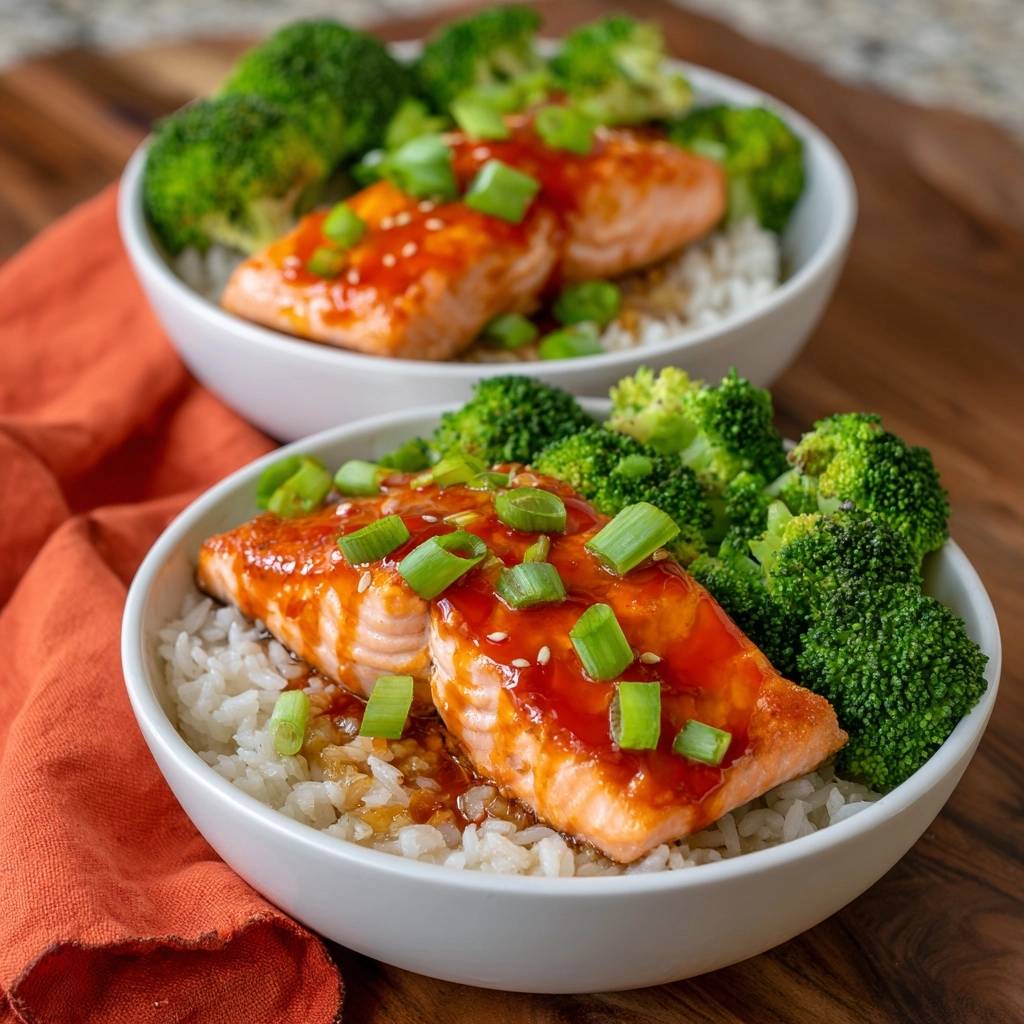
Grab wild-caught salmon if you can; it’s richer in omegas. These simple picks make Honey Soy Glazed Salmon Rice Bowls foolproof and flavorful.
Salmon Fillets: Skinless for Even Glazing
Six-ounce skinless fillets cook evenly at low heat. Patting dry removes surface water, so sesame oil and glaze stick better for a crisp edge without drying out the flesh.
Soy-Honey Glaze Components Breakdown
Whisk soy, honey, and ginger smooth; the 1/4 cup soy to 3 tbsp honey ratio creates perfect stickiness. Emulsify fully to avoid separation during baking.
Rice and Broccoli Base Essentials
Use day-old white rice for extra fluffiness; it absorbs glaze without mush. Steam broccoli just until bright green to keep that vibrant snap.
Science of Low-Heat Glaze Basting in Salmon
At 275 degrees F, collagen in salmon breaks down gently into gelatin, creating tenderness without moisture loss. High-heat sears the outside fast but dries the inside. However, this low temp keeps juices locked.
After 12 to 15 minutes at 120 degrees F internal, baste with reserved glaze. The final 2 to 3 minutes triggers Maillard reaction for glossy finish as sugars evaporate and thicken. Therefore, your Honey Soy Glazed Salmon Rice Bowls stay moist.
Physics here? Glaze reduces via evaporation, forming a barrier. Aim for 120 degrees F; over 130 dries it out. This method guarantees juicy soy glazed salmon every time.
Essential Tools for Perfect Soy Glazed Salmon Bowls
Parchment-lined baking sheet prevents sticking and easy cleanup. No oil spray needed; it lets salmon release perfectly. In addition, an instant-read thermometer ensures 120 degrees F precision.
A small whisk blends glaze smooth for even emulsion. For broccoli, use a covered pot or microwave-safe bowl. Therefore, you make Honey Soy Glazed Salmon Rice Bowls with basic weeknight gear, no fancy stuff required.
Pro tip: Calibrate your oven thermometer if it’s old; fluctuations ruin low-heat magic.
Temperature Control with Thermometer
Probe the thickest part without touching bone. Hit 120 degrees F for flaky, juicy texture; guesswork leads to dry fish.
Step-by-Step: Prepping Honey Soy Glaze and Salmon
Preheat oven to 275 degrees F and line a baking sheet with parchment. Pat salmon very dry with paper towels; this step removes excess moisture for better browning. Brush both sides lightly with sesame oil.
Whisk soy sauce, honey, and ginger until smooth and glossy. Reserve half for drizzling later. Brush the rest lightly on salmon; it soaks in during baking for infused flavor in your Honey Soy Glazed Salmon Rice Bowls.
Place fillets on the sheet. You’re set for low-heat magic; the oil creates a barrier against drying.
Low-Heat Baking and Baste Technique
Bake uncovered 12 to 15 minutes until internal temp hits 120 degrees F. Salmon turns opaque with a slight pearl sheen. Remove, then generously baste with remaining bake glaze using a spoon for full coverage.
Return to oven 2 to 3 more minutes. Watch the glaze bubble and thicken, forming a shiny seal that locks in juices. This baste prevents dry salmon in Honey Soy Glazed Salmon Rice Bowls forever.
Pro tip: If your oven runs hot, check at 12 minutes to avoid overcooking.
Steaming Crisp Broccoli for Bowl Balance
While salmon bakes, place broccoli in a covered pot with 2 tablespoons water over medium heat. Steam 4 to 5 minutes until bright green and crisp-tender; you’ll smell that fresh earthiness.
Drain well to remove excess water; soggy veg ruins bowl texture. Therefore, it contrasts perfectly with flaky soy glazed salmon in Honey Soy Glazed Salmon Rice Bowls.
Assembling Stunning Salmon Rice Bowls
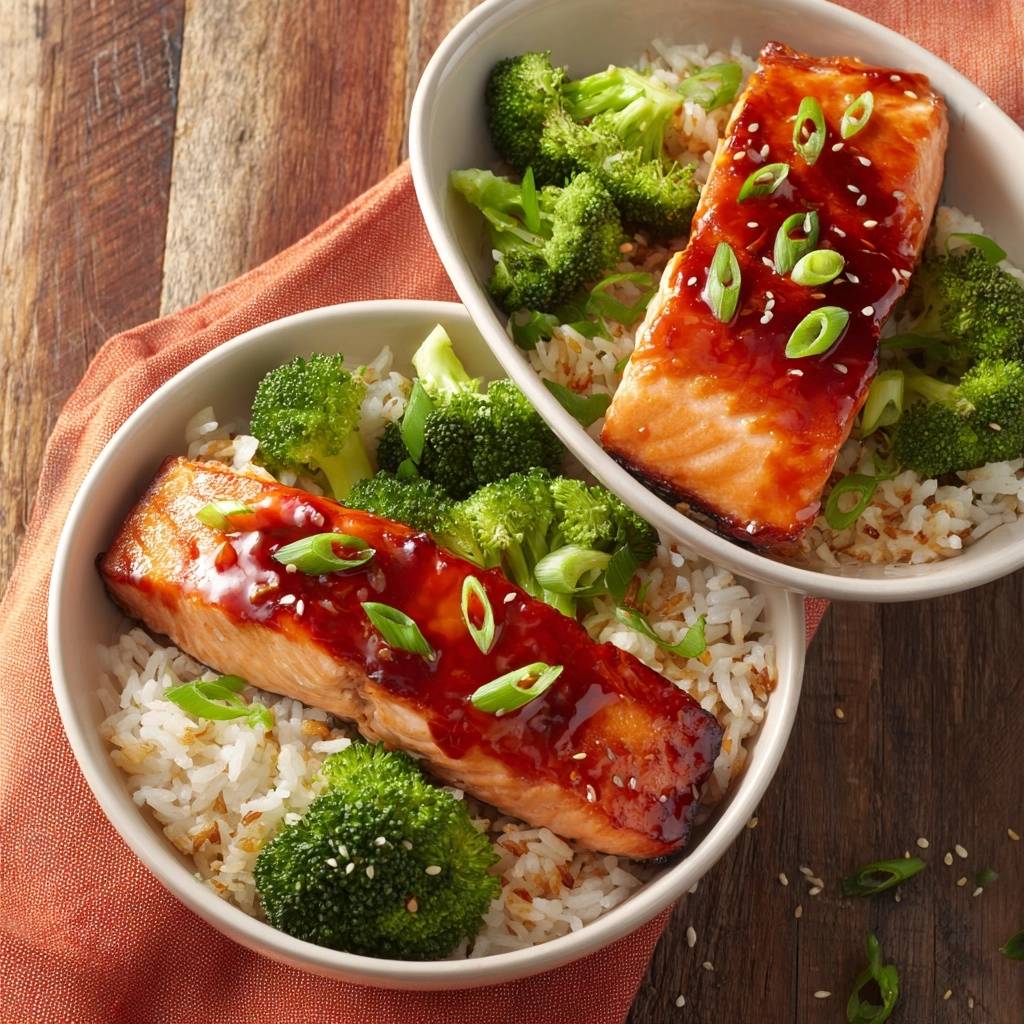
Divide 2 cups cooked rice into two bowls; fluff it first for lightness. Layer on broccoli, then salmon fillet. Slice green onions thin for pop.
Sprinkle sesame seeds and drizzle reserved glaze for shine. Serve immediately while hot; the steam rises with sweet ginger aroma. Your Honey Soy Glazed Salmon Rice Bowls are bowl goals.
Avoiding Dry Salmon in Honey Soy Glaze Bowls
Overbaking past 125 degrees F toughens salmon; always use a thermometer. If fillets are wet before oiling, pat again; moisture steams instead of glazes. Oven too hot? Door ajar helps.
Glaze separating? Whisk vigorously before use. For thicker fillets, add 2 to 3 minutes initial bake. These fixes ensure juicy Honey Soy Glazed Salmon Rice Bowls every time.
Pro tip: Let salmon rest 2 minutes post-bake; juices redistribute for max moistness.
Glaze Not Thickening? Quick Fixes
Broil 30 seconds after baste for fast bubble. Or stir in 1/2 tsp cornstarch slurry before final bake; it thickens without clumping.
Flavor Twists on Soy Glazed Salmon Rice Bowls
Swap honey for maple for earthier sweetness. Add minced garlic or chili flakes to glaze for heat. Use quinoa or brown rice for nutty base in glazed salmon bowls.
Toss in edamame or avocado for creaminess. Teriyaki twist? Extra soy and mirin. Keep low-heat baste; it works universally for Honey Soy Glazed Salmon Rice Bowls variations.
Spicy Sriracha Honey Soy Version
Whisk 1 tsp sriracha into glaze for kick. It balances sweet heat without overpowering salmon’s delicacy.
Pairing Sides with Honey Soy Salmon Bowls
Cucumber salad with rice vinegar cuts richness. Miso soup warms it up. Pickled radish adds acid crunch.
Expand with quick veggie stir-fry. Green tea or iced jasmine pairs clean. These build a full meal around Honey Soy Glazed Salmon Rice Bowls.
Nutrition Breakdown: Salmon Rice Bowl Benefits
Per serving: 40g protein, healthy fats from salmon, fiber from broccoli. Omega-3s support heart health. At 550 calories, it’s balanced.
Low-carb? Swap rice for cauliflower. Tweaks fit keto or paleo. Honey Soy Glazed Salmon Rice Bowls nourish without sacrifice.
Honey Soy Glazed Salmon Rice Bowls FAQ
Can I Use Skin-On Salmon Fillets?
Yes, score the skin in crosshatch to prevent curling and help glaze penetrate. It crisps up nicely, but add 1 to 2 minutes bake time and place skin-side down.
How to Store Leftover Soy Glazed Salmon Bowls?
Store in airtight containers in fridge up to 2 days; glaze keeps it moist. Reheat gently in 250 degrees F oven 5 to 7 minutes or microwave covered on low to avoid drying. Does not freeze well; texture turns mushy.
Best Rice for These Glazed Salmon Bowls?
Jasmine or sushi rice for sticky fluff that holds toppings. Cook in rice cooker with 1:1.25 water ratio; day-old reheated crisps edges perfectly against salmon.
Vegetarian Swap for Honey Soy Salmon?
Use firm tofu steaks, 6 oz each, pressed dry first. Follow same low-heat bake and baste; it absorbs glaze for meaty texture in 12 to 15 minutes.
Why 275°F for Moist Soy Glazed Salmon?
Low heat slowly converts collagen to gelatin without evaporating juices, unlike 400°F which tightens proteins and dries fish. Baste seals it at 120°F internal for flaky results.
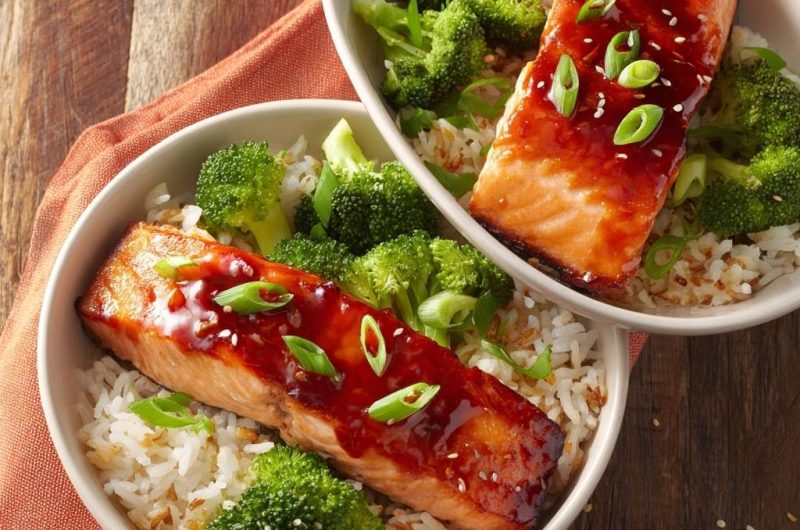
Honey Soy Glazed Salmon Rice Bowls
Course: Main CourseCuisine: Asian-InspiredDifficulty: easy2
servings10
minutes20
minutes30
Minutes550
kcalAsian-Inspired
Ingredients
2 salmon fillets (6 oz each, skinless)
2 cups cooked white rice
2 cups broccoli florets
1/4 cup low-sodium soy sauce
3 tablespoons honey
1 tablespoon sesame oil
2 green onions, thinly sliced
1 tablespoon sesame seeds
1 teaspoon minced fresh ginger (or 1/2 teaspoon ground ginger)
Directions
- Preheat oven to 275 degrees F. Line a baking sheet with parchment paper. Pat salmon fillets very dry with paper towels, then brush both sides lightly with sesame oil. Place on baking sheet.
- Whisk soy sauce, honey, and ginger in a small bowl until smooth. Reserve half for serving. Brush salmon lightly with half the glaze.
- Bake salmon uncovered for 12 to 15 minutes (internal temp reaches 120 degrees F for juicy medium-rare). Remove from oven, generously baste with remaining bake glaze using a spoon. Return to oven for 2 to 3 more minutes until glaze bubbles and thickens, locking in all moisture. This low-heat baste is the game-changer, no dryness ever.
- While salmon bakes, steam broccoli florets in a covered pot with 2 tablespoons water over medium heat for 4 to 5 minutes until bright green and crisp-tender. Drain well.
- Divide rice into two bowls. Top with broccoli, salmon, sliced green onions, and sesame seeds. Drizzle with reserved glaze. Serve immediately.
Notes
- Low-heat baking at 275°F and mid-cook glaze basting is the key to juicy, never-dry salmon. Aim for internal temp of 120°F for medium-rare.