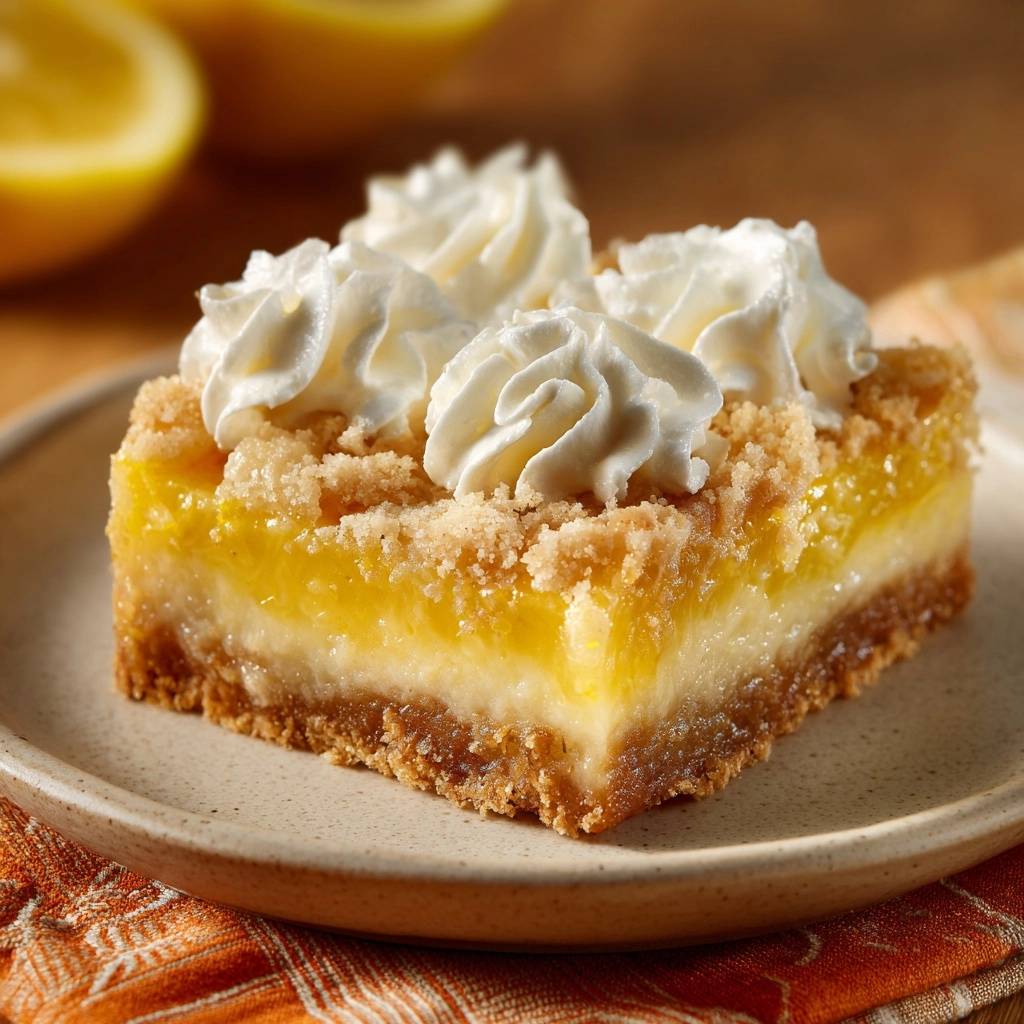
Tired of lemon crumble bars where the crust turns into a soggy mess after one bite? You know the drill: that promising buttery base gets wrecked by the juicy lemon filling. This recipe fixes it with a crisp crust that holds up every time.
Parbaking creates the difference. It sets the crust firm before the filling hits, so you get perfect layers of crunch below and bright citrus above. In addition, the crumble top adds that irresistible texture contrast everyone craves.
Here’s the expertise booster: keep the butter ice-cold and cubed for pea-sized pieces in the dough. Therefore, it steams up flaky during baking, locking in that golden, non-mushy base. You’ll taste the win in every slice.
Why Parbaking Transforms Lemon Crumble Bars
Traditional lemon crumble bars often fail because the raw crust absorbs the acidic filling’s moisture right away. However, parbaking at 350°F first dries out the dough just enough to block that. You end up with crisp lemon crumble bars that stay textured for days.
Readers always complain about mushy bottoms ruining the party. This method solves it completely. Plus, it amps up flavor through light browning on the edges.
Moisture Barrier Science in Baking
Parbaking gelatinizes the starches in the flour quickly. This forms a tight, impermeable layer that repels the wet lemon filling. In addition, the Maillard reaction kicks in for those golden edges with nutty depth.
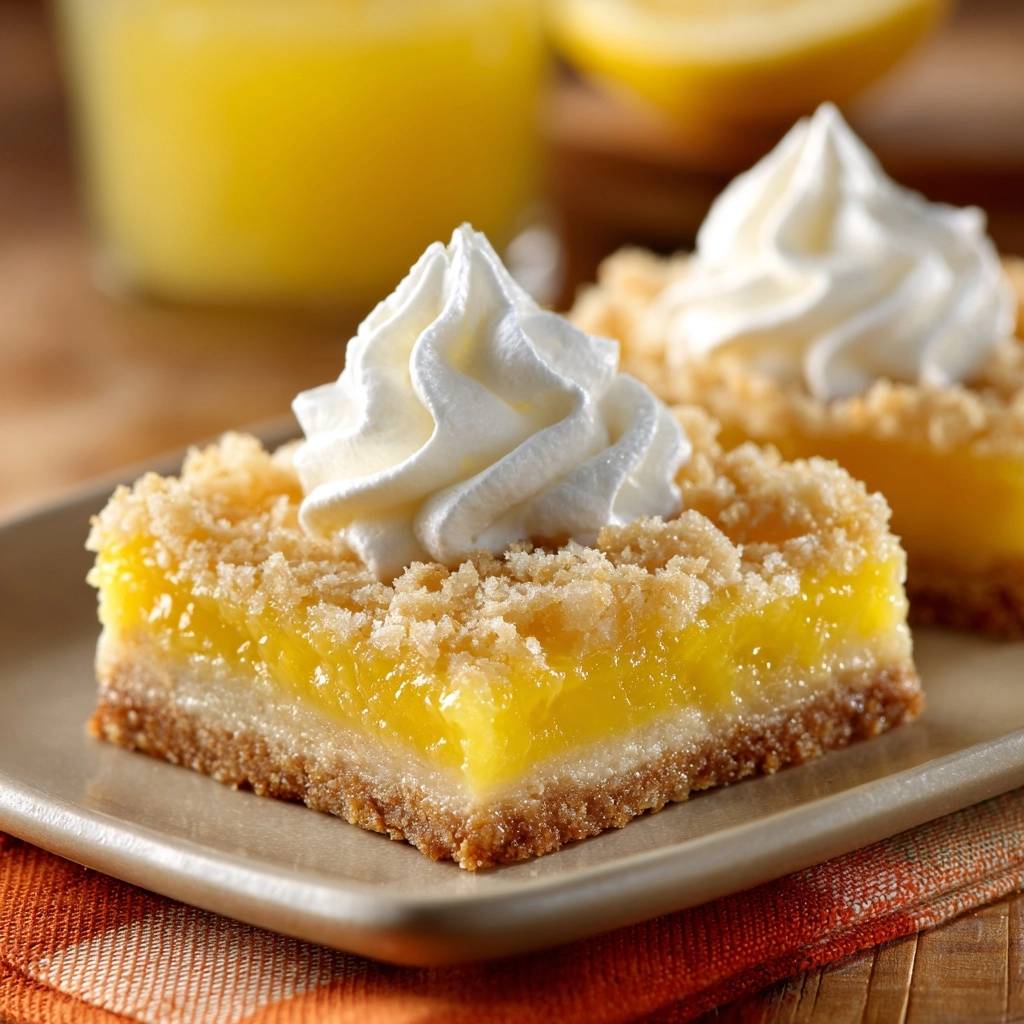
Without it, acid breaks down the crust fast. But with this step, your bars slice clean and stay crisp. It’s simple science you can trust.
Crust Texture Before and After Parbaking
Skip parbaking, and the crust goes soft and gummy fast. Parbake it, though, and it firms up with flaky layers that crunch under the fork. Cold butter keeps those pea-sized bits intact for steam pockets.
Before feels doughy; after, it’s shatteringly crisp. That’s the texture upgrade you need.
Precise Ingredients for Lemon Crumble Bars
Start with 2¼ cups all-purpose flour for structure in both crust and crumble. It holds everything together without getting tough. Use ¾ cup powdered sugar because it melts smoothly, unlike granulated which can grain up.
One cup cold unsalted butter cubed keeps things tender and flaky. A pinch of salt sharpens all the flavors. For the filling, grab 4 large eggs, 1½ cups granulated sugar, ½ cup fresh lemon juice from about 3 lemons, and 1 tablespoon zest for punchy brightness.
Don’t skip the ¼ cup flour and ½ teaspoon baking powder in the filling; they ensure it sets firm. Whipped cream needs 1 cup heavy whipping cream, 2 tablespoons powdered sugar, and ½ teaspoon vanilla. Fresh lemons beat bottled every time for real zing.
Crust and Crumble: Flour, Butter, Sugar Balance
Powdered sugar dissolves fast for a melt-in-your-mouth crust. Cold cubed butter creates tenderness through steam. Try gluten-free flour if needed, but match the amount exactly.
Salt enhances without overpowering. These ratios nail the balance.
Lemon Filling: Zest, Juice, and Setting Agents
Whisk eggs and sugar first until pale for a stable emulsion. Fresh juice and zest deliver bright acid. Flour plus baking powder thickens cleanly, no gumminess.
Whipped Cream Finish: Cream, Sugar, Vanilla
Heavy cream whips to stable peaks. Powdered sugar blends invisibly. Vanilla tempers the tartness perfectly. Coconut cream works for dairy-free dollops.
Science of Perfect Lemon Crumble Layers
The filling emulsifies when eggs and sugar go pale before acid hits. Pour it on hot crust, and it starts setting instantly. At 350°F, the crumble browns while the base stays protected.
Pressed dough forms a solid barrier; loose crumble gives crunch. Therefore, layers transform from wet mess to pro-level bars. It’s all about heat and timing.
Emulsion and Setting in Citrus Fillings
Acid curdles eggs if you rush, so whisk sugar in first till foamy. Flour suspends evenly for no lumps. Baking powder adds subtle lift like a custard pro.
Golden Crumble Top Browning Reactions
Maillard browning happens from butter sugars at high heat. Stir the topping dough briefly to loosen for even clumps. It toasts golden and crisp.
Step-by-Step: Building Crisp Lemon Crumble Bars
Preheat to 350°F. Line a 9×13 pan with parchment overhang and grease lightly. It lifts out clean later.
Prep Pan and Make Crust Dough
Pulse flour, powdered sugar, cold butter, and salt in a food processor till coarse crumbs form. Pea-sized butter stays visible; don’t overmix or it toughens. Press two-thirds firmly into the pan bottom.
Parbake Crust for Moisture Protection
Bake 20-25 minutes till edges golden and center firm to touch. This game-changer seals out moisture completely. Pro tip: press it even for uniform crispness.
Whisk Filling and Assemble Layers
Whisk eggs and sugar pale and smooth. Vigorously mix in juice, zest, flour, baking powder till lump-free. Pour over hot crust, then crumble on the remaining third dough.
Final Bake, Cool, and Chill Process
Bake 25-30 more minutes till set with slight center jiggle and golden top. Cool 1 hour on rack, then chill 2 hours minimum. Whip cream to stiff peaks for topping; slice chilled for neat edges.
Avoiding Pitfalls in Lemon Crumble Bars
Overmixing dough kills flakiness; warm butter flattens texture; skipping parbake means sogginess. Underwhisk filling leads to runniness, and rushing chill gives messy slices. Fix them with these tweaks.
Measure precisely and follow cues like “pale eggs” or “golden edges.” You’ll avoid every common flop.
Overmixing Dough Fixes
Stop at pea-sized butter for steam to create layers. Overmixing develops gluten for toughness. Pulse briefly and done.
Runny Filling Prevention
Whisk vigorously to dissolve flour fully. Measure it level; too little and it won’t set. Bake till just jiggly.
Flavor Twists on Lemon Crumble Bars
Swap lime juice for extra tang or mix in orange zest. Add blueberries to the filling for bursts of sweetness. Coconut flakes in the crumble bring tropical vibe.
Try matcha powder dusting or ginger in the dough for spice. Chocolate drizzle contrasts the citrus nicely. All keep the crisp crust intact.
Citrus Swaps and Add-Ins
Lime sharpens the edge; lemon-berry blends juicy fruit right in. Use equal juice volumes. Zest doubles for aroma.
Nutty or Spiced Crumble Upgrades
Mix almond flour into crumble for nuttiness. Add ginger or cardamom zest for warmth. Toast nuts first if using.
Make-Ahead and Storage for Lemon Crumble Bars
Parbake crust day ahead, then assemble and bake next. Keeps fresh texture. Fridge stores whole pan covered up to 4 days; flavors deepen nicely.
Freeze baked bars without cream up to 2 months. Thaw in fridge overnight. Add fresh whipped cream after.
Freezing Uncut Bars Guide
Cool fully, wrap tightly in plastic then foil. Label with date. Thaw slowly to avoid sogginess.
Pairing Sides with Lemon Crumble Bars
Black tea cuts the acid perfectly. Fresh strawberries add juicy contrast. Greek yogurt parfait layers light tang beside the richness.
Summer berries or shortbread cookies extend the treat. Keep sides simple to let lemon shine.
Essential Tools for Lemon Crumble Bars
A 9×13 pan ensures even baking depth. Food processor speeds crumbly dough fast. Microplane zester gets fine lemon zest without bitterness.
Stand mixer whips cream stable; wire rack cools evenly to prevent sogginess. Pastry blender works if no processor.
Mixing Tools for Dough and Filling
Processor pulses quick for even crumbs. Blender gives more control for small batches. Whisk by hand for filling emulsion.
Troubleshooting Lemon Crumble Bars
Soggy Crust Diagnosis
No parbake lets moisture soak in. Always bake crust 20-25 minutes first to gelatinize starches. It’s non-negotiable for crisp lemon crumble bars.
Lumpy Filling Solutions
Sift flour before adding. Whisk in stages: eggs-sugar first, then dry. Vigor fixes it fast.
How do I store Lemon Crumble Bars?
Keep them covered in the fridge up to 4 days. The crisp crust holds up well chilled. For longer, freeze uncut bars tightly wrapped for 2 months; thaw overnight in fridge. Don’t freeze with whipped cream; add fresh after thawing to avoid watery texture.
Why is my lemon crumble bars filling runny?
Usually underwhisked flour or too little bake time. Whisk vigorously till smooth and no lumps show; it emulsifies properly. Bake till center jiggles slightly only, about 25-30 minutes total after parbaking. Measure sugar and flour precisely too, as imbalances prevent setting.
Can I substitute ingredients in lemon crumble bars?
Yes, use gluten-free 1:1 flour blend for the crust, but add ¼ teaspoon xanthan gum if not included. For dairy-free, coconut oil for butter works but chill extra; coconut cream for whipped topping. Fresh lemon juice can’t swap easily; bottled lacks zest punch, so add extra lemon extract if desperate.
Why did my crust turn out tough in lemon crumble bars?
Overmixing develops gluten. Pulse just till pea-sized butter bits remain for steam pockets and flakiness. Also, use cold butter straight from fridge; warm makes dense texture. Press gently, don’t knead.
How can I make lemon crumble bars less tart?
Balance with more sugar in filling, up to 1¾ cups, or add ¼ cup finely chopped white chocolate. Increase zest slightly for aroma without extra acid. Top generously with sweetened whipped cream to mellow each bite.
Can I make lemon crumble bars ahead for a party?
Absolutely, parbake crust up to 2 days ahead, cover tightly. Assemble and bake morning of, chill fully for clean slices. They taste even better next day as flavors meld. Prep whipped cream fresh right before serving for fluffiest dollops.
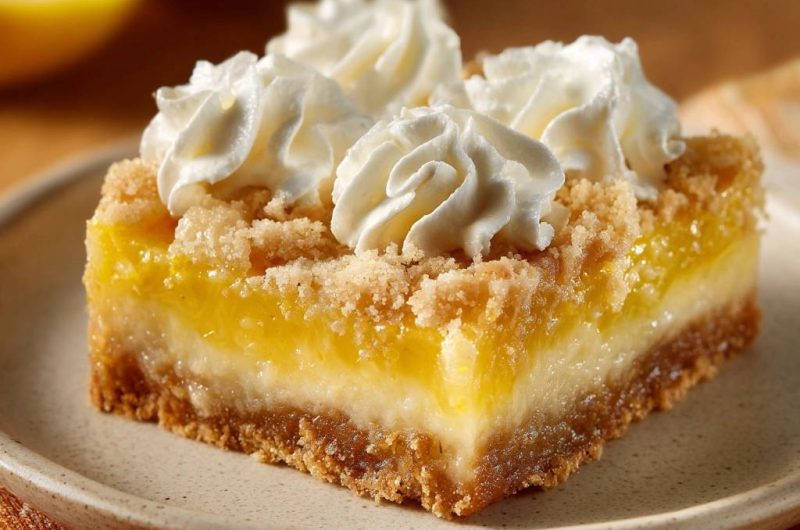
Lemon Crumble Bars
Course: DessertCuisine: AmericanDifficulty: easy24
bars20
minutes50
minutes180
Minutes280
kcalAmerican
Ingredients
Crust and Crumble Topping:
2 1/4 cups all-purpose flour
3/4 cup powdered sugar
1 cup cold unsalted butter, cubed
Pinch of salt
Lemon Filling:
4 large eggs
1 1/2 cups granulated sugar
1/2 cup fresh lemon juice (from 3 lemons)
1 tablespoon lemon zest
1/4 cup all-purpose flour
1/2 teaspoon baking powder
Whipped Cream Topping:
1 cup heavy whipping cream
2 tablespoons powdered sugar
1/2 teaspoon vanilla extract
Directions
- Preheat oven to 350 degrees F. Line a 9×13-inch baking pan with parchment paper or foil, leaving overhang for easy removal. Lightly grease.
- Make the crust dough: In a food processor or large bowl, combine flour, powdered sugar, cold butter cubes, and salt. Pulse or cut in with a pastry blender until mixture resembles coarse crumbs (pea-sized butter pieces remain – do not overmix).
- Press about two-thirds of the dough firmly and evenly into the bottom of the prepared pan to form the crust.
- Bake crust for 20 to 25 minutes until edges are lightly golden and center feels firm when pressed. This parbaking step is the game-changer – it fully sets the crust and blocks filling moisture for zero sogginess.
- While crust bakes, prepare filling: In a medium bowl, whisk eggs and granulated sugar until smooth and pale. Add lemon juice, zest, flour, and baking powder. Whisk vigorously until fully incorporated and no lumps remain (flour ensures perfect set).
- Remove parbaked crust from oven. Immediately pour lemon filling evenly over hot crust.
- Stir remaining one-third dough briefly to loosen, then sprinkle and crumble it evenly over the filling.
- Return to oven and bake 25 to 30 minutes more, until filling is set (slight jiggle in center okay), edges puff slightly, and crumble top is golden brown.
- Cool bars completely in pan on a wire rack (about 1 hour). Refrigerate at least 2 hours to fully set filling for clean slices.
- For whipped cream: Beat heavy cream, powdered sugar, and vanilla to stiff peaks. Dollop on cut bars. Garnish with lemon slices. Slice and serve chilled. Store covered in fridge up to 4 days.
Notes
- Parbaking the crust is key to preventing sogginess. Refrigerate for at least 2 hours for clean slices. Store covered in fridge up to 4 days.