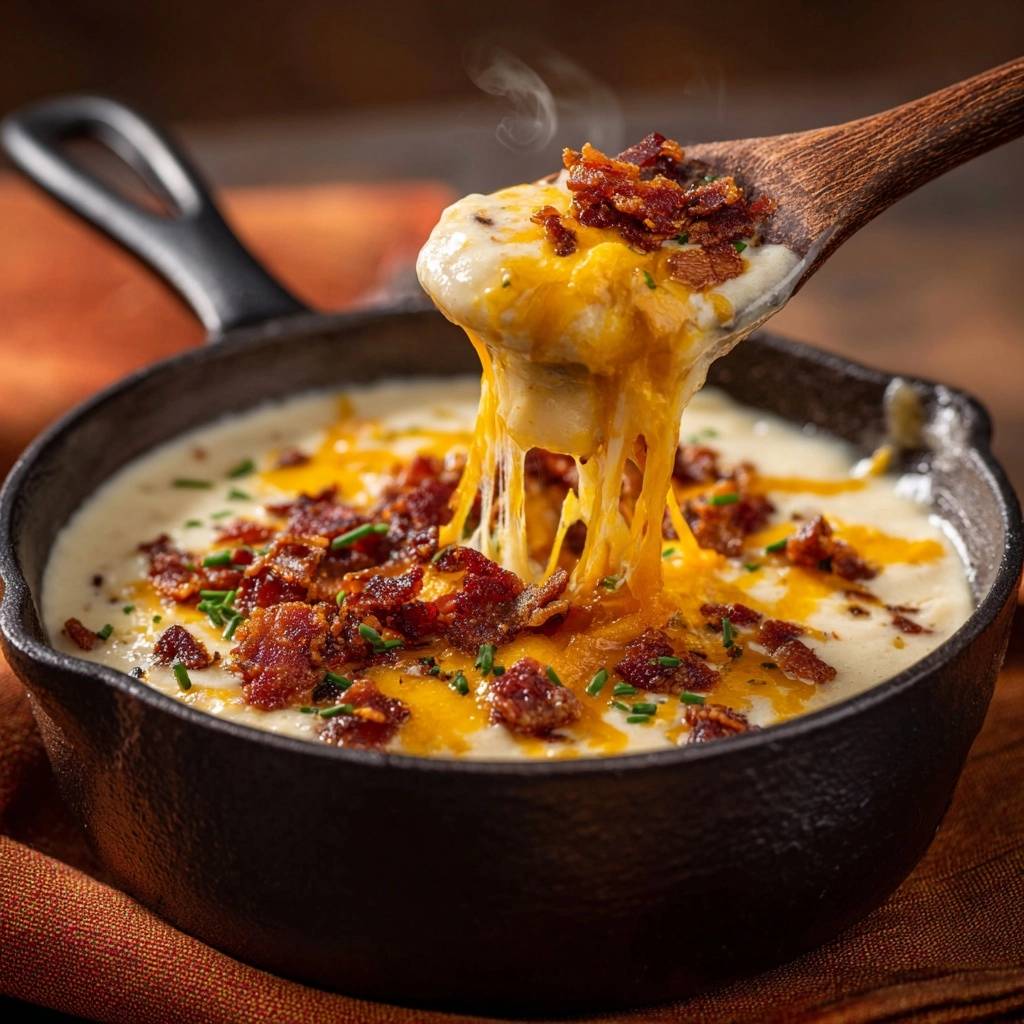
Ever scooped up a spoonful of potato soup only to find it gluey and pasty? That’s the starch from boiled potatoes going wild, turning creamy dreams into a thick sludge. But this loaded baked potato soup changes everything. You bake the russets first, locking in flavor and dodging that mess for silky smoothness every time.
Here’s why it works so well. Baking evaporates moisture inside the potatoes, so they don’t release excess starch when you mash them. In addition, the bacon drippings build a smoky base that ties it all together. You’ll get that loaded baked potato vibe without the hassle.
The real secret? Lightly mash the baked potato flesh, leaving chunks for texture. This prevents overworking the starch. Oh man, one bite and you’ll crave that stretchy cheese pull. Yields 6 servings, 20 minutes prep, 1.5 hours total.
Why Bake Russets for Loaded Baked Potato Soup
Baking vs Boiling: Starch Science
Russet potatoes pack high starch content, perfect for loaded baked potato soup’s creaminess. However, boiling them causes starch granules to swell and burst, releasing amylopectin that gels into glue. Baking at 400°F dries them out first, concentrating flavor while limiting that release.
Therefore, your soup stays velvety, not pasty. I’ve seen boiled versions thicken into wallpaper paste, but baked ones? Pure silk. Russets’ fluffy interiors scoop easily after crisping.
Selecting Perfect Russets
Pick large, firm russets with smooth skins for the best loaded baked potato soup. Avoid sprouts or green spots, as they taste bitter. Firm ones hold up during baking, crisping the exterior for easy scooping.
Pierce each potato deeply with a fork. This lets steam escape, preventing explosions. No foil needed; direct rack baking gives that craveable crisp skin.
Core Ingredients for Loaded Baked Potato Soup
Bacon and Drippings Foundation
Chop 8 slices of thick-cut bacon for smoky depth in your loaded baked potato soup. Cook it in cast iron to render fat slowly, building a flavorful base. Reserve exactly 2 tablespoons drippings; they coat everything with umami.
Turkey bacon works as a lean swap, but it lacks that rich smoke. Either way, pat the crisped bits dry for topping crunch. This step elevates the whole pot.
Dairy Blend for Creaminess
Whole milk and sour cream create the luxurious body in loaded baked potato soup. Use 2 cups milk plus 1/2 cup sour cream for tang without overpowering. Add them off-heat to avoid curdling.
Shred 2 cups sharp cheddar fresh; it melts smoother than pre-shredded, which has anti-caking agents. Divide it: 1 1/2 cups in, the rest for topping. That melty pull? Irresistible.
Aromatics and Broth Base
Dice 1 small onion and mince 2 garlic cloves for loaded baked potato soup’s savory backbone. Sauté them in bacon drippings plus 3 tablespoons butter; the sequence layers sweetness without burning. Then, 4 cups chicken broth simmers it all.
Chop 1/4 cup fresh chives, saving extra for garnish. They add a bright, oniony pop that cuts the richness. Salt and pepper finish it perfectly.
Equipment Essentials for Loaded Baked Potato Soup
Cast Iron Skillet Advantages
Cast iron shines for loaded baked potato soup’s bacon and base. Its heat retention crisps bacon evenly and sautés onions without hot spots. Enameled versions clean up easier if you prefer.
No cast iron? A Dutch oven does fine. Just ensure it’s heavy-bottomed for steady simmering. This setup prevents scorching.
Oven Rack Baking Method
Bake potatoes directly on the oven rack at 400°F for loaded baked potato soup. It crisps skins all around. Place a sheet pan below to catch drips.
Fork-pierce deeply, then cool 10 minutes post-bake. Grip with a towel for safe handling. Simple and foolproof.
Step-by-Step: Baking Phase for Loaded Baked Potato Soup
Preheating and Piercing Potatoes
Preheat to 400°F. Pierce 4 large russets all over with a fork; this vents steam so they bake evenly. Slide them right onto the rack for 1 hour.
They’re done when a knife slips in easily and skins crisp up. The kitchen fills with that toasty potato smell. Cool 10 minutes before scooping.
Scooping and Light Mashing
Halve the baked potatoes lengthwise. Scoop flesh into a bowl, leaving skins behind. Mash lightly with a fork, keeping some 1/2-inch chunks for texture.
Don’t puree; over-mashing releases more starch. Those chunks mimic loaded baked potato bites in your soup.
Step-by-Step: Building Loaded Baked Potato Soup Base
Cooking Bacon to Crisp
Chop bacon and cook over medium heat in cast iron, about 8 minutes till crispy. Stir occasionally for even browning. The sizzle promises flavor.
Scoop bacon to paper towels with a slotted spoon. Leave 2 tablespoons drippings; measure precisely for balance.
Onion-Garlic Sauté in Drippings
Add butter to drippings. Toss in diced onion and minced garlic. Cook 5 minutes till soft and fragrant, not browned.
This builds the umami base gently. You’ll smell the sweet progression.
Simmering with Broth
Add mashed potatoes to the skillet. Gradually pour in chicken broth, stirring to combine. Bring to a simmer over medium, then cook 10 minutes.
It thickens slightly; stir now and then. The mixture turns silky as flavors meld.
Step-by-Step: Creamy Finish in Loaded Baked Potato Soup
Low-Heat Dairy Integration
Drop heat to low. Stir in milk and sour cream until smooth. Never let it boil, or dairy separates.
Pro tip: Taste here; the tang balances richness. Remove from heat next for cheese.
Melting Cheese Off-Heat
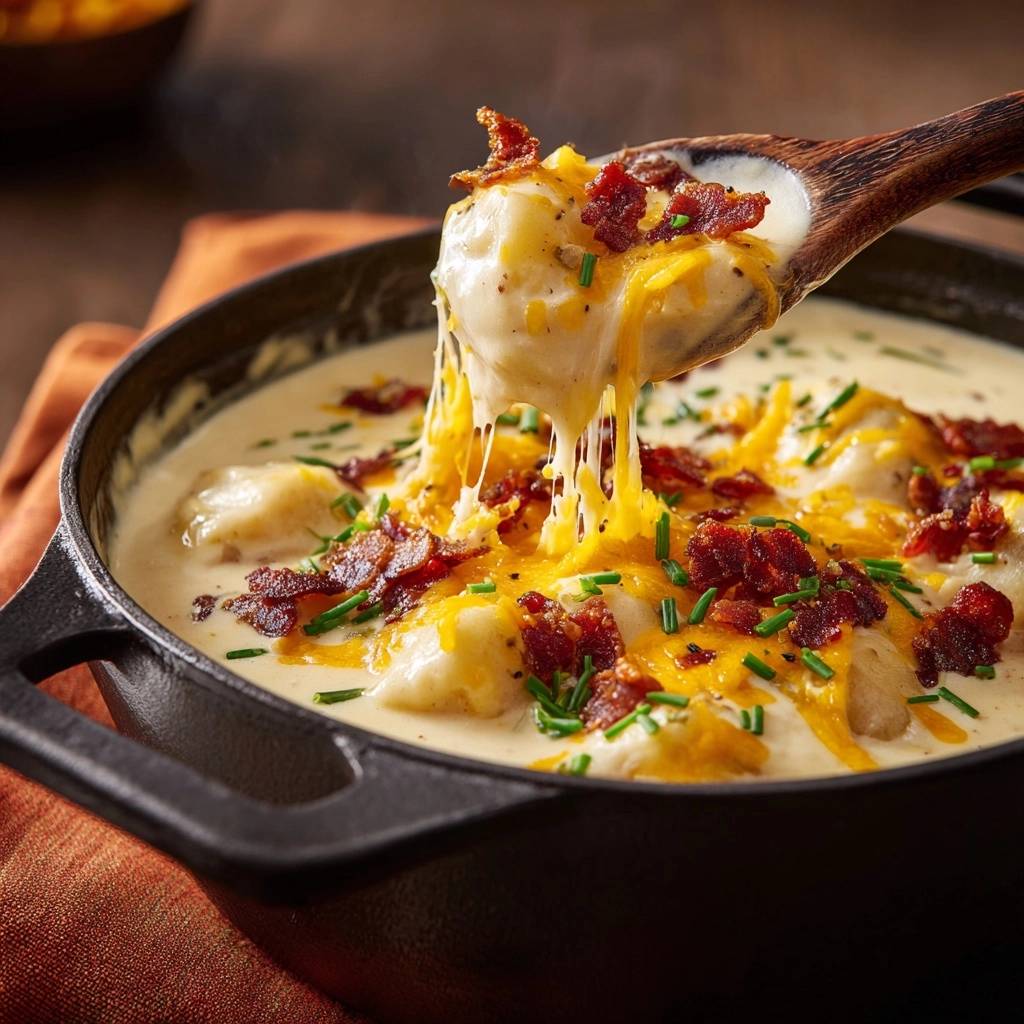
Off-heat, stir in 1 1/2 cups shredded cheddar till melted and creamy. Season with salt and pepper. It gets that glossy sheen.
The cheese stretches beautifully. Baked potatoes blend lump-free here.
Assembly and Toppings
Ladle hot loaded baked potato soup into bowls. Top with reserved bacon, remaining cheese, and chives. Serve immediately for peak comfort.
Cheese melts on contact. Dig in while steaming.
The Science of No-Gluey Loaded Baked Potato Soup
Starch Gelatinization Control
Baking russets evaporates internal water, so starch granules swell less when mashed. Boiled potatoes absorb water, bursting granules for glue. Therefore, baked ones yield fluff that creams up perfectly.
Science backs it: less moisture means controlled gelatinization. Your loaded baked potato soup stays spoonable, not stodgy.
Dairy Curdling Prevention
Sour cream’s acidity needs low heat; above 180°F, proteins tighten and separate. Off-heat addition keeps pH stable. Milk follows suit for smoothness.
This method ensures no grainy bits. Always stir gently.
Avoiding Mistakes in Loaded Baked Potato Soup
Over-Mashing Pitfalls
Fork-mash only; blenders shear starch, making gumminess. Keep chunks for satisfying texture in loaded baked potato soup. Puree risks baby food vibes.
If too smooth, next time leave bigger pieces. Texture matters.
Boiling Dairy Errors
Boiling curdles milk and sour cream into lumps. Watch for skin forming or separation. Fix by straining, but prevention’s better.
Low heat rules. Stir constantly at this stage.
Flavor Variations for Loaded Baked Potato Soup
Cheese and Protein Swaps
Swap sharp cheddar for gouda in loaded baked potato soup for nutty melt. Use ham instead of bacon for sweeter smoke. Vegan? Cashew cream mimics dairy creaminess.
Keep ratios same. Tastes fresh each time.
Spice and Herb Twists
Add smoked paprika for extra depth in loaded baked potato soup. Swap chives for green onions. For heat, pinch cayenne.
Start mild; spices bloom in simmer. Customizes easily.
Make-Ahead Guide for Loaded Baked Potato Soup
Freezing and Reheating Tips
Portion cooled loaded baked potato soup into freezer bags. Freeze up to 3 months; potatoes hold texture well since baked. Thaw overnight, then simmer gently.
Stir in fresh toppings post-reheat. Avoid multiple freezes.
Storage Best Practices
Fridge airtight leftovers up to 4 days. Stir before reheating to redistribute creaminess. Reheat on stovetop low; microwave works but stir often.
Don’t leave out over 2 hours.
Pairing Sides with Loaded Baked Potato Soup
Crusty Bread Complements
Sourdough slices dunk perfectly in loaded baked potato soup’s richness. Corn muffins add sweet contrast. Tear and dip for max soak.
Crisp exteriors hold up.
Salad and Veggie Balances
Kale slaw’s crunch cuts creaminess in loaded baked potato soup. Roasted broccoli brings char. Light sides balance the bowl.
Fresh greens revive it.
Troubleshooting Loaded Baked Potato Soup Issues
Too Thin Fixes
If thin, simmer longer or whisk in cornstarch slurry (1 tbsp cornstarch + 2 tbsp water). Stir till thickened. Broth varies, so adjust.
Lumpy Texture Solutions
Spot-blend lumps with immersion blender. Or press through sieve. Baked mash rarely lumps anyway.
Salt Balance Adjustments
Taste after broth simmers, before dairy. Broth sodium differs; add pepper too. Layers build flavor.
Loaded Baked Potato Soup FAQ
Can I use red potatoes?
No, red potatoes are low-starch and waxy, so they won’t cream up right in loaded baked potato soup. Russets’ high starch absorbs dairy perfectly for silkiness. Stick to them for no-glue results.
Vegetarian version possible?
Yes, swap chicken broth for veggie broth and use mushrooms sautéed in oil for bacon-like umami. Omit bacon or try coconut bacon bits. Keeps the loaded feel intact.
How to thin if thickened?
Warm extra milk or broth, then stir in gradually off-heat. Simmer gently 2-3 minutes. Avoid cold additions to prevent curdling.
Best reheating method?
Stovetop on low with stirring works best for loaded baked potato soup. Add splash milk if needed. Microwave in bursts, stirring between, but stovetop retains texture better.
Scale for crowd size?
Double everything except keep bacon at 8-10 slices for balance. Use larger pot; ratios stay same for 12 servings. Bake extra russets in batches if oven-limited.

Loaded Baked Potato Soup
Course: Main CourseCuisine: AmericanDifficulty: easy6
servings20
minutes1
hour60
Minutes450
kcalAmerican
Ingredients
4 large russet potatoes
8 slices bacon, chopped
4 cups chicken broth
2 cups whole milk
2 cups shredded sharp cheddar cheese, divided
1/2 cup sour cream
1/4 cup chopped fresh chives, plus more for garnish
3 tablespoons butter
1 small onion, diced
2 cloves garlic, minced
Salt and black pepper to taste
Directions
- Preheat oven to 400 degrees F. Pierce potatoes with a fork and bake directly on oven rack for 1 hour until tender and skin is crisp. Let cool 10 minutes.
- While potatoes bake, cook bacon in a large cast iron skillet over medium heat until crispy, about 8 minutes. Remove bacon with a slotted spoon to paper towels, leaving 2 tablespoons drippings in skillet.
- Add butter to skillet drippings. Stir in onion and garlic, cook until softened, 5 minutes. This builds flavor base without scorching.
- Halve baked potatoes lengthwise. Scoop out flesh into a bowl, discarding skins. Mash lightly with a fork, leaving some chunks for texture. The baking step is key: it evaporates moisture and minimizes starch gelatinization that causes gluey texture in boiled potatoes.
- Add mashed potatoes to skillet with onion mixture. Gradually stir in chicken broth, bringing to a simmer over medium heat. Cook 10 minutes, stirring occasionally, until slightly thickened.
- Reduce heat to low. Stir in milk and sour cream until smooth. Do not boil. Remove from heat.
- Stir in 1 1/2 cups cheese until fully melted and creamy. Season with salt and pepper. The off-heat dairy addition prevents curdling while baked potato flesh blends seamlessly for no-lump silkiness.
- Ladle into bowls. Top with reserved bacon, remaining cheese, and chives. Serve hot for that perfect stretchy cheese pull.
Notes
- Baking potatoes first evaporates moisture and minimizes starch gelatinization for no-gluey texture. Add dairy off-heat to prevent curdling.