Why This Loaded Greek Hummus Platter Shines
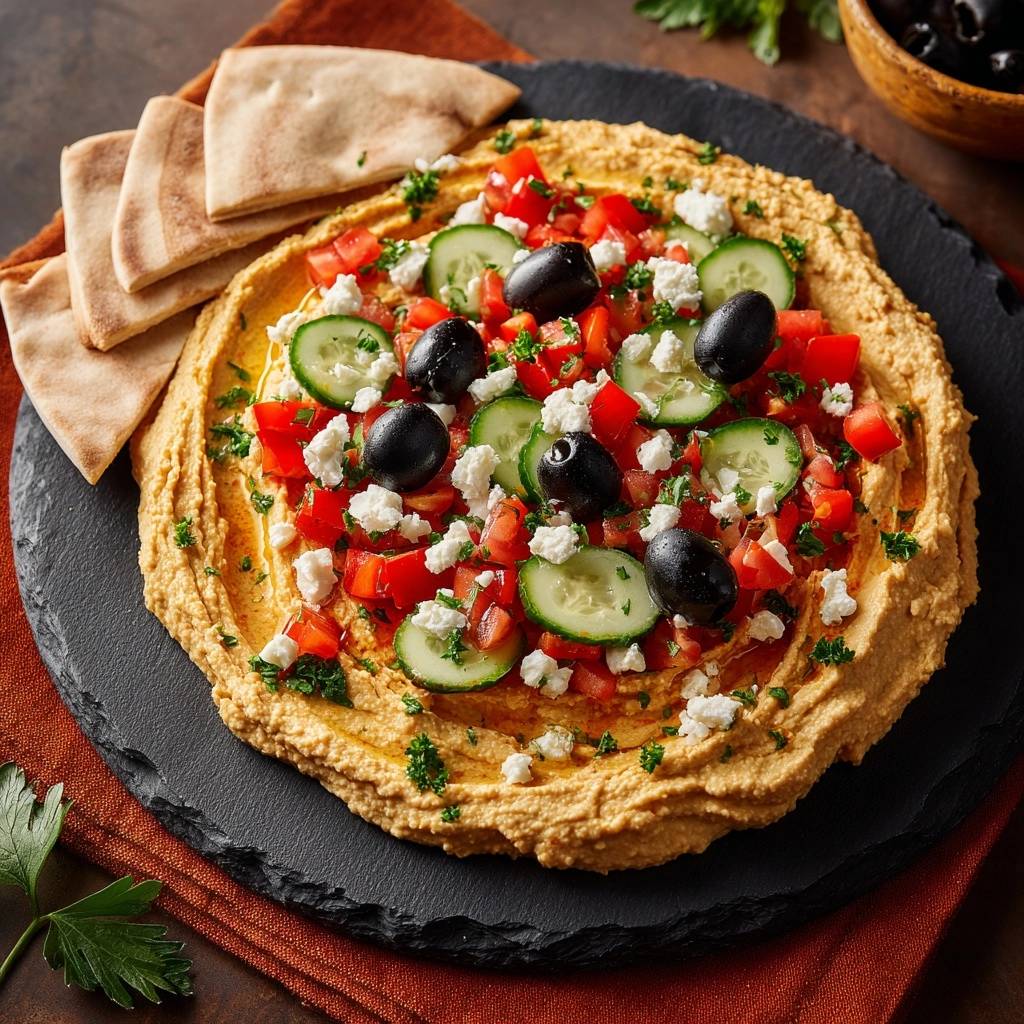
Grainy hummus from a can? It happens to everyone, but this loaded Greek hummus platter fixes that fast. You’ll whip up restaurant-smooth dip in under 15 minutes, piled with crisp cucumber, juicy tomatoes, briny olives, and tangy feta. It’s the ultimate party snack that serves 8 without any fuss.
So why does this version stand out? The blending trick starts with tahini and lemon to create a creamy base that chickpeas glide into perfectly. No more gritty texture ruining the vibe. Plus, those fresh Greek toppings add crunch and pop that keep guests scooping.
Here’s the expertise pro tip: always use ice-cold water or reserved aquafaba during blending. It keeps the temperature low, preventing starch from turning grainy. You’ll get that fluffy, whipped texture every time.
Key Ingredients for Silky Loaded Greek Hummus Platter
Start with two cans of chickpeas, drained and rinsed well. They deliver the neutral base without heavy skins that cause grit. Reserve half a cup of that aquafaba liquid; it’s a natural thickener that boosts fluffiness.
Tahini is your emulsifier star, about a third cup. Pick a good sesame paste that stirs smooth; it breaks down into creaminess when processed first. Fresh lemon juice, a quarter cup from one large lemon, balances acidity perfectly over bottled stuff.
Minced garlic, two cloves, adds punch, while half a teaspoon each of cumin and salt build earthy depth. Ice-cold water, three to four tablespoons, fluffs it up. Extra-virgin olive oil, three tablespoons plus extra for drizzling, brings richness.
Hummus Base Components Explained
Canned chickpeas beat cooking from dry for speed, but rinse thoroughly to remove excess starch. Tahini might separate in the jar; stir it vigorously first for even fat distribution. One large lemon yields just enough juice; roll it before squeezing to maximize output.
Fresh garlic minces finer than pre-chopped, releasing more flavor oils. Test cumin freshness by rubbing it between fingers; it should smell strong and nutty. Therefore, swap stale spice for vibrant taste.
Toppings That Elevate Greek Hummus Platter
Dice one cup cucumber into half-inch pieces for uniform crunch. Remove tomato seeds from one cup diced tomatoes to prevent sogginess. Halve half a cup pitted kalamata olives for easy brine bursts.
Crumble half a cup feta into small bits that melt in your mouth. Chop two tablespoons fresh parsley finely for bright green flecks. Serve with pita wedges; warm them briefly for better scoop.
Blending Technique for Grain-Free Hummus Base
Your food processor needs at least 700 watts for power. Begin with phase one: combine tahini, lemon juice, garlic, cumin, and salt. Process one to two minutes until it turns creamy white; this emulsifies tahini fibers first, avoiding grit.
Next, add chickpeas in batches. Toss in half, process one minute, and scrape sides. Add the rest with two tablespoons ice-cold water or aquafaba. Blend two to three more minutes, drizzling in remaining water gradually for fluffy results.
Finally, pulse in three tablespoons olive oil for gloss. It should look like whipped frosting, light and smooth. Taste, then adjust salt or lemon. Spread thick on a platter.
Phase 1: Tahini Emulsification Step
Starting with wet ingredients builds a stable emulsion, like making mayo. Dumping everything at once causes separation and graininess. Process until you see a pale, thickened paste; that’s your cue.
Phase 2: Chickpea Batch Blending
Half-batches prevent overload and ensure even smoothness. Aquafaba works as a vegan thickener over plain water. Scrape every minute; the mix transforms from chunky to airy.
Phase 3: Olive Oil Finish and Platter Spread
Pulse oil to avoid splattering and keep texture light. Spread hummus one-inch thick on a chilled platter; it holds shape better. This step locks in that glossy finish.
Science of Ultra-Smooth Loaded Greek Hummus
Chickpea starches gelatinize with heat from blending, creating graininess. Ice water keeps temps under 40°F, inhibiting that. Think of it as chickpea butter, smooth and spreadable.
Tahini’s lecithin acts like a natural emulsifier. Aquafaba adds protein foam for volume, whipping in air. Lemon’s pH sharpens flavors and stabilizes the mix.
In addition, cumin’s oils release during processing for depth. Therefore, follow the phases exactly for pro results every time.
Assembling Vibrant Toppings on Greek Hummus Platter
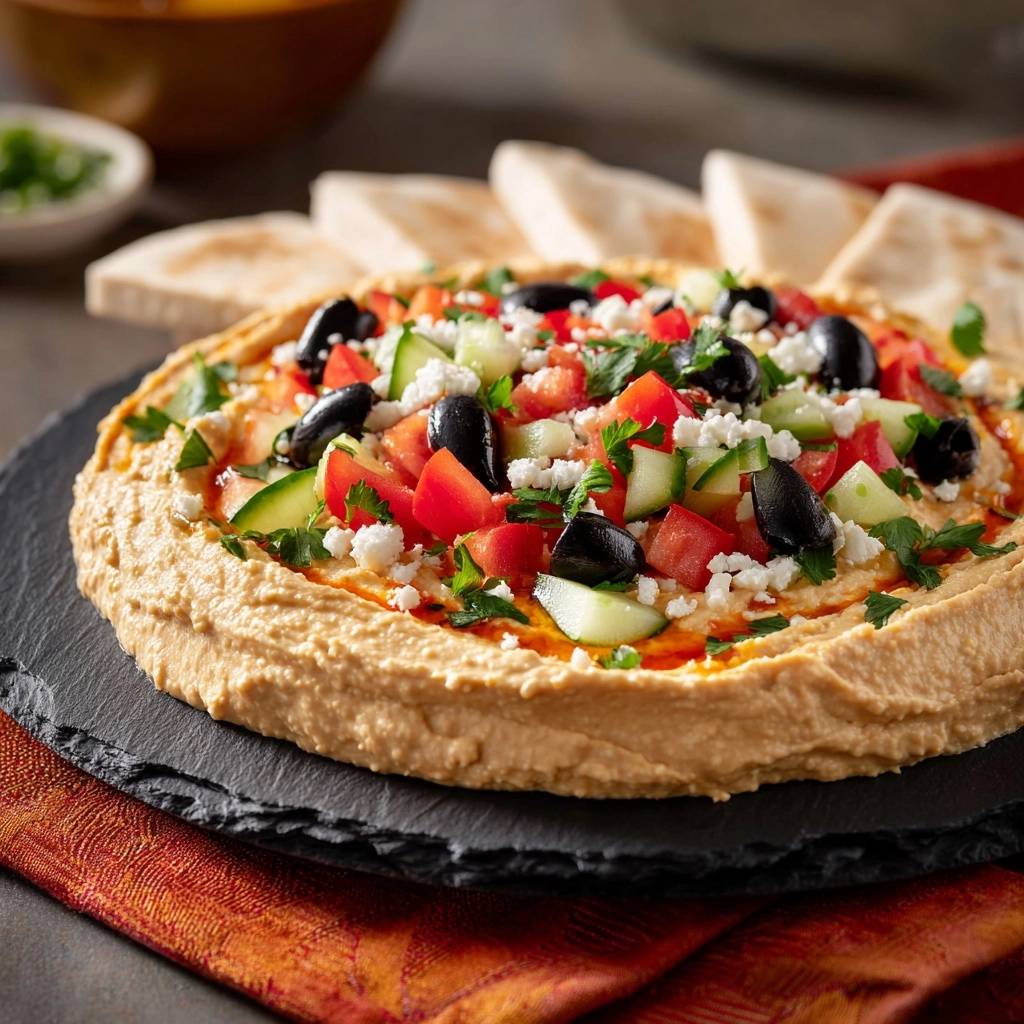
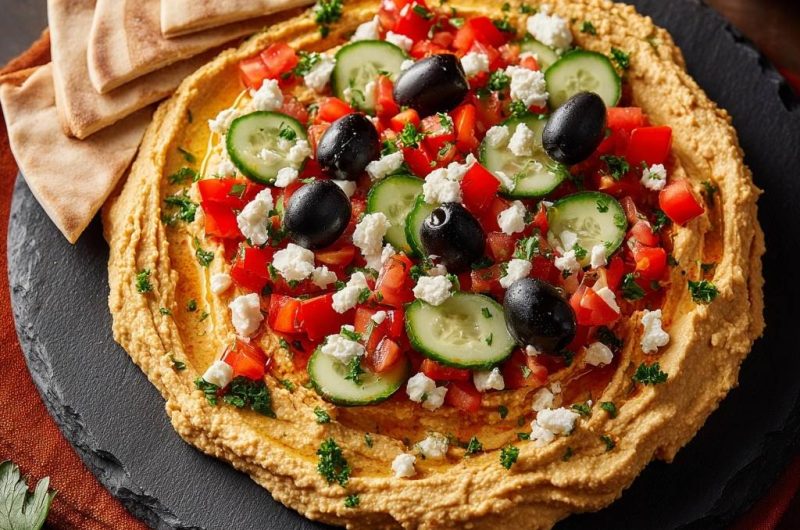
Spread hummus thick on a 12-inch platter. Create a cucumber border for crunch, pile tomatoes in the center for color. Scatter olive halves and nestle feta crumbles.
Finish with chopped parsley and a generous olive oil drizzle. Serve right away; fridge time wilts veggies. Warm pita at 350°F for five minutes to pair perfectly.
Portion for crowds by dividing into sections. Everyone grabs their favorites first.
Greek Hummus Platter Flavor Variations
Stick to classic Greek, but swap roasted red peppers for tomatoes for smokiness. Add thin red onion slices for bite. Sun-dried tomatoes intensify flavor without wateriness.
Drizzle herb-infused olive oil or sprinkle za’atar. For vegan, use nut-based feta alternative. Scale down for mini platters; blending stays silky.
However, always keep ice in the process to maintain texture. These tweaks keep it fresh and exciting.
Pairings for Loaded Greek Hummus Platter
Go beyond pita with carrot and celery sticks, bell pepper strips, or whole grain crackers. Add grilled flatbreads or falafel bites for heartiness. Mezze buddies like tzatziki shine alongside.
Sparkling water with lemon refreshes, or try herbal iced tea. Perfect for game day, summer BBQs, or holiday apps. It pulls the spread together effortlessly.
Avoiding Pitfalls in Greek Hummus Platter Prep
Grainy hummus? Blend longer with ice water. Too thick? Add more aquafaba. Bland? Boost garlic or lemon.
Pat toppings dry first to avoid wateriness. If your processor jams, switch to a high-speed blender. Don’t over-blend; stop at fluffy.
Separation happens? Re-pulse with oil. These fixes save every batch.
Make-Ahead Guide for Loaded Greek Hummus Platter
Hummus lasts five days in an airtight container; top with an oil layer to seal. Pre-chop toppings one day ahead, store in damp paper towels separately. Assemble 30 minutes before serving.
Freeze hummus up to three months; thaw overnight and re-blend smooth. Toppings don’t freeze well, so refresh them. Scale up by doubling cans for 20 servings.
Greek Hummus Platter Troubleshooting Queries
Why is my hummus grainy?
Graininess comes from heat buildup during blending, which gelatinizes chickpea starches. Fix it by using ice-cold water or aquafaba added gradually, and blend in phases starting with tahini and lemon for two minutes first. A powerful processor helps too; aim for four to five total minutes until fluffy.
Are canned chickpeas okay, or should I cook from dry?
Canned chickpeas are perfect for speed and smoothness; just drain, rinse well, and remove any loose skins by rubbing. Cooking dry gives more control over texture but takes hours. Canned works great here without sacrificing silkiness.
Can I substitute tahini?
Tahini is key for emulsification due to its sesame lecithin; no direct sub matches. In a pinch, try smooth peanut butter thinned with sesame oil, but it alters the authentic Greek flavor. Stick to tahini for best results.
How do I make a vegan version?
Skip the feta and use crumbled vegan nut cheese or tofu feta seasoned with lemon and salt. Everything else is already plant-based. Aquafaba keeps it fluffy without dairy.
Can I scale this for 4 people?
Halve everything: one can chickpeas, about 1/6 cup tahini, etc. Blend the same way for texture. Use a smaller platter and store extras airtight; it reheats well by stirring at room temp.
Does the loaded Greek hummus platter freeze well?
Hummus freezes excellently up to three months in portions; thaw in the fridge overnight, then re-blend with a splash of water for smoothness. Toppings like cucumber and tomatoes don’t freeze; prep fresh to keep crispness.
Loaded Greek Hummus Platter
Course: AppetizerCuisine: GreekDifficulty: easy8
servings15
minutes15
Minutes250
kcalGreek
Ingredients
Hummus:
2 cans (15 oz each) chickpeas, drained and rinsed (reserve 1/2 cup aquafaba/liquid)
1/3 cup tahini
1/4 cup fresh lemon juice (about 1 large lemon)
2 garlic cloves, minced
1/2 tsp ground cumin
1/2 tsp salt
3-4 tbsp ice-cold water (or reserved aquafaba)
3 tbsp extra-virgin olive oil, plus more for drizzling
Toppings:
1 cup diced cucumber (1/2-inch pieces)
1 cup diced tomato (1/2-inch pieces)
1/2 cup pitted kalamata olives, halved
1/2 cup crumbled feta cheese
2 tbsp chopped fresh parsley
Pita bread wedges, for serving
Directions
- Make the silky hummus base: In a food processor, combine tahini, lemon juice, minced garlic, cumin and salt. Process for 1-2 minutes until creamy and emulsified (this key first step breaks down tahini for no-grain smoothness).
- Add chickpeas in batches: Add half the chickpeas and process for 1 minute, scraping sides. Add remaining chickpeas and 2 tbsp ice-cold water (or aquafaba). Process 2-3 minutes more, adding remaining water 1 tbsp at a time until ultra-smooth and fluffy like whipped butter (the ice prevents warming, locking in perfect non-grainy texture; total blend time 4-5 minutes).
- Stir in olive oil: Pulse in 3 tbsp olive oil for richness. Taste and adjust lemon/salt. Spread hummus thick on a large platter.
- Load toppings fresh: Arrange diced cucumber, tomato, olives and feta artfully on top. Sprinkle parsley and drizzle olive oil. Serve immediately with pita wedges to keep toppings crisp and hummus pristine. Dig in!
Notes
- Key to silky texture: Blend tahini first, add chickpeas in batches with ice-cold water or aquafaba, and blend 4-5 minutes total. Serve immediately for crisp toppings.