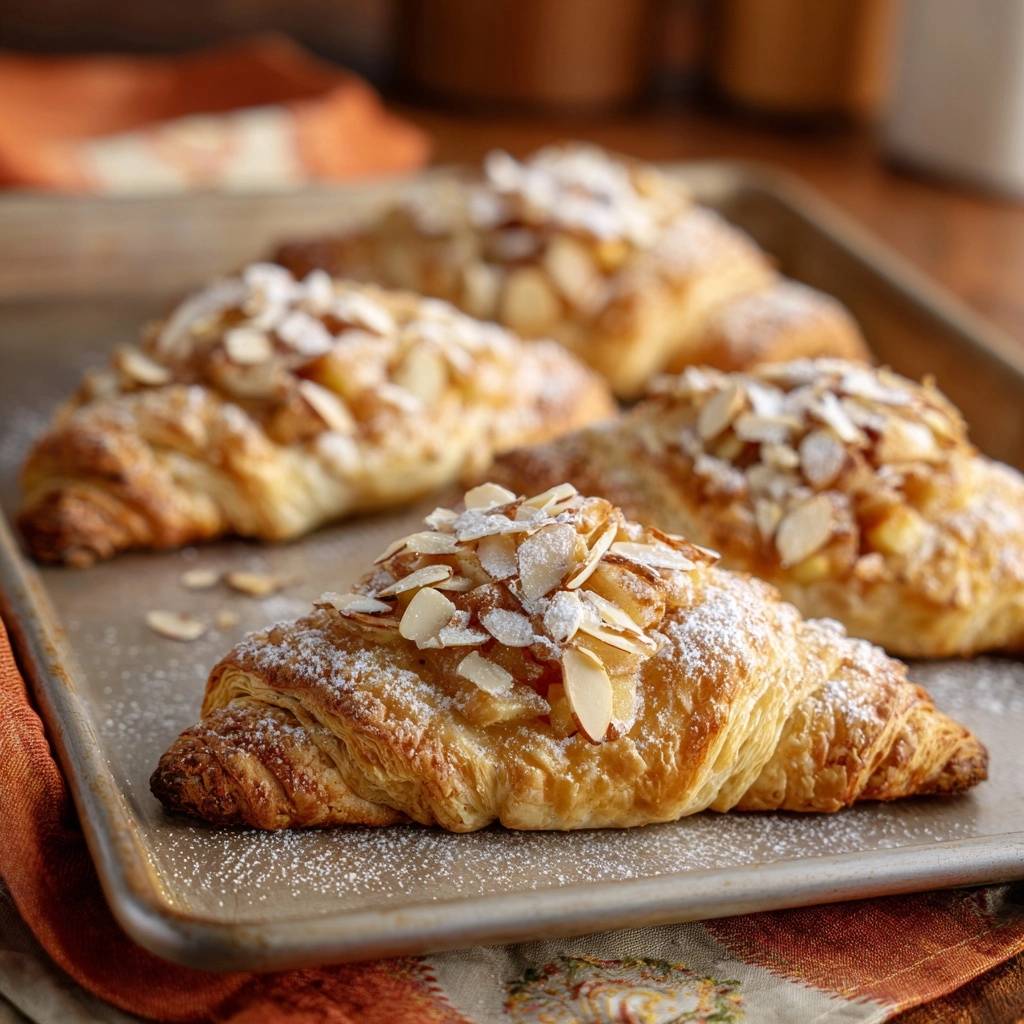
Close your eyes and imagine walking into a Parisian boulangerie at seven in the morning. The air smells of toasted nuts, caramelized sugar, and that unmistakable scent of high-quality butter. You reach for an almond croissant, and as you bite down, the exterior shatters into a thousand buttery flakes while the center reveals a soft, almond-scented custard.
However, most home cooks find that recreating this at home results in a soggy, oil-soaked mess that lacks that signature crunch. The frustration is real when your expensive pastries turn into limp sponges in the oven. Therefore, we have to change our approach to the “Double-Bake” philosophy, which is the professional standard for transforming day-old croissants into gold.
The secret to success isn’t just the filling; it’s the moisture management of the pastry itself. I’ve found that using a specific simple syrup soak is the only way to rehydrate the bread without making it greasy. If you follow this technical roadmap, you’ll achieve a professional-grade crunch that rivals any high-end bakery.
Why Day-Old Pastry Outperforms Fresh Croissants
It sounds counterintuitive, but you should never use a fresh, soft croissant for this recipe. Fresh croissants contain a high amount of moisture within their delicate crumb. If you add syrup and almond cream to a fresh pastry, the structure collapses under the weight, resulting in a dense, gummy center.
Stale croissants have undergone a process called retrogradation, where the starches crystallize and the moisture evaporates. This creates a sturdy, bone-dry skeleton that is essentially a thirsty sponge. This structural integrity is vital because it allows the pastry to soak up the flavored syrup and support the heavy frangipane without losing its shape.
In addition, the drying process concentrates the buttery flavor of the original dough. When you bake it a second time, the exterior becomes even crispier than it was on day one. Therefore, if you have leftovers from yesterday’s breakfast, you actually have the perfect raw material for a masterpiece.

Essential Components for Bakery Style Almond Croissants
Quality ingredients are the backbone of this dish, so you must choose wisely. Firstly, let’s talk about almond flour versus almond meal. You want a finely ground almond flour for a smooth, luxurious frangipane that mimics a soufflé texture. Almond meal, which includes the skins, can feel a bit gritty in this specific application.
Secondly, unsalted butter is non-negotiable here. Since different brands of salted butter have varying sodium levels, using unsalted butter allows you to control the seasoning perfectly with a single pinch of salt. This balance ensures the sweetness of the sugar doesn’t become cloying.
Lastly, the extracts act as the aromatic soul of the croissant. While vanilla provides a warm base, the almond extract provides that “cherry-like” floral note that people associate with professional pastries. Use pure extracts rather than imitation versions to avoid a chemical aftertaste.
Selecting the Right Base Pastry
If you aren’t baking your own croissants from scratch, look for “all-butter” versions at your local bakery or grocery store. Avoid the croissants sold in plastic bags in the bread aisle, as these often contain oils that prevent them from ever getting truly crispy.
Check the “honeycomb” structure by looking at the ends of the croissant. You want to see clear, defined layers of lamination. A larger croissant is generally easier to work with because it provides more surface area for the filling to expand during the second bake.
The Role of Toasted Sliced Almonds
While the recipe calls for sliced almonds on top, taking three minutes to lightly toast them in a dry pan before assembly makes a world of difference. This extra step develops the oils in the nuts, providing a deeper, woodier flavor that raw almonds simply can’t match.
When you apply them to the croissant, try to shingle them slightly rather than just tossing them on. This creates a beautiful, professional aesthetic. The toasted almonds also provide a necessary textural contrast to the soft, custardy filling hidden inside.
The Science of the Anti-Soggy Syrup Soak
The syrup soak is a technical necessity, not just a flavor booster. We use a 1:1 ratio of sugar and water to create a simple syrup that rehydrates the starch molecules in the stale bread. This prevents the croissant from tasting like dry toast after its second trip to the oven.
However, the method of application is critical. High-volume bakeries often dunk the entire croissant into a vat of syrup, but for home ovens, this usually leads to a soggy bottom. Instead, use a pastry brush to lightly paint the inside and the top of the pastry.
Wait until the syrup has cooled slightly before adding your vanilla extract. If you stir it into boiling water, the heat will cause the volatile flavor compounds to evaporate. By adding it at the end, you ensure the floral aroma stays trapped within the syrup and, ultimately, the pastry.
Crafting the Perfect Frangipane Filling
Frangipane is a classic French almond cream that differs significantly from marzipan. While marzipan is a dense, sugary paste used for molding, frangipane is a spreadable cream made with butter, eggs, and almond flour. It is designed to be baked.
The magic happens when the egg in the mixture hits the heat of the oven. The egg proteins coagulate and trap steam, causing the filling to “soufflé” or puff up. This creates a light, airy texture that feels rich but not heavy on the palate.
Make sure your butter is truly softened to room temperature before you start creaming it with the sugar. If the butter is too cold, it won’t emulsify with the egg properly. You are looking for a pale, fluffy consistency before you fold in the almond flour.
Step-by-Step: Assembly and The Hinge Technique
To begin the assembly, use a sharp serrated knife to slice the croissant horizontally. The serrated edge is vital because it saws through the delicate layers without crushing them. If you use a smooth blade, you’ll flatten the pastry and lose that airy volume.
Stop cutting about a half-inch before you reach the back of the croissant to create a “hinge.” This hinge keeps the top and bottom halves aligned during the bake. It also prevents the almond cream from sliding out the back as it expands in the heat.
Open the croissant like a book and apply your syrup first. This creates a moist barrier that helps the frangipane adhere to the bread. You want the interior to feel damp to the touch but not dripping wet.
Applying the Internal Almond Cream
Spread about two tablespoons of the frangipane across the bottom half of the croissant. Use an offset spatula or the back of a spoon to push the cream all the way to the very edges. This ensures that the first and last bites are just as flavorful as the center.
Be careful not to overfill the center. If the layer of cream is thicker than a quarter-inch, the heat might not penetrate the middle fully. This results in a raw, doughy center that feels heavy rather than custardy.
Securing the Topping with “Edible Glue”
Once you close the croissant, spread another tablespoon of frangipane across the top. Think of this layer as “edible glue.” Its primary job is to hold the sliced almonds in place so they don’t slide off the curved surface of the pastry.
After spreading the cream, take a generous handful of sliced almonds and press them firmly into the paste. Don’t be afraid to use a little pressure here. The more almonds you can fit on top, the better the crunch and the more professional the final look will be.
Precision Baking for Maximum Crunch
Oven calibration is the difference between a golden masterpiece and a burnt disappointment. Set your oven to 350°F (175°C) and ensure the rack is in the center position. If the rack is too high, the almonds will burn before the filling sets; too low, and the bottom will scorch.
Bake for 15 to 18 minutes, but start checking at the 12-minute mark. You are looking for the frangipane on the top to look “puffed” and matte rather than shiny. The tips of the croissant should be a deep, dark gold, bordering on brown.
The aroma is your best indicator of doneness. When the kitchen smells like a toasted almond, you are likely seconds away from perfection. If the almonds are browning too quickly, you can tent a piece of foil loosely over the top for the final few minutes.
The Critical 10-Minute Cooling Window
I know it’s tempting to grab a hot croissant immediately, but you must wait. When the pastries first come out of the oven, the sugars in the syrup and the fats in the frangipane are still in a liquid state. If you cut into it now, the filling will run out.
During the 10-minute cooling period, the sugars begin to crystallize and “set.” This is when the bottom of the croissant transforms from soft to shatteringly crisp. The internal filling also firms up into that signature soufflé-like texture.
Think of this as the “resting” phase for your pastry. The thermodynamics of the cooling process allow the moisture to redistribute evenly. This ensures that the exterior stays crunchy while the interior remains moist and tender.
Troubleshooting Common Almond Croissant Failures
If you end up with an oily bottom, it usually means your croissants were too fresh or your butter was too warm when you made the frangipane. To fix this, try chilling your assembled croissants for 15 minutes in the fridge before they go into the oven.
A raw or “mushy” center is almost always caused by overfilling or underbaking. If the exterior is getting too dark but the middle feels soft, lower your oven temperature by 25 degrees and bake for an extra five minutes next time. This allows the heat to reach the center without burning the outside.
If your almonds are falling off, you likely didn’t use enough frangipane on the top as “glue.” Ensure you have a visible layer of cream before pressing the nuts in. Also, make sure you are using sliced almonds rather than slivered ones, as the flat surface area of the slices sticks much better.
Professional Presentation and Finishing Touches
The final touch that separates a home-baked good from a bakery treasure is the powdered sugar. Use a fine-mesh sieve to create a “snowfall” effect over the cooled croissants. A spoon will create clumps, but a sieve ensures a perfectly even, delicate coating.
Wait until the croissants are completely cool before dusting. If the pastry is still warm, the sugar will melt into the oils and disappear, leaving a sticky residue. For the best visual impact, dust them right before you bring them to the table.
Serve these on a simple white platter to let the golden-brown colors pop. These are rich enough that they don’t need accompaniment, but a cup of strong black coffee provides the perfect bitter contrast to the sweet almond filling.
Make-Ahead Strategies and Storage Solutions
You can easily prep the frangipane up to three days in advance. Store it in an airtight container in the refrigerator, but make sure to let it sit on the counter for 30 minutes before using. It needs to be spreadable so you don’t tear the delicate croissant layers.
You can also assemble the croissants entirely the night before. Place the filled and topped croissants on a baking sheet, cover them loosely with plastic wrap, and refrigerate. In the morning, simply pop them into the preheated oven for a fresh, effortless breakfast.
If you have leftovers, do not microwave them, as this will make them rubbery. Instead, revive them in a toaster oven at 300°F for about 5-8 minutes. This will recrisp the exterior and warm the almond center without overcooking the pastry.
Frequently Asked Questions
How should I store leftover almond croissants and can they be frozen?
Store leftovers in an airtight container at room temperature for up to two days. For longer storage, you can freeze the baked and cooled croissants for up to a month. To eat from frozen, let them thaw at room temperature for an hour and then warm them in a 300°F oven for 10 minutes to restore the crunch. Do not store them in the refrigerator, as the humidity will make the pastry soggy.
Why did my almond filling run out of the sides during baking?
This usually happens if the butter in your frangipane was too warm or if you didn’t leave a “hinge” when slicing the croissant. If the butter is oily before it hits the oven, it won’t hold the almond flour in suspension. Additionally, ensure you aren’t overfilling the pastry; two tablespoons is usually the limit for a standard-sized croissant.
Can I use almond paste instead of almond flour for the filling?
You can, but you will need to adjust the recipe significantly. Almond paste contains a high amount of sugar already, so you would need to reduce the granulated sugar in the frangipane recipe to avoid an overly sweet result. It also has a much denser texture, so you’ll need to beat it longer with the butter to ensure the filling remains light and airy.
What can I use if I don’t have a serrated knife?
If you don’t have a serrated knife, you can use a very sharp chef’s knife, but you must use a gentle sawing motion rather than pressing down. Pressing down will collapse the air pockets in the croissant, leading to a heavy, dense pastry. If your knife is dull, it is better to carefully pull the croissant apart with your fingers along the natural lamination lines rather than crushing it with a blunt blade.
Can I make this recipe with gluten-free croissants?
Yes, this recipe works well with gluten-free croissants, which are often naturally drier than standard versions. Since the frangipane is made with almond flour (which is gluten-free), you only need to ensure your base pastry and extracts are certified gluten-free. The syrup soak is especially helpful for gluten-free pastries, as they tend to be more prone to crumbling.

Bakery Style Almond Croissants
Course: Breakfast and PastriesCuisine: FrenchDifficulty: easy4
servings15
minutes18
minutes33
Minutes420
kcalFrench
Ingredients
4 large day-old croissants
1 cup sliced almonds (toasted slightly for extra crunch)
Powdered sugar for dusting
1/2 cup granulated sugar
1/2 cup water
1 teaspoon vanilla extract
1 cup almond flour
1/2 cup unsalted butter, softened
1/2 cup granulated sugar (for filling)
1 large egg
1/2 teaspoon almond extract
1 pinch salt
Directions
- Preheat your oven to 350°F (175°C). Line a large rimmed baking sheet with parchment paper.
- Create the Simple Syrup: In a small saucepan, simmer 1/2 cup water and 1/2 cup sugar until dissolved. Remove from heat and stir in the vanilla extract. Let it cool slightly. This syrup rehydrates the dry pastry without making it greasy.
- Make the Frangipane: In a medium bowl, cream the softened butter and 1/2 cup sugar until pale and fluffy. Beat in the egg, almond extract, and salt. Fold in the almond flour until a thick, spreadable paste forms.
- The Anti-Soggy Technique: Slice the croissants horizontally using a serrated knife, but do not cut all the way through (leave a “hinge”). Lightly brush the inside faces and the very top of the croissants with the warm syrup. Do not submerge them; a light brushing provides moisture without collapsing the delicate pastry layers.
- Fill each croissant with about 2 tablespoons of the frangipane, spreading it evenly to the edges. Close the croissant and spread another tablespoon of the cream across the center of the top.
- Press a generous handful of sliced almonds into the cream on top. The cream acts as the “glue” to hold the almonds in place during the bake.
- Bake for 15 to 18 minutes. The croissants are done when the almond cream on top has puffed slightly and turned a deep golden brown, and the sliced almonds are toasted.
- Let the croissants cool on the baking sheet for at least 10 minutes. This cooling period is vital for the bottom crust to crisp up and the internal almond souffle to set.
- Dust heavily with powdered sugar through a fine-mesh sieve just before serving to achieve the signature bakery look.
Notes
- The cooling period of at least 10 minutes is vital for the bottom crust to crisp up and the internal almond souffle to set. Use day-old croissants for the best results as they absorb the syrup better than fresh ones.