Few things are more disappointing than biting into a beautiful thumbprint cookie only to find a mushy, water-logged center. While these treats look like sparkling jewels on a dessert platter, the moisture in the fruit jam often migrates into the shortbread, turning a crisp bake into a soggy mess. Most recipes ignore the physics of fruit moisture, but we’re going to fix that today with a professional-grade barrier technique.
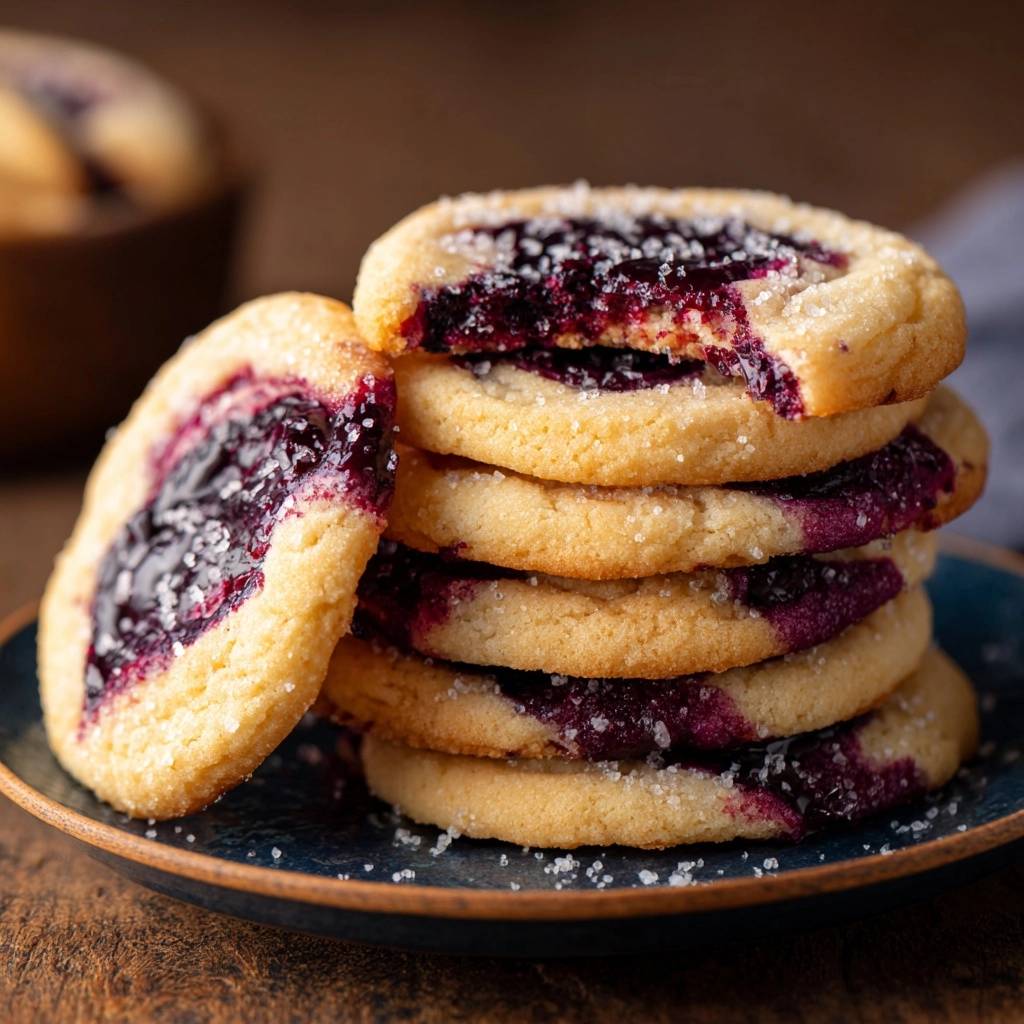
The secret to a bakery-quality result lies in the contrast between the sandy, buttery crunch of the cookie and the concentrated, tacky pull of the blueberry center. By using a specific temperature-staged filling method and a cornstarch moisture barrier, you’ll ensure the bottom stays perfectly golden and crisp. This isn’t just about flavor; it’s about mastering the structural integrity of the cookie so it holds up for days without losing its snap.
I’ve found that the real trick to success is stabilizing the fruit pectin before it ever hits the oven. Adding a tiny amount of cornstarch to your jam acts as a sponge for excess liquid, preventing that dreaded “leakage” into the dough. When you combine this with a secondary sugar shield, you create a physical wall that keeps the jam where it belongs—right on top, looking like a polished sapphire.
The Anatomy of a Perfect Shortbread Base
A great thumbprint cookie starts with a high-quality shortbread that can stand up to the weight of the filling. You want a dough that is rich enough to melt in your mouth but sturdy enough to hold a deep indentation without collapsing. Using standard unsalted butter works well, but if you can find European-style butter with a higher fat content, the flavor becomes significantly more decadent and the texture more tender.
We use granulated sugar inside the dough because its fine crystals dissolve quickly, creating a tight, uniform crumb structure that resists spreading. However, the exterior gets a coating of coarse sparkling sugar. This dual-sugar approach gives you the best of both worlds: a soft, professional interior and a crunchy, glittering shell that provides a satisfying tactile experience with every bite.
Why Almond Extract Trumps Vanilla
While vanilla is the standard choice for most baking, almond extract is the secret weapon when working with stone fruits or berries. There is a fascinating flavor chemistry between blueberries and almond; the nutty, slightly floral notes of the extract bridge the gap between the heavy butter and the acidic fruit. It makes the blueberry flavor “pop” in a way that vanilla simply can’t achieve.
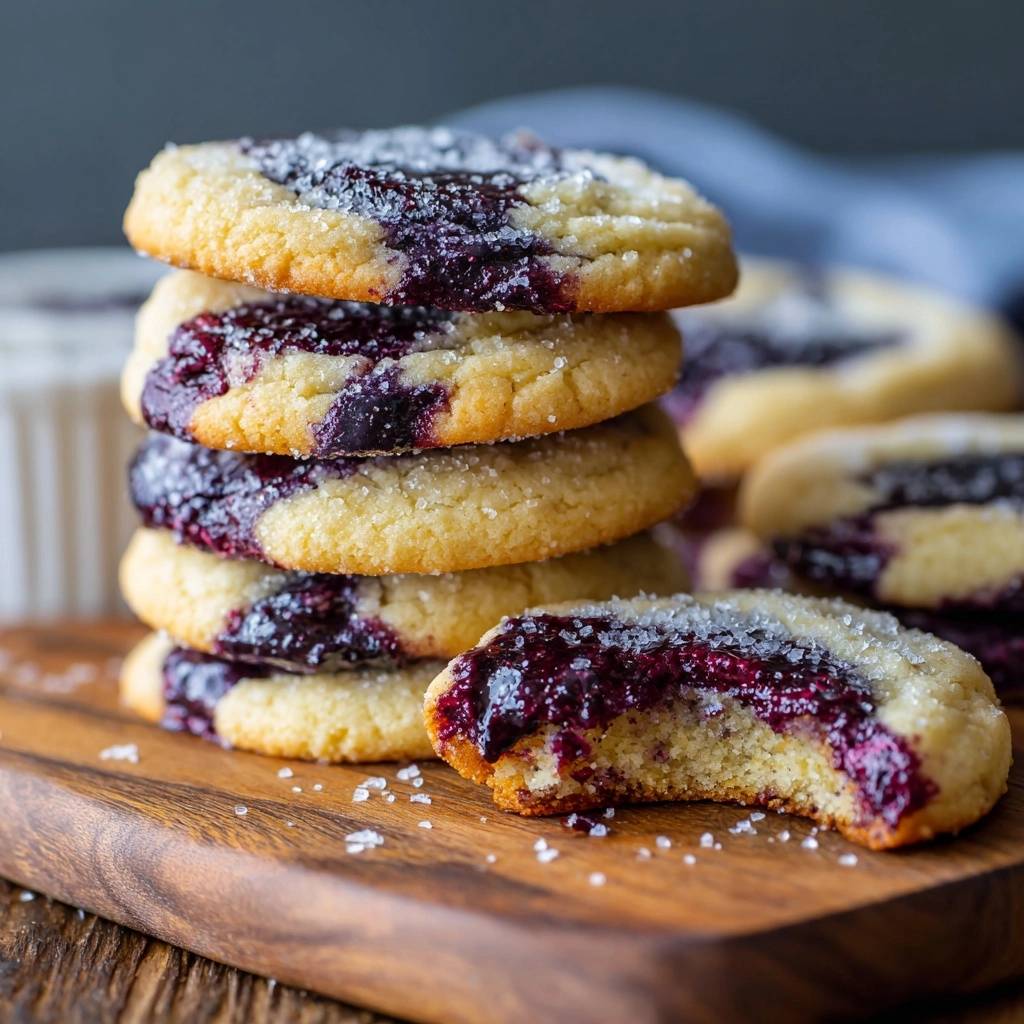
Essential Components for Blueberry Jam Thumbprint Cookies
Every ingredient in this list serves a specific structural purpose. All-purpose flour is the backbone here because it provides just enough protein to maintain the “thumbprint” shape during the bake. If you used cake flour, the cookies would be too fragile, while bread flour would make them unpleasantly chewy. We want that classic shortbread snap that shatters slightly when you bite down.
Softened butter is non-negotiable for the creaming process. If your butter is too cold, it won’t incorporate the sugar properly, leading to a gritty texture. If it’s melted, your cookies will spread into flat puddles. Aim for butter that is cool to the touch but yields easily when you press it with your thumb. This ensures the fat stays emulsified within the flour, creating those beautiful, flaky layers.
Selecting the Right Blueberry Preserves
Not all jams are created equal when it comes to baking. You should look for high-quality preserves or thick jams rather than jellies or “fruit spreads.” Jellies lack the fruit solids needed for texture, and low-sugar spreads often have a much higher water content. That extra water will steam in the oven, which is exactly what causes the dough to become soft and soggy.
The Science of the Anti-Soggy Cornstarch Barrier
Sugar is hygroscopic, meaning it loves to pull moisture from its surroundings. When you put raw jam onto raw dough, the sugar in the jam starts pulling moisture out of the fruit and pushing it directly into the porous flour. By the time the oven heat sets the dough, the damage is already done. This is why many thumbprints have a “gum line” of undercooked dough right beneath the fruit.
Cornstarch changes the game by acting as a thickening agent that binds the free water in the jam. As the cookies bake and the jam reaches a boil, the cornstarch activates, creating a gel-like consistency. This prevents the liquid from migrating downward. Instead of soaking the cookie, the moisture stays trapped in the jam, resulting in a concentrated, intense fruit flavor and a dry, crisp cookie base.
The Secondary Barrier: Sparkling Sugar Dusting
Before you even add the jam, there’s one more pro-level step: dusting the bottom of the indentation with a tiny pinch of sparkling sugar. These large sugar crystals don’t dissolve as quickly as the sugar in the dough. They create a physical, crystalline wall between the jam and the shortbread. It’s a simple trick that adds an extra layer of protection and a delightful little crunch at the very center of the cookie.
Step-by-Step: Preparing the Shortbread Dough
When you start creaming your butter and sugar, patience is your best friend. You’re looking for a “pale and fluffy” look, which usually takes about 2 to 3 minutes of steady mixing. This process aerates the butter, but be careful not to overdo it. If you whip too much air into the dough, the cookies will puff up like balloons in the oven and you’ll lose that perfect well for the jam.
Once you add the flour, switch to a low speed and stop the moment the dough comes together. Overmixing at this stage develops gluten, which turns a tender shortbread into a tough, bread-like biscuit. The dough should feel soft and pliable, almost like playdough, and it shouldn’t stick to your hands when you roll it into balls.
Shaping and Coating for Maximum Crunch
Roll your dough into 1-inch balls, keeping them as uniform as possible so they bake evenly. Immediately roll each ball in the coarse sparkling sugar. You want 100% coverage here. This sugar isn’t just for decoration; it provides structural integrity to the “walls” of the cookie, helping them hold their shape while the jam bubbles away in the center.
Creating the Perfect Indentation Without Cracking
While they are called “thumbprints,” using the back of a rounded teaspoon often yields a cleaner, more professional look. Press down firmly but slowly into the center of each ball. If the edges crack, don’t panic! Just use your fingers to gently pinch the dough back together. If the dough is cracking excessively, it might be a bit too cold; let it sit at room temperature for five minutes and try again.
The Filling and Finishing Process
Now it’s time to fill those wells with your stabilized blueberry jam. Aim to fill them right up to the edge of the indentation. As the cookies bake, the jam will settle slightly, so a generous fill ensures that “jeweled” look once they cool. For a final touch of elegance, sprinkle a tiny bit more sugar over the wet jam before sliding the tray into the oven.
This final sprinkle of sugar partially dissolves into the jam as it heats, creating a shimmering, crackly crust on top of the fruit. It looks absolutely stunning and tells your guests that these aren’t just ordinary store-bought cookies. It’s these small, intentional details that elevate a simple recipe into something truly special.
Precision Baking and the Setting Phase
Bake at 350°F for about 12 to 14 minutes. You aren’t looking for a deep brown color; the cookies should be set and the jam should be just starting to bubble. The real magic happens after you take them out. You must leave the cookies on the hot baking sheet for at least 10 minutes. This “carry-over cooking” allows the bottom of the cookie to finish crisping up against the hot metal.
During this rest period, the jam also begins to set. If you try to move them to a wire rack too early, the jam might run or the cookie might crumble. As the jam cools, the cornstarch and pectin work together to create that perfect, tacky texture that doesn’t stick to your teeth but feels substantial and rich.
Troubleshooting Common Thumbprint Cookie Failures
If your cookies spread too flat, your butter was likely too warm when you started, or you over-creamed the mixture. Try chilling the shaped dough balls for 15 minutes before baking next time. If the jam boils over the sides, you might have used a jam with too much water or simply overfilled the wells. Stick to the one-teaspoon rule for 1-inch cookies.
If the dough tastes “floury” or dry, you may have measured your flour by scooping the cup directly into the bag, which packs it down. Always spoon the flour into the measuring cup and level it off with a knife. Finally, if the bottoms are soft, ensure you didn’t skip the cornstarch or the 10-minute rest on the baking sheet. That rest is vital for moisture evaporation.
Storage Logistics and Texture Preservation
To keep these cookies at their peak, store them in an airtight container at room temperature for up to five days. However, make sure they are completely cool before you seal the lid. If there is even a hint of warmth left, the residual steam will soften the sugar crust and make the cookies lose their signature snap. I like to place a piece of parchment paper between layers to prevent the jam from sticking.
You can also freeze the unbaked dough balls for up to three months. When you’re ready for a fresh batch, just thaw them for 20 minutes, roll in sugar, indent, and fill. Freezing the finished cookies is possible, but the jam can sometimes become slightly weeping upon thawing, so for the best texture, I always recommend baking them fresh or storing them at room temperature.
Expert Baking FAQ
Can I use frozen blueberries instead of jam?
I don’t recommend using whole frozen or fresh blueberries for this specific recipe. Fresh fruit releases a massive amount of juice as the cell walls break down in the heat, which will almost certainly lead to a soggy cookie and a purple mess on your baking sheet. Stick to a high-quality preserve where the moisture has already been reduced through the cooking process.
Why did my cookies crack when I pressed them?
Cracking usually happens if the dough is too cold or if the flour-to-fat ratio is slightly off. If the dough feels dry, you can try kneading it for a few seconds with the warmth of your hands to soften the butter. If a crack does appear, simply use a damp fingertip to smooth the dough back together before filling it with jam to prevent leaks.
How do I achieve a clear, translucent jam center?
The key to a beautiful, clear center is avoiding over-mixing the jam when you add the cornstarch. Whisk it just enough to dissolve the white clumps. If you whip it too vigorously, you’ll introduce tiny air bubbles that stay trapped in the jam during the bake, making it look cloudy rather than like a clear gemstone.
Can I substitute the butter with margarine or oil?
Shortbread relies on the specific properties of solid fat to create its characteristic crumb. Margarine has a higher water content and a lower melting point, which will cause the cookies to spread and become greasy. Oil is liquid at room temperature and cannot be creamed with sugar to create the necessary structure, so your cookies would end up heavy and shapeless.
What is the shelf life of the stabilized jam centers?
Thanks to the cornstarch stabilization, the jam centers will stay tacky and firm for about 5 days at room temperature. Unlike standard jam which can get runny or soak into the cookie over time, this method keeps the fruit layer distinct. After 5 days, the shortbread will naturally begin to soften as it absorbs ambient moisture, but they will still be delicious.
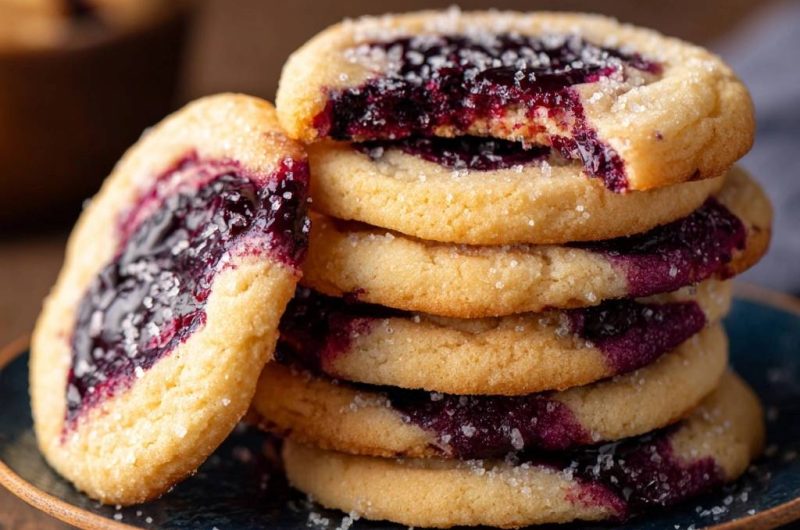
Blueberry Jam Thumbprint Cookies
Course: DessertCuisine: AmericanDifficulty: easy24
cookies20
minutes12
minutes32
MinutesAmerican
Ingredients
1 cup unsalted butter, softened
2/3 cup granulated sugar
1/2 teaspoon almond extract
1/4 teaspoon salt
2 cups all-purpose flour
1/2 cup thick blueberry jam or preserves
1/2 cup coarse sparkling sugar (for coating and finishing)
1 teaspoon cornstarch (the moisture barrier)
Directions
- Preheat your oven to 350 degrees F (175 degrees C). Line two large baking sheets with parchment paper.
- In a large bowl, cream together the softened butter and granulated sugar until the mixture is pale and fluffy (about 2-3 minutes). Stir in the almond extract and salt.
- Gradually add the flour to the butter mixture, mixing on low speed just until a soft dough forms. Do not overmix.
- Roll the dough into 1-inch balls. Roll each ball in the coarse sparkling sugar to coat the exterior thoroughly.
- Place the balls 2 inches apart on the prepared baking sheets. Use the back of a small rounded measuring spoon to press a deep, wide indentation into the center of each ball.
- The Anti-Soggy Barrier: In a small bowl, whisk the blueberry jam with the 1 teaspoon of cornstarch until smooth. This stabilizes the fruit pectin and prevents moisture migration.
- Lightly dust the bottom of each dough indentation with a tiny extra pinch of sparkling sugar before filling.
- Fill each indentation with about 1 teaspoon of the stabilized blueberry jam. To achieve the look in the image, ensure the jam reaches near the edges of the indentation.
- Visual Finish: Sprinkle an additional pinch of coarse sparkling sugar directly over the wet jam centers before baking.
- Bake for 12 to 14 minutes, or until the edges are set and the jam is bubbling slightly.
- Crucial Step: Allow the cookies to cool on the baking sheet for at least 10 minutes. This allows the jam to “set” into that tacky, non-runny texture and ensures the bottom crust fully crisps up before moving them to a wire rack.
Notes
- The cornstarch stabilizes the fruit pectin to prevent moisture migration. Cooling on the baking sheet for 10 minutes is crucial for the jam to set and the bottom to crisp.