We’ve all been there: you pull a tray of butternut squash out of the oven hoping for firm, caramelized edges, but you end up with a pile of orange mush. It’s frustrating when a beautiful vegetable loses its integrity and turns into something resembling baby food. The contrast between a sweet, roasted squash and a bright, acidic sauce is a culinary dream, but only if the texture holds its own.
This recipe solves the “mush factor” by focusing on moisture control and aggressive heat. By pairing the natural sugars of the squash with a punchy, herb-heavy chimichurri, you create a side dish that feels sophisticated yet incredibly grounded. The vibrant green sauce doesn’t just add flavor; it provides a sharp counterpoint to the earthy richness of the roasted cubes.
The secret to success lies in the “dry-pat” method. Even if the squash looks dry after peeling, surface moisture is the enemy of caramelization. I’ve found that taking thirty seconds to press the cubes between paper towels ensures the olive oil coats the vegetable rather than sliding off into a pool of steam. This small step is what guarantees those sharp, defined edges every single time.
The Science of High-Heat Squash Caramelization
Achieving the perfect roast isn’t just luck; it’s chemistry. When you subject butternut squash to high heat, the Maillard reaction occurs, which is the chemical reaction between amino acids and reducing sugars. This process creates that deep, savory-sweet crust that makes roasted vegetables so addictive.
Setting your oven to 425°F is the absolute “sweet spot” for this specific vegetable. At this temperature, the heat is intense enough to evaporate surface moisture almost instantly. If you roast at 350°F or 375°F, the interior cell walls collapse and release water faster than the oven can evaporate it, leading to a soggy, steamed result.
Butternut squash contains pectin, a structural fiber that acts like “glue” for the plant’s cells. High heat helps set this pectin quickly on the outside, creating a protective shell. This shell keeps the interior creamy while preventing the entire cube from slumping into a soft mess on your baking sheet.
Why Moisture is the Enemy of Texture
If your squash cubes are crowded together or damp when they hit the pan, you’re essentially boiling them in their own juices. This “steaming effect” happens because the water vapor has nowhere to go. Instead of browning, the squash absorbs the steam, which breaks down the cellular structure of the Cucurbita moschata.
Surface-level dryness is the non-negotiable prerequisite for a crisp exterior. When the surface is dry, the oil can immediately begin frying the outer layer of the squash. This creates a barrier that locks in the natural sweetness while providing the structural integrity needed to toss the squash with a heavy sauce later.
Essential Components for Chimichurri Roasted Butternut Squash
Quality ingredients make or break a simple vegetable dish. When selecting your squash, look for one that feels heavy for its size with a matte, blemish-free skin. A shiny skin often indicates the squash was picked too early and won’t have the high sugar content needed for deep caramelization.
The choice of oil is equally important. For the roasting phase, a standard olive oil with a higher smoke point is better than a delicate extra virgin oil. However, for the chimichurri sauce itself, you want the most robust, high-quality extra virgin olive oil you can find. Since the sauce isn’t cooked, the peppery, fruity notes of the oil will shine through.
Selecting and Prepping the Butternut Squash
Consistency is king when it comes to cubing. I recommend aiming for 1.5-inch cubes because they offer the ideal surface-area-to-volume ratio. This size is large enough to stay fluffy in the middle but small enough to develop plenty of browned, crispy surface area during the 25-minute roast.
When prepping, try to use the “neck” of the squash as much as possible for uniform cubes. The bulbous end contains the seeds and has a thinner wall, which can cook faster than the solid neck. If you use both parts, just ensure the pieces are cut to the same dimensions so they finish roasting at the exact same moment.
The Herb Profile: Cilantro vs. Parsley Balance
Traditional chimichurri often leans heavily on parsley, but adding cilantro brings a citrusy brightness that complements the sweetness of the squash. The parsley provides an earthy, peppery base, while the cilantro lifts the entire flavor profile. It’s a balanced aromatic duo that prevents the sauce from feeling too “grassy.”
The red wine vinegar is the “chemical brightener” in this equation. It provides the necessary acidity to cut through the starchiness of the squash. Without that acidic hit, the dish can feel heavy; with it, every bite feels refreshed and vibrant. It also helps preserve the bright green color of the chopped herbs.
Step-by-Step: Achieving the Perfect Roast
Start by preheating your oven thoroughly; don’t rush this part. You want the baking sheet to be hot the moment the squash touches it. I prefer placing the squash directly on the metal pan rather than using parchment paper. Direct metal contact conducts heat more efficiently, leading to superior browning on the bottom of the cubes.
After you’ve patted the cubes dry, toss them with the oil and seasonings in a bowl before spreading them on the pan. This ensures every single side is lightly coated. When you arrange them on the sheet, leave at least half an inch of space between each cube. If they’re touching, they’ll steam—and we already know that’s the enemy of texture.
The Single-Flip Rule for Structural Integrity
One of the biggest mistakes people make is “fiddling” with the vegetables. Every time you move the squash, you risk breaking the softened exterior. Let them sit undisturbed for at least 12 to 15 minutes. You’re looking for a golden-brown “halo” to appear around the base of the cubes where they meet the pan.
Once you see that color, use a thin metal spatula to flip them once. After the roasting time is up, let the pan sit on the counter for 5 minutes. This cooling period allows the starches to “set,” making the cubes much firmer. If you try to move them immediately, they’re more likely to crumble under the weight of the chimichurri.
Crafting the Vibrant Chimichurri Sauce
While the squash is roasting, it’s time to build the sauce. Put the food processor away! Hand-chopping the herbs is the only way to go here. A blade spinning at high speeds tends to bruise the herbs and oxidize them, resulting in a muddy, dark green paste rather than a bright, textured sauce.
Whisk the chopped herbs with the garlic, vinegar, and oil, then let it sit. This “bloom” time is essential. It allows the acidity of the vinegar to mellow the bite of the raw garlic and lets the dried oregano rehydrate. By the time the squash is out of the oven, the sauce will have developed a complex, unified flavor.
Adjusting Heat with Red Chili Peppers
This recipe uses red chili peppers in two ways to create layers of heat. The finely diced chili in the sauce infuses the oil with a steady, low-level warmth. It’s not about making it spicy; it’s about adding a back-of-the-throat hum that balances the sugar in the squash.
The roughly chopped chili used as a garnish provides a different experience. These larger pieces offer a fresh, crisp texture and a sudden burst of heat when you bite into them. If you’re sensitive to spice, you can remove the seeds and ribs from the peppers before chopping to keep the flavor without the burn.
Avoiding Common Roasted Squash Mistakes
If you notice your squash is browning too quickly on one side of the pan, your oven likely has hot spots. Simply rotate the entire baking sheet 180 degrees halfway through. If the squash still feels soft after 25 minutes, it’s usually because the cubes were cut too large or the oven wasn’t truly at 425°F.
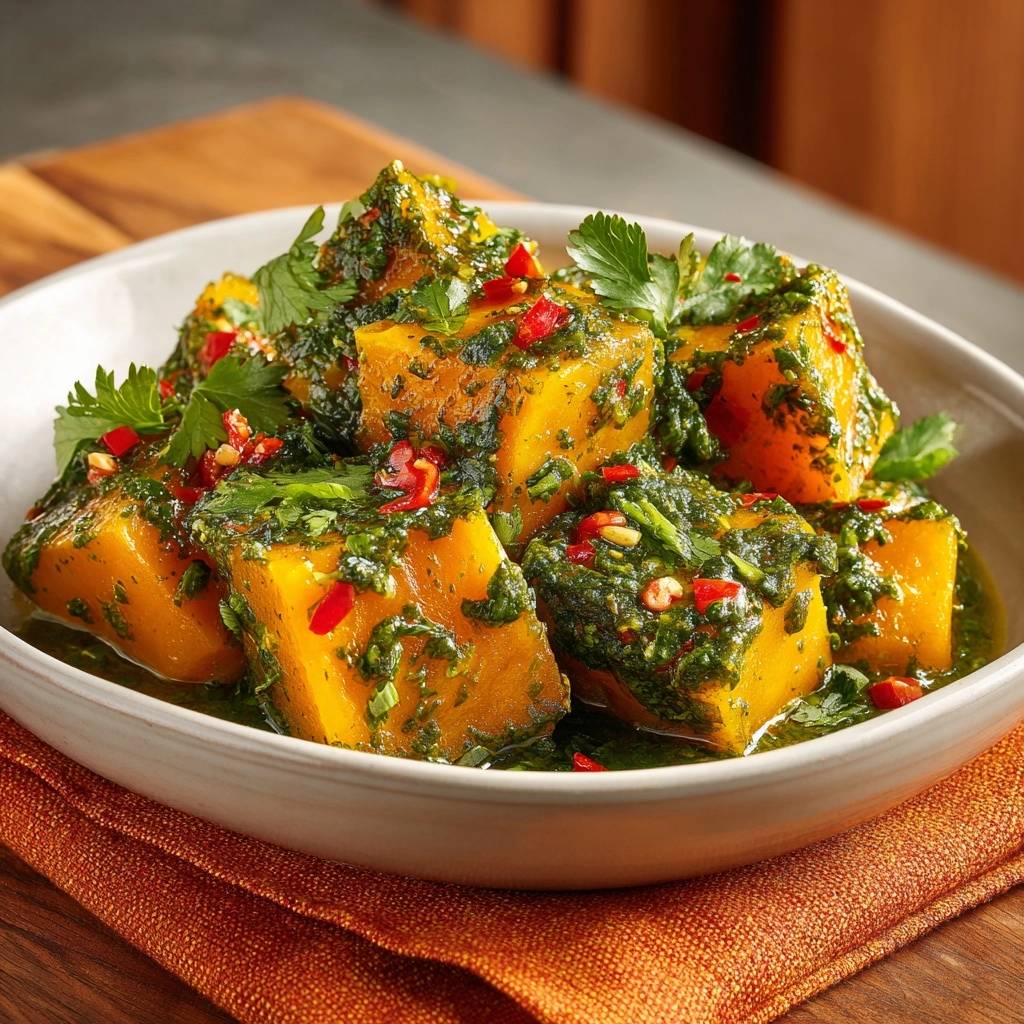
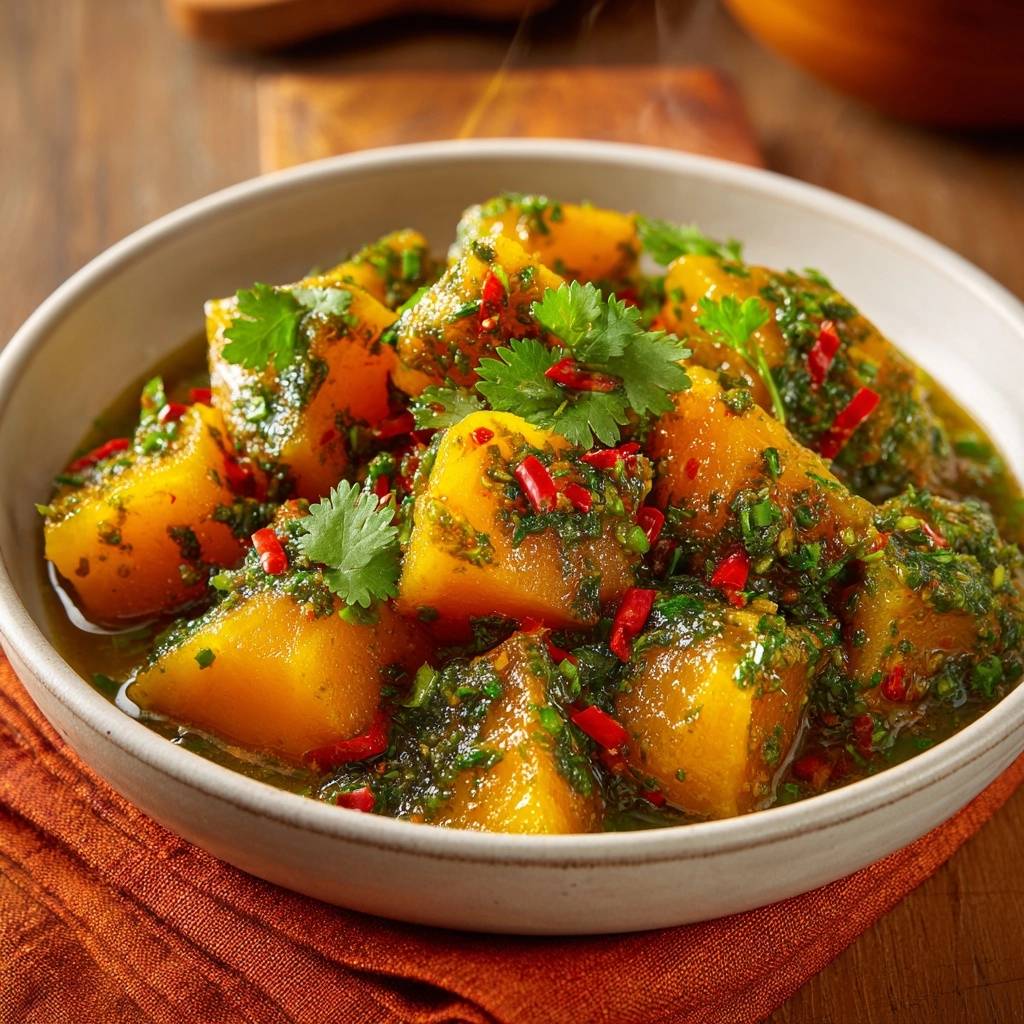
When plating, don’t be afraid of the “pooling” oil. This isn’t a mistake; it’s a deliberate choice. The herb-infused oil at the bottom of the bowl acts as a dipping sauce for the squash. As you eat, the cubes continue to soak up that flavorful fat, making the last bite just as good as the first.
Flavor Variations and Herb Substitutions
You can easily adapt this dish to fit different seasons or pantry staples. If you don’t have cilantro, try using fresh mint for a Mediterranean-inspired twist. The coolness of the mint works surprisingly well with the warmth of the roasted squash. You can also swap the red wine vinegar for fresh lemon juice if you want a sharper, more citrus-forward acidity.
For an extra layer of texture, try adding toasted pumpkin seeds (pepitas) or crushed walnuts at the very end. The crunch of the nuts against the creamy squash and the oily sauce creates a fantastic mouthfeel. Just remember to keep the substitutions fresh; dried herbs won’t work as a primary base for the chimichurri.
What to Serve with Chimichurri Roasted Butternut Squash
This dish is a powerhouse side that pairs beautifully with protein-heavy mains. It’s excellent alongside a simple roasted chicken or grilled lamb chops. The acidity in the chimichurri acts as a palate cleanser, cutting through the richness of the meat and making the whole meal feel lighter.
If you want to keep the meal vegetarian, serve the squash over a bed of warm quinoa pilaf or farro. The grains will soak up the excess chimichurri oil, ensuring none of that flavor goes to waste. A sprinkle of crumbled feta or goat cheese on top can also add a creamy, salty element that ties everything together.
Make Ahead Strategies and Storage Tips
While this dish is undeniably best when served fresh and hot, you can prep the components in advance. You can peel and cube the squash up to two days ahead; just keep the cubes in an airtight container in the fridge. The chimichurri can also be made a few hours early, though the herbs will eventually lose their bright green color if left overnight.
If you have leftovers, avoid the microwave at all costs. Microwaving will introduce steam and turn your perfectly roasted cubes into the very mush we worked so hard to avoid. Instead, give them a quick blast in an air fryer or a hot oven for 5 minutes to revive the exterior texture before adding a fresh drizzle of oil.
Troubleshooting Your Roasted Squash
Why is my squash sticking to the pan?
This usually happens if you didn’t use enough oil or if the pan wasn’t hot enough when the squash was added. Make sure every cube is glistening with oil before roasting. Also, resist the urge to flip the squash too early; it will naturally release from the pan once a proper crust has formed.
Can I use frozen squash cubes?
I strongly recommend against using frozen squash for this specific recipe. Frozen vegetables contain ice crystals that rupture the cell walls. When they thaw in the oven, they release a massive amount of water, making it impossible to achieve a firm, caramelized exterior. Stick to fresh squash for the best results.
My chimichurri turned brown—what happened?
Oxidation is the culprit here. If you chop the herbs too far in advance or use a dull knife, the edges will turn brown. Additionally, the acid in the vinegar will eventually cook the herbs. For the brightest green color, mix the vinegar into the oil and herbs no more than an hour before serving.
Is there a substitute for red wine vinegar?
Yes, apple cider vinegar is a great alternative that maintains a similar fruity acidity. You can also use fresh lemon juice or lime juice. Avoid white distilled vinegar, as the flavor is too harsh and medicinal for the delicate herbs and sweet squash.
How do I get more even browning?
Check your oven rack positioning. For the best browning, place the rack in the bottom third of the oven. This puts the baking sheet closer to the heating element, which helps the bottom of the squash cubes caramelize quickly while the top roasts in the ambient heat.
How should I store and reheat leftovers?
Store any leftovers in an airtight container in the refrigerator for up to 3 days. To reheat, place the squash on a baking sheet in a 400°F oven for about 5-8 minutes until heated through and sizzling. This helps maintain the texture much better than a microwave would. Do not freeze the roasted squash, as the texture will become grainy and watery upon thawing.
Chimichurri Roasted Butternut Squash
Course: Side DishCuisine: FusionDifficulty: easy4
servings15
minutes25
minutes40
Minutes285
kcalFusion
Ingredients
1 large butternut squash, peeled and cut into 1.5-inch cubes
3 tablespoons olive oil
1 teaspoon kosher salt
1/2 teaspoon black pepper
1 cup fresh cilantro, finely chopped
1/2 cup fresh parsley, finely chopped
3 cloves garlic, minced
2 red chili peppers (one finely diced for the sauce, one roughly chopped for garnish)
2 tablespoons red wine vinegar
1/2 cup extra virgin olive oil (for the sauce and pooling)
1/2 teaspoon dried oregano
1/4 teaspoon red pepper flakes
Directions
- Preheat your oven to 425 degrees F. This high temperature is the key to preventing mushiness; lower temperatures steam the squash rather than roasting it.
- Place the squash cubes on a large baking sheet. Pat them completely dry with a paper towel. Any surface moisture will cause the squash to soften and collapse.
- Toss the dry cubes with 3 tablespoons of olive oil, salt, and pepper. Spread them out so they are not touching. If the pan is crowded, the squash will release steam and get soggy.
- Roast for 20 to 25 minutes. Do not over-toss; flip only once halfway through to ensure the edges are golden brown and the centers are tender but still hold their sharp, square shape.
- While the squash roasts, prepare the chimichurri. In a bowl, whisk together the cilantro, parsley, garlic, one diced chili pepper, red wine vinegar, dried oregano, red pepper flakes, and 1/2 cup of extra virgin olive oil. Let the sauce sit to allow the flavors to meld.
- Remove the squash from the oven and let it sit on the hot pan for 5 minutes. This allows the exterior to firm up so the cubes do not break when handled.
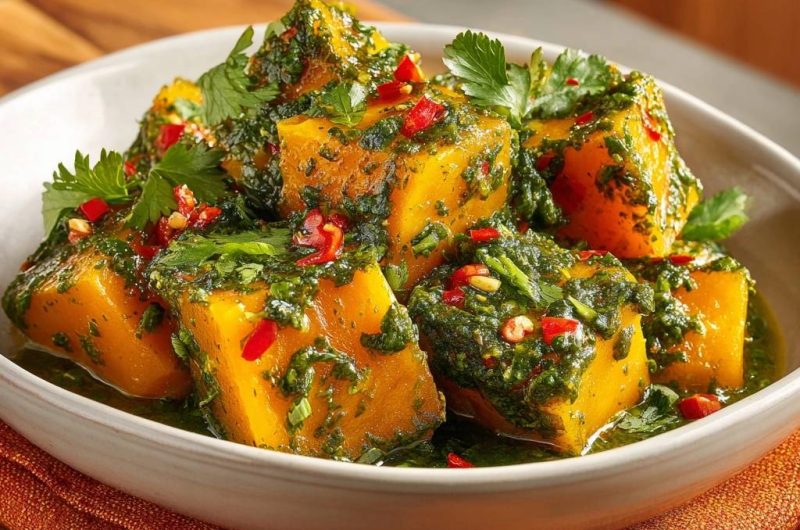
- Transfer the squash to a shallow serving bowl. Pour the chimichurri generously over the cubes, allowing the excess oil and herbs to pool at the bottom of the dish as shown in the image.
- Garnish with the remaining roughly chopped red chili and a few whole cilantro leaves. Serve immediately while the squash is warm and the herbs are vibrant.
Notes
- The secret to avoiding mushy squash is patting the cubes completely dry and ensuring the oven is at 425 degrees F. Do not crowd the pan to avoid steaming the vegetables.