We have all been there before. You wake up craving a warm, comforting bowl of oatmeal, but you end up with a sticky, glue-like paste that feels more like a chore than a breakfast. It is the classic cafeteria experience that has given oats a bad reputation for years. You want a bowl where the grains are distinct and tender, swirled in a creamy base rather than a thick, gelatinous mass.
The secret to achieving that restaurant-quality texture is not found in a fancy brand of grain, but in how you manage your heat. Most people make the mistake of dumping their oats into cold water and letting them slowly heat up together. This slow climb in temperature is exactly what creates that gummy mouthfeel you are trying to avoid.
I’m going to show you how a simple shift in your morning routine can fix this forever. By mastering a specific heat-management technique, you will create Cinnamon Pear Morning Oats that hold their shape beautifully. The secret is all about when you introduce the oats to the heat, ensuring the starch sets immediately for a perfect bite every single time.
The Science of Starch: Why Oats Turn Slimy
To understand why oatmeal gets gummy, we have to look at the starch. Oats are packed with beta-glucan, a type of soluble fiber that loves to absorb water. When you start oats in cold water, the grains have too much time to leak starch into the liquid as the temperature rises. This creates a thick, slimy coating around every grain before the center is even cooked.
However, when you wait for a full rolling boil before adding your oats, something different happens. The intense heat hits the outside of the grain instantly, “setting” the outer starch layer. This creates a barrier that keeps the interior of the oat intact while it softens. It is the difference between a crisp-tender vegetable and one that has been boiled into mush.
In addition to the starting temperature, your spoon might be your own worst enemy. Every time you stir the pot, you are physically knocking starch off the oats and into the water. This mechanical action breaks down the delicate fibers and creates that heavy, sticky consistency. If you want a clean, elegant texture, you have to resist the urge to constantly agitate the pot.
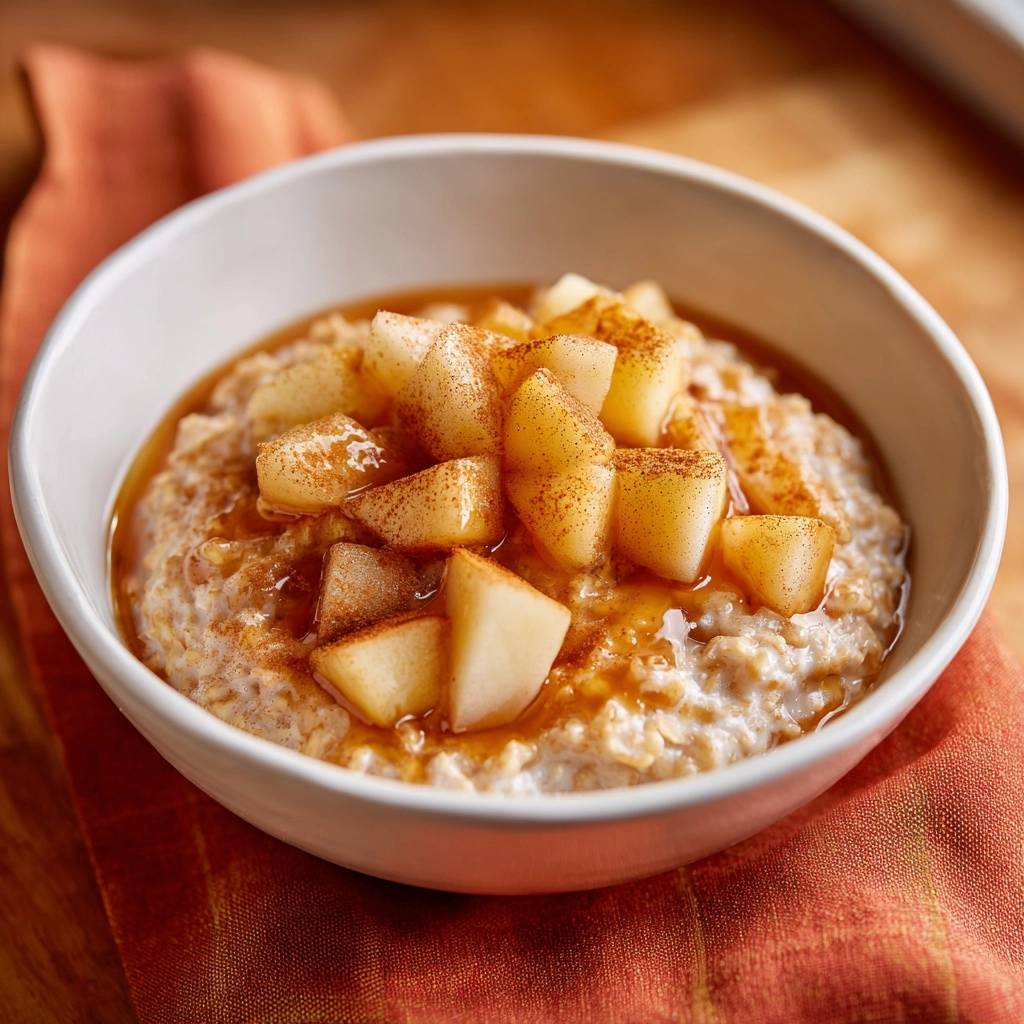
Therefore, the goal is to let the boiling water do the heavy lifting. By reducing the heat to a low simmer immediately after adding the grains, you allow the water to hydrate the oats gently. This method ensures the grains stay separate and plump, providing a much more satisfying mouthfeel that pairs perfectly with the crunch of fresh fruit.
Essential Components for Cinnamon Pear Morning Oats
Quality ingredients are the foundation of this dish, and it starts with the type of oat you choose. For this specific texture, you must use Old Fashioned Rolled Oats. Quick oats or instant varieties have been steamed and rolled much thinner, which means they break down almost instantly upon hitting water. They simply cannot provide the structural integrity needed for a non-gummy bowl.
Don’t forget the salt, even if you are someone who prefers a sweet breakfast. A tiny pinch of salt is not there to make the oats salty; it is there to round out the flavors. Without it, the oats will taste flat and the sweetness of the maple syrup will feel one-dimensional. Salt acts as a flavor enhancer that makes the nuttiness of the grain and the floral notes of the pear really pop.
When it comes to the fruit, the variety of pear you select will change the entire experience. Bosc pears are fantastic because they are crisp and hold their shape well when cubed. Anjou pears are also a great choice as they offer a sweet, citrus-like finish. Just make sure the pear is ripe but still firm to the touch so it provides a nice contrast to the soft oats.
Selecting the Right Pear for Texture Contrast
To find the perfect pear, you should “check the neck.” Apply gentle pressure with your thumb near the stem end; if it gives slightly, the pear is ripe and ready. If the middle of the pear is soft, it is likely overripe and will turn to mush in your bowl.
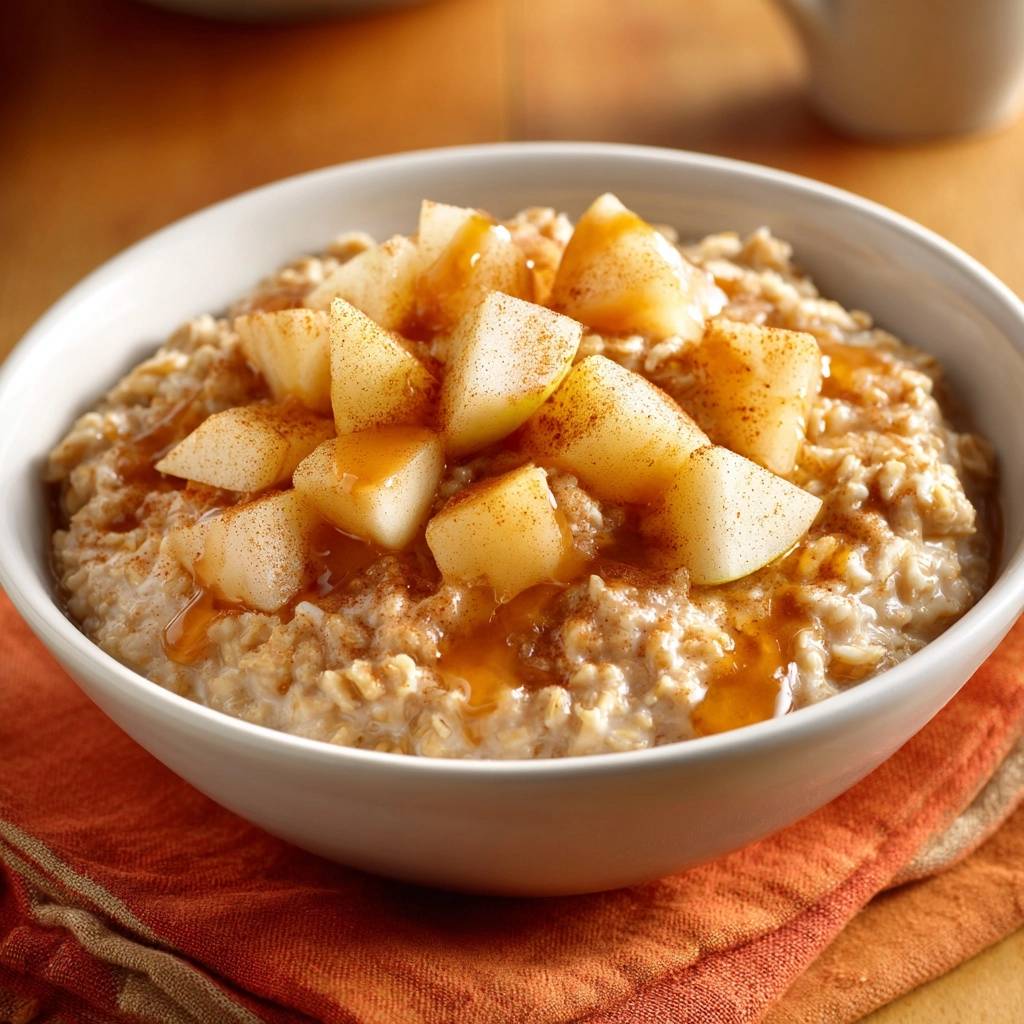
Keeping the pear raw and cubed is a deliberate choice for this recipe. While many people cook their fruit into the oats, keeping them fresh provides a bright, crisp structural contrast. This prevents the entire meal from having a singular, soft texture and adds a refreshing burst of juice in every bite.
Natural Sweeteners: Beyond Refined Sugar
Pure maple syrup is the gold standard for this dish because its earthy, caramel-like undertones complement cinnamon perfectly. Unlike honey, which can sometimes be too floral, or agave, which is purely sweet, maple syrup has a complexity that mimics the warmth of the spices. It flows easily and creates a beautiful glaze over the fresh pear cubes.
When you drizzle the syrup over the cinnamon-dusted pears, it actually helps the spice distribute evenly. Instead of getting a dry puff of cinnamon, the syrup carries the spice into every nook and cranny of the fruit. This creates a “glaze” effect that looks as good as it tastes, making the breakfast feel like a gourmet treat.
Step-by-Step: Achieving the Perfect Oat Base
The first step is the most critical: bring your one cup of water and a pinch of salt to a full, rolling boil. You want to see large bubbles breaking the surface vigorously. Once the water is at its peak heat, pour in your half-cup of rolled oats. You will notice the water temperature drops slightly, but the initial shock to the oats has already done its job of sealing the starch.
Immediately turn the heat down to a low simmer. You are looking for just a few small bubbles dancing around the edges of the pan. If the water is boiling too hard, the oats will bounce around and break apart. If it is too low, they will sit and soak. A gentle simmer is the “Goldilocks” zone for a tender grain that isn’t mushy.
Now comes the hardest part: do not stir. You can give it one quick swirl at the beginning to make sure all the oats are submerged, but after that, leave it alone. Watch the liquid level carefully. After about 5 to 7 minutes, you will see that most of the water has been absorbed, and small “steam holes” will begin to form on the surface of the oats.
When the oats look moist but the liquid is no longer pooling, it is time to pull the pan off the burner. The grains should look plump and distinct. If you see a little bit of liquid left, don’t worry. The next step will take care of that without overcooking the delicate fibers of the grain.
The Steam-Finish: Why Resting Matters
Once you remove the pan from the heat, place a lid on it and let it sit for exactly two minutes. This is the “steam-finish” phase. The residual heat trapped under the lid gently finishes cooking the very center of the oat grains. This ensures they are tender all the way through without the exterior becoming over-processed.
This resting period also allows the remaining moisture to distribute evenly. When you lift the lid, you will find the oats have a beautiful, matte finish rather than a shiny, wet look. This is the hallmark of a perfectly cooked bowl of oatmeal that will hold its texture even after you add your toppings.
Incorporating Creaminess Without Overcooking
After the rest, it is time to add your splash of milk. By adding the milk at the very end, off the heat, you are creating a silky coating rather than cooking the milk into the starch. This preserves the fresh flavor of the milk and provides a luxurious, creamy mouthfeel that doesn’t feel heavy or thick.
Gently fold the milk in with a spoon. You aren’t trying to whip the oats; just a couple of light turns will do. This final touch adds a layer of richness that ties the nutty oats and the sweet pears together. It is the secret to a bowl that feels indulgent while remaining light and healthy.
Flavor Variations and Nutritional Swaps
If you want to add some extra staying power to this breakfast, consider adding a crunch factor. Toasted walnuts or pecans are a natural fit for the pear and cinnamon flavor profile. The healthy fats and protein in the nuts will keep you full longer, and the toasted flavor adds a savory depth to the sweet maple syrup.
For those looking to experiment with the base liquid, coconut water is a surprising and delicious alternative to plain water. It adds a subtle sweetness and a boost of electrolytes. If you prefer a richer base, you can use almond milk or oat milk for the entire cooking process, though you must be even more careful with the heat to prevent scorching.
In addition, you can easily boost the fiber content by stirring in a tablespoon of ground flaxseeds or chia seeds. If you use chia seeds, keep in mind they absorb a lot of liquid. You may need to add an extra tablespoon or two of water during the simmering phase to ensure the oats don’t become too dry or stiff.
Troubleshooting Common Oatmeal Mistakes
If your oats ever turn out too dry, do not reach for the cold milk right away. Instead, stir in a tablespoon of boiling water. Cold liquid can shock the starches and make the texture feel gritty, whereas hot liquid integrates smoothly. Always add liquid in small increments so you don’t accidentally turn your perfect oats into soup.
If you find that your oats are still coming out gummy despite the boiling water method, check your heat level. You might be simmering them too high, which causes the grains to collide and shed starch. Also, ensure you are using a small enough saucepan. If the pan is too wide, the water evaporates too quickly before the oats can properly hydrate.
Finally, use a “Texture Checklist” to evaluate your bowl. Are the grains visible? Does the spoon move through the oats without sticking? Is there a slight resistance when you bite into a grain? If you can answer yes to these, you have successfully avoided the gummy trap. Practice makes perfect, and soon this method will be second nature.
Expert Tips for Morning Efficiency
You don’t have to start from scratch every single morning to have a great breakfast. I love using a “Dry Prep” strategy. On Sunday night, portion out your half-cup of oats, the pinch of salt, and the cinnamon into small jars or containers. When you wake up, all you have to do is boil the water and pour the contents in.
If you want to prep your pears ahead of time, you have to deal with browning. Pears oxidize quickly once they are cut. To keep them looking fresh and bright, toss the cubes in a tiny bit of lemon juice or store them in a strictly airtight container with as little head-space as possible. This keeps the edges sharp and the color vibrant for your morning bowl.
Another great tip is to use a kettle to boil your water while you are getting dressed. It is much faster than waiting for a pot on the stove. Once the kettle whistles, pour the boiling water into your saucepan and you are already halfway there. This small shortcut can save you several minutes during the morning rush.
Optimal Ratios for Larger Batches
If you are cooking for a family, you can easily double or triple this recipe. The standard ratio is 1 part oats to 2 parts water. For two servings, use 1 cup of oats and 2 cups of water. The cooking time will remain roughly the same, though the “steam-finish” rest might need an extra minute to account for the larger volume of food.
When making larger batches, it is even more important to avoid stirring. A larger pot has more surface area for starch to release, so be extra gentle when you finally fold in the milk at the end. Use a wide, shallow bowl for serving to prevent the bottom layer from getting squashed by the weight of the oats on top.
Frequently Asked Questions
Can I use Steel Cut oats with this method?
You can use the “boil-first” method with steel cut oats, but the timing is very different. Steel cut oats are the whole oat groat chopped into pieces, so they require much more liquid and time. Usually, you will need a 1:3 or 1:4 ratio of oats to water and a simmering time of 20 to 30 minutes. The texture will be even chewier and less likely to get gummy than rolled oats.
Why is my cinnamon clumping?
Cinnamon is hydrophobic, meaning it does not like to dissolve in water. If you stir it directly into the simmering pot, it often forms little dry balls of spice. The best way to avoid this is to dust the cinnamon directly over the fresh pears and the finished oats. The moisture from the fruit and the maple syrup will help the cinnamon stick and spread without clumping.
Is this recipe suitable for meal prep?
While these oats are best fresh, you can reheat them. Store leftovers in an airtight container in the fridge for up to three days. When reheating, the oats will have thickened significantly. Add a splash of water or milk before microwaving or heating on the stove to loosen the texture back up. Note that the pears may soften slightly upon reheating.
Can I cook the pears into the oats?
You certainly can, but it will change the texture profile of the dish. Cooking the pears makes them soft and jam-like, which some people enjoy. However, the pears will release their own sugars and moisture into the oats, which can make the overall consistency a bit softer. If you choose this route, add the pears during the last 2 minutes of simmering.
What if I don’t have maple syrup?
If you are out of maple syrup, honey is the next best choice, though it has a stronger floral flavor. You could also use a teaspoon of brown sugar stirred in at the very end. The molasses in the brown sugar mimics some of the depth found in maple syrup. If you want to avoid added sugars entirely, a few mashed dates can provide a natural, caramel-like sweetness.
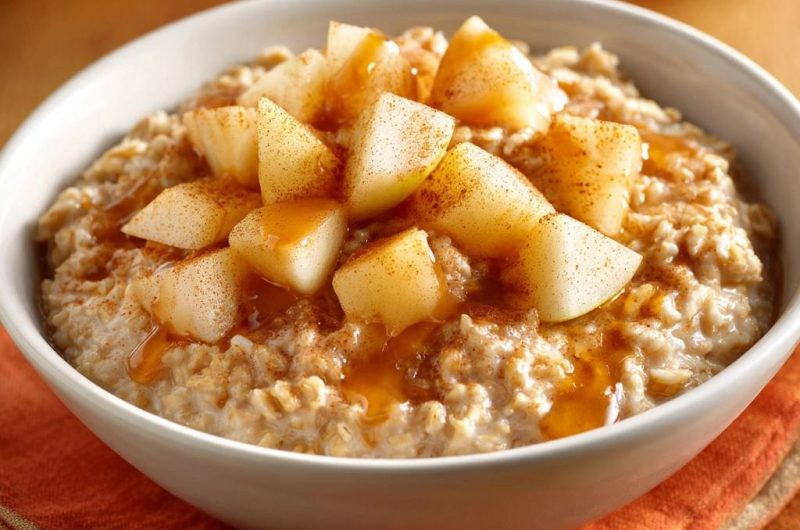
Cinnamon Pear Morning Oats
Course: BreakfastCuisine: AmericanDifficulty: easy1
serving5
minutes10
minutes15
Minutes340
kcalAmerican
Ingredients
1/2 cup old fashioned rolled oats
1 cup water
1 pinch salt
1 ripe pear, cubed
1/2 teaspoon ground cinnamon
2 tablespoons pure maple syrup
1 tablespoon milk of choice
Directions
- To solve the gummy texture problem, do not add your oats to cold water. Bring the water and salt to a full rolling boil in a small saucepan first. Adding oats to boiling water sets the outside starch immediately, preventing that slimy breakdown.
- Once boiling, stir in the oats and immediately reduce the heat to a low simmer.
- Cook for 5 to 7 minutes, stirring only occasionally. Over-stirring is the second cause of gumminess as it breaks down the oat fibers.
- While the oats simmer, prepare your pear. To match the visual in the image, keep the pear cubes fresh and raw to maintain their sharp edges and bright color.
- Once the liquid is mostly absorbed but the oats still look moist, remove from heat. Cover the pan and let it sit for 2 minutes. This steam-finish ensures the oats are tender without becoming mushy.
- Transfer the oats to a bowl. Stir in the splash of milk for creaminess.
- Top with the fresh cubed pears. Dust the cinnamon directly over the pears and oats, then finish with a generous drizzle of maple syrup so it pools around the fruit as shown in the photo.
Notes
- To avoid a gummy texture, always add oats to boiling water rather than cold water and avoid over-stirring during the simmering process.