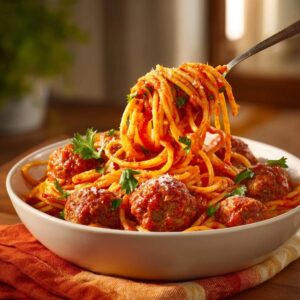
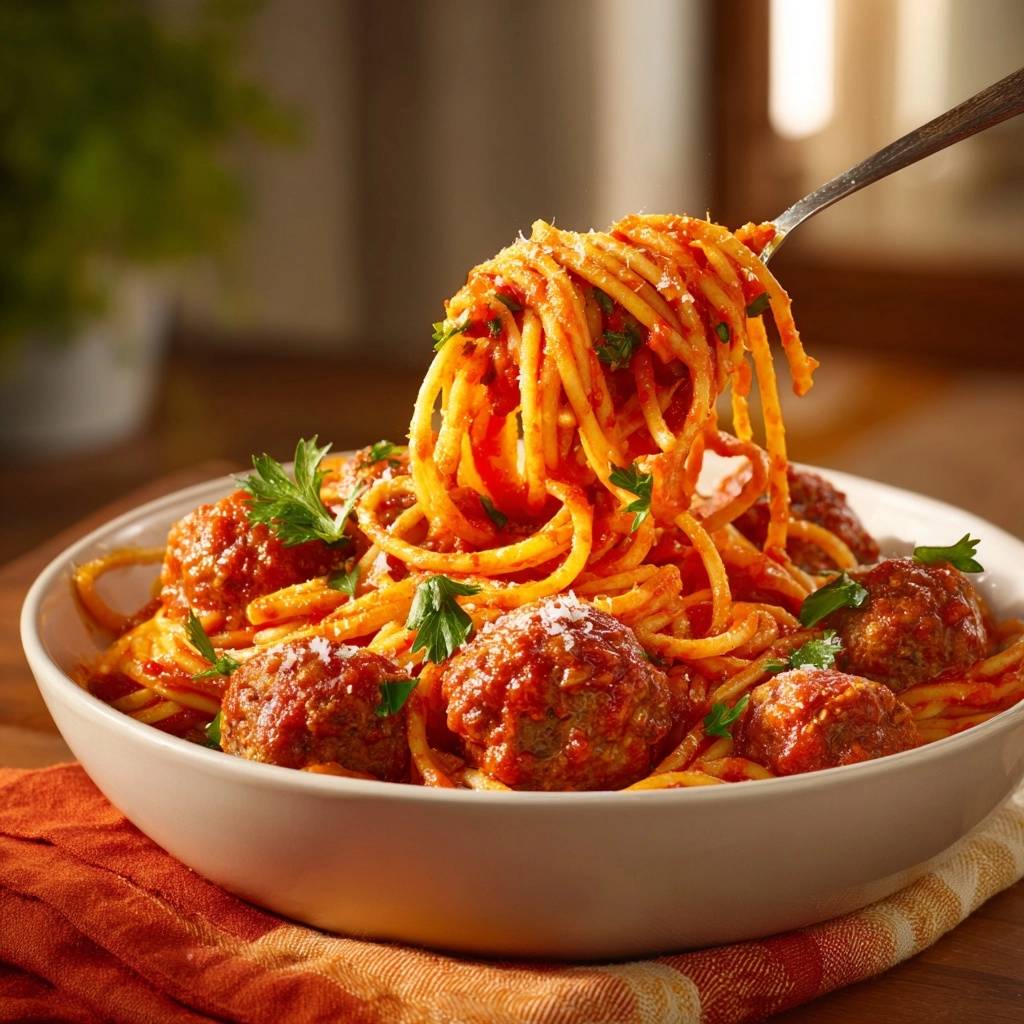
Nothing beats the comfort of a towering plate of spaghetti topped with tender, savory meatballs. It’s the ultimate Italian-American hug in a bowl, but all too often, the experience ends in a watery disappointment. You know the feeling when you finish your pasta and find a puddle of thin, red liquid sitting at the bottom of your plate? That separation happens because the sauce and the noodles never truly became one.
That “soggy bottom” is the enemy of a great dinner, but it’s actually a very easy problem to solve. By moving away from the “plop and drop” method—where you simply pour sauce over plain noodles—you can achieve restaurant-quality results at home. The secret lies in a professional culinary trick called the starch-emulsion technique, which binds everything together into a cohesive, silky masterpiece.
The real magic happens when you stop thinking of pasta water as a waste product and start seeing it as “liquid gold.” I’ve found that saving just a half-cup of that cloudy, starchy water is the single most important step in the entire process. It acts as a bridge between the fats in the meat and the acidity of the tomatoes, ensuring every single strand of spaghetti is perfectly coated in a velvet-like sauce that actually sticks.
The Science of the Starch-Emulsion Technique
When you boil spaghetti, the noodles release amylose starch into the water. This starch is a natural thickening agent that most home cooks accidentally pour down the drain. However, when you add that starchy water back into your skillet, it performs a bit of kitchen chemistry. It acts as an emulsifier, allowing the oil and fats from the beef to mix smoothly with the water-based tomato sauce.
Without this step, the oil and water will naturally want to stay separate, leading to that thin, runny mess on your plate. By tossing the pasta vigorously in the skillet with the sauce and a splash of that “liquid gold,” you create a physical bond. The mechanical action of tossing helps the starch coat the noodles, creating a glossy, thick finish that looks and tastes like it came from a high-end trattoria.
Essential Components for Classic Spaghetti and Meatballs
Quality ingredients are the foundation of this dish, starting with the meat. I always recommend an 80/20 ground beef blend because that 20% fat content is vital for a juicy meatball. If you go too lean, the meatballs will turn out dry and crumbly. The fat provides the moisture and flavor that carries the herbs and garlic through every bite.
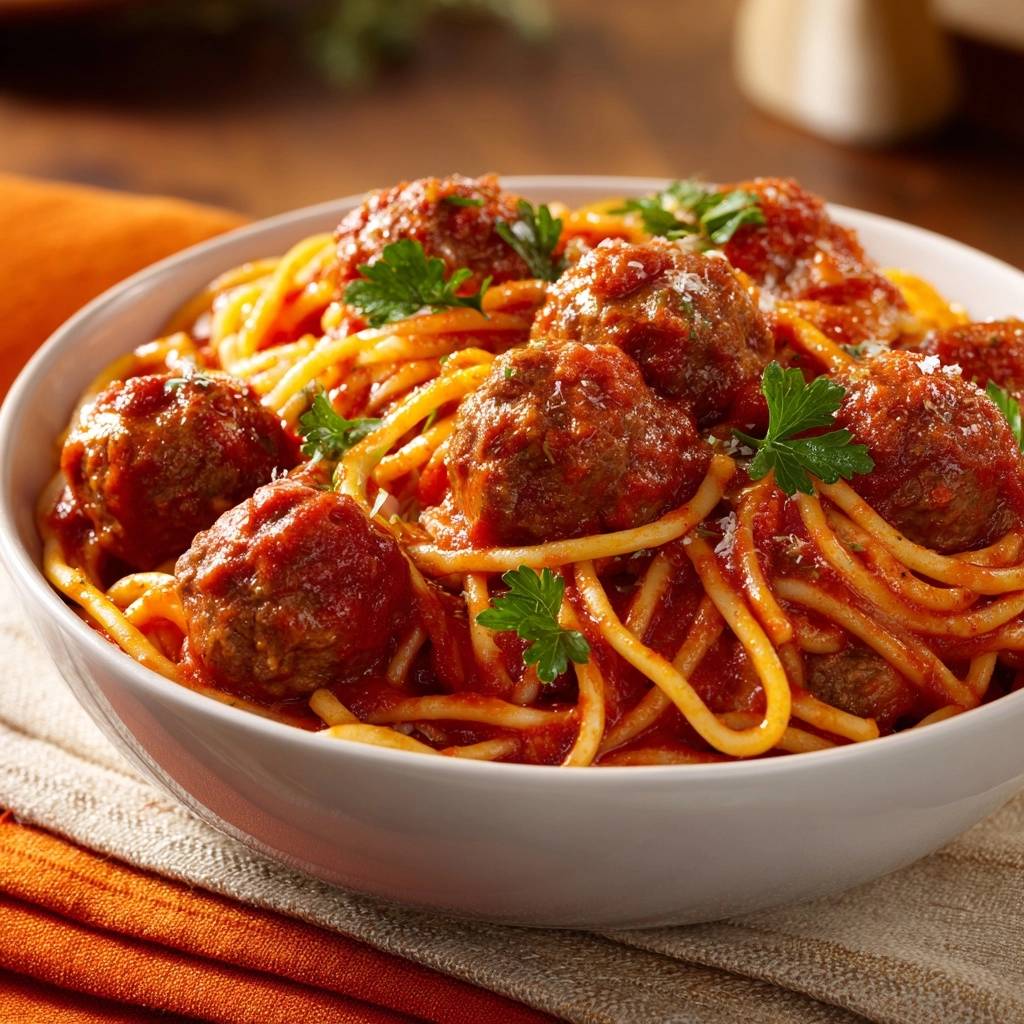
In addition to the beef, the binder you use is just as important. We use a combination of panko breadcrumbs, whole milk, and a beaten egg. This mixture ensures the meatballs hold their shape while remaining incredibly tender. Don’t forget the cheese; freshly grated Parmesan adds a salty, nutty depth that pre-shredded versions simply can’t match because they are coated in anti-clumping starches.
Why a Panade is Non-Negotiable
A panade is a simple paste made from mixing breadcrumbs and milk, and it is the secret to a melt-in-your-mouth texture. When you let the breadcrumbs soak for five minutes, they form a gel-like substance. This gel coats the protein fibers in the ground beef, preventing them from tightening up and becoming rubbery during the cooking process. It’s the difference between a tough “meat-wad” and a delicate, tender meatball.
Selecting the Right Pasta Shape and Brand
While you can technically use any shape, classic spaghetti is the traditional choice for a reason. The long, round strands provide the perfect surface area for an emulsified sauce to cling to. If you can find it, look for “bronze-cut” pasta. You can tell by its slightly dusty, rough appearance. That rough texture acts like tiny hooks, grabbing onto the sauce much better than the smooth, shiny pasta made by mass-market brands.
Phase One: Crafting the Perfect Meatball Texture
When it’s time to mix your meatballs, the most important rule is to be gentle. I like to use my hands to lightly toss the beef with the panade, egg, and seasonings until they are just combined. If you squeeze or overwork the meat, you’ll squeeze out the air and create a dense, heavy texture. Think of it as folding ingredients together rather than kneading dough.
Aim for uniform meatballs about 1.5 inches in diameter, which is roughly the size of a golf ball. This size is the “sweet spot” for cooking. It’s large enough to stay juicy in the center but small enough to develop a great crust-to-interior ratio. Plus, they fit perfectly on a fork alongside a swirl of spaghetti, ensuring you get a bit of everything in one bite.
Phase Two: Developing Flavor Through Proper Searing
Before the meatballs ever touch the sauce, they need a good sear in olive oil. This triggers the Maillard reaction, a chemical process that creates those deep, savory, caramelized flavors on the surface of the meat. You aren’t trying to cook them all the way through at this stage; you just want a beautiful golden-brown crust on all sides.
Be careful not to crowd the pan. If the meatballs are too close together, they will release steam and turn gray instead of browning. Work in batches if you need to. That brown residue left in the bottom of the pan—called fond—is pure flavor. When you pour the marinara sauce in later, it will lift that fond and incorporate all those roasted meat notes directly into your sauce.
Phase Three: Simmering the Sauce and Meatballs
Once the meatballs are browned, it’s time for the low-and-slow simmer. Adding the remaining garlic now ensures it softens and flavors the oil without burning. When you pour the marinara over the meatballs, the sauce acts as a poaching liquid. The meatballs finish cooking gently, which keeps them plump and prevents them from breaking apart.
As they simmer for 15 to 20 minutes, the meatballs release their savory juices into the tomato sauce. This transforms a standard marinara into a rich, complex meat sauce. Keep the heat low and the lid on to trap the moisture. You’ll know it’s ready when the sauce has slightly thickened and the meatballs feel firm but yielding when pressed with a spoon.
Phase Four: The Critical Finish and Emulsification
This is where the magic happens. You must cook your spaghetti for about two minutes less than the package directions. The pasta should have a very firm bite in the center because it will finish cooking inside the sauce. This allows the noodles to absorb the flavor of the sauce rather than just being coated by it.
Before you drain the pasta, grab a mug and scoop out that half-cup of starchy water. Add the drained noodles and that water directly into the skillet with the meatballs. Increase the heat to medium-high and start tossing. Use tongs to lift and swirl the pasta vigorously. You’ll see the sauce transform from a watery liquid into a thick, glossy glaze that hugs every noodle. This is the professional finish that prevents the dreaded puddle at the bottom of the bowl.
Troubleshooting Common Spaghetti and Meatball Hurdles
If you find your sauce has become too thick during the final tossing phase, don’t panic. Simply add another splash of pasta water or a tablespoon of warm water to loosen it back up. The starch will keep it creamy even as you thin it out. If your meatballs seem to be falling apart, it usually means the panade was too wet or the meat was handled too roughly; next time, ensure the breadcrumb paste is thick and the mixing is minimal.
Sometimes a tomato sauce can taste a bit too acidic or sharp. Instead of reaching for sugar, try simmering it for an extra five minutes without the lid. This allows some of the harsher acidic notes to mellow out. If it still needs a boost, a tiny knob of butter stirred in at the very end can round out the flavors and add an extra layer of richness to the emulsion.
Make-Ahead Strategies and Proper Storage
This recipe is a fantastic candidate for meal prep. You can shape the meatballs and freeze them raw on a baking sheet before transferring them to a bag. When you’re ready for dinner, just brown them straight from frozen, adding a few extra minutes to the simmer time. You can also freeze the fully cooked meatballs in the sauce for up to three months.
For leftovers, store the pasta and meatballs in an airtight container in the fridge for up to three days. To reheat, I recommend adding a tiny splash of water to the bowl before microwaving or heating on the stove. This helps “reactivate” the starch emulsion so the sauce becomes creamy again rather than soaking into the noodles and becoming dry.
Complementary Sides for a Complete Italian Feast
Since this dish is quite rich and savory, I love pairing it with something bright and crisp. A simple arugula salad with a sharp lemon vinaigrette provides a perfect acidic contrast to the heavy beef and cheese. The peppery bite of the greens cuts through the fat, refreshing your palate between bites of pasta.
If you want something warm, roasted broccolini with plenty of garlic and a pinch of red pepper flakes is a great choice. The charred edges of the vegetable mimic the seared flavor of the meatballs. Avoid overly buttery sides like heavy garlic bread if you want the pasta to remain the star of the show; a crusty piece of plain sourdough is all you need to swipe up any leftover sauce.
Expert Tips for Professional Results
Can I use ground turkey or lamb instead of beef?
You can certainly substitute the meat, but keep the fat content in mind. Ground turkey is often very lean, so I recommend adding a tablespoon of olive oil to the meat mixture to prevent the meatballs from becoming dry. Lamb is naturally fatty and works beautifully, though it will give the dish a much more robust, gamey flavor profile compared to the classic beef version.
Why is my pasta water not cloudy enough?
If your pasta water looks clear, you might be using too much water in your pot. To get that concentrated “liquid gold,” use just enough water to cover the pasta by an inch or two. This concentrates the starch released from the noodles, making the water much more effective at thickening and emulsifying your sauce at the end.
Do I really need to salt the pasta water “like the sea”?
Yes, seasoning the water is your only chance to season the pasta itself. Since the noodles only spend a few minutes in the sauce, they won’t absorb much salt from the marinara. Adding about a tablespoon of salt to the boiling water ensures the spaghetti has a delicious flavor on its own, which elevates the entire dish.
Can I use gluten-free pasta with this emulsion technique?
Gluten-free pasta can be tricky because it often releases different types of starches (like corn or rice starch) that can make the sauce feel slightly grittier. It still works, but you should be extra careful not to overcook the noodles, as GF pasta tends to fall apart quickly. Use a little less pasta water to start and add it gradually until you reach the desired consistency.
How do I prevent the garlic from burning in the skillet?
Garlic burns very quickly and becomes bitter, which can ruin the whole sauce. The trick is timing and temperature. Only add the second half of the garlic after the meatballs are browned and you’ve lowered the heat. Sauté it for no more than 60 seconds—just until you can smell that wonderful aroma—before immediately pouring in the tomato sauce to stop the cooking process.
How should I store and reheat leftovers?
Store leftovers in an airtight container in the refrigerator for up to 3 days. When reheating, the pasta will have absorbed much of the sauce’s moisture. To bring back that silky texture, add a teaspoon of water per serving before reheating on the stove or in the microwave. This moisture helps the starch emulsion loosen up so the sauce becomes glossy again. I do not recommend freezing the cooked pasta, as the noodles will become mushy when thawed.
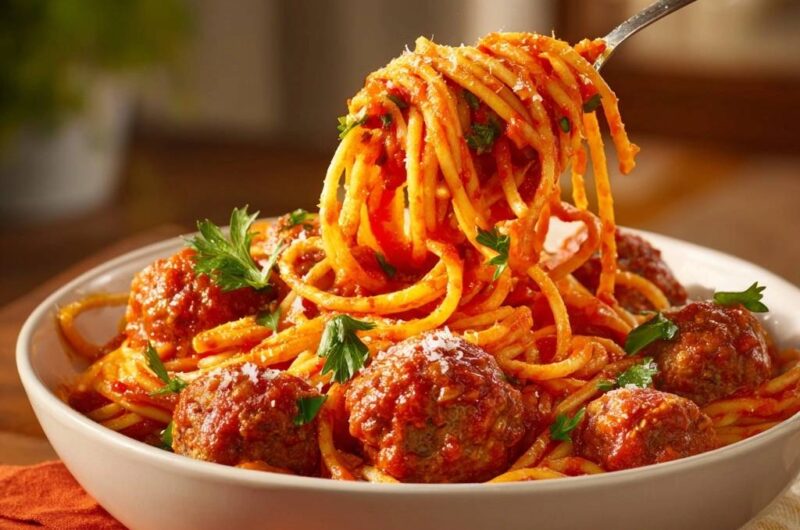
Classic Spaghetti and Meatballs
Course: Main CourseCuisine: Italian-AmericanDifficulty: easy4
servings20
minutes30
minutes50
Minutes680
kcalItalian-American
Ingredients
1 pound spaghetti
1 pound ground beef (80/20 blend for moisture)
1/2 cup panko or plain breadcrumbs
1/4 cup whole milk
1 egg, beaten
1/2 cup grated Parmesan cheese, plus more for garnish
3 cloves garlic, minced (divided)
1 teaspoon dried oregano
1/2 teaspoon salt
1/4 teaspoon black pepper
2 tablespoons olive oil
28 ounces high-quality marinara sauce or crushed tomatoes
1/2 cup reserved starchy pasta water
Fresh Italian parsley, roughly torn for garnish
Directions
- In a large bowl, combine breadcrumbs and milk. Let sit for 5 minutes to form a paste (panade). Add the ground beef, egg, Parmesan, half of the minced garlic, oregano, salt, and pepper. Mix gently with your hands until just combined; do not overwork the meat or the meatballs will be tough.
- Shape the mixture into 12 to 15 uniform meatballs (about 1.5 inches in diameter).
- Heat olive oil in a large, deep skillet over medium heat. Add meatballs and brown on all sides for about 8-10 minutes. They do not need to be cooked through yet, but they must have a deep golden-brown crust.
- Add the remaining garlic to the skillet and cook for 1 minute until fragrant. Pour the marinara sauce over the meatballs. Reduce heat to low, cover, and simmer for 15 to 20 minutes.
- While the sauce simmers, bring a large pot of heavily salted water to a boil. Cook the spaghetti for 2 minutes less than the package directions (it should still have a firm bite).
- CRITICAL STEP: Before draining the pasta, scoop out 1/2 cup of the cloudy, starchy pasta water. This is the emulsifying agent that prevents a watery mess.
- Drain the pasta and add it directly into the skillet with the sauce and meatballs. Pour in the reserved pasta water.
- Increase heat to medium-high. Using tongs, toss the pasta vigorously with the sauce and meatballs for 2 minutes. The mechanical action of tossing combined with the starch in the water will emulsify the fats and liquids, creating a thick, velvet-like sauce that binds perfectly to the noodles.
- Serve immediately in warm bowls, topped with a generous amount of fresh parsley and extra grated Parmesan cheese as shown in the image.
Notes
- The secret to this recipe is the ‘liquid gold’ pasta water. By finishing the pasta in the sauce with the starchy water, you create a velvet-like texture that binds the sauce to the noodles.